Loading...
Alexander Kolchak vs Anami Korechika
Alexander Kolchak leads by 5.6 pts · 2 figures compared
…

Alexander Kolchak
General · Modern
48.1Total
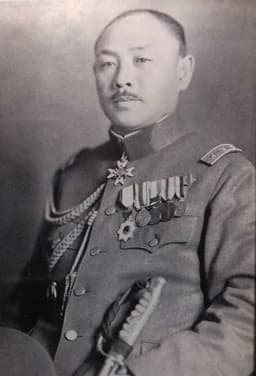
Anami Korechika
General · Modern
42.5Total
Basic Information
Born
1874
1887
Died
1920
1945
Era
Modern
Modern
Nationality
Russia
Japan
Occupation
General
General
Civilization
Western
Eastern
Score Comparison
Military (10%)
50.0
25.9
Political (20%)
35.1
30.8
Influence (20%)
57.2
49.4
Legacy (20%)
45.0
43.3
Leadership (15%)
48.4
51.9
Strategy (15%)
50.0
43.7
TOTAL
48.1
42.5
Alexander Kolchak — Complete Timeline
1918 AD
Supreme Ruler of RussiaPolitical Action
Kolchak was proclaimed Supreme Ruler of Russia by the White forces in Omsk. He established a government that claimed authority over all anti-Bolshevik forces. His regime was recognized by the Allies and became the main White government in Siberia.
Supreme RulerWhite MovementSiberia
Impact: national
Gold Reserve of the Russian EmpirePolitical Action◆ Major
Kolchak's government gained control of a large portion of the Russian Empire's gold reserve, which had been captured by the Czechoslovak Legion. The gold was used to finance his government and purchase supplies. Its fate after Kolchak's defeat remains a subject of speculation.
Gold ReserveWhite MovementFinance
Impact: national
1919 AD
Spring Offensive of 1919War◆ Major
Kolchak launched a major offensive westward from Siberia, aiming to link up with Denikin's forces and march on Moscow. The offensive initially captured large areas, including Perm and Ufa, but was halted by the Red Army and turned into a retreat.
Spring OffensiveWhite ArmyRussian Civil War
Impact: national
1920 AD
Capture and Execution by the BolsheviksPolitical Action
After the collapse of his government, Kolchak was captured by the Czechoslovak Legion and handed over to the Bolsheviks in Irkutsk. He was executed by firing squad on February 7, 1920, and his body was thrown into the Angara River.
ExecutionWhite ArmyBolsheviks
Impact: nationaltragic
Anami Korechika — Complete Timeline
1945 AD
Appointed War MinisterPolitical Action◆ Major
Anami Korechika was appointed Minister of War in the cabinet of Prime Minister Kantaro Suzuki in April 1945. He was a key figure in the Japanese government during the final months of World War II, advocating for continued resistance against the Allies.
World War IIJapanese GovernmentMilitary Leadership
Impact: national
Opposed Surrender DecisionPolitical Action◆ Major
In August 1945, Anami opposed the Potsdam Declaration and advocated for a final decisive battle on the Japanese home islands. He argued against unconditional surrender, contributing to the deadlock in the Supreme War Council.
World War IISurrender DebateMilitary Faction
Impact: nationaldestructive
Committed SeppukuOther◆ Major
On August 15, 1945, after Emperor Hirohito announced Japan's surrender, Anami Korechika committed seppuku (ritual suicide) at his residence. He left a death poem and expressed regret for his role in the war, choosing death over surrender.
World War IIRitual SuicideEnd of War
Impact: nationaltragic
Expert Analysis
Origins
Alexander Kolchak was born in 1874 in Saint Petersburg, Russia, into a military family. His father was a naval officer, which influenced Kolchak's early interest in the sea. He graduated from the Naval Cadet Corps in 1894 and later served as a polar explorer and oceanographer, gaining scientific acclaim. Kolchak's formative experiences included expeditions to the Arctic and service in the Russo-Japanese War, where he was taken prisoner by the Japanese.
Anami Korechika was born in 1887 in Oita Prefecture, Japan, into a samurai family. He graduated from the Imperial Japanese Army Academy in 1906 and later from the Army War College. Anami served in the Siberian Intervention (1918-1922) and held various staff positions. His early career was marked by devotion to the emperor and the bushido code, which emphasized honor and loyalty.
Rise to Power
Kolchak rose to prominence during World War I as a naval commander in the Black Sea Fleet. He was promoted to vice admiral in 1916 and successfully conducted operations against the Ottoman Empire. After the Bolshevik Revolution, Kolchak became a leader of the White movement in Siberia. In November 1918, he was proclaimed Supreme Ruler of Russia in Omsk, with support from the Czechoslovak Legion and Allied powers. His government claimed authority over all anti-Bolshevik forces.
Anami's rise was more gradual. He served as a military attaché in Germany and later commanded the 109th Division in China during the Second Sino-Japanese War. He became Vice Minister of War in 1943 and was appointed War Minister in April 1945 under Prime Minister Kantaro Suzuki. His position made him a key figure in Japan's final wartime decisions.
Leadership & Governance
Kolchak's leadership was characterized by authoritarian rule and military governance. He attempted to restore the Russian Empire's pre-revolutionary order, but his regime was plagued by corruption, inefficiency, and lack of popular support. He controlled the gold reserve of the Russian Empire, valued at around 500 million rubles, but mismanaged it. His military strategy scored 50.0, reflecting competent but flawed campaigns. For example, his Spring Offensive of 1919 initially captured vast territories, but overextended supply lines led to counterattacks by the Red Army.
Anami's governance was focused on military control and opposition to surrender. As War Minister, he advocated for a final decisive battle on the home islands, known as Ketsu-Go, which would have caused massive casualties. His political score of 30.8 reflects his inability to influence the surrender decision. Anami's leadership score of 51.9 shows his effectiveness within the military hierarchy, but his strategy score of 43.7 indicates poor judgment in the face of inevitable defeat.
Triumph & Tragedy
Kolchak's greatest success was his initial consolidation of anti-Bolshevik forces and the Spring Offensive of 1919, which came within 50 miles of Kazan. He also secured control over the gold reserve, providing financial resources. His greatest failure was the collapse of his government due to internal divisions, poor logistics, and the loss of Allied support. He was captured and executed by the Bolsheviks on February 7, 1920, after being handed over by the Czechoslovak Legion.
Anami's greatest success was his role in maintaining military discipline until the end of the war. His greatest failure was his opposition to surrender, which prolonged the conflict and contributed to the atomic bombings. He committed seppuku on August 15, 1945, after the emperor's surrender broadcast, upholding his samurai code but failing to prevent national devastation.
Character & Destiny
Kolchak was determined and scientifically minded but politically naive. His authoritarian tendencies alienated potential allies, and his reliance on foreign support proved fragile. His character scored 48.4 in leadership, reflecting his inability to inspire loyalty beyond his immediate circle. His destiny was shaped by the chaotic Russian Civil War, where he became a symbol of the White movement's failure.
Anami was deeply loyal to the emperor and the bushido code. His character was rigid and honor-bound, which led him to oppose surrender despite the hopeless situation. His leadership score of 51.9 shows he was respected by subordinates, but his political score of 30.8 indicates his limited influence. His destiny was sealed by Japan's defeat, and his seppuku became a symbol of the militarist ethos.
Legacy
Kolchak is remembered as a tragic figure of the White movement, but his legacy is mixed. In post-Soviet Russia, some view him as a patriot, but he is also criticized for his dictatorial methods. His influence score of 57.2 reflects his role in the civil war, but his legacy score of 45.0 shows limited long-term impact. The gold reserve he controlled was largely lost or spent.
Anami's legacy is similarly contested. In Japan, he is sometimes seen as a model of samurai loyalty, but also as a militarist who resisted peace. His influence score of 49.4 and legacy score of 43.3 indicate moderate impact. His actions contributed to the atomic bombings and the suffering of Japanese civilians.
Conclusion
Alexander Kolchak had a greater impact than Anami Korechika, as evidenced by his total score of 48.1 versus 42.5. Kolchak's role as Supreme Ruler of a vast territory and his control of the gold reserve gave him more influence over historical events, even though his regime ultimately failed. Anami's impact was limited to the final months of World War II, and his opposition to surrender did not alter the outcome. While both figures represent the tragedy of lost causes, Kolchak's broader scope and higher scores in military (50.0 vs 25.9) and influence (57.2 vs 49.4) make him the more significant historical figure.
Rankings
🥇
Alexander KolchakLeader
Mil: 50.0Pol: 35.1Inf: 57.2
48.1
🥈
Anami Korechika
Mil: 25.9Pol: 30.8Inf: 49.4
42.5
+5.6 behind
How This Comparison Works
Algorithm
Each figure is scored on 6 dimensions (0—100 scale) based on structured historical data: Military (10%), Political (20%), Influence (20%), Legacy (20%), Leadership (15%), Strategy (15%). The weighted total produces the final ranking.
Data Sources
Scores are computed from structured sub-indicators in the database. Scale factors adjust for era (Ancient ×0.85, Modern ×1.0) and civilization size (Eastern ×1.05, Other ×0.80) to account for differences in population and military scale.
Maximum 3 Figures
Comparisons are limited to 2—3 figures to ensure readability and statistical meaningfulness.
Error Margins
±5 points per dimension — Sub-scores are derived from historical records with inherent uncertainty. Two figures within 5 points on a dimension should be considered roughly equivalent in that area.
Total Score Accuracy
±3 points overall — The weighted combination of 6 dimensions produces a total score with approximately ±3 points of uncertainty. Differences of less than 3 points are not statistically significant— the figures are effectively tied.
Known Limitations
- Historical records are incomplete and uneven across civilizations
- Figures from oral-tradition societies may be underrepresented
- Occupation labels can misclassify multi-role figures
- Scores measure capability and impact, not moral character
- Quantitative scoring is a comparison tool, not absolute truth
Capability Radar
Military (10%) — Battles & Warfare
Battles
65
15
Win Rate
40
10
Expansion
45
5
Political (20%) — Governance & Reform
Reform
25
15
Diplomacy
20
20
Economy
15
10
Influence (20%) — Cultural & Global Reach
Cultural
30
15
Global
25
10
Legacy (20%) — Historical Impact
Historical
40
30
Longevity
20
20
Leadership (15%) — Power & Stability
Tenure
30
40
Stability
10
5
Strategy (15%) — Tactics & Innovation
Strategy
55
25
Tactics
60
20
Reform
50
10
Similar Comparisons
Comments & Discussion
No comments yet. Be the first to share your thoughts!