Loading...
Amr ibn al-As vs Yue Yi
Amr ibn al-As leads by 9.9 pts · 2 figures compared
…

Amr ibn al-As
General · Ancient
59.7Total
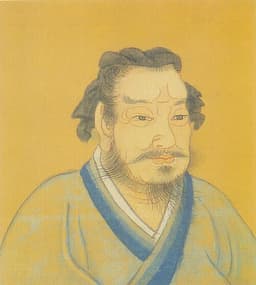
Yue Yi
General · Ancient
49.8Total
Basic Information
Born
-573
-310
Died
—
-259
Era
Ancient
Ancient
Nationality
Rashidun Caliphate
China
Occupation
General
General
Civilization
Middle Eastern
Eastern
Score Comparison
Military (10%)
72.0
75.0
Political (20%)
46.6
26.4
Influence (20%)
56.7
53.3
Legacy (20%)
58.0
50.0
Leadership (15%)
68.0
36.9
Strategy (15%)
66.7
70.0
TOTAL
59.7
49.8
Amr ibn al-As — Complete Timeline
640 AD
Conquest of EgyptWar◆ Major
Amr ibn al-As led the Muslim Arab army into Egypt, then a province of the Byzantine Empire. He defeated the Byzantines at the Battle of Heliopolis and captured the fortress of Babylon, leading to the surrender of Alexandria in 642.
Islamic ConquestEgyptByzantine Empire
Impact: regional
641 AD
Foundation of FustatCultural◆ Major
Amr ibn al-As established the city of Fustat near the Nile Delta as the new capital of Muslim Egypt. The city became a major administrative and commercial center, later evolving into modern Cairo.
City FoundationEgyptIslamic Architecture
Impact: regionalconstructive
642 AD
Governor of EgyptPolitical Action◆ Major
After the conquest, Amr ibn al-As was appointed governor of Egypt by Caliph Umar. He administered the province, implemented tax systems, and oversaw the construction of the Mosque of Amr ibn al-As, the first mosque in Africa.
GovernorshipEgyptAdministration
Impact: regionalconstructive
Yue Yi — Complete Timeline
284 BC
Alliance of Five StatesWar◆ Major
Yue Yi formed a coalition of five states
CoalitionDiplomacyWarring States
Impact: regional
Conquest of Qi CitiesWar◆ Major
Yue Yi led the coalition forces to a series of victories, capturing over 70 cities of Qi, including the capital Linzi. Qi was reduced to only two remaining cities, Ju and Jimo, and was on the verge of total annihilation.
Qi ConquestMilitary CampaignYan Victory
Impact: regional
Appointment as General of YanPolitical Action◆ Major
King Zhao of Yan appointed Yue Yi as general to lead a campaign against the state of Qi. Yue Yi had previously served in Wei and Zhao, but his talents were recognized by King Zhao, who trusted him with the command of the Yan army.
Yan StateAppointmentQi Campaign
Impact: regional
279 BC
Exile to ZhaoPolitical Action◆ Major
After King Zhao of Yan died, his successor King Hui distrusted Yue Yi due to slander from Qi spies. Yue Yi fled to the state of Zhao to avoid execution. His departure allowed Qi to recover under Tian Dan and recapture its lost cities.
ExileYan StateQi Recovery
Impact: regionaltragic
Expert Analysis
Origins
**Amr ibn al-As** (born c. 573 CE) was a member of the Quraysh tribe in Mecca. Initially opposing Islam, he converted in 629 CE and became a close companion of the Prophet Muhammad. His early career involved diplomacy and trade, giving him administrative experience. His tribe, the Banu Sahm, were merchants, and Amr's skills in negotiation and strategy were honed in pre-Islamic conflicts.
**Yue Yi** (born c. 4th century BCE) was a native of the state of Zhao during the Warring States period. He initially served as a general in Zhao but later moved to Wei and then Yan. His family had a military background, and he studied Sun Tzu's Art of War. His early career was marked by service under various rulers, where he gained a reputation for strategic thinking.
Rise to Power
Amr ibn al-As rose to prominence after converting to Islam. He participated in battles like Mu'tah (629 CE) and the conquest of Mecca (630 CE). His key turning point came when Caliph Abu Bakr appointed him to lead campaigns in Syria. In 639 CE, Caliph Umar authorized Amr to invade Egypt. He defeated the Byzantines at the Battle of Heliopolis in 640 CE and captured the fortress of Babylon. By 642 CE, he secured the surrender of Alexandria, completing the conquest.
Yue Yi's rise began when King Zhao of Yan sought a capable general to revenge against Qi. Yue Yi, having fled Wei, was appointed as Yan's prime minister and general around 284 BCE. He formed a grand alliance of five states—Yan, Zhao, Chu, Wei, and Han—to attack Qi. This diplomatic achievement isolated Qi and set the stage for his campaign.
Leadership & Governance
Amr ibn al-As governed Egypt with a focus on administration and taxation. He established the city of Fustat (near modern Cairo) as the capital, building a mosque and a governor's residence. He implemented the poll tax (jizya) on non-Muslims and land taxes, ensuring revenue for the caliphate. His leadership was pragmatic; he maintained existing Byzantine administrative structures while integrating Muslim rule. He also conducted naval campaigns, capturing Cyprus in 649 CE.
Yue Yi's leadership was purely military. He did not govern conquered territories but relied on Yan's administration. He employed psychological warfare, such as spreading rumors to demoralize Qi forces. His strategy involved capturing cities in a systematic manner, avoiding protracted sieges. However, his political acumen was weak; he failed to secure his position after King Zhao's death.
Triumph & Tragedy
Amr ibn al-As's greatest triumph was the conquest of Egypt, a wealthy province that became a cornerstone of the Islamic empire. He founded Fustat, which grew into a major city. His greatest failure was his dismissal as governor in 646 CE due to complaints of corruption. He later regained favor under Caliph Muawiya, but his legacy was tarnished by accusations of nepotism.
Yue Yi's triumph was the near-destruction of Qi. He captured over 70 cities, including the capital Linzi, leaving Qi with only two fortresses. His tragedy came when King Hui, suspicious of Yue Yi's loyalty, replaced him with a lesser general. Yue Yi fled to Zhao, where he died in obscurity. Qi eventually reconquered its lost cities, nullifying his gains.
Character & Destiny
Amr ibn al-As was ambitious and adaptable. He switched sides during the First Fitna (Islamic civil war) to support Muawiya, which secured his position but damaged his reputation for loyalty. His decision-making was pragmatic, prioritizing stability. His character allowed him to thrive under different caliphs, but his opportunism limited his trustworthiness.
Yue Yi was a meticulous planner but politically naive. He trusted King Zhao's favor without building alliances at court. His destiny was shaped by slander and the whims of a new ruler. His flight to Zhao preserved his life but ended his career. Historians note his strategic brilliance but criticize his lack of political foresight.
Legacy
Amr ibn al-As's legacy is profound. He integrated Egypt into the Islamic world, transforming its religious and cultural landscape. Fustat evolved into Cairo, a major Islamic center. His administrative systems influenced later Muslim rulers. He scored 72.0 in military and 58.0 in legacy, reflecting his lasting impact.
Yue Yi's legacy is more limited. His campaign is studied as a classic example of coalition warfare and rapid conquest. However, his failure to consolidate meant his achievements were temporary. He scored 75.0 in military but only 50.0 in legacy. In Chinese history, he is remembered as a tragic hero, outplayed by court intrigue.
Conclusion
Amr ibn al-As had greater overall impact. While Yue Yi was a more skilled tactician (military score 75.0 vs 72.0), Amr's conquest created a lasting change in Egypt's governance, religion, and demography. His political score of 46.6, though lower, was sufficient to secure his position, whereas Yue Yi's 26.4 doomed his campaign. Amr's legacy score of 58.0 exceeds Yue Yi's 50.0, as his foundations endured for centuries. Thus, Amr ibn al-As emerges as the more influential figure.
Rankings
🥇
Amr ibn al-AsLeader
Mil: 72.0Pol: 46.6Inf: 56.7
59.7
🥈
Yue Yi
Mil: 75.0Pol: 26.4Inf: 53.3
49.8
+9.9 behind
How This Comparison Works
Algorithm
Each figure is scored on 6 dimensions (0—100 scale) based on structured historical data: Military (10%), Political (20%), Influence (20%), Legacy (20%), Leadership (15%), Strategy (15%). The weighted total produces the final ranking.
Data Sources
Scores are computed from structured sub-indicators in the database. Scale factors adjust for era (Ancient ×0.85, Modern ×1.0) and civilization size (Eastern ×1.05, Other ×0.80) to account for differences in population and military scale.
Maximum 3 Figures
Comparisons are limited to 2—3 figures to ensure readability and statistical meaningfulness.
Error Margins
±5 points per dimension — Sub-scores are derived from historical records with inherent uncertainty. Two figures within 5 points on a dimension should be considered roughly equivalent in that area.
Total Score Accuracy
±3 points overall — The weighted combination of 6 dimensions produces a total score with approximately ±3 points of uncertainty. Differences of less than 3 points are not statistically significant— the figures are effectively tied.
Known Limitations
- Historical records are incomplete and uneven across civilizations
- Figures from oral-tradition societies may be underrepresented
- Occupation labels can misclassify multi-role figures
- Scores measure capability and impact, not moral character
- Quantitative scoring is a comparison tool, not absolute truth
Capability Radar
Military (10%) — Battles & Warfare
Battles
65
75
Win Rate
70
80
Expansion
75
70
Political (20%) — Governance & Reform
Reform
55
20
Diplomacy
70
50
Economy
50
25
Influence (20%) — Cultural & Global Reach
Cultural
55
40
Global
60
30
Legacy (20%) — Historical Impact
Historical
65
60
Longevity
60
50
Leadership (15%) — Power & Stability
Tenure
60
40
Stability
55
30
Strategy (15%) — Tactics & Innovation
Strategy
75
90
Tactics
72
85
Reform
40
30
Similar Comparisons
Comments & Discussion
No comments yet. Be the first to share your thoughts!