Loading...
This comparison has not been analyzed yet.
One-time AI generation (~1 minute). Scores and timeline are already available below.
Amina J. Mohammed vs Manuel Prado Ugarteche
Amina J. Mohammed leads by 3.4 pts · 2 figures compared
…

Amina J. Mohammed
Politician · Modern
54.5Total
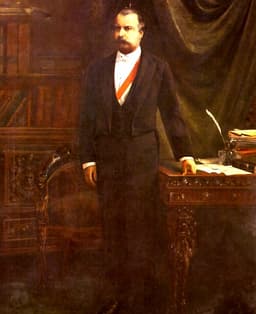
Manuel Prado Ugarteche
Politician · Modern
51.1Total
Basic Information
Born
1961
1889
Died
—
1967
Era
Modern
Modern
Nationality
Nigeria
Peru
Occupation
Politician
Politician
Civilization
Other
Western
Score Comparison
Military (10%)
39.9
47.8
Political (20%)
60.0
45.0
Influence (20%)
61.0
53.3
Legacy (20%)
45.8
45.0
Leadership (15%)
72.0
72.0
Strategy (15%)
40.3
41.5
TOTAL
54.5
51.1
Amina J. Mohammed — Complete Timeline
2015 AD
Led Development of Sustainable Development GoalsReform
As Special Adviser to UN Secretary-General Ban Ki-moon on Post-2015 Development Planning, Mohammed played a central role in shaping the 2030 Agenda for Sustainable Development. She coordinated the process that resulted in the adoption of the 17 Sustainable Development Goals by UN member states in September 2015.
Sustainable DevelopmentUNGlobal Goals
Impact: globalconstructive
Appointed Nigerian Minister of EnvironmentPolitical Action
President Muhammadu Buhari appointed Amina J. Mohammed as Nigeria's Minister of Environment in November 2015. During her tenure, she focused on environmental remediation in the Niger Delta and climate change policy, serving until her move to the UN in 2017.
EnvironmentNigeriaCabinet
Impact: nationalconstructive
2017 AD
Appointed UN Deputy Secretary-GeneralPolitical Action◆ Major
Amina J. Mohammed was appointed as Deputy Secretary-General of the United Nations by Secretary-General Ant
United NationsDiplomacyNigeria
Impact: globalconstructive
Manuel Prado Ugarteche — Complete Timeline
1939 AD
Elected President of Peru for the first termPolitical Action◆ Major
Manuel Prado Ugarteche won the 1939 presidential election as the candidate of the conservative coalition, succeeding General
ElectionWorld War IIModerate
Impact: national
1942 AD
Supported the Allied cause during World War IIPolitical Action◆ Major
Prado aligned Peru with the Allies during World War II, breaking diplomatic relations with the Axis powers in 1942 and allowing the U.S. to use Peruvian air bases. He also promoted economic cooperation with the United States, benefiting from wartime demand for Peruvian exports.
World War IIAlliesDiplomacy
Impact: globalconstructive
1956 AD
Elected President for a second termPolitical Action◆ Major
After an eight-year hiatus, Prado won the 1956 presidential election as the candidate of the Pradist Democratic Movement. He took office on July 28, 1956, for a second term, this time with the support of the APRA party, which he had previously opposed.
ElectionSecond TermAPRA Alliance
Impact: national
1960 AD
Implemented the Agrarian Reform LawReform◆ Major
During his second term, Prado signed the Agrarian Reform Law in 1960, which aimed to redistribute land to peasants. Although limited in scope, it was a precursor to more extensive reforms later and addressed some rural inequalities.
Agrarian ReformLand RedistributionSocial Policy
Impact: nationalconstructive
This comparison has not been analyzed yet.
One-time AI generation (~1 minute). Scores and timeline are already available below.
Rankings
🥇
Amina J. MohammedLeader
Mil: 39.9Pol: 60.0Inf: 61.0
54.5
🥈
Manuel Prado Ugarteche
Mil: 47.8Pol: 45.0Inf: 53.3
51.1
+3.4 behind
How This Comparison Works
Algorithm
Each figure is scored on 6 dimensions (0—100 scale) based on structured historical data: Military (10%), Political (20%), Influence (20%), Legacy (20%), Leadership (15%), Strategy (15%). The weighted total produces the final ranking.
Data Sources
Scores are computed from structured sub-indicators in the database. Scale factors adjust for era (Ancient ×0.85, Modern ×1.0) and civilization size (Eastern ×1.05, Other ×0.80) to account for differences in population and military scale.
Maximum 3 Figures
Comparisons are limited to 2—3 figures to ensure readability and statistical meaningfulness.
Error Margins
±5 points per dimension — Sub-scores are derived from historical records with inherent uncertainty. Two figures within 5 points on a dimension should be considered roughly equivalent in that area.
Total Score Accuracy
±3 points overall — The weighted combination of 6 dimensions produces a total score with approximately ±3 points of uncertainty. Differences of less than 3 points are not statistically significant— the figures are effectively tied.
Known Limitations
- Historical records are incomplete and uneven across civilizations
- Figures from oral-tradition societies may be underrepresented
- Occupation labels can misclassify multi-role figures
- Scores measure capability and impact, not moral character
- Quantitative scoring is a comparison tool, not absolute truth
Capability Radar
Military (10%) — Battles & Warfare
Battles
19
30
Win Rate
27
33
Expansion
27
36
Political (20%) — Governance & Reform
Reform
65
55
Diplomacy
75
65
Economy
55
60
Influence (20%) — Cultural & Global Reach
Cultural
40
30
Global
65
30
Legacy (20%) — Historical Impact
Historical
45
40
Longevity
30
30
Leadership (15%) — Power & Stability
Tenure
60
60
Stability
50
65
Strategy (15%) — Tactics & Innovation
Strategy
30
37
Tactics
32
40
Reform
39
43
Similar Comparisons
Comments & Discussion
No comments yet. Be the first to share your thoughts!