Loading...
Billy Hughes vs Manuel Prado Ugarteche
Billy Hughes leads by 5.8 pts · 2 figures compared
…
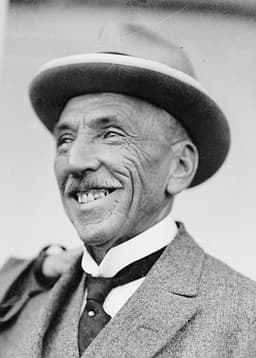
Billy Hughes
Politician · Modern
56.9Total
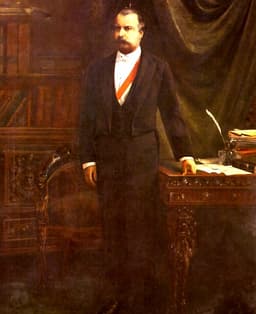
Manuel Prado Ugarteche
Politician · Modern
51.1Total
Basic Information
Born
1862
1889
Died
1952
1967
Era
Modern
Modern
Nationality
Australia
Peru
Occupation
Politician
Politician
Civilization
Western
Western
Score Comparison
Military (10%)
49.4
47.8
Political (20%)
72.0
45.0
Influence (20%)
59.0
53.3
Legacy (20%)
49.2
45.0
Leadership (15%)
66.0
72.0
Strategy (15%)
41.8
41.5
TOTAL
56.9
51.1
Billy Hughes — Complete Timeline
1915 AD
Became Prime Minister of AustraliaPolitical Action◆ Major
Billy Hughes became Prime Minister of Australia on October 27, 1915, succeeding Andrew Fisher. He led the country through the remainder of World War I, becoming a dominant figure in Australian politics.
Prime MinisterWorld War ILeadership
Impact: national
1916 AD
Conscription Referendums (1916 and 1917)Political Action◆ Major
Hughes held two national referendums on conscription for overseas military service during WWI, in 1916 and 1917. Both were narrowly defeated, causing a split in the Labor Party. Hughes and his supporters left to form the Nationalist Party.
ConscriptionReferendumLabor Split
Impact: nationaldestructive
Expelled from Labor PartyPolitical Action◆ Major
Following the defeat of the first conscription referendum, Hughes was expelled from the Australian Labor Party in November 1916. He then formed the National Labor Party, which later merged with the Liberal Party to become the Nationalist Party.
ExpulsionLabor PartyParty Split
Impact: nationaldestructive
1919 AD
Attended Paris Peace ConferencePolitical Action◆ Major
Hughes represented Australia at the Paris Peace Conference in 1919. He argued strongly for Australian interests, including control over former German colonies in the Pacific and reparations from Germany. He also secured Australia's separate membership in the League of Nations.
Paris Peace ConferenceLeague of NationsWorld War I
Impact: globalconstructive
Manuel Prado Ugarteche — Complete Timeline
1939 AD
Elected President of Peru for the first termPolitical Action◆ Major
Manuel Prado Ugarteche won the 1939 presidential election as the candidate of the conservative coalition, succeeding General
ElectionWorld War IIModerate
Impact: national
1942 AD
Supported the Allied cause during World War IIPolitical Action◆ Major
Prado aligned Peru with the Allies during World War II, breaking diplomatic relations with the Axis powers in 1942 and allowing the U.S. to use Peruvian air bases. He also promoted economic cooperation with the United States, benefiting from wartime demand for Peruvian exports.
World War IIAlliesDiplomacy
Impact: globalconstructive
1956 AD
Elected President for a second termPolitical Action◆ Major
After an eight-year hiatus, Prado won the 1956 presidential election as the candidate of the Pradist Democratic Movement. He took office on July 28, 1956, for a second term, this time with the support of the APRA party, which he had previously opposed.
ElectionSecond TermAPRA Alliance
Impact: national
1960 AD
Implemented the Agrarian Reform LawReform◆ Major
During his second term, Prado signed the Agrarian Reform Law in 1960, which aimed to redistribute land to peasants. Although limited in scope, it was a precursor to more extensive reforms later and addressed some rural inequalities.
Agrarian ReformLand RedistributionSocial Policy
Impact: nationalconstructive
Expert Analysis
Origins
Billy Hughes was born in London on September 25, 1862, to Welsh parents. He emigrated to Australia in 1884, working as a laborer and later a union organizer. His early political involvement began with the Australian Labor Party, representing the working class. Manuel Prado Ugarteche was born in Lima, Peru, on April 21, 1889, into a wealthy banking family. His father, Mariano Ignacio Prado, was a former president. He studied engineering and later managed family businesses, entering politics through conservative circles.
Rise to Power
Hughes entered federal parliament in 1901 and served as Attorney-General under Andrew Fisher. He became Prime Minister on October 27, 1915, amid World War I, leveraging his wartime leadership. His rise was marked by fierce nationalism and oratory. Prado won the 1939 presidential election as a conservative coalition candidate, succeeding General Benavides. His first term (1939-1945) focused on stability and alignment with the Allies. After a hiatus, he won again in 1956, returning to power at age 67.
Leadership & Governance
Hughes governed with an iron will, pursuing total war mobilization. He held two conscription referendums (1916 and 1917), both of which failed, splitting the Labor Party. He then formed a Nationalist government with former opponents. His leadership scored 66.0 in our metrics, reflecting his determination but also his divisiveness. Prado pursued moderate, pragmatic policies. He supported the Allied cause in WWII, breaking ties with Axis powers in 1942 and allowing US bases. Domestically, he enacted a limited Agrarian Reform Law in 1960, aiming to reduce rural unrest. His political score (45.0) is lower than Hughes' (72.0), indicating less transformative impact.
Triumph & Tragedy
Hughes' greatest triumph was representing Australia at the Paris Peace Conference in 1919, securing control over former German colonies. His tragedy was the defeat of conscription, which deepened national divisions and cost him his party. Prado's triumph was navigating Peru through WWII and the early Cold War with stability. His tragedy was the limited success of his land reforms, which failed to address deep inequality, contributing to future unrest. Both leaders faced failure: Hughes' divisiveness and Prado's incomplete reforms.
Character & Destiny
Hughes was pugnacious, energetic, and stubborn. His character drove him to push conscription despite popular opposition, leading to his expulsion from Labor. He was a wartime leader who thrived on crisis. Prado was cautious, diplomatic, and pragmatic. He avoided radical change, maintaining elite support. His moderate nature allowed him to serve two non-consecutive terms but limited his legacy. Historians note Hughes as a transformative figure in Australian politics, while Prado is seen as a competent but unremarkable president.
Legacy
Hughes' legacy includes strengthening Australia's independent voice in foreign affairs and the Nationalist Party's formation. His conscription battles shaped Australian national identity. He scores 49.2 in legacy. Prado's legacy is his support for the Allies and the Agrarian Reform Law, which set a precedent for later reforms. He scores 45.0 in legacy. Both had moderate long-term impact, but Hughes' influence on Australian political history is more significant.
Conclusion
Billy Hughes had a greater impact than Manuel Prado. His leadership during WWI (score 66.0 vs 72.0, but political score 72.0 vs 45.0) reshaped Australian politics and international standing. Prado's moderate reforms did not fundamentally alter Peru's trajectory. Hughes' total score of 56.9 surpasses Prado's 51.1, reflecting his more consequential, albeit contentious, role in history.
Rankings
🥇
Billy HughesLeader
Mil: 49.4Pol: 72.0Inf: 59.0
56.9
🥈
Manuel Prado Ugarteche
Mil: 47.8Pol: 45.0Inf: 53.3
51.1
+5.8 behind
How This Comparison Works
Algorithm
Each figure is scored on 6 dimensions (0—100 scale) based on structured historical data: Military (10%), Political (20%), Influence (20%), Legacy (20%), Leadership (15%), Strategy (15%). The weighted total produces the final ranking.
Data Sources
Scores are computed from structured sub-indicators in the database. Scale factors adjust for era (Ancient ×0.85, Modern ×1.0) and civilization size (Eastern ×1.05, Other ×0.80) to account for differences in population and military scale.
Maximum 3 Figures
Comparisons are limited to 2—3 figures to ensure readability and statistical meaningfulness.
Error Margins
±5 points per dimension — Sub-scores are derived from historical records with inherent uncertainty. Two figures within 5 points on a dimension should be considered roughly equivalent in that area.
Total Score Accuracy
±3 points overall — The weighted combination of 6 dimensions produces a total score with approximately ±3 points of uncertainty. Differences of less than 3 points are not statistically significant— the figures are effectively tied.
Known Limitations
- Historical records are incomplete and uneven across civilizations
- Figures from oral-tradition societies may be underrepresented
- Occupation labels can misclassify multi-role figures
- Scores measure capability and impact, not moral character
- Quantitative scoring is a comparison tool, not absolute truth
Capability Radar
Military (10%) — Battles & Warfare
Battles
30
30
Win Rate
34
33
Expansion
32
36
Political (20%) — Governance & Reform
Reform
60
55
Diplomacy
70
65
Economy
55
60
Influence (20%) — Cultural & Global Reach
Cultural
40
30
Global
55
30
Legacy (20%) — Historical Impact
Historical
55
40
Longevity
40
30
Leadership (15%) — Power & Stability
Tenure
65
60
Stability
50
65
Strategy (15%) — Tactics & Innovation
Strategy
35
37
Tactics
43
40
Reform
42
43
Similar Comparisons
Comments & Discussion
No comments yet. Be the first to share your thoughts!