Loading...
Amasis II vs Murong Chui
Amasis II leads by 3.9 pts · 2 figures compared
…

Amasis II
Emperor · Ancient
62.1Total
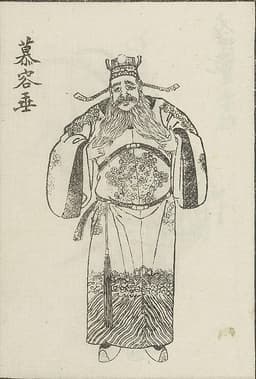
Murong Chui
Emperor · Ancient
58.2Total
Basic Information
Born
-570
326
Died
-526
396
Era
Ancient
Ancient
Nationality
Egypt
China
Occupation
Emperor
Emperor
Civilization
Middle Eastern
Eastern
Score Comparison
Military (10%)
60.0
65.0
Political (20%)
59.3
45.0
Influence (20%)
62.0
58.0
Legacy (20%)
56.0
50.0
Leadership (15%)
80.0
72.0
Strategy (15%)
57.5
72.0
TOTAL
62.1
58.2
Amasis II — Complete Timeline
570 BC
Coup d'état against ApriesPolitical Action◆ Major
Amasis II seized power after leading a rebellion against Pharaoh Apries. The revolt began when Apries sent Egyptian troops to support the Greek colony of Cyrene, which resulted in a defeat. Amasis, a general, was proclaimed pharaoh by the rebel army. Apries was killed in a subsequent battle.
CoupRebellionSuccession
Impact: national
560 BC
Alliance with Greece and economic prosperityPolitical Action◆ Major
Amasis II established close diplomatic and trade relations with Greek city-states, particularly Athens and Cyrene. He granted Greek merchants a trading post at Naucratis in the Nile Delta. This alliance brought economic prosperity to Egypt and made Naucratis a major commercial center.
TradeGreeceNaucratis
Impact: regionalconstructive
550 BC
Construction of the temple at SaisCultural
Amasis II undertook extensive building projects, including the expansion of the temple of Neith at Sais. He also constructed a large monolithic shrine and other monuments. These projects demonstrated the wealth of Egypt under his rule and promoted the Saite Renaissance.
ArchitectureTempleSais
Impact: nationalconstructive
Peaceful reign and avoidance of major warsPolitical Action
Amasis II maintained a long period of peace and stability in Egypt, avoiding major military conflicts. He focused on internal development and diplomacy. This peace allowed Egypt to prosper economically and culturally, but also left it unprepared for the Persian threat that emerged after his death.
PeaceStabilityProsperity
Impact: nationalconstructive
Murong Chui — Complete Timeline
384 AD
Founded the Later Yan dynastyPolitical Action◆ Major
Murong Chui declared himself Prince of Yan, founding the Later Yan dynasty after breaking away from the Former Qin. He established his capital at Zhongshan (modern Dingzhou, Hebei) and began consolidating power in northern China.
Dynasty FoundingXianbeiNorthern China
Impact: regionalconstructive
395 AD
Battle of Canhe SlopeWar◆ Major
Murong Chui led a campaign against the Northern Wei dynasty. His forces were defeated at Canhe Slope by the Wei army under Tuoba Gui, a major setback that weakened Later Yan and led to its decline.
BattleDefeatNorthern Wei
Impact: regionaldestructive
396 AD
Death from illnessOther◆ Major
Murong Chui died of illness while on campaign against Northern Wei. His death left the Later Yan dynasty in a weakened state, and it soon collapsed under pressure from the Northern Wei.
DeathDynastic Decline
Impact: regionaltragic
Expert Analysis
Origins
Amasis II (also known as Ahmose II) was born around 570 BCE in Egypt, likely of common origin. He rose from the ranks of the Egyptian army under Pharaoh Apries. His early life is obscure, but he gained military experience and favor among native Egyptian soldiers, who resented Apries' reliance on Greek mercenaries.
Murong Chui (326–396 CE) was a prince of the Xianbei Murong clan, which ruled the Former Yan dynasty. Born into a nomadic warrior culture, he was trained in horsemanship and archery from youth. His father, Murong Huang, was a founding emperor, and Chui's early life was marked by clan conflicts and military campaigns.
Rise to Power
Amasis II seized power in a coup d'état in 570 BCE after Apries sent Egyptian troops to support a Greek colony against Cyrene, leading to a mutiny. The rebels declared Amasis pharaoh. Apries returned with Greek mercenaries but was defeated at the Battle of Momemphis. Amasis consolidated power by executing Apries and securing recognition from the Egyptian priesthood.
Murong Chui rose to prominence as a general under the Former Yan, but internal strife forced him to flee to the Former Qin dynasty. He served the Qin emperor Fu Jian, leading campaigns that helped unify northern China. After Fu Jian's catastrophic defeat at the Battle of Fei River in 383 CE, Murong Chui rebelled, founding the Later Yan dynasty in 384 CE.
Leadership & Governance
Amasis II ruled Egypt for 44 years (570–526 BCE), focusing on diplomacy and economic prosperity. He forged alliances with Greek city-states, granting Greek merchants a trading post at Naucratis, which boosted commerce. He also undertook extensive building projects, including the temple of Neith at Sais. His leadership style was conciliatory, avoiding major wars and instead relying on tribute and negotiation. He scored 80.0 in leadership, reflecting his ability to maintain stability.
Murong Chui, with a leadership score of 72.0, was a brilliant military strategist but a less effective political leader. He governed the Later Yan through a combination of Xianbei tribal traditions and Chinese administrative practices. However, his reign was plagued by constant warfare, including campaigns against the Northern Wei and other rivals. His governance was less stable, and he struggled to consolidate control.
Triumph & Tragedy
Amasis II's greatest triumph was his long, peaceful reign that brought prosperity to Egypt. He successfully navigated the threat of the Neo-Babylonian Empire and maintained Egypt's independence. His greatest failure was his inability to foresee the rising power of Persia under Cyrus the Great. After his death in 526 BCE, his son Psamtik III was quickly defeated by the Persians, leading to Egypt's conquest. Amasis II scored 56.0 in legacy, reflecting the short-lived nature of his achievements.
Murong Chui's triumphs include founding the Later Yan and winning several battles, notably his victory over the Western Yan in 386 CE. However, his tragedy was the defeat at the Battle of Canhe Slope in 395 CE, where his forces were crushed by the Northern Wei under Tuoba Gui. Murong Chui died of illness during the subsequent campaign, and his dynasty collapsed shortly after. His military score of 65.0 and strategy of 72.0 highlight his tactical skill but inability to secure lasting success.
Character & Destiny
Amasis II was pragmatic and diplomatic, often using cunning to avoid conflict. Herodotus records that he was known for his wit and ability to charm both Egyptians and Greeks. His character suited the twilight of Egyptian independence, but his lack of military preparedness ultimately doomed his dynasty. He scored 59.3 in political acumen, reflecting his skill in internal affairs but weakness in external threats.
Murong Chui was a fierce warrior and proud prince, driven by ambition to restore his clan's glory. He was decisive on the battlefield but often reckless, as seen in his campaign against Northern Wei despite illness. His character mirrored the turbulent era of the Sixteen Kingdoms, where brute force often prevailed over diplomacy. He scored 45.0 in political skill, indicating his inability to build stable institutions.
Legacy
Amasis II is remembered as the last great pharaoh of Egypt's Late Period. His reign marked a cultural renaissance, with Greek influence flourishing. However, his legacy is overshadowed by the subsequent Persian conquest. He scored 62.0 in influence, primarily through his economic policies that linked Egypt to the Greek world.
Murong Chui's legacy is mixed. He is celebrated as a founder of the Later Yan but also blamed for its rapid decline. His military campaigns contributed to the fragmentation of northern China. He scored 50.0 in legacy, as the Later Yan was short-lived and left little lasting impact beyond its immediate history.
Conclusion
While both leaders faced the challenge of preserving their realms, Amasis II had a greater overall impact due to his longer reign and more effective governance. His total score of 62.1, compared to Murong Chui's 58.2, reflects this. Amasis II's diplomatic approach maintained Egyptian independence for four decades, while Murong Chui's military focus led to a brief but unstable dynasty. In the data-supported verdict, Amasis II stands as the more successful ruler, though both ultimately failed to secure their legacies against rising powers.
Rankings
🥇
Amasis IILeader
Mil: 60.0Pol: 59.3Inf: 62.0
62.1
🥈
Murong Chui
Mil: 65.0Pol: 45.0Inf: 58.0
58.2
+3.9 behind
How This Comparison Works
Algorithm
Each figure is scored on 6 dimensions (0—100 scale) based on structured historical data: Military (10%), Political (20%), Influence (20%), Legacy (20%), Leadership (15%), Strategy (15%). The weighted total produces the final ranking.
Data Sources
Scores are computed from structured sub-indicators in the database. Scale factors adjust for era (Ancient ×0.85, Modern ×1.0) and civilization size (Eastern ×1.05, Other ×0.80) to account for differences in population and military scale.
Maximum 3 Figures
Comparisons are limited to 2—3 figures to ensure readability and statistical meaningfulness.
Error Margins
±5 points per dimension — Sub-scores are derived from historical records with inherent uncertainty. Two figures within 5 points on a dimension should be considered roughly equivalent in that area.
Total Score Accuracy
±3 points overall — The weighted combination of 6 dimensions produces a total score with approximately ±3 points of uncertainty. Differences of less than 3 points are not statistically significant— the figures are effectively tied.
Known Limitations
- Historical records are incomplete and uneven across civilizations
- Figures from oral-tradition societies may be underrepresented
- Occupation labels can misclassify multi-role figures
- Scores measure capability and impact, not moral character
- Quantitative scoring is a comparison tool, not absolute truth
Capability Radar
Military (10%) — Battles & Warfare
Battles
55
85
Win Rate
60
90
Expansion
45
85
Political (20%) — Governance & Reform
Reform
70
65
Diplomacy
75
70
Economy
80
60
Influence (20%) — Cultural & Global Reach
Cultural
60
50
Global
50
40
Legacy (20%) — Historical Impact
Historical
65
65
Longevity
55
45
Leadership (15%) — Power & Stability
Tenure
80
75
Stability
75
55
Strategy (15%) — Tactics & Innovation
Strategy
55
88
Tactics
50
92
Reform
40
70
Similar Comparisons
Comments & Discussion
No comments yet. Be the first to share your thoughts!