Loading...
Amadu Amadu vs Jean-Bedel Bokassa
Amadu Amadu leads by 8.7 pts · 2 figures compared
…

Amadu Amadu
Emperor · Modern
48.2Total
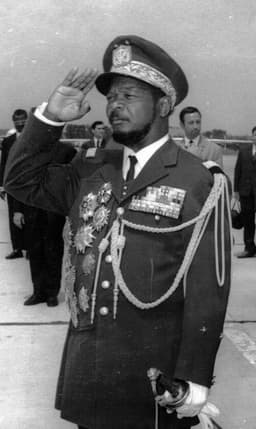
Jean-Bedel Bokassa
Emperor · Modern
39.5Total
Basic Information
Born
1830
1921
Died
1862
—
Era
Modern
Modern
Nationality
Macina Empire
Central African Republic
Occupation
Emperor
Emperor
Civilization
Other
Other
Score Comparison
Military (10%)
46.7
20.0
Political (20%)
45.1
29.3
Influence (20%)
51.0
47.1
Legacy (20%)
40.0
36.7
Leadership (15%)
65.7
45.0
Strategy (15%)
41.7
54.3
TOTAL
48.2
39.5
Amadu Amadu — Complete Timeline
1861 AD
Resistance against Toucouleur ExpansionWar◆ Major
Amadu Amadu led military resistance against the expanding Toucouleur Empire under El Hajj Umar Tall. Despite initial successes, his forces were ultimately overwhelmed by the better-equipped Toucouleur army, leading to the fall of the caliphate.
ResistanceWarToucouleur
Impact: regional
1862 AD
Battle of HamdullahiWar
Amadu Amadu's capital of Hamdullahi was besieged and captured by the Toucouleur Empire forces of El Hajj Umar Tall. The fall of the city marked the end of the independent Macina Caliphate and its incorporation into the Toucouleur Empire.
BattleFall of CapitalToucouleur
Impact: regionaltragic
Death in BattleWar◆ Major
Amadu Amadu was killed during the final defense of Hamdullahi against the forces of El Hajj Umar Tall. His death ended the Diarra dynasty's rule over Macina and marked the end of the independent caliphate.
DeathBattleEnd of Dynasty
Impact: regionaltragic
Jean-Bedel Bokassa — Complete Timeline
1966 AD
Seized Power in Central African Republic CoupPolitical Action◆ Major
Jean-Bédel Bokassa led a military coup against President David Dacko, his cousin. He suspended the constitution, dissolved the National Assembly, and declared himself president, beginning a repressive regime.
Central African RepublicCoupDacko
Impact: nationaldestructive
1976 AD
Proclaimed Emperor of Central AfricaPolitical Action◆ Major
Bokassa declared the Central African Republic a monarchy and crowned himself Emperor Bokassa I in a lavish ceremony costing millions of dollars. The event was modeled on Napoleon's coronation and widely criticized as extravagant.
Central African RepublicMonarchyExtravagance
Impact: nationaldestructive
1979 AD
Overthrown by French Operation BarracudaWar◆ Major
French paratroopers, in Operation Barracuda, overthrew Bokassa while he was in Libya. David Dacko was reinstalled as president. Bokassa went into exile in France and later C
Central African RepublicFrench InterventionExile
Impact: regional
Bangui Student MassacrePolitical Action◆ Major
Bokassa ordered the arrest and killing of schoolchildren protesting compulsory school uniforms. Approximately 100 children were killed, leading to international condemnation and accelerating the end of his regime.
Central African RepublicHuman Rights AbusesMassacre
Impact: nationaltragic
1986 AD
Convicted and Sentenced to DeathPolitical Action◆ Major
Bokassa returned to CAR voluntarily and was put on trial for crimes including murder, cannibalism, and embezzlement. He was convicted and sentenced to death, later commuted to life imprisonment.
Central African RepublicJusticeTrial
Impact: nationalconstructive
Expert Analysis
Origins
Amadu Amadu (born c. 1800s) was the last independent ruler of the Macina Caliphate, a theocratic state in present-day Mali. He belonged to the Diarra dynasty, which had ruled Macina since its founding by his grandfather, Seku Amadu. His early life was shaped by the Islamic scholarly traditions of the Fula people and the political structure of the caliphate. He inherited a state facing internal dissent and external threats from neighboring empires.
Jean-Bedel Bokassa (born 1921) was born in Bobangui, French Ubangi-Shari (now Central African Republic). Orphaned at a young age, he was raised by missionaries and later joined the French colonial army. His military career included service in Indochina and Algeria, which gave him discipline but also exposed him to authoritarian models. His family connection to David Dacko, his cousin, facilitated his rise in the post-independence CAR military.
Rise to Power
Amadu Amadu ascended to power around 1852 after the death of his father, Amadu II. His rule was immediately challenged by the expansionist Toucouleur Empire under El Hajj Umar Tall, who sought to conquer Macina. Amadu Amadu organized resistance, leveraging the caliphate's military resources and alliances with other Fulani states. His rise was thus defensive, centered on preserving independence.
Bokassa seized power in a coup on December 31, 1965, overthrowing his cousin President David Dacko. He suspended the constitution, dissolved the National Assembly, and established a dictatorship. Initially popular for restoring order, he consolidated power through purges and patronage. His rise was opportunistic, using his position as army chief of staff to take control.
Leadership & Governance
Amadu Amadu's leadership focused on defending the Islamic state and its institutions. He maintained the theocratic governance system of Macina, which emphasized Sharia law and religious education. His military strategy was reactive, deploying forces to counter Toucouleur advances. His governance score of 65.7 reflects his ability to maintain cohesion under pressure, but his political score of 45.1 indicates limited administrative innovation.
Bokassa ruled through fear and extravagance. He declared himself Emperor in 1976, spending $20 million on his coronation, which bankrupted the country. He instituted brutal policies, including arbitrary arrests and executions. His leadership score of 45.0 is low due to his erratic and violent style. He scored 29.3 in political, reflecting his failure to build stable institutions.
Triumph & Tragedy
Amadu Amadu's greatest success was holding the Toucouleur forces at bay for several years, scoring 46.7 in military. However, his capital Hamdullahi fell in 1862 after a siege, and he was killed in battle. His death marked the end of the Diarra dynasty and the absorption of Macina into the Toucouleur Empire. His failure to secure external alliances or adapt military tactics proved fatal.
Bokassa's triumphs were short-lived: he initially stabilized CAR after independence. But his regime descended into atrocity, notably the 1979 Bangui student massacre where 100 children were killed. This triggered French intervention (Operation Barracuda) that overthrew him. He was later convicted of murder, cannibalism, and embezzlement, scoring 36.7 in legacy. His total score of 39.5 reflects his catastrophic rule.
Character & Destiny
Amadu Amadu was a devout Muslim leader committed to defending his faith and state. His courage in battle was notable, but his inflexibility in diplomacy and strategy contributed to his downfall. He chose to fight to the death rather than surrender, a decision that sealed his fate. Historians view him as a tragic figure who upheld his principles at the cost of his realm.
Bokassa was grandiose, paranoid, and cruel. His delusions of grandeur led him to emulate Napoleon, but his brutality alienated even his French backers. His character—vindictive and impulsive—directly caused his downfall. The massacre of children turned international opinion against him, and his reliance on French support proved unreliable.
Legacy
Amadu Amadu is remembered as the last independent ruler of Macina, a symbol of resistance against external domination. His legacy score of 40.0 reflects his limited long-term impact, as the caliphate was dismantled. However, he is honored in local traditions as a martyr. His leadership score of 65.7 is the highest among his metrics, indicating his effectiveness in crisis.
Bokassa's legacy is overwhelmingly negative. He is a cautionary tale of African dictatorship, with his excesses studied in political science. His influence score of 47.1 is slightly higher than Amadu's 51.0, but his legacy score of 36.7 is lower. His total score of 39.5 places him below Amadu in historical impact.
Conclusion
While both rulers ended tragically, Amadu Amadu had a greater overall impact with a total score of 48.2 compared to Bokassa's 39.5. Amadu's resistance, though unsuccessful, preserved a cultural and religious identity for a period, while Bokassa's rule brought only suffering and chaos. Amadu's higher leadership (65.7 vs 45.0) and military (46.7 vs 20.0) scores demonstrate more effective governance within his context. Therefore, Amadu Amadu stands as the more significant historical figure.
Rankings
🥇
Amadu AmaduLeader
Mil: 46.7Pol: 45.1Inf: 51.0
48.2
🥈
Jean-Bedel Bokassa
Mil: 20.0Pol: 29.3Inf: 47.1
39.5
+8.7 behind
How This Comparison Works
Algorithm
Each figure is scored on 6 dimensions (0—100 scale) based on structured historical data: Military (10%), Political (20%), Influence (20%), Legacy (20%), Leadership (15%), Strategy (15%). The weighted total produces the final ranking.
Data Sources
Scores are computed from structured sub-indicators in the database. Scale factors adjust for era (Ancient ×0.85, Modern ×1.0) and civilization size (Eastern ×1.05, Other ×0.80) to account for differences in population and military scale.
Maximum 3 Figures
Comparisons are limited to 2—3 figures to ensure readability and statistical meaningfulness.
Error Margins
±5 points per dimension — Sub-scores are derived from historical records with inherent uncertainty. Two figures within 5 points on a dimension should be considered roughly equivalent in that area.
Total Score Accuracy
±3 points overall — The weighted combination of 6 dimensions produces a total score with approximately ±3 points of uncertainty. Differences of less than 3 points are not statistically significant— the figures are effectively tied.
Known Limitations
- Historical records are incomplete and uneven across civilizations
- Figures from oral-tradition societies may be underrepresented
- Occupation labels can misclassify multi-role figures
- Scores measure capability and impact, not moral character
- Quantitative scoring is a comparison tool, not absolute truth
Capability Radar
Military (10%) — Battles & Warfare
Battles
30
5
Win Rate
35
5
Expansion
30
5
Political (20%) — Governance & Reform
Reform
35
10
Diplomacy
30
10
Economy
30
5
Influence (20%) — Cultural & Global Reach
Cultural
30
10
Global
15
10
Legacy (20%) — Historical Impact
Historical
30
15
Longevity
20
5
Leadership (15%) — Power & Stability
Tenure
40
30
Stability
25
5
Strategy (15%) — Tactics & Innovation
Strategy
35
5
Tactics
30
5
Reform
25
5
Similar Comparisons
Comments & Discussion
No comments yet. Be the first to share your thoughts!