Loading...
Alvaro Obregon vs Archibald Wavell
Alvaro Obregon leads by 5.0 pts · 2 figures compared
…

Alvaro Obregon
General · Modern
62.4Total
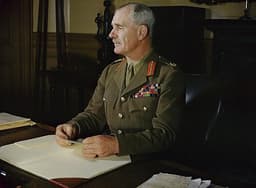
Archibald Wavell
General · Modern
57.4Total
Basic Information
Born
1880
1883
Died
1928
1950
Era
Modern
Modern
Nationality
Mexico
United Kingdom
Occupation
General
General
Civilization
Western
Western
Score Comparison
Military (10%)
82.0
70.0
Political (20%)
55.0
46.6
Influence (20%)
62.0
55.0
Legacy (20%)
56.0
54.0
Leadership (15%)
66.0
71.0
Strategy (15%)
65.4
55.0
TOTAL
62.4
57.4
Alvaro Obregon — Complete Timeline
1915 AD
Battle of CelayaWar
Obregón commanded Constitutionalist forces in a decisive victory over Pancho Villa's Division of the North at Celaya. Using modern trench warfare tactics, he defeated Villa's cavalry, solidifying his reputation as a military strategist and weakening Villa's power.
Mexican RevolutionBattleVilla
Impact: national
1920 AD
Presidency of MexicoPolitical Action◆ Major
Obregón was elected President of Mexico in 1920, serving until 1924. His administration focused on reconstruction after the revolution, implementing land reform, supporting labor unions, and promoting education and cultural nationalism.
PresidencyReconstructionMexican Revolution
Impact: nationalconstructive
1923 AD
Bucareli TreatyPolitical Action◆ Major
Obregón signed the Bucareli Treaty with the United States in 1923, agreeing to compensate American citizens for property losses during the revolution. This agreement secured U.S. diplomatic recognition for his government, stabilizing Mexico's international relations.
TreatyUnited StatesDiplomacy
Impact: national
1928 AD
Re-election and AssassinationPolitical Action
Obregón was re-elected president in 1928 after a constitutional amendment allowed non-consecutive terms. However, he was assassinated on July 17, 1928, by a Catholic radical before taking office, plunging Mexico into a political crisis.
AssassinationRe-electionPolitical Crisis
Impact: nationaltragic
Archibald Wavell — Complete Timeline
1939 AD
Appointed Commander-in-Chief of Middle East CommandOther◆ Major
Wavell was appointed Commander-in-Chief of the Middle East Command in July 1939. He oversaw British forces in Egypt, Sudan, Palestine, and East Africa, preparing for the expected conflict with Italy in North Africa at the outbreak of World War II.
World War IINorth Africa
Impact: national
1940 AD
Launched Operation CompassOther◆ Major
Wavell ordered Operation Compass in December 1940, a British offensive against Italian forces in North Africa. The attack captured 130,000 Italian prisoners, advanced 500 miles into Libya, and destroyed the Italian Tenth Army, achieving the first major Allied land victory of World War II.
World War IINorth AfricaVictory
Impact: nationalconstructive
1941 AD
Defeated Italian Forces in East AfricaOther◆ Major
Wavell's forces conducted a campaign in East Africa from January to May 1941. British, Commonwealth, and Ethiopian troops defeated the Italian army in Eritrea and Ethiopia, capturing 230,000 prisoners and restoring Emperor Haile Selassie to the Ethiopian throne.
World War IIEast AfricaVictory
Impact: nationalconstructive
Relieved of Command in the Middle EastOther◆ Major
Wavell was relieved as Commander-in-Chief of Middle East Command in July 1941 following a series of setbacks, including the failure of Operation Battleaxe to relieve Tobruk and the German capture of Crete. He was replaced by Claude Auchinleck and reassigned to India.
World War IINorth AfricaSetback
Impact: nationaldestructive
1943 AD
Appointed Viceroy of IndiaPolitical Action◆ Major
Wavell was appointed Viceroy and Governor-General of India in October 1943, succeeding Lord Linlithgow. He faced the Bengal famine of 1943, which killed an estimated 2-3 million people, and attempted to negotiate Indian independence with political leaders including Gandhi and Jinnah.
IndiaWorld War IIColonial Administration
Impact: national
Expert Analysis
Origins
Alvaro Obregon was born on February 19, 1880, in Navojoa, Sonora, Mexico, into a poor farming family. He had little formal education but learned practical skills as a farmer and small businessman. His early life was marked by the instability of Porfirio Diaz's dictatorship, which shaped his revolutionary views.
Archibald Wavell was born on May 5, 1883, in Colchester, England, into a military family. He attended Winchester College and the Royal Military College, Sandhurst, receiving a traditional British officer's education. His early career included service in the Second Boer War and World War I, where he lost an eye.
Rise to Power
Obregon rose to prominence during the Mexican Revolution. In 1912, he joined the Constitutionalist forces under Venustiano Carranza. His military talent was evident at the Battle of Celaya in April 1915, where he defeated Pancho Villa's Division of the North using trench warfare and machine guns, scoring a decisive victory (military score 82.0). This made him the leading general of the Constitutionalist faction. In 1920, he led a revolt against Carranza, seized power, and was elected president later that year.
Wavell's rise was more gradual. He served in World War I, earning a reputation as a competent staff officer. In July 1939, he was appointed Commander-in-Chief of Middle East Command, overseeing British forces in Egypt, Sudan, Palestine, and East Africa. His bold decision to launch Operation Compass in December 1940 against Italian forces in North Africa captured 130,000 prisoners and nearly destroyed the Italian Tenth Army, bringing him fame.
Leadership & Governance
Obregon's presidency (1920-1924) focused on reconstruction after the revolution. He implemented land reform, promoting agrarian redistribution, and supported labor rights, but also suppressed opposition. He negotiated the Bucareli Treaty with the United States in 1923, agreeing to compensate American property losses, which stabilized foreign relations. His political score is 55.0, reflecting pragmatism but also authoritarian tendencies.
Wavell's leadership was characterized by caution and strategic thinking. In North Africa, he achieved a stunning victory with limited resources (Operation Compass). However, his failure to exploit success in Greece and his handling of the Western Desert Force led to setbacks, including the failure of Operation Battleaxe. As Viceroy of India (1943-1947), he faced the Bengal famine of 1943, which killed 2-3 million people, and struggled with political negotiations for Indian independence. His political score is 46.6.
Triumph & Tragedy
Obregon's greatest triumph was his military defeat of Villa at Celaya, which secured the Constitutionalist victory. As president, he stabilized Mexico and implemented reforms. His tragedy was his assassination on July 17, 1928, shortly after being re-elected, which plunged Mexico into political crisis.
Wavell's triumph was Operation Compass, a brilliant campaign that destroyed Italian forces in North Africa. His tragedy was being relieved of command in July 1941 after setbacks in Greece and Crete, and his tenure as Viceroy was marred by the Bengal famine and failure to resolve India's political future.
Character & Destiny
Obregon was pragmatic, ruthless, and politically astute. He used military force to achieve power but also understood the need for compromise, as seen in the Bucareli Treaty. His ambition and lack of a clear succession plan led to his assassination.
Wavell was reserved, intellectual, and cautious. He was an excellent strategist but lacked the political acumen to navigate higher command. His character led to underappreciation by Churchill, who relieved him. His destiny was to be overshadowed by more aggressive commanders.
Legacy
Obregon's legacy is mixed. He is remembered as a key figure in the Mexican Revolution who helped consolidate the post-revolutionary state. His land reforms and labor policies influenced later administrations. However, his authoritarian methods and assassination left a volatile political environment. His overall influence score is 62.0 and legacy 56.0.
Wavell's legacy is as a capable but unlucky commander. He is credited with early victories in North Africa that prevented Axis domination. His tenure in India is often criticized for the famine, but he laid groundwork for eventual independence. His influence score is 55.0 and legacy 54.0.
Conclusion
Alvaro Obregon had a greater impact than Archibald Wavell. His military victories and presidency shaped Mexico's trajectory for decades, despite his short time in power. Wavell's achievements, while significant, were more limited in scope and undone by later failures. Obregon's total score of 62.4 exceeds Wavell's 57.4, reflecting his higher military, political, and influence scores. He was a transformative figure in Mexican history, whereas Wavell was a competent commander in a losing strategic situation.
Rankings
🥇
Alvaro ObregonLeader
Mil: 82.0Pol: 55.0Inf: 62.0
62.4
🥈
Archibald Wavell
Mil: 70.0Pol: 46.6Inf: 55.0
57.4
+5.0 behind
How This Comparison Works
Algorithm
Each figure is scored on 6 dimensions (0—100 scale) based on structured historical data: Military (10%), Political (20%), Influence (20%), Legacy (20%), Leadership (15%), Strategy (15%). The weighted total produces the final ranking.
Data Sources
Scores are computed from structured sub-indicators in the database. Scale factors adjust for era (Ancient ×0.85, Modern ×1.0) and civilization size (Eastern ×1.05, Other ×0.80) to account for differences in population and military scale.
Maximum 3 Figures
Comparisons are limited to 2—3 figures to ensure readability and statistical meaningfulness.
Error Margins
±5 points per dimension — Sub-scores are derived from historical records with inherent uncertainty. Two figures within 5 points on a dimension should be considered roughly equivalent in that area.
Total Score Accuracy
±3 points overall — The weighted combination of 6 dimensions produces a total score with approximately ±3 points of uncertainty. Differences of less than 3 points are not statistically significant— the figures are effectively tied.
Known Limitations
- Historical records are incomplete and uneven across civilizations
- Figures from oral-tradition societies may be underrepresented
- Occupation labels can misclassify multi-role figures
- Scores measure capability and impact, not moral character
- Quantitative scoring is a comparison tool, not absolute truth
Capability Radar
Military (10%) — Battles & Warfare
Battles
75
65
Win Rate
80
60
Expansion
60
50
Political (20%) — Governance & Reform
Reform
70
30
Diplomacy
60
50
Economy
55
20
Influence (20%) — Cultural & Global Reach
Cultural
55
30
Global
45
45
Legacy (20%) — Historical Impact
Historical
60
55
Longevity
50
40
Leadership (15%) — Power & Stability
Tenure
65
55
Stability
50
35
Strategy (15%) — Tactics & Innovation
Strategy
75
75
Tactics
70
70
Reform
65
40
Similar Comparisons
Comments & Discussion
No comments yet. Be the first to share your thoughts!