Loading...
This comparison has not been analyzed yet.
One-time AI generation (~1 minute). Scores and timeline are already available below.
Alphonse Massamba-Debat vs Ralph Gonsalves
Ralph Gonsalves leads by 9.4 pts · 2 figures compared
…
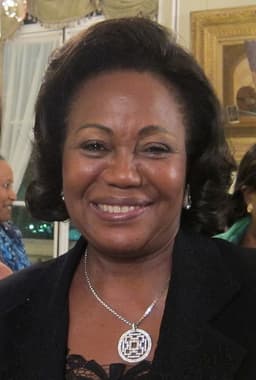
Alphonse Massamba-Debat
Politician · Modern
42.4Total

Ralph Gonsalves
Politician · Modern
51.8Total
Basic Information
Born
1921
1946
Died
—
—
Era
Modern
Modern
Nationality
Congo-Brazzaville
Saint Vincent
Occupation
Politician
Politician
Civilization
Other
Other
Score Comparison
Military (10%)
50.0
41.3
Political (20%)
35.1
68.0
Influence (20%)
48.6
50.2
Legacy (20%)
38.3
40.0
Leadership (15%)
41.5
72.0
Strategy (15%)
42.1
41.1
TOTAL
42.4
51.8
Alphonse Massamba-Debat — Complete Timeline
1963 AD
Elected President of Congo-BrazzavillePolitical Action◆ Major
Massamba-Debat was elected president following the overthrow of Fulbert Youlou. He established a socialist-oriented government and pursued policies of nationalization and one-party rule under the National Revolutionary Movement.
ElectionSocialist GovernmentCongo-Brazzaville
Impact: national
1968 AD
Overthrown and Executed in CoupPolitical Action◆ Major
Massamba-Debat was overthrown in a military coup led by Marien Ngouabi. He was subsequently arrested and executed by firing squad, ending his presidency and marking a shift to Marxist military rule.
CoupExecutionCongo-Brazzaville
Impact: nationaltragic
Ralph Gonsalves — Complete Timeline
2001 AD
Elected Prime Minister of Saint Vincent and the GrenadinesPolitical Action◆ Major
Ralph Gonsalves led the Unity Labour Party to victory in the 2001 general election, becoming prime minister. His leftist policies included social programs and regional integration efforts.
ElectionSaint VincentULP
Impact: nationalconstructive
2002 AD
Implemented Free Education and HealthcareReform◆ Major
Gonsalves introduced free primary and secondary education, as well as subsidized healthcare. These policies expanded access to social services for low-income Vincentians.
Social PolicyEducationHealthcare
Impact: nationalprogressive
2005 AD
Advocated for Regional IntegrationPolitical Action◆ Major
Gonsalves pushed for deeper Caribbean integration, supporting the Caribbean Single Market and Economy (CSME). He argued for regional cooperation on trade and climate change.
CaribbeanIntegrationCSME
Impact: regionalconstructive
2010 AD
Faced Controversy Over Airport ProjectPolitical Action◆ Major
Gonsalves oversaw the construction of the Argyle International Airport, funded partly by Venezuela. Critics raised concerns about debt and corruption, but the airport opened in 2017, boosting tourism.
InfrastructureAirportVenezuela
Impact: national
2015 AD
Won Fourth Consecutive Term in 2015Political Action◆ Major
Gonsalves won a fourth consecutive term in the 2015 general election, a rare feat in Caribbean politics. His continued tenure made him one of the longest-serving leaders in the region.
ElectionSaint VincentULP
Impact: nationalconstructive
This comparison has not been analyzed yet.
One-time AI generation (~1 minute). Scores and timeline are already available below.
Rankings
🥇
Ralph GonsalvesLeader
Mil: 41.3Pol: 68.0Inf: 50.2
51.8
🥈
Alphonse Massamba-Debat
Mil: 50.0Pol: 35.1Inf: 48.6
42.4
+9.4 behind
How This Comparison Works
Algorithm
Each figure is scored on 6 dimensions (0—100 scale) based on structured historical data: Military (10%), Political (20%), Influence (20%), Legacy (20%), Leadership (15%), Strategy (15%). The weighted total produces the final ranking.
Data Sources
Scores are computed from structured sub-indicators in the database. Scale factors adjust for era (Ancient ×0.85, Modern ×1.0) and civilization size (Eastern ×1.05, Other ×0.80) to account for differences in population and military scale.
Maximum 3 Figures
Comparisons are limited to 2—3 figures to ensure readability and statistical meaningfulness.
Error Margins
±5 points per dimension — Sub-scores are derived from historical records with inherent uncertainty. Two figures within 5 points on a dimension should be considered roughly equivalent in that area.
Total Score Accuracy
±3 points overall — The weighted combination of 6 dimensions produces a total score with approximately ±3 points of uncertainty. Differences of less than 3 points are not statistically significant— the figures are effectively tied.
Known Limitations
- Historical records are incomplete and uneven across civilizations
- Figures from oral-tradition societies may be underrepresented
- Occupation labels can misclassify multi-role figures
- Scores measure capability and impact, not moral character
- Quantitative scoring is a comparison tool, not absolute truth
Capability Radar
Military (10%) — Battles & Warfare
Battles
21
21
Win Rate
27
22
Expansion
27
30
Political (20%) — Governance & Reform
Reform
30
55
Diplomacy
25
55
Economy
20
50
Influence (20%) — Cultural & Global Reach
Cultural
15
20
Global
15
20
Legacy (20%) — Historical Impact
Historical
20
20
Longevity
10
20
Leadership (15%) — Power & Stability
Tenure
20
60
Stability
10
50
Strategy (15%) — Tactics & Innovation
Strategy
31
31
Tactics
33
36
Reform
38
36
Similar Comparisons
Comments & Discussion
No comments yet. Be the first to share your thoughts!