Loading...
Ali Bongo Ondimba vs Faure Gnassingbe
Faure Gnassingbe leads by 3.5 pts · 2 figures compared
…
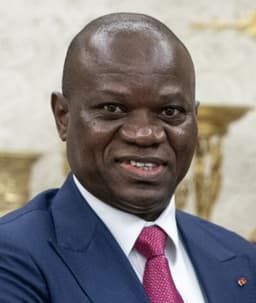
Ali Bongo Ondimba
Politician · Modern
43.7Total

Faure Gnassingbe
Politician · Modern
47.2Total
Basic Information
Born
1959
1966
Died
—
—
Era
Modern
Modern
Nationality
Gabon
Togo
Occupation
Politician
Politician
Civilization
Other
Other
Score Comparison
Military (10%)
48.1
50.0
Political (20%)
32.2
39.4
Influence (20%)
47.9
47.1
Legacy (20%)
37.5
36.7
Leadership (15%)
55.3
74.0
Strategy (15%)
44.0
42.8
TOTAL
43.7
47.2
Ali Bongo Ondimba — Complete Timeline
2009 AD
Elected President of GabonPolitical Action◆ Major
Following the death of his father Omar Bongo, Ali Bongo Ondimba won the presidential election in Gabon. His victory was contested by the opposition, leading to protests and accusations of electoral fraud.
ElectionSuccessionControversy
Impact: national
2018 AD
Suffered StrokeOther◆ Major
Ali Bongo Ondimba suffered a stroke while attending a summit in Saudi Arabia. He spent months abroad recovering, which fueled speculation about his health and ability to govern, leading to a power vacuum and attempted coup in 2019.
Health CrisisPower VacuumSpeculation
Impact: nationaltragic
2023 AD
Overthrown in Coup d'ÉtatPolitical Action
On August 30, 2023, military officers led by General Brice Oligui Nguema announced the overthrow of President Ali Bongo Ondimba. The coup occurred shortly after Bongo was declared winner of a disputed election, ending his 14-year rule.
CoupEnd of RegimeMilitary Takeover
Impact: nationaldestructive
Faure Gnassingbe — Complete Timeline
2005 AD
Became President of Togo After Father's DeathPolitical Action◆ Major
After the death of President Gnassingb
TogoSuccessionConstitutional Crisis
Impact: nationaldestructive
Elected President of TogoPolitical Action◆ Major
Gnassingbé won the presidential election with 60.2% of the vote, though the election was marred by allegations of fraud and violence. He succeeded his father, extending the Eyadéma dynasty's rule.
TogoElectionEyadéma Dynasty
Impact: national
2015 AD
Reelected for Third TermPolitical Action
Gnassingbé won a third presidential term with 58.8% of the vote. The election was boycotted by the opposition and criticized internationally, but Gnassingbé remained in power, continuing his family's long rule.
TogoElectionControversy
Impact: national
Expert Analysis
Origins
Ali Bongo Ondimba was born on February 9, 1959, in Brazzaville, Congo, as Alain Bernard Bongo. He is the son of Omar Bongo, who ruled Gabon from 1967 until his death in 2009. Ali studied law at the Sorbonne in Paris but did not complete a degree. He later attended a military academy in Morocco, though his military service was brief. His early career included serving as a private aide to his father and later as Minister of Foreign Affairs from 1989 to 1991. Faure Gnassingbe was born on June 6, 1966, in Afagnan, Togo, as Faure Essozimna Gnassingbé Eyadéma. He is the son of Gnassingbé Eyadéma, who ruled Togo from 1967 until his death in 2005. Faure studied at the University of Paris-Dauphine, earning a degree in finance, and later an MBA from George Washington University. He worked as a banker in France before entering politics. Both were born into dynastic rule and groomed for succession, but their formative experiences differed: Ali was more sheltered, while Faure had corporate exposure.
Rise to Power
Ali Bongo rose to power after his father's death on June 8, 2009. He won the presidential election on August 30, 2009, with 41.7% of the vote, amid allegations of fraud. The constitutional court validated his victory despite opposition protests. He was sworn in on October 16, 2009. His rise was marked by continuity of the Bongo dynasty. Faure Gnassingbe was thrust into power immediately after his father's death on February 5, 2005. The military, loyal to the Eyadéma family, amended the constitution and appointed Faure as president on February 7, 2005. International pressure forced him to step down, but he won a snap election on April 24, 2005, with 60.2% of the vote. Both succeeded their fathers under controversial circumstances, but Faure's ascension was more overtly military-backed.
Leadership & Governance
Ali Bongo's leadership style was technocratic but distant. He pursued economic diversification through the 'Emerging Gabon' strategy, focusing on infrastructure and mining. However, his governance was criticized for corruption and nepotism. He scored 55.3 in leadership and 44.0 in strategy. He centralized power but failed to address inequality. Faure Gnassingbe scores higher in leadership at 74.0. He has maintained stability through a mix of repression and co-optation. He implemented economic reforms like the 'Togo 2020' plan, improving the business environment. However, political freedoms remain restricted. Both have similar political scores (32.2 vs 39.4), but Faure has shown more strategic adaptability, staying in power since 2005.
Triumph & Tragedy
Ali Bongo's greatest triumph was his 2016 re-election, which he won with 49.8% against Jean Ping. He also hosted the 2012 Africa-South America Summit. His tragedy was the 2023 coup on August 30, 2023, when military officers overthrew him, ending 56 years of Bongo rule. He suffered a stroke in 2018 that weakened his authority. Faure Gnassingbe's triumph is his longevity: he has been president for 19 years, winning elections in 2005, 2010, 2015, and 2020. His tragedy is the democratic deficit: his rule is marked by violent crackdowns, such as the 2005 protests that killed hundreds. He also faced a serious coup attempt in 2008 that was thwarted. Both have mixed legacies of survival and repression.
Character & Destiny
Ali Bongo was perceived as aloof and out of touch. His stroke in 2018 exacerbated his health issues, leading to a power vacuum. His character—reclusive and reliant on a small circle—contributed to his downfall. Faure Gnassingbe is more pragmatic and ruthless. He has skillfully managed the military and opposition, but his authoritarian tendencies have isolated him internationally. Historically, Faure is seen as a survivor, while Ali is seen as a failed heir. Faure's leadership score of 74.0 reflects his ability to maintain power, whereas Ali's 55.3 indicates weaker control.
Legacy
Ali Bongo's legacy is the end of the Bongo dynasty. His overthrow demonstrated the fragility of dynastic rule in Africa. The coup in Gabon may inspire other movements. Faure Gnassingbe's legacy is still unfolding. He has the third-longest tenure in Africa. His rule has seen economic growth but political stagnation. If he eventually falls, his legacy will be similar to his father's: long but repressive. The scores reflect this: Ali scores 37.5 in legacy, Faure 36.7—nearly equal.
Conclusion
Faure Gnassingbe has had a greater impact than Ali Bongo Ondimba. Despite scoring only 3.5 points higher overall (47.2 vs 43.7), Faure's political survival and influence are more substantial. Ali Bongo's rule ended abruptly, whereas Faure continues to shape Togo. Faure's higher leadership score (74.0 vs 55.3) and political maneuvering have allowed him to outlast his counterpart. However, neither has left a positive democratic legacy. The comparison shows that dynastic leaders in Africa can persist if they maintain military support and strategic flexibility, as Faure did, but collapse if they lose control, as Ali did. Faure's impact is greater because he has endured longer and navigated crises more effectively.
Rankings
🥇
Faure GnassingbeLeader
Mil: 50.0Pol: 39.4Inf: 47.1
47.2
🥈
Ali Bongo Ondimba
Mil: 48.1Pol: 32.2Inf: 47.9
43.7
+3.5 behind
How This Comparison Works
Algorithm
Each figure is scored on 6 dimensions (0—100 scale) based on structured historical data: Military (10%), Political (20%), Influence (20%), Legacy (20%), Leadership (15%), Strategy (15%). The weighted total produces the final ranking.
Data Sources
Scores are computed from structured sub-indicators in the database. Scale factors adjust for era (Ancient ×0.85, Modern ×1.0) and civilization size (Eastern ×1.05, Other ×0.80) to account for differences in population and military scale.
Maximum 3 Figures
Comparisons are limited to 2—3 figures to ensure readability and statistical meaningfulness.
Error Margins
±5 points per dimension — Sub-scores are derived from historical records with inherent uncertainty. Two figures within 5 points on a dimension should be considered roughly equivalent in that area.
Total Score Accuracy
±3 points overall — The weighted combination of 6 dimensions produces a total score with approximately ±3 points of uncertainty. Differences of less than 3 points are not statistically significant— the figures are effectively tied.
Known Limitations
- Historical records are incomplete and uneven across civilizations
- Figures from oral-tradition societies may be underrepresented
- Occupation labels can misclassify multi-role figures
- Scores measure capability and impact, not moral character
- Quantitative scoring is a comparison tool, not absolute truth
Capability Radar
Military (10%) — Battles & Warfare
Battles
21
24
Win Rate
24
23
Expansion
30
29
Political (20%) — Governance & Reform
Reform
15
20
Diplomacy
30
40
Economy
20
30
Influence (20%) — Cultural & Global Reach
Cultural
10
10
Global
15
10
Legacy (20%) — Historical Impact
Historical
15
10
Longevity
10
10
Leadership (15%) — Power & Stability
Tenure
40
60
Stability
10
25
Strategy (15%) — Tactics & Innovation
Strategy
31
33
Tactics
34
32
Reform
35
36
Similar Comparisons
Comments & Discussion
No comments yet. Be the first to share your thoughts!