Loading...
This comparison has not been analyzed yet.
One-time AI generation (~1 minute). Scores and timeline are already available below.
Ali Amin Gandapur vs Joyce Banda
Joyce Banda leads by 6.9 pts · 2 figures compared
…

Ali Amin Gandapur
Politician · Modern
35.3Total
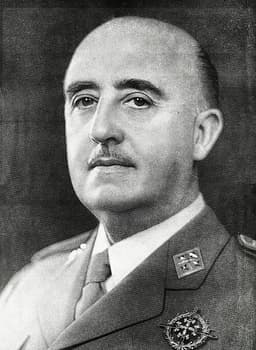
Joyce Banda
Politician · Modern
42.2Total
Basic Information
Born
1972
1950
Died
—
—
Era
Modern
Modern
Nationality
Pakistan
Malawi
Occupation
Politician
Politician
Civilization
Indian
Other
Score Comparison
Military (10%)
22.6
12.2
Political (20%)
26.4
39.4
Influence (20%)
46.3
53.3
Legacy (20%)
35.0
42.5
Leadership (15%)
34.6
45.0
Strategy (15%)
35.8
43.4
TOTAL
35.3
42.2
Ali Amin Gandapur — Complete Timeline
2018 AD
Appointed Federal Minister for Kashmir AffairsPolitical Action
Ali Amin Gandapur was appointed as the Federal Minister for Kashmir Affairs and Gilgit-Baltistan in the PTI government. His tenure focused on development projects in the region, but he faced criticism for lack of progress.
Federal MinisterKashmirPTI
Impact: nationalconstructive
2023 AD
Arrested on Corruption ChargesPolitical Action◆ Major
Gandapur was arrested by the National Accountability Bureau on charges of corruption and assets beyond means. His arrest was part of a broader crackdown on PTI leaders following the party's protests.
ArrestCorruptionNAB
Impact: nationaltragic
Led Protests Against Federal GovernmentPolitical Action
Gandapur led PTI protests in Khyber Pakhtunkhwa against the federal government's policies, including demands for early elections. His fiery speeches and activism made him a prominent opposition figure.
ProtestsPTIOpposition
Impact: regionaldestructive
2024 AD
Elected Chief Minister of Khyber PakhtunkhwaPolitical Action◆ Major
Gandapur became the Chief Minister of Khyber Pakhtunkhwa after the PTI won the provincial elections. His election was seen as a continuation of PTI's influence in the province, despite the party's national setbacks.
Chief MinisterKhyber PakhtunkhwaPTI
Impact: regionalconstructive
Joyce Banda — Complete Timeline
2009 AD
Became Vice President of MalawiPolitical Action◆ Major
Joyce Banda was elected Vice President of Malawi as running mate to President Bingu wa Mutharika. She served in this role until Mutharika's death in 2012.
Vice PresidencyElection
Impact: national
2010 AD
Expelled from Democratic Progressive PartyPolitical Action◆ Major
Banda was expelled from the DPP after she refused to support President Mutharika's plan to make his brother Peter Mutharika his successor. She subsequently formed her own party, the People's Party.
Political SplitParty Formation
Impact: national
2012 AD
Became President of MalawiPolitical Action
Following President Bingu wa Mutharika's sudden death, Banda assumed the presidency, becoming Malawi's first female president. Her succession was initially contested by Mutharika's cabinet but ultimately upheld.
PresidencyGenderSuccession
Impact: nationalprogressive
Sold Presidential Jet and Luxury CarsPolitical Action◆ Major
Banda sold the presidential jet and a fleet of luxury cars, using the proceeds to fund development projects. This act was widely praised as a symbol of austerity and anti-corruption.
AusterityAnti-Corruption
Impact: nationalconstructive
2014 AD
Lost Presidential ElectionPolitical Action◆ Major
Banda lost the presidential election to Peter Mutharika, coming third with 20% of the vote. The election was marred by allegations of fraud, and Banda challenged the results in court but was unsuccessful.
ElectionDefeat
Impact: national
This comparison has not been analyzed yet.
One-time AI generation (~1 minute). Scores and timeline are already available below.
Rankings
🥇
Joyce BandaLeader
Mil: 12.2Pol: 39.4Inf: 53.3
42.2
🥈
Ali Amin Gandapur
Mil: 22.6Pol: 26.4Inf: 46.3
35.3
+6.9 behind
How This Comparison Works
Algorithm
Each figure is scored on 6 dimensions (0—100 scale) based on structured historical data: Military (10%), Political (20%), Influence (20%), Legacy (20%), Leadership (15%), Strategy (15%). The weighted total produces the final ranking.
Data Sources
Scores are computed from structured sub-indicators in the database. Scale factors adjust for era (Ancient ×0.85, Modern ×1.0) and civilization size (Eastern ×1.05, Other ×0.80) to account for differences in population and military scale.
Maximum 3 Figures
Comparisons are limited to 2—3 figures to ensure readability and statistical meaningfulness.
Error Margins
±5 points per dimension — Sub-scores are derived from historical records with inherent uncertainty. Two figures within 5 points on a dimension should be considered roughly equivalent in that area.
Total Score Accuracy
±3 points overall — The weighted combination of 6 dimensions produces a total score with approximately ±3 points of uncertainty. Differences of less than 3 points are not statistically significant— the figures are effectively tied.
Known Limitations
- Historical records are incomplete and uneven across civilizations
- Figures from oral-tradition societies may be underrepresented
- Occupation labels can misclassify multi-role figures
- Scores measure capability and impact, not moral character
- Quantitative scoring is a comparison tool, not absolute truth
Capability Radar
Military (10%) — Battles & Warfare
Battles
25
26
Win Rate
29
31
Expansion
32
30
Political (20%) — Governance & Reform
Reform
20
30
Diplomacy
15
35
Economy
10
25
Influence (20%) — Cultural & Global Reach
Cultural
10
30
Global
5
30
Legacy (20%) — Historical Impact
Historical
5
35
Longevity
5
20
Leadership (15%) — Power & Stability
Tenure
15
20
Stability
5
15
Strategy (15%) — Tactics & Innovation
Strategy
33
35
Tactics
37
38
Reform
38
39
Similar Comparisons
Comments & Discussion
No comments yet. Be the first to share your thoughts!