Loading...
Alfonso VII of Leon vs Magnus IV of Sweden
Alfonso VII of Leon leads by 17.5 pts · 2 figures compared
…
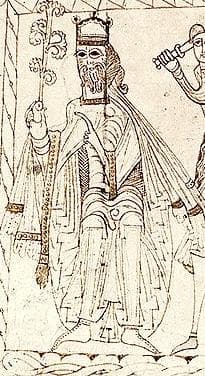
Alfonso VII of Leon
Emperor · Medieval
55.8Total
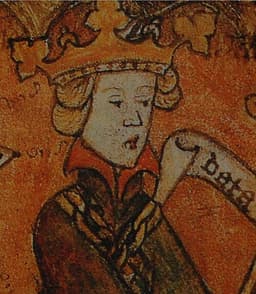
Magnus IV of Sweden
Emperor · Medieval
38.3Total
Basic Information
Born
1105
1316
Died
1157
1374
Era
Medieval
Medieval
Nationality
Leon
Sweden
Occupation
Emperor
Emperor
Civilization
Western
Western
Score Comparison
Military (10%)
72.5
21.2
Political (20%)
68.0
30.8
Influence (20%)
58.0
47.9
Legacy (20%)
48.3
37.5
Leadership (15%)
40.0
41.5
Strategy (15%)
57.5
39.6
TOTAL
55.8
38.3
Alfonso VII of Leon — Complete Timeline
1135 AD
Coronation as Emperor of All SpainPolitical Action◆ Major
Alfonso VII was crowned Emperor of All Spain in the Cathedral of Leon, claiming imperial authority over all Christian and Muslim rulers in the Iberian Peninsula. This coronation asserted Leon's supremacy over Castile, Aragon, and Navarre.
CoronationImperial TitleLeon
Impact: regionalconstructive
1147 AD
Conquest of AlmeriaWar◆ Major
Alfonso VII led a coalition of Leon, Castile, Genoese, and Pisan forces to capture the wealthy Moorish port city of Almeria. The conquest opened the Mediterranean to Christian trade and was a major victory in the Reconquista.
ReconquistaConquestAlmeria
Impact: regionalconstructive
1151 AD
Treaty of TudejénPolitical Action
Alfonso VII signed the Treaty of Tudej
TreatyReconquistaPartition
Impact: regionalconstructive
1157 AD
Death and Division of the KingdomPolitical Action◆ Major
Alfonso VII died, dividing his kingdom between his sons: Sancho III received Castile and Ferdinand II received Leon. This division reversed the union achieved by his father and weakened Christian power in Iberia.
SuccessionDivisionLeonCastile
Impact: regionaldestructive
Magnus IV of Sweden — Complete Timeline
1319 AD
Coronation as King of SwedenPolitical Action◆ Major
Magnus IV was crowned King of Sweden at the age of three, succeeding his grandfather Birger Magnusson. His minority led to a regency council ruling Sweden until he came of age.
CoronationMinority Rule
Impact: national
Union of Sweden and NorwayPolitical Action◆ Major
Magnus IV inherited the throne of Norway from his grandfather Haakon V, becoming king of both Sweden and Norway. This personal union united the two kingdoms under a single monarch for the first time.
UnionPersonal Union
Impact: regionalconstructive
1364 AD
Deposition by Swedish noblesPolitical Action◆ Major
Magnus IV was deposed by Swedish nobles led by Albert of Mecklenburg, who was elected king. Magnus was forced into exile in Norway, ending his rule over Sweden after 45 years.
DepositionNoble Revolt
Impact: nationaltragic
1374 AD
Death in exileOther
Magnus IV died in exile in Norway after being shipwrecked off the coast of Bergen. His death marked the end of the Swedish-Norwegian personal union, as Norway passed to his son Haakon VI.
DeathExile
Impact: nationaltragic
Expert Analysis
Origins
Alfonso VII of Leon was born on March 1, 1105, in Toledo, the son of Urraca of Leon and Raymond of Burgundy. He was raised in a tumultuous political environment, with his mother struggling to maintain control over her kingdoms. Alfonso's early life was shaped by the conflict between his parents and the nobility. He received a thorough education in military and governance, preparing him for his future role.
Magnus IV of Sweden was born in 1316, the son of Duke Erik Magnusson and Ingeborg of Norway. His father was murdered when Magnus was young, and he was raised under the regency of his grandfather, King Birger of Sweden. Magnus became king at the age of three after Birger's death, and his minority was marked by noble factions vying for control. His upbringing was heavily influenced by the regency council and his mother's political ambitions.
Rise to Power
Alfonso VII's rise began in 1126 when he was recognized as king of Leon and Castile after his mother's death. He faced opposition from his stepfather, Alfonso the Battler, and rebellious nobles. In 1135, he was crowned Emperor of All Spain in the Cathedral of Leon, a title that asserted his supremacy over all Christian and Muslim rulers in Iberia. This coronation was a turning point, as it symbolized his claim to lead the Reconquista and unite the peninsula.
Magnus IV was crowned King of Sweden in 1319 at age three, with a regency council ruling until he came of age. In 1319, he also inherited the throne of Norway from his grandfather Haakon V, creating a personal union between Sweden and Norway. This union was a significant achievement, as it united the two kingdoms under a single monarch. Magnus assumed full control in 1332, but his reign was plagued by conflicts with the nobility and the Church.
Leadership & Governance
Alfonso VII's leadership style was pragmatic and coalition-building. He led campaigns against the Moors, such as the conquest of Almeria in 1147, where he partnered with Genoese and Pisan forces. His governance focused on consolidating his authority through the Treaty of Tudején (1151) with Ramon Berenguer IV, dividing future conquests. He also strengthened the church and promoted the pilgrimage route to Santiago de Compostela.
Magnus IV's governance was marked by conflict. He attempted to centralize power but faced strong opposition from the Swedish nobility, who resented his pro-Norwegian policies. His leadership was indecisive, and he often compromised with the nobles, weakening his authority. His military score of 21.2 reflects his lack of success in campaigns, particularly against the Danes and the Teutonic Knights.
Triumph & Tragedy
Alfonso VII's greatest triumph was the conquest of Almeria in 1147, a major Moorish port that opened Mediterranean trade. His coronation as emperor was also a symbolic high point. However, his greatest failure was the division of his kingdom upon his death in 1157, splitting Leon and Castile between his sons, which reversed the unification he had achieved. His legacy score of 48.3 reflects this fragmentation.
Magnus IV's triumph was the union of Sweden and Norway, which lasted from 1319 to 1343. This personal union was a rare achievement in Scandinavian history. His tragedy was his deposition in 1364 by Swedish nobles, who elected Albert of Mecklenburg as king. Magnus died in exile in Norway in 1374 after a shipwreck, ending the union. His political score of 30.8 underscores his inability to maintain power.
Character & Destiny
Alfonso VII was ambitious and strategic, with a score of 57.5 in strategy. He was a skilled diplomat, forming alliances with Genoa and Pisa. His character was determined, but his decision to divide his kingdom proved fatal to his legacy. Historians note that he overestimated his sons' ability to cooperate.
Magnus IV was passive and relied on regents and nobles. His leadership score of 41.5 suggests he lacked the decisiveness needed to rule. His character was shaped by his youth and dependence on others, leading to his downfall. His total score of 38.3 reflects his ineffectiveness.
Legacy
Alfonso VII's legacy is mixed. He revived the imperial title in Spain and expanded Christian territory, but his division of the kingdom set back unification for decades. His influence score of 58.0 shows his impact on Iberian politics. The Treaty of Tudején shaped later conquests.
Magnus IV's legacy is primarily the union of Sweden and Norway, which was brief and did not last. His deposition set a precedent for noble power in Sweden. His influence score of 47.9 is modest. He is often remembered as a weak king who lost his throne.
Conclusion
Alfonso VII had a greater impact than Magnus IV. His military and political scores (72.5 and 68.0) far exceed Magnus's (21.2 and 30.8). Alfonso expanded Christian Iberia and asserted imperial authority, while Magnus failed to maintain his union and was deposed. Despite Alfonso's division of his kingdom, his achievements in the Reconquista and diplomacy overshadow Magnus's short-lived union. The score gap of 17.5 points supports this. Alfonso VII is the more significant historical figure.
Rankings
🥇
Alfonso VII of LeonLeader
Mil: 72.5Pol: 68.0Inf: 58.0
55.8
🥈
Magnus IV of Sweden
Mil: 21.2Pol: 30.8Inf: 47.9
38.3
+17.5 behind
How This Comparison Works
Algorithm
Each figure is scored on 6 dimensions (0—100 scale) based on structured historical data: Military (10%), Political (20%), Influence (20%), Legacy (20%), Leadership (15%), Strategy (15%). The weighted total produces the final ranking.
Data Sources
Scores are computed from structured sub-indicators in the database. Scale factors adjust for era (Ancient ×0.85, Modern ×1.0) and civilization size (Eastern ×1.05, Other ×0.80) to account for differences in population and military scale.
Maximum 3 Figures
Comparisons are limited to 2—3 figures to ensure readability and statistical meaningfulness.
Error Margins
±5 points per dimension — Sub-scores are derived from historical records with inherent uncertainty. Two figures within 5 points on a dimension should be considered roughly equivalent in that area.
Total Score Accuracy
±3 points overall — The weighted combination of 6 dimensions produces a total score with approximately ±3 points of uncertainty. Differences of less than 3 points are not statistically significant— the figures are effectively tied.
Known Limitations
- Historical records are incomplete and uneven across civilizations
- Figures from oral-tradition societies may be underrepresented
- Occupation labels can misclassify multi-role figures
- Scores measure capability and impact, not moral character
- Quantitative scoring is a comparison tool, not absolute truth
Capability Radar
Military (10%) — Battles & Warfare
Battles
55
15
Win Rate
60
10
Expansion
65
5
Political (20%) — Governance & Reform
Reform
50
30
Diplomacy
60
25
Economy
45
20
Influence (20%) — Cultural & Global Reach
Cultural
45
15
Global
35
10
Legacy (20%) — Historical Impact
Historical
50
20
Longevity
40
15
Leadership (15%) — Power & Stability
Tenure
65
40
Stability
50
10
Strategy (15%) — Tactics & Innovation
Strategy
55
10
Tactics
50
10
Reform
40
5
Similar Comparisons
Comments & Discussion
No comments yet. Be the first to share your thoughts!