Loading...
Alfonso VII of Leon vs Henry VI
Alfonso VII of Leon leads by 3.7 pts · 2 figures compared
…
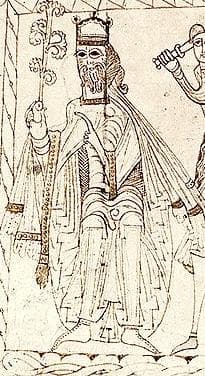
Alfonso VII of Leon
Emperor · Medieval
55.8Total

Henry VI
Emperor · Medieval
52.1Total
Basic Information
Born
1105
1165
Died
1157
1197
Era
Medieval
Medieval
Nationality
Leon
Holy Roman Empire
Occupation
Emperor
Emperor
Civilization
Western
Western
Score Comparison
Military (10%)
72.5
45.0
Political (20%)
68.0
48.0
Influence (20%)
58.0
54.1
Legacy (20%)
48.3
44.2
Leadership (15%)
40.0
65.7
Strategy (15%)
57.5
60.0
TOTAL
55.8
52.1
Alfonso VII of Leon — Complete Timeline
1135 AD
Coronation as Emperor of All SpainPolitical Action◆ Major
Alfonso VII was crowned Emperor of All Spain in the Cathedral of Leon, claiming imperial authority over all Christian and Muslim rulers in the Iberian Peninsula. This coronation asserted Leon's supremacy over Castile, Aragon, and Navarre.
CoronationImperial TitleLeon
Impact: regionalconstructive
1147 AD
Conquest of AlmeriaWar◆ Major
Alfonso VII led a coalition of Leon, Castile, Genoese, and Pisan forces to capture the wealthy Moorish port city of Almeria. The conquest opened the Mediterranean to Christian trade and was a major victory in the Reconquista.
ReconquistaConquestAlmeria
Impact: regionalconstructive
1151 AD
Treaty of TudejénPolitical Action
Alfonso VII signed the Treaty of Tudej
TreatyReconquistaPartition
Impact: regionalconstructive
1157 AD
Death and Division of the KingdomPolitical Action◆ Major
Alfonso VII died, dividing his kingdom between his sons: Sancho III received Castile and Ferdinand II received Leon. This division reversed the union achieved by his father and weakened Christian power in Iberia.
SuccessionDivisionLeonCastile
Impact: regionaldestructive
Henry VI — Complete Timeline
1190 AD
Election as King of GermanyPolitical Action◆ Major
Henry VI was elected King of Germany in 1190 following the death of his father Frederick Barbarossa. He succeeded without opposition, inheriting a powerful Hohenstaufen realm.
SuccessionHohenstaufen Dynasty
Impact: regional
1191 AD
Coronation as Holy Roman EmperorPolitical Action◆ Major
Pope Celestine III crowned Henry VI Holy Roman Emperor in Rome on April 15, 1191. The coronation was delayed due to tensions with the Papacy over Henry's claims in Sicily.
CoronationImperial Authority
Impact: regionalconstructive
1192 AD
Capture of Richard the LionheartPolitical Action◆ Major
Henry VI captured King Richard I of England in December 1192 near Vienna and held him for ransom. Richard was released in 1194 after payment of a huge ransom, which Henry used to fund his Sicilian campaign.
RansomRichard IDiplomacy
Impact: regional
1194 AD
Conquest of SicilyWar
Henry VI conquered the Kingdom of Sicily in 1194 after the death of King Tancred. He was crowned King of Sicily in Palermo on December 25, 1194, uniting the island with the Empire and creating a vast Mediterranean domain.
ConquestSicilyTerritorial Expansion
Impact: regional
1195 AD
Plan for a World EmpirePolitical Action
Henry VI proposed a plan to make the Empire hereditary and to launch a crusade to conquer the Byzantine Empire. The plan failed due to opposition from German princes and Henry's sudden death in 1197.
Imperial AmbitionCrusade
Impact: regional
Expert Analysis
Origins
Alfonso VII was born on March 1, 1105, in Toledo, the son of Urraca of León and Raymond of Burgundy. He inherited a fragmented realm from his mother, who struggled to control the kingdom. His early years were marked by civil war between his mother and his stepfather, Alfonso the Battler of Aragon. Alfonso VII's education was overseen by the Archbishop of Toledo, and he was groomed for kingship from a young age. He grew up amid constant conflict, shaping his military and political instincts.
Henry VI was born in November 1165 in Nijmegen, the eldest son of Frederick Barbarossa and Beatrice of Burgundy. He was raised in the Hohenstaufen court, receiving a knightly education and exposure to imperial politics. His father's ambitions for a strong, centralized empire influenced Henry's worldview. He was elected King of Germany at age 4 and later crowned co-emperor. His upbringing was steeped in the ideals of Roman imperial revival.
Rise to Power
Alfonso VII rose to power after the death of his mother, Queen Urraca, in 1126. He immediately faced rebellions from nobles and conflicts with his stepfather. He asserted his authority by defeating the rebellious counts and securing the loyalty of key cities. In 1135, he was crowned Emperor of All Spain in the Cathedral of León, a title that claimed supremacy over all Christian and Muslim rulers in Iberia. This coronation was a turning point, solidifying his status as the leading Christian monarch in Spain.
Henry VI's rise was more structured. He was elected King of Germany in 1190 upon his father's death, inheriting a powerful realm. His coronation as Holy Roman Emperor by Pope Celestine III occurred on April 15, 1191, but was delayed due to disputes over the Kingdom of Sicily. Henry's key turning point was the conquest of Sicily in 1194, which gave him control of a wealthy kingdom and a Mediterranean power base. His capture of King Richard the Lionheart in 1192 further boosted his prestige and finances.
Leadership & Governance
Alfonso VII ruled through a combination of military campaigns and diplomatic treaties. He maintained the unity of León and Castile through personal authority, but his governance was decentralized, relying on local nobles. He promoted the Reconquista, leading campaigns against Muslim taifas. He signed the Treaty of Tudején (1151) with Ramon Berenguer IV, dividing future conquests, showing pragmatic diplomacy. However, his decision to divide his kingdom between his sons upon his death weakened his legacy.
Henry VI was an ambitious, centralized ruler. He aimed to make the Holy Roman Empire hereditary and to conquer the Byzantine Empire, a plan that failed due to noble opposition. He ruled Sicily with a firm hand, imposing taxes and centralizing administration. His capture of Richard the Lionheart demonstrated his strategic use of hostages. Politically, he scored 48.0, lower than Alfonso's 68.0, indicating less effective governance. Henry's military score of 45.0 also lags behind Alfonso's 72.5, reflecting Alfonso's active role in battles.
Triumph & Tragedy
Alfonso VII's greatest triumph was the conquest of Almería in 1147, a wealthy Moorish port. He led a coalition including Genoese and Pisan forces, opening the Mediterranean to Christian trade. However, the city was lost again in 1157, a setback. His greatest tragedy was the division of his kingdom after his death, which reversed the union of León and Castile and led to internal strife. His legacy score of 48.3 reflects this fragmentation.
Henry VI's triumph was the conquest of Sicily in 1194, uniting the kingdom with the Empire. He also captured Richard I, securing a massive ransom. His tragedy was the failure of his grand plan for a world empire and a hereditary monarchy, which crumbled due to noble resistance and his early death at age 32. His legacy score of 44.2 is slightly lower than Alfonso's.
Character & Destiny
Alfonso VII was a pragmatic, determined ruler who sought to expand Christian territory. His character was shaped by the constant warfare of the Reconquista. He was capable of coalition-building but lacked foresight in succession planning. His destiny was to be remembered as a unifier who ultimately divided his realm. Historians note his effective use of the imperial title to assert dominance.
Henry VI was ambitious and ruthless, as seen in his treatment of Richard and his Sicilian subjects. His character was driven by a vision of universal monarchy, but his overreach led to opposition. His early death cut short his plans. He is often seen as a capable but flawed emperor whose ambitions exceeded his reach.
Legacy
Alfonso VII's legacy is primarily as a key figure in the Reconquista and the only Spanish emperor. His conquests set the stage for later Christian advances, but his division of the kingdom weakened León and Castile for generations. He is remembered as a strong military leader but a flawed statesman.
Henry VI's legacy includes the consolidation of Hohenstaufen power in Sicily and the precedent of capturing a king for ransom. His plans for a world empire influenced later imperial ambitions. However, his early death and the subsequent collapse of Hohenstaufen rule limit his long-term impact.
Conclusion
Alfonso VII had a greater impact than Henry VI. His military achievements (72.5 vs 45.0) and political skills (68.0 vs 48.0) were superior. While Henry's ambitions were grander, Alfonso's actions directly shaped the Reconquista and Iberian politics for centuries. Henry's plans died with him, while Alfonso's conquests, even if temporary, advanced Christian Spain. The total score difference of 3.7 points (55.8 vs 52.1) reflects Alfonso's edge, but the qualitative analysis confirms his larger historical footprint. Alfonso VII, the Emperor of All Spain, achieved more concrete results than Henry VI, whose grand vision remained unfulfilled.
Rankings
🥇
Alfonso VII of LeonLeader
Mil: 72.5Pol: 68.0Inf: 58.0
55.8
🥈
Henry VI
Mil: 45.0Pol: 48.0Inf: 54.1
52.1
+3.7 behind
How This Comparison Works
Algorithm
Each figure is scored on 6 dimensions (0—100 scale) based on structured historical data: Military (10%), Political (20%), Influence (20%), Legacy (20%), Leadership (15%), Strategy (15%). The weighted total produces the final ranking.
Data Sources
Scores are computed from structured sub-indicators in the database. Scale factors adjust for era (Ancient ×0.85, Modern ×1.0) and civilization size (Eastern ×1.05, Other ×0.80) to account for differences in population and military scale.
Maximum 3 Figures
Comparisons are limited to 2—3 figures to ensure readability and statistical meaningfulness.
Error Margins
±5 points per dimension — Sub-scores are derived from historical records with inherent uncertainty. Two figures within 5 points on a dimension should be considered roughly equivalent in that area.
Total Score Accuracy
±3 points overall — The weighted combination of 6 dimensions produces a total score with approximately ±3 points of uncertainty. Differences of less than 3 points are not statistically significant— the figures are effectively tied.
Known Limitations
- Historical records are incomplete and uneven across civilizations
- Figures from oral-tradition societies may be underrepresented
- Occupation labels can misclassify multi-role figures
- Scores measure capability and impact, not moral character
- Quantitative scoring is a comparison tool, not absolute truth
Capability Radar
Military (10%) — Battles & Warfare
Battles
55
45
Win Rate
60
40
Expansion
65
65
Political (20%) — Governance & Reform
Reform
50
40
Diplomacy
60
50
Economy
45
45
Influence (20%) — Cultural & Global Reach
Cultural
45
30
Global
35
35
Legacy (20%) — Historical Impact
Historical
50
40
Longevity
40
25
Leadership (15%) — Power & Stability
Tenure
65
55
Stability
50
30
Strategy (15%) — Tactics & Innovation
Strategy
55
50
Tactics
50
35
Reform
40
30
Similar Comparisons
Comments & Discussion
No comments yet. Be the first to share your thoughts!