Loading...
Alexios II Komnenos vs Yagbeu Seyon
Alexios II Komnenos leads by 4.8 pts · 2 figures compared
…
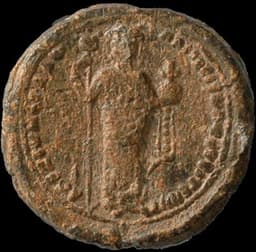
Alexios II Komnenos
Emperor · Medieval
48.2Total

Yagbeu Seyon
Emperor · Medieval
43.4Total
Basic Information
Born
1169
1258
Died
1183
1294
Era
Medieval
Medieval
Nationality
Byzantine Empire
Ethiopia
Occupation
Emperor
Emperor
Civilization
Western
Other
Score Comparison
Military (10%)
11.6
21.2
Political (20%)
68.0
35.1
Influence (20%)
60.0
50.2
Legacy (20%)
42.5
41.7
Leadership (15%)
45.0
62.2
Strategy (15%)
44.2
36.8
TOTAL
48.2
43.4
Alexios II Komnenos — Complete Timeline
1171 AD
Accession as co-emperorPolitical Action
Alexios II was crowned co-emperor alongside his father Manuel I Komnenos at the age of two. This was a dynastic move to secure the succession, but left the empire in the hands of regents after Manuel's death in 1180.
SuccessionDynastic Politics
Impact: national
1183 AD
Murder by Andronikos I KomnenosPolitical Action◆ Major
Alexios II was strangled to death in Constantinople on the orders of his cousin Andronikos I Komnenos. Andronikos had seized power as regent and then co-emperor, and eliminated the 14-year-old Alexios to secure his own rule, ending the direct Komnenian line.
AssassinationDynastic ConflictRegency
Impact: nationaltragic
Yagbeu Seyon — Complete Timeline
1280 AD
Supported the Ethiopian Orthodox ChurchCultural◆ Major
Yagbeu Seyon granted land and privileges to the Ethiopian Orthodox Church, strengthening its institutional power. His patronage helped consolidate the Solomonic dynasty's religious legitimacy and fostered the church's role in governance.
Church patronageSolomonic consolidationReligious policy
Impact: regionalconstructive
Expert Analysis
Alexios II Komnenos vs Yagbeu Seyon
Alexios II Komnenos vs Yagbeu Seyon: Historical Comparison
Comparing a Byzantine child emperor who ruled for three years and was murdered at fourteen with an Ethiopian Solomonic monarch who reigned for nearly a decade and died naturally presents an immediate challenge: how does one evaluate a life that barely began against one that reached a measure of fulfillment? The scoring system gives Alexios II a narrow edge (48 to 43), a verdict that seems counterintuitive until one examines what these scores actually measure — not personal achievement, but historical significance and the weight of the worlds these figures inhabited.
The Child Emperor of Byzantium
Alexios II Komnenos was born in 1169 into the most glittering court in Christendom. His father, Manuel I Komnenos, was the last great ruler of the Komnenian dynasty, a warrior-emperor who had fought Seljuk Turks, Hungarians, and Normans, and who dreamed of restoring the Roman Empire to its ancient glory. When Manuel crowned the infant Alexios as co-emperor in 1171, it seemed to herald a smooth dynastic succession. But Manuel died in 1180, leaving the 11-year-old Alexios under the regency of his Latin mother, Maria of Antioch.
The regency was a disaster. Maria's Western origins and her favoritism toward Latin merchants inflamed anti-Latin sentiment in Constantinople. Within two years, Manuel's cousin Andronikos Komnenos — a charismatic and utterly ruthless adventurer in his sixties — exploited this discontent to seize power. He entered Constantinople in 1182 with an army, unleashed a massacre of the city's Latin population, and installed himself as regent. By 1183, he had forced the young emperor to sign his own mother's death warrant, then had Alexios himself strangled and his body thrown into the sea.
Alexios II never governed, never commanded an army, never made a decision of consequence. His Political score of 68 is the great anomaly of this comparison — it reflects not his own ability but the institutional weight of the Komnenian imperial office at its peak. The scoring system, in effect, credits him with the power he nominally held rather than the power he actually exercised. This is a defensible approach — the Byzantine Empire under Manuel I was still a great power, and the throne Alexios inherited was one of the most prestigious in the medieval world — but it produces a score that bears little relationship to the boy's actual historical agency.
The Ethiopian Monarch
Yagbeu Seyon, who ruled Ethiopia from approximately 1285 to 1294, presents a study in contrast. Where Alexios was a passive victim, Yagbeu Seyon was an active patron of the Ethiopian Orthodox Church, granting lands and privileges that strengthened the Solomonic dynasty's religious legitimacy. The Solomonic dynasty, restored in 1270 after the overthrow of the Zagwe, needed exactly this kind of ecclesiastical alliance-building to consolidate its rule. Yagbeu Seyon's support for the Church was not merely piety — it was state-building.
Yet Yagbeu Seyon's scores are consistently lower than Alexios's: Military 21 to 12, Political 35 to 68, Influence 50 to 60. The gap in Political scores is particularly striking and reflects the same institutional logic that inflates Alexios's numbers. The Ethiopian state in the late 13th century, while significant in its regional context, was a fraction of the size, wealth, and complexity of the Byzantine Empire. The office of the Ethiopian emperor, while sacred in the Solomonic tradition, did not carry the same institutional weight as the office of the Byzantine basileus.
This raises a fundamental question about the scoring methodology: should a figure be rewarded for the power of the institution they happen to inherit? Yagbeu Seyon did more with his reign — he governed, he built, he strengthened his dynasty's foundations — but Alexios II scores higher because of what Byzantium was, not because of what Alexios did.
Mortality and Memory
The Legacy dimension adds another layer: Alexios scores 43 to Yagbeu Seyon's 42 — essentially identical. This near-tie reflects that neither figure is widely remembered outside specialist circles. Alexios II is a footnote in Byzantine history, remembered mainly for his pitiful death. Yagbeu Seyon is one of many Solomonic emperors whose reigns are recorded in Ethiopian chronicles but who left few monuments that survive today.
What distinguishes them is the manner of their deaths and what those deaths meant. Alexios II's murder by Andronikos I marked the beginning of the end for the Komnenian dynasty. Andronikos's reign was so brutal and unstable that it provoked the Norman invasion of 1185 and his own overthrow and gruesome death. Within two decades, Constantinople would fall to the Fourth Crusade (1204), an event from which Byzantium never fully recovered. Alexios's death was thus symbolically significant — it signaled the collapse of the Komnenian order.
Yagbeu Seyon's death, by contrast, was unremarkable — he died naturally around 1294 and was succeeded by a series of short-lived Solomonic rulers. His dynasty survived, and Ethiopia remained an independent Christian kingdom through the medieval period, unique in Africa.
Conclusion
The 48-43 score favoring Alexios II Komnenos over Yagbeu Seyon is a product of Byzantine exceptionalism — the scoring system's tendency to credit figures from larger, more complex civilizations with higher baseline scores. Whether this is justifiable depends on one's philosophy of history. If historical significance is about the weight of the world you inhabit, then a Byzantine emperor, even a child victim, outranks an Ethiopian monarch. If it is about what you actually accomplish with the time you are given, then Yagbeu Seyon deserves the higher score. The data, as always, tells both stories at once.
Rankings
🥇
Alexios II KomnenosLeader
Mil: 11.6Pol: 68.0Inf: 60.0
48.2
🥈
Yagbeu Seyon
Mil: 21.2Pol: 35.1Inf: 50.2
43.4
+4.8 behind
How This Comparison Works
Algorithm
Each figure is scored on 6 dimensions (0—100 scale) based on structured historical data: Military (10%), Political (20%), Influence (20%), Legacy (20%), Leadership (15%), Strategy (15%). The weighted total produces the final ranking.
Data Sources
Scores are computed from structured sub-indicators in the database. Scale factors adjust for era (Ancient ×0.85, Modern ×1.0) and civilization size (Eastern ×1.05, Other ×0.80) to account for differences in population and military scale.
Maximum 3 Figures
Comparisons are limited to 2—3 figures to ensure readability and statistical meaningfulness.
Error Margins
±5 points per dimension — Sub-scores are derived from historical records with inherent uncertainty. Two figures within 5 points on a dimension should be considered roughly equivalent in that area.
Total Score Accuracy
±3 points overall — The weighted combination of 6 dimensions produces a total score with approximately ±3 points of uncertainty. Differences of less than 3 points are not statistically significant— the figures are effectively tied.
Known Limitations
- Historical records are incomplete and uneven across civilizations
- Figures from oral-tradition societies may be underrepresented
- Occupation labels can misclassify multi-role figures
- Scores measure capability and impact, not moral character
- Quantitative scoring is a comparison tool, not absolute truth
Capability Radar
Military (10%) — Battles & Warfare
Battles
5
10
Win Rate
8
10
Expansion
11
10
Political (20%) — Governance & Reform
Reform
0
30
Diplomacy
0
30
Economy
0
30
Influence (20%) — Cultural & Global Reach
Cultural
0
30
Global
0
10
Legacy (20%) — Historical Impact
Historical
5
30
Longevity
0
20
Leadership (15%) — Power & Stability
Tenure
5
40
Stability
0
40
Strategy (15%) — Tactics & Innovation
Strategy
17
10
Tactics
17
10
Reform
21
10
Similar Comparisons
Comments & Discussion
ByzantineBuff7/7/2026
The Political score of 68 for a 14-year-old who never made a single decision is absurd. That's not a score for Alexios II, it's a score for the Byzantine imperial office. The methodology needs to separate institutional power from personal capability.
AddisHistorian7/7/2026
Yagbeu Seyon deserves more credit than he gets here. The Solomonic restoration was only 15 years old when he took the throne — it could easily have collapsed. His church patronage helped stabilize the dynasty for centuries. That's real legacy, not just inherited prestige.
中世纪迷7/7/2026
阿莱克修斯二世的悲剧在于他根本没有机会证明自己。14岁就被自己的表叔勒死,尸体扔进大海——这种结局本身就让他成为了历史的象征。分值高不是因为他做了什么,而是因为他代表的东西在历史上太重要了。
SkepticalScholar7/7/2026
Honestly, comparing these two is a stretch. Neither was a consequential ruler. The 48-43 score is within the margin of error. Move on to figures who actually changed history.