Loading...
Alexios I Komnenos vs Timur
Alexios I Komnenos leads by 12.8 pts · 2 figures compared
…
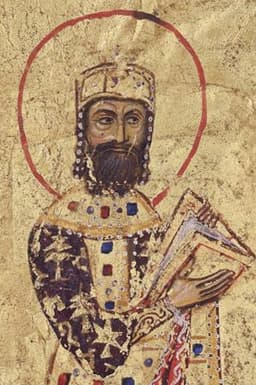
Alexios I Komnenos
Emperor · Medieval
78.4Total
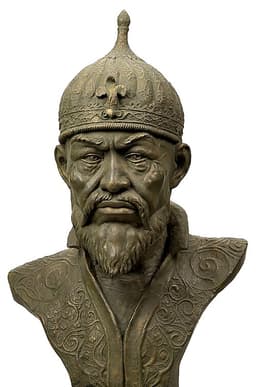
Timur
Emperor · Medieval
65.6Total
Basic Information
Born
1048
1336
Died
1118
1405
Era
Medieval
Medieval
Nationality
Byzantine Empire
Timurid Empire
Occupation
Emperor
Emperor
Civilization
Western
Middle Eastern
Score Comparison
Military (10%)
61.7
79.0
Political (20%)
78.0
70.0
Influence (20%)
88.0
70.0
Legacy (20%)
80.0
40.0
Leadership (15%)
78.0
79.8
Strategy (15%)
68.0
77.6
TOTAL
78.4
65.6
Alexios I Komnenos — Complete Timeline
1081 AD
Battle of DyrrhachiumWar◆ Major
Alexios I Komnenos was defeated by the Norman army under Robert Guiscard at Dyrrhachium. The Byzantine forces were routed, and Alexios barely escaped. This loss allowed the Normans to occupy much of the western Balkans, though Alexios later recovered some territory.
Norman InvasionDefeatBalkans
Impact: regionaltragic
1090 AD
Reforms of the Byzantine Military and EconomyReform◆ Major
Alexios I implemented a series of reforms to restore Byzantine power. He reorganized the army by relying more on foreign mercenaries, reformed the currency (the hyperpyron), and granted tax exemptions to the Church. These measures stabilized the empire after decades of decline.
Military ReformEconomic ReformKomnenian Restoration
Impact: nationalconstructive
1095 AD
Appeal to the West: Council of PiacenzaPolitical Action
Alexios I sent envoys to Pope Urban II at the Council of Piacenza, requesting military aid against the Seljuk Turks. This appeal contributed to Urban's call for the First Crusade at the Council of Clermont later that year, initiating the Crusader movement.
First CrusadePope Urban IISeljuk Turks
Impact: global
1097 AD
First Crusade: Siege of NicaeaWar◆ Major
Alexios I cooperated with the Crusader army to besiege and capture Nicaea from the Seljuk Turks. The city was surrendered to Byzantine control, and Alexios used the Crusaders to recover key territories in Anatolia, though tensions later arose over land claims.
First CrusadeNicaeaByzantine-Crusader Relations
Impact: regionalconstructive
Timur — Complete Timeline
1362 AD
Battle of the Terek RiverWar
Timur defeated the Mongol ruler of the Chagatai Khanate, establishing his control over Transoxiana. This victory marked the beginning of his rise to power, as he captured Samarkand and declared himself emir.
Rise to PowerBattleCentral Asia
Impact: regional
1387 AD
Conquest of PersiaWar◆ Major
Timur launched a campaign into Persia, capturing Isfahan and Shiraz. He suppressed a revolt in Isfahan by massacring tens of thousands of inhabitants, establishing his reputation for extreme brutality and consolidating control over the region.
ConquestMassacrePersia
Impact: regionaldestructive
1395 AD
Campaign against the Golden HordeWar◆ Major
Timur defeated the Golden Horde under Tokhtamysh at the Battle of the Terek River. He sacked Sarai, the Horde's capital, and destroyed its trade networks, permanently weakening the Mongol state and securing his northern frontier.
ConquestGolden HordeBattle
Impact: regionaldestructive
1398 AD
Sack of DelhiWar◆ Major
Timur invaded the Delhi Sultanate, defeating Sultan Nasir-ud-Din Mahmud Shah Tughluq. His army sacked Delhi, massacring tens of thousands of civilians and destroying the city's infrastructure, then withdrew with immense plunder.
ConquestMassacreIndia
Impact: regionaldestructive
1402 AD
Battle of AnkaraWar
Timur defeated the Ottoman Sultan Bayezid I at Ankara, capturing him. The victory shattered Ottoman power, leading to a civil war among Bayezid's sons and delaying Ottoman expansion into Europe for a decade.
BattleOttoman EmpireDecisive Victory
Impact: global
1404 AD
Construction of SamarkandCultural◆ Major
Timur invested heavily in transforming Samarkand into a cultural and architectural center. He brought artisans from conquered lands to build mosques, madrasas, and the Bibi-Khanym Mosque, making the city a showcase of Timurid art and learning.
ArchitecturePatronageCultural Center
Impact: regionalconstructive
1405 AD
Death during campaign against Ming ChinaWar◆ Major
Timur died of illness while leading a massive army toward the Ming dynasty's borders. His death ended the planned invasion of China and led to the fragmentation of his empire among his sons and grandsons.
DeathCampaignMing Dynasty
Impact: regional
Expert Analysis
Alexios I Komnenos vs Timur
The Conqueror and the Survivor
In the summer of 1402, two empires collided on the plains of Ankara. Timur, the aging Turco-Mongol conqueror, watched as his veteran cavalry encircled the Ottoman army of Sultan Bayezid I. By nightfall, Bayezid was a prisoner in an iron cage, and the Ottoman Empire lay shattered. Half a world away, three centuries earlier, another emperor faced his own moment of annihilation: Alexios I Komnenos, fleeing the battlefield of Dyrrhachium in 1081, his army destroyed by Norman knights, his throne hanging by a thread. One man built his legacy on conquest; the other on survival. Why did Timur’s empire crumble within a generation, while Alexios’s dynasty endured for a century? The answer lies not in their swords, but in their minds.
Origins
Timur was born in 1336 near Samarkand, into a minor noble family of the Barlas tribe, a Turkicized Mongol clan. The son of a sheep rustler, he grew up in the shadow of the Mongol Empire’s collapse, a world of warring khans and shifting loyalties. A childhood injury to his right leg and hand earned him the name “Timur the Lame,” a physical mark that seemed to fuel a burning ambition. His world was one of steppe warfare, where power was seized, not inherited.
Alexios I Komnenos, born in 1048, came from a very different world—the Byzantine aristocracy, a world of court intrigue, Roman law, and Greek learning. His family, the Komnenoi, had produced generals and emperors before. But the Byzantine Empire he inherited in 1081 was a corpse waiting for burial: its treasury empty, its army shattered by the Seljuk Turks at Manzikert a decade earlier, and Norman invaders carving out a kingdom in its western provinces. Alexios was not a steppe warrior; he was a survivor of the palace, a man who understood that power could be built as well as taken.
Rise to Power
Timur’s rise was a masterpiece of ruthless opportunism. In 1362, at the Battle of the Terek River, he defeated the Mongol ruler of the Chagatai Khanate, establishing control over Transoxiana. He did not simply win battles; he forged alliances with nomadic chieftains, married into the family of the great conqueror Genghis Khan, and presented himself as a restorer of Mongol glory. His path was one of constant warfare—against Persia, the Golden Horde, India, and the Ottomans—each campaign feeding the next.
Alexios rose through a coup. In 1081, he led a rebellion against the incompetent Emperor Nikephoros III Botaneiates, seizing Constantinople with the support of his powerful family and the army. But unlike Timur, Alexios understood that his throne was not secure by conquest alone. He immediately faced the Norman invasion under Robert Guiscard, and his defeat at Dyrrhachium in 1081 could have ended him. Yet Alexios did not retreat into isolation; he turned disaster into opportunity, learning from his enemies and adapting.
Leadership & Governance
Here lies the deepest divide. Timur’s leadership was a hammer. He ruled through terror and spectacle: after capturing Isfahan in 1387, he massacred tens of thousands of its inhabitants, stacking their skulls into pyramids. His sack of Delhi in 1398 left the city in ruins, its wealth carried back to Samarkand. His military genius was undeniable—he defeated the Golden Horde at the Terek River in 1395, shattered the Ottomans at Ankara in 1402—but his political wisdom was that of a conqueror who built nothing that could outlast him. His capital, Samarkand, became a cultural jewel under his patronage, but only because he forced artisans from conquered cities to work there. The empire was a tribute machine, not a state.
Alexios governed through diplomacy, reform, and survival. After Dyrrhachium, he reorganized the Byzantine military, relying more on foreign mercenaries and granting land in exchange for military service—a system called *pronoia* that would define Byzantine governance for centuries. He reformed the economy, stabilized the currency, and, most crucially, appealed to the West. At the Council of Piacenza in 1095, he sent envoys to Pope Urban II, requesting aid against the Seljuk Turks. This appeal sparked the First Crusade, which Alexios skillfully manipulated. When the Crusaders besieged Nicaea in 1097, he ensured the city surrendered to his Byzantine officers, not the Western knights. He used the Crusaders as a tool to reclaim Anatolia, then sent them on their way.
Triumph & Tragedy
Timur’s greatest moment was the Battle of Ankara in 1402, where he captured the Ottoman sultan and broke the empire’s power for a decade. His tragedy came three years later, in 1405, when he died of illness while leading a massive army toward the Ming dynasty of China. His invasion plan died with him, and his empire, lacking any succession structure, fragmented into civil war. The man who had conquered from Delhi to Damascus left no stable inheritance.
Alexios’s triumph was not a single battle but a lifetime of survival. He reclaimed the Aegean coast and much of Anatolia from the Turks, restored Byzantine prestige, and founded the Komnenian dynasty that would rule for over a century. His tragedy was the First Crusade itself: the very forces he had summoned turned against him, sacking Constantinople in 1204, long after his death. The seeds of that disaster were planted in his own pragmatism.
Character & Destiny
Timur was a man of iron will and unbending cruelty. His disability seemed to drive a need to prove himself through destruction. He was a patron of learning and architecture, yet his legacy is one of skulls and ashes. “The sword is the key to heaven and hell,” he once said, and he swung it without hesitation.
Alexios was a fox, not a lion. He was cautious, calculating, and deeply pragmatic. His *Alexiad*, written by his daughter Anna Komnena, portrays him as a man constantly aware of his limits, willing to compromise and deceive to preserve his empire. He was not a great warrior, but a great survivor. His personality shaped a reign of consolidation, not conquest.
Legacy
Timur is remembered as a monster and a builder. His empire collapsed within a generation, but his cultural legacy in Samarkand—the Registan, the Bibi-Khanym Mosque—endures. He also inspired the Mughal Empire in India, founded by his descendant Babur. Yet his name is synonymous with devastation.
Alexios is remembered as the savior of Byzantium, the emperor who bought his empire another century of life. His reforms shaped the late Byzantine state, and his appeal to the West changed world history. But he is also blamed for unleashing the Crusades, a force that would eventually consume his own capital.
Conclusion
Timur and Alexios faced the same fundamental question: how to build a legacy that outlasts a single lifetime. Timur answered with conquest, building an empire on fear that dissolved upon his death. Alexios answered with statecraft, building a dynasty on diplomacy and reform that endured for generations. One left pyramids of skulls; the other left a system of governance. In the end, the survivor proved more lasting than the conqueror. History remembers both, but it is Alexios’s lesson—that power is not seized but sustained—that remains the harder, and more enduring, truth.
Rankings
🥇
Alexios I KomnenosLeader
Mil: 61.7Pol: 78.0Inf: 88.0
78.4
🥈
Timur
Mil: 79.0Pol: 70.0Inf: 70.0
65.6
+12.8 behind
How This Comparison Works
Algorithm
Each figure is scored on 6 dimensions (0—100 scale) based on structured historical data: Military (10%), Political (20%), Influence (20%), Legacy (20%), Leadership (15%), Strategy (15%). The weighted total produces the final ranking.
Data Sources
Scores are computed from structured sub-indicators in the database. Scale factors adjust for era (Ancient ×0.85, Modern ×1.0) and civilization size (Eastern ×1.05, Other ×0.80) to account for differences in population and military scale.
Maximum 3 Figures
Comparisons are limited to 2—3 figures to ensure readability and statistical meaningfulness.
Error Margins
±5 points per dimension — Sub-scores are derived from historical records with inherent uncertainty. Two figures within 5 points on a dimension should be considered roughly equivalent in that area.
Total Score Accuracy
±3 points overall — The weighted combination of 6 dimensions produces a total score with approximately ±3 points of uncertainty. Differences of less than 3 points are not statistically significant— the figures are effectively tied.
Known Limitations
- Historical records are incomplete and uneven across civilizations
- Figures from oral-tradition societies may be underrepresented
- Occupation labels can misclassify multi-role figures
- Scores measure capability and impact, not moral character
- Quantitative scoring is a comparison tool, not absolute truth
Capability Radar
Military (10%) — Battles & Warfare
Battles
75
95
Win Rate
70
92
Expansion
60
96
Political (20%) — Governance & Reform
Reform
85
78
Diplomacy
90
70
Economy
70
82
Influence (20%) — Cultural & Global Reach
Cultural
70
88
Global
75
85
Legacy (20%) — Historical Impact
Historical
85
90
Longevity
80
75
Leadership (15%) — Power & Stability
Tenure
80
85
Stability
75
65
Strategy (15%) — Tactics & Innovation
Strategy
85
93
Tactics
80
94
Reform
75
80
Similar Comparisons
Comments & Discussion
草原瘸狼6/16/2026
数据不会撒谎:帖木儿征服了从德里到大马士革的每一座城市,但他的帝国在死后十二年内就缩小了60%;阿莱克修斯在迪拉基乌姆惨败后,丢掉了安纳托利亚西部,但曼努埃尔一世时代帝国领土反而增加了30%。帖木儿的军事效率是惊人的——1402年安卡拉之战仅用一天就歼灭了奥斯曼主力——但他从未建立官僚体系或税收制度。阿莱克修斯虽然输了战役,却赢了战争:他创建了普罗诺亚制,重新武装了海军,最终在1085年收复了亚得里亚海东岸。速度与持久力的对决,答案显而易见。
Chronicler34316/16/2026
Timur’s empire didn’t just fade—it self-destructed because he built a war machine, not a state. Alexios faced a similar crisis at Dyrrhachium and pivoted to diplomacy, taxes, and Komnenian family governance that lasted a century. Timur appointed sons as governors but never a clear succession plan; after his death in 1405, Shah Rukh had to re-conquer half the empire from fractious heirs. Alexios, by contrast, forced his son John II to co-rule from age 24, ensuring stable handover. Coins don’t lie