Loading...
Alexios I Komnenos vs Pachacuti
Alexios I Komnenos leads by 9.0 pts · 2 figures compared
…
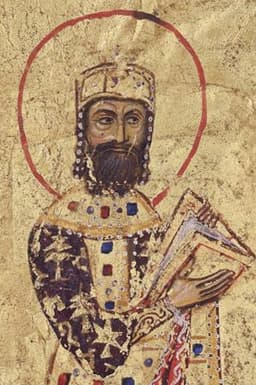
Alexios I Komnenos
Emperor · Medieval
78.4Total
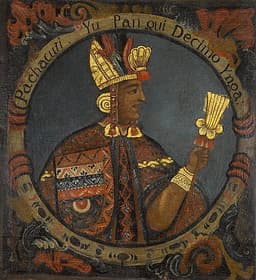
Pachacuti
Emperor · Medieval
69.4Total
Basic Information
Born
1048
1418
Died
1118
1472
Era
Medieval
Medieval
Nationality
Byzantine Empire
Inca Empire
Occupation
Emperor
Emperor
Civilization
Western
Other
Score Comparison
Military (10%)
61.7
78.5
Political (20%)
78.0
58.1
Influence (20%)
88.0
65.0
Legacy (20%)
80.0
72.0
Leadership (15%)
78.0
78.0
Strategy (15%)
68.0
69.2
TOTAL
78.4
69.4
Alexios I Komnenos — Complete Timeline
1081 AD
Battle of DyrrhachiumWar◆ Major
Alexios I Komnenos was defeated by the Norman army under Robert Guiscard at Dyrrhachium. The Byzantine forces were routed, and Alexios barely escaped. This loss allowed the Normans to occupy much of the western Balkans, though Alexios later recovered some territory.
Norman InvasionDefeatBalkans
Impact: regionaltragic
1090 AD
Reforms of the Byzantine Military and EconomyReform◆ Major
Alexios I implemented a series of reforms to restore Byzantine power. He reorganized the army by relying more on foreign mercenaries, reformed the currency (the hyperpyron), and granted tax exemptions to the Church. These measures stabilized the empire after decades of decline.
Military ReformEconomic ReformKomnenian Restoration
Impact: nationalconstructive
1095 AD
Appeal to the West: Council of PiacenzaPolitical Action
Alexios I sent envoys to Pope Urban II at the Council of Piacenza, requesting military aid against the Seljuk Turks. This appeal contributed to Urban's call for the First Crusade at the Council of Clermont later that year, initiating the Crusader movement.
First CrusadePope Urban IISeljuk Turks
Impact: global
1097 AD
First Crusade: Siege of NicaeaWar◆ Major
Alexios I cooperated with the Crusader army to besiege and capture Nicaea from the Seljuk Turks. The city was surrendered to Byzantine control, and Alexios used the Crusaders to recover key territories in Anatolia, though tensions later arose over land claims.
First CrusadeNicaeaByzantine-Crusader Relations
Impact: regionalconstructive
Pachacuti — Complete Timeline
1438 AD
Conquest of the Chanka KingdomWar
Pachacuti led the Inca army to defeat the Chanka, a powerful rival, in a decisive battle near Cusco. This victory secured his position as Sapa Inca and initiated a period of rapid expansion, transforming the Inca from a small kingdom into a vast empire.
ConquestInca ExpansionChanka
Impact: regional
1440 AD
Reconstruction of CuscoCultural◆ Major
Pachacuti rebuilt Cusco as the imperial capital, designing it in the shape of a puma and constructing massive stone structures like Sacsayhuam
Urban PlanningArchitectureInca Empire
Impact: regionalconstructive
1450 AD
Initiation of Machu Picchu's ConstructionCultural◆ Major
Pachacuti ordered the construction of Machu Picchu, a royal estate and ceremonial site high in the Andes. The complex featured sophisticated dry-stone masonry and terraced agriculture, serving as a symbol of Inca engineering and a retreat for the emperor.
ArchitectureRoyal EstateInca Engineering
Impact: regionalconstructive
Expert Analysis
Pachacuti vs Alexios I Komnenos
### The Puma and the Cross
In the high, thin air of the Andes, a man who called himself the “Shaker of the Earth” was reshaping a mountain into a city of white granite, a celestial estate for a sun-god emperor. Across the world, on the shores of the Bosphorus, another emperor, pale and exhausted, watched a horde of ragged, holy warriors stream past his palace walls—men he had summoned, but whom he could never truly control. One built an empire from stone and blood; the other fought to keep a dying world alive. Both were called emperor, but their paths, their triumphs, and their tragedies could not have been more different. How did two rulers of the same medieval century end up with such divergent fates? The answer lies not just in their actions, but in the very nature of the worlds they inherited.
### Origins: The Son of the Sun and the General of a Ghost
Pachacuti, born in 1418, was not meant to be emperor. The ninth son of the Sapa Inca, he was a prince of a modest kingdom, a small state in a valley surrounded by powerful enemies. His world was young, expanding, and deeply superstitious. When the Chanka nation attacked Cusco in 1438, the ruling Inca fled. It was Pachacuti, then a prince, who refused to run. He rallied the desperate defenders, claiming divine favor from the sun god Inti. His stunning victory was not just a military triumph; it was a religious mandate. He was reborn as Pachacuti, the “Cataclysm,” and his rise was a story of pure, volcanic will.
Alexios I Komnenos, born in 1048, was a product of a world far older and more brittle. The Byzantine Empire was a magnificent ghost, the last ember of Rome, rich in gold and memory but bankrupt in power. A career general from a noble but not ruling family, Alexios grew up in a court of endless intrigue, watching the empire lose Anatolia to the Seljuk Turks and its treasury to corrupt officials. He was no divine shaker of the earth; he was a pragmatist, a survivor in a game where the rules were written in Greek and blood. He seized the throne in 1081 not through a miracle, but through a military coup, a desperate act to save a drowning empire.
### Rise to Power: The Miracle and the Coup
Pachacuti’s path was forged in a single, decisive battle. The Chanka war was a turning point that defined his entire reign. He did not merely win; he annihilated his enemy, then turned his army outward in a relentless wave of conquest. His legitimacy was absolute, born from the mud and blood of a near-death experience. Every victory afterward was proof that the Sun God smiled upon him.
Alexios’s rise was messier. His coup succeeded, but his first major test as emperor was the Battle of Dyrrhachium in 1081. It was a catastrophe. The Norman warlord Robert Guiscard crushed the Byzantine army, and Alexios barely escaped with his life. Unlike Pachacuti, who never lost a major battle, Alexios began his reign with a humiliating defeat. He could not claim divine favor; he could only claim grim necessity. His power was not a gift from heaven, but a loan from the army and the aristocracy, a loan he would spend his entire life trying to pay back.
### Leadership & Governance: The Builder and the Barterer
As rulers, their styles were a study in contrasts. Pachacuti was a creator. After conquest, he did not just tax; he transformed. He rebuilt Cusco in the shape of a sacred puma, a massive stone city that still baffles engineers. He initiated the construction of Machu Picchu around 1450, a royal estate that was as much a spiritual statement as a political one. He imposed a single language, Quechua, and a single religion. His reforms were top-down, absolute, and breathtakingly ambitious. He was an artist of empire, carving a world out of a mountain.
Alexios was a restorer, a firefighter in a burning house. His reforms, beginning around 1090, were a series of patchwork solutions. He couldn’t build a new capital; he had to defend an old one. He couldn’t impose a single faith; he had to navigate a schism between Rome and Constantinople. His greatest innovation was desperation: he reorganized the army by relying on foreign mercenaries and feudal grants, trading long-term stability for short-term survival. His political genius lay in his ability to barter—with the church, with the nobility, and most famously, with the West.
That barter led to the defining event of his reign: the appeal to Pope Urban II at the Council of Piacenza in 1095. Alexios asked for a few thousand mercenaries to fight the Turks. Instead, he unleashed the First Crusade. In 1097, at the Siege of Nicaea, he played a masterful game, cooperating with the Crusader army to retake the city, then ensuring it surrendered to him, not them. It was a brilliant tactical victory, but it sowed the seeds of future disaster. He had opened a door he could never close.
### Triumph & Tragedy: The Apex and the Abyss
Pachacuti’s greatest moment was his entire life. He died in 1472 as the undisputed master of the largest empire in the pre-Columbian Americas. His tragedy was not personal; it was historical. He built an empire so rigidly centralized, so dependent on the divine authority of the Sapa Inca, that when the Spanish arrived fifty years later, the entire system collapsed. His very success created a brittle world, one that could not adapt to a threat it could not comprehend.
Alexios’s triumph was survival. He held the empire together for thirty-seven years, driving back the Normans, the Pechenegs, and the Seljuks. He founded the Komnenian dynasty, which would restore Byzantine prestige for a century. But his tragedy was the Crusade. The armies he summoned sacked Constantinople in 1204, a disaster that permanently crippled Byzantium. Alexios died in 1118, before he could see his own salvation become his legacy’s poison.
### Character & Destiny: The Visionary and the Pragmatist
Pachacuti was a visionary who believed he was a god. This gave him the confidence to build, to conquer, to dream on a scale no one else dared. But it also made him blind to the limits of his own power. Alexios was a pragmatist who knew he was a man. He saw every alliance as temporary, every victory as fragile. This made him a master of the short game, but it also meant his greatest achievements—the Crusade, the reforms—were built on shaky foundations of compromise and debt.
### Legacy: The Eternal Stone and the Forgotten Debt
Today, Pachacuti’s name is synonymous with the glory of the Inca. Machu Picchu stands as a wonder of the world, a testament to his vision. He is remembered as a builder, a conqueror, a near-mythical figure. Alexios is known to fewer people, often as the emperor who started the Crusades—a mixed legacy at best. Yet his true achievement was more profound: he bought the Byzantine Empire a century of life, a final golden age before the fall.
### Conclusion: Two Kinds of Greatness
One emperor built a world from nothing; the other held a world together with string. Pachacuti’s greatness is visible, carved in stone. Alexios’s greatness is invisible, woven into the fabric of diplomacy and survival. Both were shaped by their eras—the young, hungry world of the Andes and the old, weary world of the Mediterranean. One created a civilization that was destined to be shattered; the other preserved a civilization that was destined to fade. Their stories remind us that history judges not by effort alone, but by the permanence of the mark left behind. And sometimes, the most desperate struggles to hold on are the most heroic of all.
Rankings
🥇
Alexios I KomnenosLeader
Mil: 61.7Pol: 78.0Inf: 88.0
78.4
🥈
Pachacuti
Mil: 78.5Pol: 58.1Inf: 65.0
69.4
+9.0 behind
How This Comparison Works
Algorithm
Each figure is scored on 6 dimensions (0—100 scale) based on structured historical data: Military (10%), Political (20%), Influence (20%), Legacy (20%), Leadership (15%), Strategy (15%). The weighted total produces the final ranking.
Data Sources
Scores are computed from structured sub-indicators in the database. Scale factors adjust for era (Ancient ×0.85, Modern ×1.0) and civilization size (Eastern ×1.05, Other ×0.80) to account for differences in population and military scale.
Maximum 3 Figures
Comparisons are limited to 2—3 figures to ensure readability and statistical meaningfulness.
Error Margins
±5 points per dimension — Sub-scores are derived from historical records with inherent uncertainty. Two figures within 5 points on a dimension should be considered roughly equivalent in that area.
Total Score Accuracy
±3 points overall — The weighted combination of 6 dimensions produces a total score with approximately ±3 points of uncertainty. Differences of less than 3 points are not statistically significant— the figures are effectively tied.
Known Limitations
- Historical records are incomplete and uneven across civilizations
- Figures from oral-tradition societies may be underrepresented
- Occupation labels can misclassify multi-role figures
- Scores measure capability and impact, not moral character
- Quantitative scoring is a comparison tool, not absolute truth
Capability Radar
Military (10%) — Battles & Warfare
Battles
75
85
Win Rate
70
90
Expansion
60
90
Political (20%) — Governance & Reform
Reform
85
92
Diplomacy
90
75
Economy
70
80
Influence (20%) — Cultural & Global Reach
Cultural
70
85
Global
75
65
Legacy (20%) — Historical Impact
Historical
85
80
Longevity
80
70
Leadership (15%) — Power & Stability
Tenure
80
85
Stability
75
82
Strategy (15%) — Tactics & Innovation
Strategy
85
88
Tactics
80
80
Reform
75
85
Similar Comparisons
Comments & Discussion
No comments yet. Be the first to share your thoughts!