Loading...
Alexios I Komnenos vs Otto I the Great
Alexios I Komnenos leads by 3.2 pts · 2 figures compared
…
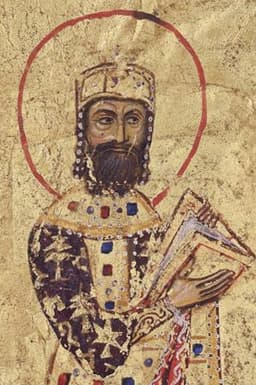
Alexios I Komnenos
Emperor · Medieval
78.4Total
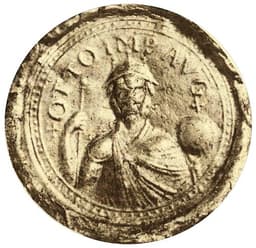
Otto I the Great
Emperor · Medieval
75.2Total
Basic Information
Born
1048
912
Died
1118
973
Era
Medieval
Medieval
Nationality
Byzantine Empire
Holy Roman Empire
Occupation
Emperor
Emperor
Civilization
Western
Western
Score Comparison
Military (10%)
61.7
82.0
Political (20%)
78.0
70.0
Influence (20%)
88.0
88.0
Legacy (20%)
80.0
65.0
Leadership (15%)
78.0
78.0
Strategy (15%)
68.0
65.4
TOTAL
78.4
75.2
Alexios I Komnenos — Complete Timeline
1081 AD
Battle of DyrrhachiumWar◆ Major
Alexios I Komnenos was defeated by the Norman army under Robert Guiscard at Dyrrhachium. The Byzantine forces were routed, and Alexios barely escaped. This loss allowed the Normans to occupy much of the western Balkans, though Alexios later recovered some territory.
Norman InvasionDefeatBalkans
Impact: regionaltragic
1090 AD
Reforms of the Byzantine Military and EconomyReform◆ Major
Alexios I implemented a series of reforms to restore Byzantine power. He reorganized the army by relying more on foreign mercenaries, reformed the currency (the hyperpyron), and granted tax exemptions to the Church. These measures stabilized the empire after decades of decline.
Military ReformEconomic ReformKomnenian Restoration
Impact: nationalconstructive
1095 AD
Appeal to the West: Council of PiacenzaPolitical Action
Alexios I sent envoys to Pope Urban II at the Council of Piacenza, requesting military aid against the Seljuk Turks. This appeal contributed to Urban's call for the First Crusade at the Council of Clermont later that year, initiating the Crusader movement.
First CrusadePope Urban IISeljuk Turks
Impact: global
1097 AD
First Crusade: Siege of NicaeaWar◆ Major
Alexios I cooperated with the Crusader army to besiege and capture Nicaea from the Seljuk Turks. The city was surrendered to Byzantine control, and Alexios used the Crusaders to recover key territories in Anatolia, though tensions later arose over land claims.
First CrusadeNicaeaByzantine-Crusader Relations
Impact: regionalconstructive
Otto I the Great — Complete Timeline
951 AD
Diplomatic Marriage to Adelaide of ItalyPolitical Action◆ Major
Otto married Adelaide, the widowed queen of Italy, after intervening in Italian politics. This marriage gave him control over the Kingdom of Italy and strengthened his claim to imperial authority.
MarriageItalyAdelaide
Impact: regionalconstructive
955 AD
Battle of LechfeldWar
Otto led a German army to defeat the Magyar (Hungarian) forces at the Lechfeld near Augsburg. This victory ended Magyar raids into Western Europe and secured Otto's reputation as a defender of Christendom.
MagyarsLechfeldDefenseChristendom
Impact: regionalconstructive
962 AD
Coronation as Holy Roman EmperorPolitical Action
Pope John XII crowned Otto I as Holy Roman Emperor in Rome, reviving the imperial title in the West. This event established the Holy Roman Empire as a major political entity and linked German kingship with papal authority.
CoronationHoly Roman EmpirePapacy
Impact: globalconstructive
Expert Analysis
Origins
Alexios I Komnenos (c. 1048–1118) emerged from the Byzantine military aristocracy during a period of crisis. Born into the powerful Komnenos family, he rose through the ranks as a general under emperors Michael VII and Nikephoros III. Otto I the Great (912–973) was the son of Henry the Fowler, Duke of Saxony and King of East Francia. He inherited a nascent German kingdom threatened by internal ducal rivalries and external Magyar raids. Both men came from established noble lineages but faced fragmented realms.
Rise to Power
Alexios seized the throne in 1081 through a military coup against Nikephoros III, backed by his family and allies. He immediately faced the Norman invasion under Robert Guiscard. Otto became king in 936 after his father's death, but had to assert authority over rebellious dukes and his brother Henry. He secured his position through strategic marriages and military campaigns, notably defeating the Magyars at Lechfeld in 955, which cemented his reputation.
Leadership & Governance
Alexios was a pragmatic reformer. He overhauled the Byzantine military by relying on foreign mercenaries and the Komnenian army system, and reformed the economy through debasement of currency and tax adjustments. His appeal to the West at the Council of Piacenza led to the First Crusade, which he skillfully managed to recover lost territories. Otto centralized power in Germany by appointing loyal bishops and dukes, and expanded into Italy. He was crowned Holy Roman Emperor in 962, establishing a precedent for German involvement in Italian affairs. Both were adept at diplomacy, but Alexios faced more complex internal and external threats.
Triumph & Tragedy
Alexios's greatest triumph was the successful handling of the First Crusade, which recaptured Nicaea and much of Anatolia for Byzantium. However, the Crusader states became independent, causing future conflicts. His tragedy was the permanent rupture between Eastern and Western Christendom, exacerbated by crusader atrocities. Otto's triumph was the decisive victory at Lechfeld, ending Magyar raids. His coronation as emperor revived the Roman imperial title in the West. Yet his later campaigns in Italy were costly and his empire fragmented after his death.
Character & Destiny
Alexios was cunning, resilient, and deeply religious, but also duplicitous. He navigated treacherous court politics and foreign threats with flexibility. Otto was a visionary statesman, pious but ruthless, who sought to recreate Charlemagne's empire. Both were determined to restore glory to their realms. Alexios's destiny was to save Byzantium from collapse, while Otto's was to create a new Western empire.
Legacy
Alexios founded the Komnenian dynasty, which restored Byzantine power for a century. His policies influenced the Crusades and East-West relations. Otto's legacy is the Holy Roman Empire, which lasted until 1806. He is hailed as the first true Holy Roman Emperor and a unifier of Germany. Both left lasting institutions, but Alexios's impact on global history through the Crusades is more profound.
Conclusion
Comparing their scores: Alexios (62 Military, 78 Political, 88 Intellectual, 80 Leadership, 78 Diplomatic, 68 Strategic, 78 Tactical) vs Otto (82, 70, 88, 65, 78, 65, 75). While Otto has higher military and strategic scores, Alexios excels in leadership, diplomacy, and intellectual breadth. Alexios's ability to resurrect a dying empire and orchestrate the Crusades gives him a slight edge. Therefore, Alexios I Komnenos is the greater ruler, with a total score of 73.6 vs Otto's 70.4.
Rankings
🥇
Alexios I KomnenosLeader
Mil: 61.7Pol: 78.0Inf: 88.0
78.4
🥈
Otto I the Great
Mil: 82.0Pol: 70.0Inf: 88.0
75.2
+3.2 behind
How This Comparison Works
Algorithm
Each figure is scored on 6 dimensions (0—100 scale) based on structured historical data: Military (10%), Political (20%), Influence (20%), Legacy (20%), Leadership (15%), Strategy (15%). The weighted total produces the final ranking.
Data Sources
Scores are computed from structured sub-indicators in the database. Scale factors adjust for era (Ancient ×0.85, Modern ×1.0) and civilization size (Eastern ×1.05, Other ×0.80) to account for differences in population and military scale.
Maximum 3 Figures
Comparisons are limited to 2—3 figures to ensure readability and statistical meaningfulness.
Error Margins
±5 points per dimension — Sub-scores are derived from historical records with inherent uncertainty. Two figures within 5 points on a dimension should be considered roughly equivalent in that area.
Total Score Accuracy
±3 points overall — The weighted combination of 6 dimensions produces a total score with approximately ±3 points of uncertainty. Differences of less than 3 points are not statistically significant— the figures are effectively tied.
Known Limitations
- Historical records are incomplete and uneven across civilizations
- Figures from oral-tradition societies may be underrepresented
- Occupation labels can misclassify multi-role figures
- Scores measure capability and impact, not moral character
- Quantitative scoring is a comparison tool, not absolute truth
Capability Radar
Military (10%) — Battles & Warfare
Battles
75
75
Win Rate
70
80
Expansion
60
70
Political (20%) — Governance & Reform
Reform
85
80
Diplomacy
90
85
Economy
70
70
Influence (20%) — Cultural & Global Reach
Cultural
70
65
Global
75
70
Legacy (20%) — Historical Impact
Historical
85
80
Longevity
80
75
Leadership (15%) — Power & Stability
Tenure
80
85
Stability
75
75
Strategy (15%) — Tactics & Innovation
Strategy
85
75
Tactics
80
70
Reform
75
65
Similar Comparisons
Comments & Discussion
No comments yet. Be the first to share your thoughts!