Loading...
Alexios I Komnenos vs King Taejo of Goryeo
Alexios I Komnenos leads by 8.3 pts · 2 figures compared
…
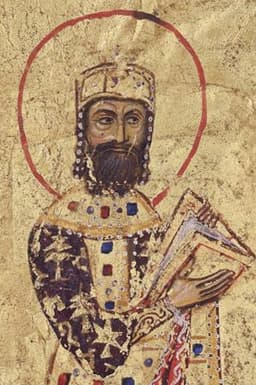
Alexios I Komnenos
Emperor · Medieval
78.4Total
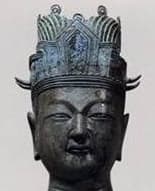
King Taejo of Goryeo
Emperor · Medieval
70.1Total
Basic Information
Born
1048
877
Died
1118
943
Era
Medieval
Medieval
Nationality
Byzantine Empire
Korea
Occupation
Emperor
Emperor
Civilization
Western
Eastern
Score Comparison
Military (10%)
61.7
78.0
Political (20%)
78.0
72.0
Influence (20%)
88.0
65.0
Legacy (20%)
80.0
65.0
Leadership (15%)
78.0
82.0
Strategy (15%)
68.0
67.2
TOTAL
78.4
70.1
Alexios I Komnenos — Complete Timeline
1081 AD
Battle of DyrrhachiumWar◆ Major
Alexios I Komnenos was defeated by the Norman army under Robert Guiscard at Dyrrhachium. The Byzantine forces were routed, and Alexios barely escaped. This loss allowed the Normans to occupy much of the western Balkans, though Alexios later recovered some territory.
Norman InvasionDefeatBalkans
Impact: regionaltragic
1090 AD
Reforms of the Byzantine Military and EconomyReform◆ Major
Alexios I implemented a series of reforms to restore Byzantine power. He reorganized the army by relying more on foreign mercenaries, reformed the currency (the hyperpyron), and granted tax exemptions to the Church. These measures stabilized the empire after decades of decline.
Military ReformEconomic ReformKomnenian Restoration
Impact: nationalconstructive
1095 AD
Appeal to the West: Council of PiacenzaPolitical Action
Alexios I sent envoys to Pope Urban II at the Council of Piacenza, requesting military aid against the Seljuk Turks. This appeal contributed to Urban's call for the First Crusade at the Council of Clermont later that year, initiating the Crusader movement.
First CrusadePope Urban IISeljuk Turks
Impact: global
1097 AD
First Crusade: Siege of NicaeaWar◆ Major
Alexios I cooperated with the Crusader army to besiege and capture Nicaea from the Seljuk Turks. The city was surrendered to Byzantine control, and Alexios used the Crusaders to recover key territories in Anatolia, though tensions later arose over land claims.
First CrusadeNicaeaByzantine-Crusader Relations
Impact: regionalconstructive
King Taejo of Goryeo — Complete Timeline
918 AD
Founded the Goryeo DynastyPolitical Action
Wang Geon (Taejo) overthrew the Later Goguryeo state and established the Goryeo dynasty, with its capital at Songak (Kaesong). This marked the beginning of a new era in Korean history.
Dynasty FoundingGoryeoKorea
Impact: regionalconstructive
920 AD
Adopted a Policy of Marrying Local ElitesPolitical Action◆ Major
Taejo married women from powerful local clans to secure their loyalty and integrate regional powers into the Goryeo state. This policy helped stabilize the new dynasty.
Marriage PolicyGoryeoUnification
Impact: regionalconstructive
936 AD
Unified the Later Three KingdomsWar
Taejo completed the unification of the Later Three Kingdoms (Later Goguryeo, Later Baekje, and Silla) under Goryeo rule. This ended the period of division and established a unified Korean state.
UnificationLater Three KingdomsGoryeo
Impact: regionalconstructive
943 AD
Implemented Ten InjunctionsPolitical Action◆ Major
Taejo issued the Ten Injunctions, a set of political guidelines for his successors. These stressed the importance of Buddhism, diplomacy with China, and avoiding internal conflict.
GovernanceGoryeoPolicy
Impact: regionalconstructive
Expert Analysis
Alexios I Komnenos vs King Taejo of Goryeo
# The Emperor and the King: Two Paths to Power in a Fractured World
On a dusty battlefield in modern-day Albania, the Byzantine Emperor Alexios I Komnenos watched his army scatter before Norman lances. It was October 1081, and the man who had seized the throne only six months earlier was learning a brutal lesson: survival in the medieval world demanded more than ambition. Half a continent away, another ruler was learning the opposite lesson. In 918, Wang Geon, a general of the Later Goguryeo kingdom, overthrew his own sovereign and declared a new dynasty. Unlike Alexios, his first major battle would be his last—and he would win it. What drove these two founders, born in the same medieval century, to such different fates?
Origins
Alexios Komnenos was born in 1048 into a Byzantine aristocracy that had seen better days. His empire, once the unrivalled superpower of the Mediterranean, was bleeding from every frontier: Normans in the west, Pechenegs in the north, Seljuk Turks in the east. The Komnenoi clan was powerful, but power in Constantinople was a poisoned chalice. Alexios grew up in a world of palace coups and civil wars, where loyalty was a currency that depreciated overnight. He learned to read men before he learned to read books.
Wang Geon, born in 877, came from a merchant family on the Korean peninsula. His father was a wealthy trader who had parlayed commercial connections into political influence in the chaotic Later Three Kingdoms period. Unlike Alexios, Wang Geon did not inherit a collapsing empire—he inherited a fragment. The peninsula was divided among Later Goguryeo, Later Baekje, and Silla, each claiming legitimacy, none commanding it. Wang Geon’s world was one of opportunity, not decline.
Rise to Power
Alexios rose through the ranks of the Byzantine military, fighting alongside his older brother Isaac against the Turks and the Norman mercenaries who plagued the empire. In 1081, with the empire on the verge of disintegration, Alexios staged a coup against the unpopular Emperor Nikephoros III. He entered Constantinople not as a liberator but as a pragmatist, crowning himself emperor while his troops looted the capital to pay their wages. It was a messy, desperate beginning.
Wang Geon’s rise was cleaner. He served under the warlord Gung Ye of Later Goguryeo, but when Gung Ye became paranoid and tyrannical, Wang Geon found himself the natural alternative. In 918, his officers mutinied and offered him the crown. He accepted—but unlike Alexios, he did not take a city by force. He took it by reputation. His first act was to rename his kingdom Goryeo, a deliberate echo of the ancient Goguryeo state that had once dominated northern Korea and Manchuria. He was building legitimacy from day one.
Leadership & Governance
Alexios ruled for thirty-seven years, and his reign was a masterclass in improvisation. He reformed the Byzantine military by relying increasingly on foreign mercenaries and granting land grants (pronoiain) to soldiers in exchange for service. He overhauled the economy, debasing the currency when necessary and raising taxes when he could. But his most fateful decision came in 1095, when he sent envoys to Pope Urban II at the Council of Piacenza, begging for western mercenaries to fight the Seljuks. The result was the First Crusade—a tidal wave of Frankish knights that Alexios could neither control nor fully trust.
Wang Geon ruled for twenty-five years, and his governance was strategic rather than reactive. He unified the Later Three Kingdoms in 936 not by annihilation but by marriage. He wed women from powerful local clans—dozens of them—binding regional elites to the Goryeo throne through family ties. His Ten Injunctions, issued in 943, were a blueprint for dynasty survival: embrace Buddhism, avoid civil war, trust the local lords. Where Alexios fought crises, Wang Geon prevented them.
Triumph & Tragedy
Alexios’s greatest triumph was the Siege of Nicaea in 1097, where Byzantine forces cooperated with the Crusaders to recapture the city from the Seljuks. It was a moment of genuine cooperation, a glimpse of what might have been. But the triumph was hollow. The Crusaders never trusted him, and he never trusted them. The tragedy of Alexios’s reign was that his success destabilized the very world he sought to save. The Crusades brought new enemies, new wars, and new resentments that would haunt Byzantium for centuries.
Wang Geon’s triumph was unification itself. By 936, he had absorbed Silla peacefully and crushed Later Baekje in battle. His tragedy was more personal: he died in 943, leaving his Ten Injunctions as a fragile shield for his successors. Unlike Alexios, he did not live to see his work undone. His dynasty would endure for nearly five centuries.
Character & Destiny
Alexios was a survivor. He was cunning, flexible, and ruthless when necessary—but also haunted by the fragility of his position. He trusted no one completely, and that mistrust shaped Byzantine policy for generations. His personality was forged in crisis, and crisis defined him.
Wang Geon was a unifier. He was patient, diplomatic, and strategically generous. He understood that power in Korea came not from controlling a capital but from binding a peninsula. His personality was forged in commerce and compromise, and those values defined his dynasty.
Legacy
Alexios I Komnenos is remembered as the founder of the Komnenian restoration, a brief golden age that delayed Byzantium’s fall. His appeal to the West changed the course of history, for better and worse. But his legacy is ambiguous: a brilliant emperor who saved his empire by mortgaging its future.
Wang Geon is remembered as the father of Korea. Goryeo gave its name to the modern nation, and his Ten Injunctions became a foundational text of Korean statecraft. His legacy is unambiguous: a king who built a dynasty on marriage, Buddhism, and patience, and whose work outlasted him by four hundred years.
Conclusion
Standing at the edge of their respective centuries, Alexios and Wang Geon faced the same fundamental problem: how to rule a fractured world. Alexios chose fire—war, diplomacy, and desperate gambles. Wang Geon chose water—marriage, patience, and slow consolidation. One saved his empire for a generation. The other founded a nation for a millennium. Both understood that power, in the end, is not about the battles you win but the structures you leave behind.
Rankings
🥇
Alexios I KomnenosLeader
Mil: 61.7Pol: 78.0Inf: 88.0
78.4
🥈
King Taejo of Goryeo
Mil: 78.0Pol: 72.0Inf: 65.0
70.1
+8.3 behind
How This Comparison Works
Algorithm
Each figure is scored on 6 dimensions (0—100 scale) based on structured historical data: Military (10%), Political (20%), Influence (20%), Legacy (20%), Leadership (15%), Strategy (15%). The weighted total produces the final ranking.
Data Sources
Scores are computed from structured sub-indicators in the database. Scale factors adjust for era (Ancient ×0.85, Modern ×1.0) and civilization size (Eastern ×1.05, Other ×0.80) to account for differences in population and military scale.
Maximum 3 Figures
Comparisons are limited to 2—3 figures to ensure readability and statistical meaningfulness.
Error Margins
±5 points per dimension — Sub-scores are derived from historical records with inherent uncertainty. Two figures within 5 points on a dimension should be considered roughly equivalent in that area.
Total Score Accuracy
±3 points overall — The weighted combination of 6 dimensions produces a total score with approximately ±3 points of uncertainty. Differences of less than 3 points are not statistically significant— the figures are effectively tied.
Known Limitations
- Historical records are incomplete and uneven across civilizations
- Figures from oral-tradition societies may be underrepresented
- Occupation labels can misclassify multi-role figures
- Scores measure capability and impact, not moral character
- Quantitative scoring is a comparison tool, not absolute truth
Capability Radar
Military (10%) — Battles & Warfare
Battles
75
75
Win Rate
70
80
Expansion
60
80
Political (20%) — Governance & Reform
Reform
85
80
Diplomacy
90
75
Economy
70
70
Influence (20%) — Cultural & Global Reach
Cultural
70
70
Global
75
60
Legacy (20%) — Historical Impact
Historical
85
80
Longevity
80
75
Leadership (15%) — Power & Stability
Tenure
80
85
Stability
75
75
Strategy (15%) — Tactics & Innovation
Strategy
85
85
Tactics
80
70
Reform
75
65
Similar Comparisons
Comments & Discussion
No comments yet. Be the first to share your thoughts!