Loading...
Alexios I Komnenos vs Henry the Fowler
Alexios I Komnenos leads by 17.5 pts · 2 figures compared
…
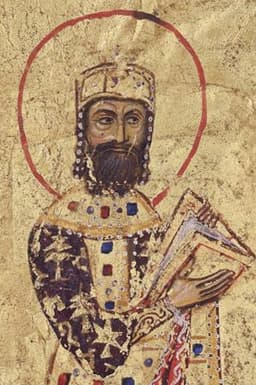
Alexios I Komnenos
Emperor · Medieval
78.4Total
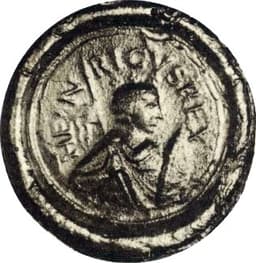
Henry the Fowler
Emperor · Medieval
60.9Total
Basic Information
Born
1048
876
Died
1118
936
Era
Medieval
Medieval
Nationality
Byzantine Empire
East Francia
Occupation
Emperor
Emperor
Civilization
Western
Western
Score Comparison
Military (10%)
61.7
70.0
Political (20%)
78.0
59.3
Influence (20%)
88.0
55.0
Legacy (20%)
80.0
52.0
Leadership (15%)
78.0
85.0
Strategy (15%)
68.0
55.0
TOTAL
78.4
60.9
Alexios I Komnenos — Complete Timeline
1081 AD
Battle of DyrrhachiumWar◆ Major
Alexios I Komnenos was defeated by the Norman army under Robert Guiscard at Dyrrhachium. The Byzantine forces were routed, and Alexios barely escaped. This loss allowed the Normans to occupy much of the western Balkans, though Alexios later recovered some territory.
Norman InvasionDefeatBalkans
Impact: regionaltragic
1090 AD
Reforms of the Byzantine Military and EconomyReform◆ Major
Alexios I implemented a series of reforms to restore Byzantine power. He reorganized the army by relying more on foreign mercenaries, reformed the currency (the hyperpyron), and granted tax exemptions to the Church. These measures stabilized the empire after decades of decline.
Military ReformEconomic ReformKomnenian Restoration
Impact: nationalconstructive
1095 AD
Appeal to the West: Council of PiacenzaPolitical Action
Alexios I sent envoys to Pope Urban II at the Council of Piacenza, requesting military aid against the Seljuk Turks. This appeal contributed to Urban's call for the First Crusade at the Council of Clermont later that year, initiating the Crusader movement.
First CrusadePope Urban IISeljuk Turks
Impact: global
1097 AD
First Crusade: Siege of NicaeaWar◆ Major
Alexios I cooperated with the Crusader army to besiege and capture Nicaea from the Seljuk Turks. The city was surrendered to Byzantine control, and Alexios used the Crusaders to recover key territories in Anatolia, though tensions later arose over land claims.
First CrusadeNicaeaByzantine-Crusader Relations
Impact: regionalconstructive
Henry the Fowler — Complete Timeline
919 AD
Election as King of East FranciaPolitical Action
Henry the Fowler was elected King of East Francia by the Saxon and Frankish nobles at Fritzlar on May 6, 919. He was the first Saxon king, marking the transition from Carolingian to Ottonian rule. His election was contested by other dukes but he prevailed.
ElectionAccessionOttonian Dynasty
Impact: regionalconstructive
921 AD
Treaty of Bonn (921)Political Action◆ Major
Henry the Fowler signed the Treaty of Bonn with Charles the Simple of West Francia, recognizing each other's royal titles and establishing peaceful relations. This treaty ended Carolingian claims over East Francia and solidified Henry's legitimacy as an independent king.
TreatyRecognitionDiplomacy
Impact: regionalconstructive
924 AD
Nine-Year Truce with the MagyarsPolitical Action◆ Major
Henry the Fowler negotiated a nine-year truce with the Magyars, agreeing to pay tribute in exchange for a halt to their raids. He used this period to fortify towns, reorganize the army, and train cavalry. This strategic pause was crucial for his later military reforms.
TruceMagyarsMilitary Reform
Impact: regionalconstructive
929 AD
Battle of Lenzen (929)War◆ Major
Henry the Fowler's forces defeated a Slavic army at the Battle of Lenzen, securing the eastern frontier of East Francia. This victory allowed Henry to consolidate control over the Elbe region and establish the March of Brandenburg, a key step in German eastward expansion.
BattleSlavic WarsEastern Expansion
Impact: regionalconstructive
933 AD
Battle of Riade (933)War
After the truce with the Magyars expired, Henry the Fowler led a German army to victory at the Battle of Riade (near Merseburg). The defeat of the Magyar cavalry ended their raids into East Francia for a generation and established Henry's reputation as a defender of Christendom.
BattleMagyarsVictory
Impact: regionalconstructive
936 AD
Death of Henry the FowlerOther◆ Major
Henry the Fowler died on July 2, 936, at Memleben. He was succeeded by his son, Otto I, who would become Holy Roman Emperor. Henry's reign laid the foundations for the Ottonian dynasty and the medieval German kingdom.
DeathSuccessionOttonian
Impact: regional
Expert Analysis
Henry the Fowler vs Alexios I Komnenos
# The Emperor Who Opened the Gate and the King Who Closed the Wall
In the spring of 1095, a desperate Byzantine emperor knelt before the Pope of Rome—not in submission, but in supplication. Alexios I Komnenos had sent his envoys to the Council of Piacenza, begging for Western knights to save his crumbling empire from the Seljuk Turks. Less than two centuries earlier, another ruler faced a different kind of existential threat. Henry the Fowler, King of East Francia, looked out from his Saxon stronghold at the Magyar horsemen who had terrorized German lands for generations. He did not beg. He bought time. And then, when the moment came, he struck. These two medieval rulers, separated by a century and a half, faced remarkably similar challenges: foreign invaders, fractured kingdoms, and the desperate need to rebuild. Yet their paths diverged in ways that would reshape Europe forever. Why did one open the door to the Crusades while the other closed the wall against the Magyars?
Origins
Alexios I Komnenos was born in 1048 into the Byzantine military aristocracy, a world of court intrigue and constant warfare. His family had already produced emperors, but the empire he inherited was a shadow of its former self. The disastrous Battle of Manzikert in 1071 had opened Anatolia to the Seljuk Turks, and Norman adventurers were carving out territories in Italy. Alexios was a product of a civilization that remembered glory but lived in fear—a man who understood that survival sometimes required swallowing pride.
Henry the Fowler, born in 876, came from a different world entirely. His father, Otto the Illustrious, was Duke of Saxony, but the title carried little weight in a kingdom fractured by tribal loyalties. The Carolingian Empire had collapsed, and East Francia was a patchwork of Saxon, Frankish, Bavarian, and Swabian duchies. Henry grew up in a land where power was local, where a king was only as strong as the nobles who chose to follow him. He learned early that leadership meant persuasion as much as command.
Rise to Power
Alexios seized the throne in 1081 through a military coup, deposing the incompetent Emperor Nikephoros III. He was thirty-three years old, a seasoned general who had already proven his worth on the battlefield. But his coronation was immediately tested. Within months, the Norman warlord Robert Guiscard landed in the Balkans, and at the Battle of Dyrrhachium in 1081, Alexios suffered a devastating defeat. His army was routed, and he barely escaped with his life. It was a humiliating beginning, but one that taught him a lesson he would never forget: the Byzantine army, as it existed, could not defend the empire.
Henry’s rise was quieter but no less significant. In 919, the Saxon and Frankish nobles gathered at Fritzlar and elected him King of East Francia. He was forty-three years old, a duke who had proven his military competence but who lacked the imperial ambition of his predecessors. Unlike Alexios, Henry did not seize power—he was offered it. And he accepted with characteristic pragmatism. He refused to be anointed by the Church, rejecting the Carolingian model of sacred kingship. He would rule as a first among equals, not a emperor by divine right.
Leadership & Governance
The contrast in their governing styles reveals everything. Alexios was a reformer who understood that the old ways had failed. After Dyrrhachium, he overhauled the Byzantine military, relying increasingly on foreign mercenaries and granting land in exchange for military service—a system that would later evolve into the pronoia grants. He also reformed the economy, debasing the currency to pay for his wars and centralizing control over the provinces. His was a government of desperate innovation, a constant balancing act between tradition and necessity.
Henry was a builder, not a revolutionary. He spent his first five years consolidating power, making peace with his rivals. The Treaty of Bonn in 921 recognized Charles the Simple of West Francia as an equal, ending decades of futile claims to Carolingian supremacy. Then came his masterstroke: in 924, faced with the relentless Magyar raids, Henry negotiated a nine-year truce. He agreed to pay tribute, but he used that time to fortify Saxon towns, train a new cavalry, and build a network of strongholds. While Alexios opened his empire to foreign armies, Henry closed his kingdom off and prepared.
Triumph & Tragedy
Alexios’s greatest triumph was also his greatest tragedy. In 1095, his appeal to Pope Urban II at Piacenza triggered the First Crusade. By 1097, he had cooperated with the Crusaders to recapture Nicaea from the Seljuks, a stunning victory that restored Byzantine control over western Anatolia. But the Crusaders were not the disciplined mercenaries he had imagined. They were a wildfire, and once unleashed, they could not be controlled. The Crusader states that emerged in the Holy Land owed nothing to Byzantium, and the relationship between East and West would never recover.
Henry’s triumph came in 933 at the Battle of Riade. When the nine-year truce with the Magyars expired, he refused to pay further tribute. The Magyar army marched into Saxony, expecting easy plunder. Instead, they found a fortified landscape and a disciplined German cavalry waiting for them. Henry’s victory was decisive, and the Magyars never threatened East Francia again. His tragedy was quieter: he died in 936 at Memleben, having achieved his goals but never seeing the empire his son Otto would forge.
Character & Destiny
Alexios was a survivor, and survival shaped every decision he made. He was politically astute, capable of great patience and great ruthlessness. He manipulated the Crusaders, played them against each other, and extracted what he could from their presence. But his vision was limited by his circumstances. He could not see that the Crusades would outlive him, that the forces he had summoned would one day turn on his own city. His legacy is one of brilliant tactical maneuvering within a strategic disaster.
Henry was a pragmatist with a long view. He understood that power had to be built on solid foundations—fortresses, alliances, and time. He was not a charismatic leader in the mold of Charlemagne, but he was steady, patient, and unshakeable. When he died, he left his son Otto a kingdom that was secure, prosperous, and respected. Otto would go on to be crowned Holy Roman Emperor, fulfilling a destiny that Henry had made possible.
Legacy
Alexios I Komnenos founded a dynasty that would rule Byzantium for a century, restoring some of its former glory. But he also opened the door to the Crusades, a decision that would ultimately contribute to the empire's destruction. His military and political reforms kept Byzantium alive, but at a cost that future generations would pay. Today, he is remembered as a capable emperor who faced impossible choices—and who made the wrong one.
Henry the Fowler is remembered as the founder of the Ottonian dynasty, the father of the Holy Roman Empire. He never called himself emperor, never sought the grandeur of Rome. But he built the foundation on which the medieval German kingdom would stand. His legacy is one of patient statecraft, of knowing when to wait and when to strike. He is the quiet architect behind one of Europe's great dynasties.
Conclusion
Two rulers, two crises, two different answers to the same question: when your kingdom is dying, what do you do? Alexios reached outward, seeking salvation from strangers. Henry turned inward, building strength from within. One opened a gate that could never be closed again; the other built a wall that held. In the end, both men were products of their worlds—the Byzantine emperor who believed in the power of diplomacy and alliance, the Saxon king who trusted only in walls and swords. Their choices echo through history, reminding us that the most fateful decisions are not between good and evil, but between different kinds of survival.
Rankings
🥇
Alexios I KomnenosLeader
Mil: 61.7Pol: 78.0Inf: 88.0
78.4
🥈
Henry the Fowler
Mil: 70.0Pol: 59.3Inf: 55.0
60.9
+17.5 behind
How This Comparison Works
Algorithm
Each figure is scored on 6 dimensions (0—100 scale) based on structured historical data: Military (10%), Political (20%), Influence (20%), Legacy (20%), Leadership (15%), Strategy (15%). The weighted total produces the final ranking.
Data Sources
Scores are computed from structured sub-indicators in the database. Scale factors adjust for era (Ancient ×0.85, Modern ×1.0) and civilization size (Eastern ×1.05, Other ×0.80) to account for differences in population and military scale.
Maximum 3 Figures
Comparisons are limited to 2—3 figures to ensure readability and statistical meaningfulness.
Error Margins
±5 points per dimension — Sub-scores are derived from historical records with inherent uncertainty. Two figures within 5 points on a dimension should be considered roughly equivalent in that area.
Total Score Accuracy
±3 points overall — The weighted combination of 6 dimensions produces a total score with approximately ±3 points of uncertainty. Differences of less than 3 points are not statistically significant— the figures are effectively tied.
Known Limitations
- Historical records are incomplete and uneven across civilizations
- Figures from oral-tradition societies may be underrepresented
- Occupation labels can misclassify multi-role figures
- Scores measure capability and impact, not moral character
- Quantitative scoring is a comparison tool, not absolute truth
Capability Radar
Military (10%) — Battles & Warfare
Battles
75
55
Win Rate
70
60
Expansion
60
60
Political (20%) — Governance & Reform
Reform
85
75
Diplomacy
90
70
Economy
70
65
Influence (20%) — Cultural & Global Reach
Cultural
70
55
Global
75
40
Legacy (20%) — Historical Impact
Historical
85
65
Longevity
80
60
Leadership (15%) — Power & Stability
Tenure
80
70
Stability
75
70
Strategy (15%) — Tactics & Innovation
Strategy
85
65
Tactics
80
50
Reform
75
70
Similar Comparisons
Comments & Discussion
CavalryCynic6/16/2026
Henry the Fowler is the real military genius here. Alexios flailed for twenty years before begging the Pope for help—that’s not strategy, that’s desperation. Henry built fortresses, trained a cavalry from scratch, and let Magyar raids exhaust themselves before annihilating them at Riade in 933. Alexios got lucky with the First Crusade’s timing; Henry earned his victory through quiet, methodical preparation. Give me the Saxon who paid in silver and blood over the Komnenian who paid in Western fav
数据论道6/16/2026
你们都在吹亨利“买时间”的智慧,但仔细算算——他给了马扎尔人九年的贡金,相当于每年烧掉东法兰克王国国库的十分之一。亚历克修斯呢?他用招募雇佣兵的钱买来了十字军,实际上把军费转嫁给了西方贵族。从成本效益看,亚历克修斯更胜一筹:亨利掏光了自己人的口袋,亚历克修斯则让威尼斯人和法兰克人埋单。数据不会说谎,省钱才是硬道理。
KnightErrant6/16/2026
Alexios opened the gate, sure—but he had no other move. Manzikert shattered the thematic system; the Eastern armies were ghosts. Henry could fortify and wait for a spring offensive because his Saxon heavy cavalry had not been wiped out in a single disastrous afternoon. The Komnenoi inherited collapse, the Liudolfingers inherited resilience. Judge Henry on his options, not his outcome. Alexios played a terrible hand better than anyone could.
古迹迷踪6/16/2026
别忽略一件事:亨利死后三十年,他的孙辈奥托一世加冕为神圣罗马帝国皇帝,而这帝国的核心正是萨尔茨堡—马格德堡防线上的那些“亨利堡垒”。亚历克修斯在曼齐刻尔特战后重建了科穆宁军制,但君士坦丁堡的城墙从没替他挡住十字军的刀——1204年的灾难就是证明。亨利筑的墙是真的墙,亚历克修斯的墙是纸糊的。
PraetorianScribe6/16/2026
Revisionist take: Alexios didn’t open the gate to the Crusades—the Crusades kicked it down and looted his house. Henry’s deal with the Magyars was a temporary truce; Alexios’s plea to Urban II was a strategic miscalculation. He thought he was hiring mercenaries, but he lit a wildfire. Henry’s fortresses held for decades; Alexios’s alliances collapsed into the Fourth Crusade. One bought time wisely, the other sold the future for a moment’s peace.