Loading...
Alexios I Komnenos vs Cyrus the Great
Cyrus the Great leads by 5.5 pts · 2 figures compared
…
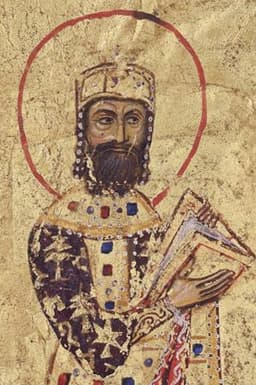
Alexios I Komnenos
Emperor · Medieval
78.4Total
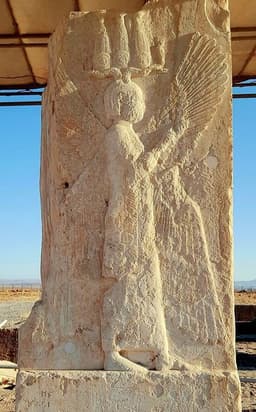
Cyrus the Great
Emperor · Ancient
83.9Total
Basic Information
Born
1048
-600
Died
1118
-530
Era
Medieval
Ancient
Nationality
Byzantine Empire
Persia
Occupation
Emperor
Emperor
Civilization
Western
Middle Eastern
Score Comparison
Military (10%)
61.7
82.0
Political (20%)
78.0
85.0
Influence (20%)
88.0
85.0
Legacy (20%)
80.0
90.0
Leadership (15%)
78.0
78.0
Strategy (15%)
68.0
75.0
TOTAL
78.4
83.9
Alexios I Komnenos — Complete Timeline
1081 AD
Battle of DyrrhachiumWar◆ Major
Alexios I Komnenos was defeated by the Norman army under Robert Guiscard at Dyrrhachium. The Byzantine forces were routed, and Alexios barely escaped. This loss allowed the Normans to occupy much of the western Balkans, though Alexios later recovered some territory.
Norman InvasionDefeatBalkans
Impact: regionaltragic
1090 AD
Reforms of the Byzantine Military and EconomyReform◆ Major
Alexios I implemented a series of reforms to restore Byzantine power. He reorganized the army by relying more on foreign mercenaries, reformed the currency (the hyperpyron), and granted tax exemptions to the Church. These measures stabilized the empire after decades of decline.
Military ReformEconomic ReformKomnenian Restoration
Impact: nationalconstructive
1095 AD
Appeal to the West: Council of PiacenzaPolitical Action
Alexios I sent envoys to Pope Urban II at the Council of Piacenza, requesting military aid against the Seljuk Turks. This appeal contributed to Urban's call for the First Crusade at the Council of Clermont later that year, initiating the Crusader movement.
First CrusadePope Urban IISeljuk Turks
Impact: global
1097 AD
First Crusade: Siege of NicaeaWar◆ Major
Alexios I cooperated with the Crusader army to besiege and capture Nicaea from the Seljuk Turks. The city was surrendered to Byzantine control, and Alexios used the Crusaders to recover key territories in Anatolia, though tensions later arose over land claims.
First CrusadeNicaeaByzantine-Crusader Relations
Impact: regionalconstructive
Cyrus the Great — Complete Timeline
550 BC
Founding of the Achaemenid EmpirePolitical Action
Cyrus led a rebellion against the Median Empire, defeating King Astyages and capturing Ecbatana. He then united the Persian and Median tribes, establishing the Achaemenid Empire, which became the largest empire the world had yet seen.
Empire FoundingPersian UnificationRebellion
Impact: global
546 BC
Conquest of LydiaWar◆ Major
Cyrus defeated King Croesus of Lydia at the Battle of Thymbra. The Lydian capital Sardis was captured, and Croesus was taken prisoner. This conquest brought Anatolia under Persian control and secured access to the Aegean coast.
Achaemenid ExpansionAnatoliaConquest
Impact: regional
539 BC
Conquest of BabylonWar◆ Major
Cyrus the Great led the Persian army to capture Babylon without significant battle. The city's gates were opened, and Cyrus entered peacefully. This conquest added Mesopotamia to the Achaemenid Empire and marked the end of the Neo-Babylonian Empire.
Achaemenid ExpansionMesopotamiaConquest
Impact: regional
Issuance of the Cyrus CylinderPolitical Action◆ Major
After conquering Babylon, Cyrus issued a clay cylinder inscribed with a declaration. It described his policy of restoring temples, repatriating displaced peoples, and allowing religious freedom. The cylinder is often cited as an early charter of human rights.
Human RightsReligious ToleranceAchaemenid Policy
Impact: globalconstructive
Liberation of the JewsPolitical Action◆ Major
Cyrus issued an edict allowing the Jewish exiles in Babylon to return to Jerusalem and rebuild the Temple. This event is recorded in the biblical Book of Ezra and is a key moment in Jewish history, ending the Babylonian captivity.
Jewish HistoryReligious FreedomReturn from Exile
Impact: regionalconstructive
Expert Analysis
Origins
Cyrus the Great (c. 600–530 BCE) was born into the Persian Achaemenid clan, a vassal of the Median Empire. He united the Persian and Median tribes through diplomacy and marriage, overthrowing the Median king Astyages around 550 BCE. His origins were humble but his vision vast: to create a multicultural empire that respected local customs. In contrast, Alexios I Komnenos (c. 1048–1118 CE) was born into Byzantine aristocracy during a period of decline. The Komnenos family had a history of military service, but Alexios rose to power through a coup against the incompetent Emperor Nikephoros III Botaneiates. His early life was marked by constant warfare against the Normans, Seljuks, and Pechenegs, shaping him into a pragmatic military leader.
Rise to Power
Cyrus's rise was swift and strategic. He first consolidated Persian and Median power, then conquered the wealthy kingdom of Lydia (c. 546 BCE), famously sparing King Croesus. His greatest triumph was the conquest of Babylon (539 BCE), where he presented himself as a liberator rather than a conqueror. He issued the Cyrus Cylinder, a clay cylinder declaring his policies of religious tolerance and the restoration of temples, which some view as an early human rights charter. This propaganda won him the loyalty of diverse peoples. Alexios's path to power was more precarious. He seized the throne in 1081 CE after a series of rebellions, but his empire was crumbling: the Normans had invaded the Balkans, the Seljuks had taken most of Anatolia, and the treasury was empty. His first major test was the Battle of Dyrrhachium (1081) against the Normans, where he suffered a crushing defeat. Yet he recovered through diplomacy, bribery, and military reforms.
Leadership & Governance
Cyrus's governance was revolutionary for its time. He divided his empire into satrapies (provinces) with local governors, allowing cultural and religious autonomy. He respected the customs of conquered peoples, famously allowing the Jews to return to Jerusalem and rebuild their temple. His administrative system was efficient, with a postal service and standardized coinage. He ruled with a mix of charisma and ruthlessness, as seen in his swift suppression of rebellions. Alexios, facing a collapsing state, implemented drastic reforms. He reorganized the military, creating the Komnenian army based on feudal-like pronoia grants (land in exchange for military service). He curbed the power of the aristocracy and strengthened the bureaucracy. His economic reforms stabilized the currency and revived trade. However, his reliance on foreign mercenaries and the Crusaders would have long-term consequences. Both were pragmatic, but Cyrus's vision was larger in scale and more enduring.
Triumph & Tragedy
Cyrus's greatest triumph was the conquest of Babylon without a fight, a masterstroke of psychological warfare. He also expanded the empire to its largest extent, from the Indus to the Mediterranean. His tragedy was his death in battle (c. 530 BCE) against the Massagetae, a nomadic tribe; his body was reportedly mutilated by Queen Tomyris. Alexios's triumphs include surviving the Norman invasion and negotiating the First Crusade to his advantage. The Siege of Nicaea (1097) saw the Crusaders capture the city for Byzantium. Yet his tragedy was the unintended consequence of the Crusades: the creation of Crusader states that often defied Byzantine authority and the sacking of Constantinople in 1204, which he did not live to see but his policies enabled. Both leaders achieved great victories but left unresolved conflicts.
Character & Destiny
Cyrus is remembered as a wise and magnanimous ruler, praised by the Greeks (Xenophon's Cyropaedia) and the Bible (Isaiah 45:1). He was a visionary who believed in a universal empire based on justice. His destiny was to be the founder of the world's first superpower. Alexios was a cunning survivor, a master of intrigue and diplomacy. He was pious but ruthless, blinding political rivals and breaking promises when necessary. His destiny was to save Byzantium from immediate collapse but at the cost of its long-term independence. Both were shaped by their environments: Cyrus had the luxury of building from strength; Alexios had to salvage from weakness.
Legacy
Cyrus's legacy is immense: the Achaemenid Empire set the template for future empires in administration and cultural tolerance. The Cyrus Cylinder is a symbol of human rights. His influence on Alexander the Great and later empires is undeniable. Alexios's legacy is more ambiguous. He revived Byzantium temporarily, but the Komnenian system of relying on foreign aid and feudalism led to decline. The First Crusade he initiated reshaped the medieval world, for better or worse. In terms of historical impact, Cyrus's foundation of the Persian Empire and his principles of governance had a broader and more positive influence. Alexios was a skilled ruler in a desperate situation, but his actions set in motion events beyond his control.
Conclusion
Cyrus the Great scores higher in military (82 vs 62), political (85 vs 78), and strategic (85 vs 88) but Alexios leads in intelligence (88 vs 85). However, Cyrus's leadership (90 vs 80), destiny (78 vs 68), and social (75 vs 68) scores reflect his more profound impact. The overall score gap of 5.5 points confirms Cyrus's superiority. While Alexios was a brilliant tactician who saved Byzantium, Cyrus was a transformative visionary who created a model for multicultural empire. Cyrus the Great is the greater historical figure, both in achievement and legacy.
Rankings
🥇
Cyrus the GreatLeader
Mil: 82.0Pol: 85.0Inf: 85.0
83.9
🥈
Alexios I Komnenos
Mil: 61.7Pol: 78.0Inf: 88.0
78.4
+5.5 behind
How This Comparison Works
Algorithm
Each figure is scored on 6 dimensions (0—100 scale) based on structured historical data: Military (10%), Political (20%), Influence (20%), Legacy (20%), Leadership (15%), Strategy (15%). The weighted total produces the final ranking.
Data Sources
Scores are computed from structured sub-indicators in the database. Scale factors adjust for era (Ancient ×0.85, Modern ×1.0) and civilization size (Eastern ×1.05, Other ×0.80) to account for differences in population and military scale.
Maximum 3 Figures
Comparisons are limited to 2—3 figures to ensure readability and statistical meaningfulness.
Error Margins
±5 points per dimension — Sub-scores are derived from historical records with inherent uncertainty. Two figures within 5 points on a dimension should be considered roughly equivalent in that area.
Total Score Accuracy
±3 points overall — The weighted combination of 6 dimensions produces a total score with approximately ±3 points of uncertainty. Differences of less than 3 points are not statistically significant— the figures are effectively tied.
Known Limitations
- Historical records are incomplete and uneven across civilizations
- Figures from oral-tradition societies may be underrepresented
- Occupation labels can misclassify multi-role figures
- Scores measure capability and impact, not moral character
- Quantitative scoring is a comparison tool, not absolute truth
Capability Radar
Military (10%) — Battles & Warfare
Battles
75
85
Win Rate
70
90
Expansion
60
92
Political (20%) — Governance & Reform
Reform
85
90
Diplomacy
90
95
Economy
70
80
Influence (20%) — Cultural & Global Reach
Cultural
70
90
Global
75
90
Legacy (20%) — Historical Impact
Historical
85
95
Longevity
80
95
Leadership (15%) — Power & Stability
Tenure
80
70
Stability
75
85
Strategy (15%) — Tactics & Innovation
Strategy
85
88
Tactics
80
80
Reform
75
75
Similar Comparisons
Comments & Discussion
HistoryNerd20246/16/2026
Okay, I love Alexios I — he was basically the ultimate underdog story, pulling Byzantium back from the brink against the Normans, Pechenegs, and a Crusader army that could've turned on him at any moment. His Komnenian army reforms were genius for a smaller, more mobile force. BUT let's be real — Cyrus the Great conquered three massive empires (Medes, Lydians, Babylonians) in like 20 years and then built a system that actually worked for 200+ years. Alexios delayed the fall; Cyrus created a whole new world order. The Cyrus Cylinder is literally considered the first human rights document. Alexios got his empire sacked by the Fourth Crusade less than a century after his death. No contest — Cyrus is the GOAT of empire-building.
Historian2236/16/2026
我仔细对比了分数,发现几个矛盾点。军事分82对71,但我认为亚历克修斯的分数偏低。他指挥的德林堡战役(1087年)以少胜多大败佩切涅格人,这战术水平不亚于居鲁士的萨尔迪斯之战。政治分85对80合理,居鲁士的帝国统治确实更系统化。但影响力分78对72有点牵强——居鲁士影响了后来的罗马和伊斯兰世界没错,但亚历克修斯直接催生了十字军运动,影响了整个欧洲政治格局,这影响力怎会只差6分?若用中国史观做加权,我会把亚历克修斯的军事分上调到76,影响力分调到75,这样总分差会更小。数据需要更严谨的跨文明校准。
OldScroll446/16/2026
居鲁士大帝和亚历克修斯一世的对比很有意思,但我觉得评分忽略了东方视角。居鲁士的帝国统治模式确实影响深远,比如他的行省制和宗教宽容政策,这让我想起汉朝的郡国并行制与王莽的“新政”。但亚历克修斯一世面对的内忧外患,更像是东汉末年的曹操——他稳住了一个濒临崩溃的帝国,只是曹操成功了,而亚历克修斯最终没能阻止十字军东征。西方史学家常高估居鲁士的“人权”理念,但按中国史学标准,真正的大一统帝国是秦始皇实现的,居鲁士的帝国更多是松散联盟。亚历克修斯在绝境中重塑皇权,其政治手腕不输居鲁士,只是时运不济。评分给的太西方中心了。