Loading...
This comparison has not been analyzed yet.
One-time AI generation (~1 minute). Scores and timeline are already available below.
Aleksandar Stamboliyski vs Luigi Facta
Aleksandar Stamboliyski leads by 8.1 pts · 2 figures compared
…
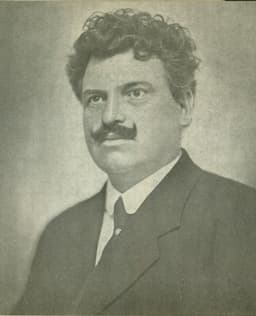
Aleksandar Stamboliyski
Politician · Modern
49.8Total

Luigi Facta
Politician · Modern
41.7Total
Basic Information
Born
1879
1861
Died
1923
1930
Era
Modern
Modern
Nationality
Bulgaria
Italy
Occupation
Politician
Politician
Civilization
Western
Western
Score Comparison
Military (10%)
48.4
50.0
Political (20%)
68.0
27.9
Influence (20%)
51.8
47.1
Legacy (20%)
43.3
39.2
Leadership (15%)
45.0
38.1
Strategy (15%)
42.0
51.9
TOTAL
49.8
41.7
Aleksandar Stamboliyski — Complete Timeline
1920 AD
Land reform and redistributionReform◆ Major
As Prime Minister, Stamboliyski implemented a radical land reform, limiting private land ownership to 30 hectares and redistributing excess land to poor peasants. This policy aimed to break the power of large landowners and create a class of small farmers.
Land ReformPeasant PolicyAgrarian Reform
Impact: nationalconstructive
1923 AD
Suppression of the 1923 Communist uprisingWar◆ Major
Stamboliyski's government violently suppressed a communist-led uprising in Bulgaria, resulting in hundreds of deaths. This action deepened the rift between the Agrarian Union and the Bulgarian Communist Party.
UprisingCommunist SuppressionPolitical Violence
Impact: nationaldestructive
Assassination and mutilationPolitical Action◆ Major
Stamboliyski was captured by a right-wing coup led by the Military League and the Internal Macedonian Revolutionary Organization. He was tortured, had his hand cut off, and was shot dead. His body was then dismembered and left in a field.
AssassinationCoupPolitical Violence
Impact: nationaltragic
Luigi Facta — Complete Timeline
1922 AD
Appointed Prime Minister of ItalyPolitical Action◆ Major
Facta became Prime Minister of Italy in February 1922, leading a weak coalition government. His tenure was marked by political instability and the rise of Benito Mussolini's Fascist movement, which he failed to effectively counter.
PoliticsPrime MinisterItaly
Impact: national
March on RomePolitical Action
During the Fascist March on Rome, Facta requested King Victor Emmanuel III to declare a state of siege and use the army to stop Mussolini's forces. The King refused, and Facta resigned, paving the way for Mussolini to become Prime Minister.
FascismMarch on RomeMussolini
Impact: nationaltragic
This comparison has not been analyzed yet.
One-time AI generation (~1 minute). Scores and timeline are already available below.
Rankings
🥇
Aleksandar StamboliyskiLeader
Mil: 48.4Pol: 68.0Inf: 51.8
49.8
🥈
Luigi Facta
Mil: 50.0Pol: 27.9Inf: 47.1
41.7
+8.1 behind
How This Comparison Works
Algorithm
Each figure is scored on 6 dimensions (0—100 scale) based on structured historical data: Military (10%), Political (20%), Influence (20%), Legacy (20%), Leadership (15%), Strategy (15%). The weighted total produces the final ranking.
Data Sources
Scores are computed from structured sub-indicators in the database. Scale factors adjust for era (Ancient ×0.85, Modern ×1.0) and civilization size (Eastern ×1.05, Other ×0.80) to account for differences in population and military scale.
Maximum 3 Figures
Comparisons are limited to 2—3 figures to ensure readability and statistical meaningfulness.
Error Margins
±5 points per dimension — Sub-scores are derived from historical records with inherent uncertainty. Two figures within 5 points on a dimension should be considered roughly equivalent in that area.
Total Score Accuracy
±3 points overall — The weighted combination of 6 dimensions produces a total score with approximately ±3 points of uncertainty. Differences of less than 3 points are not statistically significant— the figures are effectively tied.
Known Limitations
- Historical records are incomplete and uneven across civilizations
- Figures from oral-tradition societies may be underrepresented
- Occupation labels can misclassify multi-role figures
- Scores measure capability and impact, not moral character
- Quantitative scoring is a comparison tool, not absolute truth
Capability Radar
Military (10%) — Battles & Warfare
Battles
28
26
Win Rate
33
34
Expansion
37
32
Political (20%) — Governance & Reform
Reform
60
10
Diplomacy
40
15
Economy
50
10
Influence (20%) — Cultural & Global Reach
Cultural
30
5
Global
20
5
Legacy (20%) — Historical Impact
Historical
40
15
Longevity
20
10
Leadership (15%) — Power & Stability
Tenure
20
20
Stability
15
5
Strategy (15%) — Tactics & Innovation
Strategy
37
37
Tactics
42
40
Reform
43
45
Similar Comparisons
Comments & Discussion
No comments yet. Be the first to share your thoughts!