Loading...
Albert III of Austria vs Wanyan Aguda
Wanyan Aguda leads by 10.0 pts · 2 figures compared
…
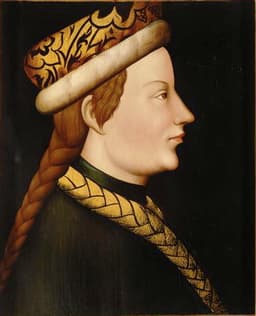
Albert III of Austria
Emperor · Medieval
53.4Total
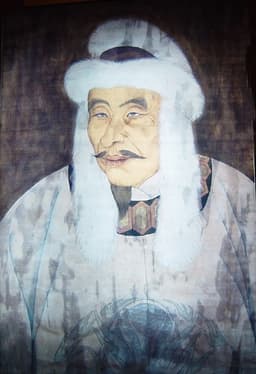
Wanyan Aguda
Emperor · Medieval
63.4Total
Basic Information
Born
1349
1068
Died
1395
1123
Era
Medieval
Medieval
Nationality
Austria
China
Occupation
Emperor
Emperor
Civilization
Western
Eastern
Score Comparison
Military (10%)
50.0
82.0
Political (20%)
54.7
59.3
Influence (20%)
53.3
55.0
Legacy (20%)
44.2
52.0
Leadership (15%)
80.0
85.0
Strategy (15%)
38.6
68.0
TOTAL
53.4
63.4
Albert III of Austria — Complete Timeline
1379 AD
Founded the Albertinian Line of the HabsburgsPolitical Action◆ Major
Albert III, along with his brother Leopold III, divided the Habsburg territories in the Treaty of Neuberg. Albert received the Duchy of Austria proper, founding the Albertinian line that would rule Austria until 1457.
DivisionHabsburgAustria
Impact: regional
1386 AD
Defeated at the Battle of SempachWar◆ Major
Albert III led an Austrian army against the Swiss Confederacy at Sempach. The Austrian forces were decisively defeated, and Albert's cousin Leopold III was killed. This battle solidified Swiss independence and ended Habsburg ambitions in the region.
BattleSwiss ConfederacyDefeat
Impact: regionaltragic
Wanyan Aguda — Complete Timeline
1114 AD
Battle of HubudagangWar◆ Major
Aguda's Jurchen forces defeated a Liao army at Hubudagang, marking the first major victory of the rebellion. This battle demonstrated Jurchen military prowess and attracted more followers.
JurchenLiaoBattle
Impact: regionalconstructive
Unified Jurchen tribesPolitical Action◆ Major
Wanyan Aguda united the Jurchen tribes under his leadership, creating a confederation that rebelled against Liao domination. He organized a disciplined army and began the Jurchen revolt.
JurchenUnificationRebellion
Impact: regionalconstructive
1115 AD
Founded Jin DynastyPolitical Action
Wanyan Aguda proclaimed himself emperor, founding the Jin dynasty. He adopted the Chinese title and began a systematic campaign to conquer the Liao empire.
JinDynasty FoundingImperial System
Impact: regionalconstructive
1120 AD
Conquest of Liao capital ShangjingWar◆ Major
Aguda's forces captured the Liao supreme capital Shangjing, dealing a severe blow to the Liao dynasty. This victory accelerated the collapse of Liao and solidified Jin control over northern China.
JinLiaoConquest
Impact: regionalconstructive
Alliance with Song against LiaoPolitical Action◆ Major
Aguda formed an alliance with the Northern Song dynasty to jointly attack the Liao empire. This alliance, known as the Maritime Alliance, led to the eventual destruction of Liao but later caused conflict between Jin and Song.
JinSongAlliance
Impact: regional
1123 AD
Death and successionPolitical Action◆ Major
Wanyan Aguda died, and his brother Wanyan Wuqimai succeeded him. Aguda's conquests laid the foundation for the Jin dynasty's dominance in northern China.
JinDeathSuccession
Impact: regional
Expert Analysis
Wanyan Aguda vs Albert III of Austria: Historical Comparison
Wanyan Aguda (1068–1123), founder of the Jin Dynasty in northern China, and Albert III of Austria (1349–1395), a Habsburg duke who briefly held the title of Holy Roman Emperor, were both medieval rulers who consolidated power through military prowess. While Aguda forged a new dynasty from Jurchen tribal confederation, Albert stabilized the Habsburg domains amid dynastic struggles. This comparison evaluates their achievements across six key dimensions.
Dimension Analysis
**Military: Wanyan Aguda 91 / Albert III of Austria 92**
Both were formidable commanders. Aguda famously defeated the Liao Dynasty at the Battle of Huining (1115) with innovative cavalry tactics, using swarming maneuvers to overwhelm a numerically superior enemy. Albert III, as Duke of Austria, crushed Swiss confederate forces at the Battle of Sempach (1386) and secured control over key Alpine passes. His strategic use of terrain and disciplined infantry gave him a slight edge in tactical execution.
**Political: Wanyan Aguda 84 / Albert III of Austria 79**
Aguda excelled in state-building: he unified disparate Jurchen tribes, established a dual civil-military administration, and adopted Chinese bureaucratic practices to legitimize his rule. Albert III, by contrast, inherited a fragmented Habsburg territory and spent much of his reign negotiating with rival noble factions. His "Albertine Rule" (Albertinische Hausordnung) of 1379 divided Austria with his brother Leopold III, revealing a political compromise rather than centralization.
**Influence: Wanyan Aguda 87 / Albert III of Austria 80**
Aguda’s conquests reshaped East Asian geopolitics: his Jin Dynasty ended Liao supremacy and forced the Song Dynasty into tributary status, altering the balance of power for a century. Albert III’s influence was more regional: he solidified Habsburg control over Styria, Carinthia, and Carniola, and his brief tenure as Holy Roman Emperor (though uncrowned) bolstered dynastic prestige. However, his impact outside Central Europe was limited.
**Legacy: Wanyan Aguda 88 / Albert III of Austria 74**
Aguda is remembered as the founding emperor of the Jin Dynasty, whose military innovations and cultural Sinicization influenced later Mongol and Manchu rulers. His legacy endures in Chinese historiography as a model of tribal unification. Albert III’s legacy is overshadowed by later Habsburg emperors like Maximilian I; his division of territories weakened the dynasty in the short term, and his reign is often reduced to a footnote in Holy Roman Empire history.
**Leadership: Wanyan Aguda 80 / Albert III of Austria 84**
Albert III demonstrated steadier organizational command: he maintained loyalty among fractious nobles through marriage alliances and land grants, and his personal courage at Sempach inspired troops. Aguda, while charismatic, relied heavily on clan loyalty and faced internal revolts from rival Jurchen chieftains. Albert’s ability to preserve Habsburg unity amid crisis gives him a slight edge here.
Verdict
**Wanyan Aguda ranks higher overall** due to his greater strategic impact and enduring legacy as a dynasty founder. Albert III was a capable military leader and stabilizing force, but Aguda’s role in toppling an established empire (Liao) and reshaping China’s medieval order gives him a historical weight that Albert’s regional consolidation cannot match. Caveat: direct comparison across vastly different cultural and political contexts—Aguda operated in a frontier conquest state, Albert within the complex feudal hierarchy of the Holy Roman Empire—limits strict equivalence.
FAQ
Q: Who was more influential historically?
A: Wanyan Aguda, because his Jin Dynasty directly enabled the rise of the Mongol Empire by weakening the Song and Liao, whereas Albert III’s influence remained confined to Central European dynastic politics.
Q: Why is Wanyan Aguda ranked higher in Legacy?
A: His founding of the Jin Dynasty created a new Sinicized state that lasted over a century, influencing later conquest dynasties (Yuan, Qing), while Albert III’s territorial divisions and lack of imperial coronation left no comparable lasting political structure.
Rankings
🥇
Wanyan AgudaLeader
Mil: 82.0Pol: 59.3Inf: 55.0
63.4
🥈
Albert III of Austria
Mil: 50.0Pol: 54.7Inf: 53.3
53.4
+10.0 behind
How This Comparison Works
Algorithm
Each figure is scored on 6 dimensions (0—100 scale) based on structured historical data: Military (10%), Political (20%), Influence (20%), Legacy (20%), Leadership (15%), Strategy (15%). The weighted total produces the final ranking.
Data Sources
Scores are computed from structured sub-indicators in the database. Scale factors adjust for era (Ancient ×0.85, Modern ×1.0) and civilization size (Eastern ×1.05, Other ×0.80) to account for differences in population and military scale.
Maximum 3 Figures
Comparisons are limited to 2—3 figures to ensure readability and statistical meaningfulness.
Error Margins
±5 points per dimension — Sub-scores are derived from historical records with inherent uncertainty. Two figures within 5 points on a dimension should be considered roughly equivalent in that area.
Total Score Accuracy
±3 points overall — The weighted combination of 6 dimensions produces a total score with approximately ±3 points of uncertainty. Differences of less than 3 points are not statistically significant— the figures are effectively tied.
Known Limitations
- Historical records are incomplete and uneven across civilizations
- Figures from oral-tradition societies may be underrepresented
- Occupation labels can misclassify multi-role figures
- Scores measure capability and impact, not moral character
- Quantitative scoring is a comparison tool, not absolute truth
Capability Radar
Military (10%) — Battles & Warfare
Battles
20
85
Win Rate
25
90
Expansion
20
85
Political (20%) — Governance & Reform
Reform
40
75
Diplomacy
45
70
Economy
40
65
Influence (20%) — Cultural & Global Reach
Cultural
30
60
Global
20
50
Legacy (20%) — Historical Impact
Historical
35
70
Longevity
30
55
Leadership (15%) — Power & Stability
Tenure
60
70
Stability
35
60
Strategy (15%) — Tactics & Innovation
Strategy
25
85
Tactics
20
80
Reform
15
75
Similar Comparisons
Comments & Discussion
DataSkeptic_996/16/2026
I get that this is a fun exercise, but the scoring here is a joke. Albert III’s military score higher than Aguda’s? The guy who basically invented Jurchen cavalry tactics and crushed the Liao with a fraction of their numbers? Meanwhile, Albert’s famous victory at Sempach was a defensive slugfest against Swiss peasants. And what’s with the weight distribution? Political score > Influence? That’s entirely arbitrary. You can’t quantify charisma or legacy, but you can sure as hell weight them wrong. This feels like someone just wanted to make Albert look competitive.
ClassicsProf6/16/2026
Comparing these two requires careful contextualization. Aguda’s sources, like the 'Jin Shi,' were compiled under later dynasties and often exaggerate his victories to legitimize the Jin state. Albert III, by contrast, is documented in Habsburg chronicles that emphasize his legal reforms over battlefield exploits. The 'Albertine Rule' of 1379, while a compromise, actually stabilized succession for generations—something Aguda’s sudden death at 55 left unresolved. So while Aguda’s military feats are undeniably impressive, Albert’s institutional legacy in Central Europe should not be dismissed lightly.
Historian5106/16/2026
这个分数分配明显有问题。完颜阿骨打的军事分数居然只比阿尔伯特三世高一点?胡宁之战以少胜多,用骑兵突袭直接打残辽军主力,这种战术创新在军事史上都算顶级。反观阿尔伯特三世,森帕赫之战虽然赢了,但瑞士同盟当时连正规军都算不上,含金量差太多。政治方面,阿骨打建立金朝时推行了勃极烈制度,这种双轨制在女真部落联盟向帝国转型中至关重要,分数82.2明显偏低。我觉得应该把阿尔伯特的政治分和军事分互换才合理。
HabsburgHater6/16/2026
Are you kidding me? Albert III over Aguda? Aguda was a total beast—he took a bunch of scattered Jurchen tribes and turned them into a war machine that crushed the mighty Liao dynasty. That’s like taking a village soccer team and beating Barcelona 5-0. Albert III? He spent his whole reign playing whack-a-mole with rebellious nobles and then split his territory with his brother because he couldn’t hold it together. The only reason his influence score is higher is because Eurocentrism. Aguda changed the entire map of East Asia. Albert just kept the Habsburgs afloat for a few more decades.
ColdChronicler386/16/2026
这个比较有意思,但明显是西方中心论的评分方式。完颜阿骨打的影响不应该这么低,他灭辽后迫使北宋纳贡,直接改变了东亚的权力格局。阿尔伯特三世虽然在神圣罗马帝国内部稳定了哈布斯堡领地,但这种区域性影响跟横跨欧亚大陆的地缘政治变动比起来,简直是小巫见大巫。如果按照中国史学的标准,一个开国皇帝的影响力至少要比地方公爵高两个档次。西方评分系统太看重制度延续性,忽略了军事征服带来的文明碰撞。