Loading...
Ahmad Shah I Wali vs Albert II
Ahmad Shah I Wali leads by 9.4 pts · 2 figures compared
…
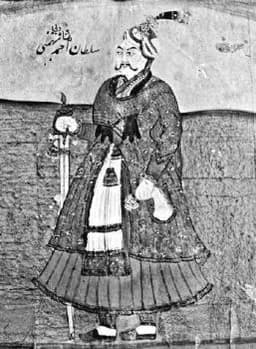
Ahmad Shah I Wali
Emperor · Medieval
51.7Total
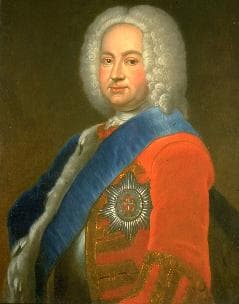
Albert II
Emperor · Medieval
42.3Total
Basic Information
Born
1422
1397
Died
1436
1439
Era
Medieval
Medieval
Nationality
India
Holy Roman Empire
Occupation
Emperor
Emperor
Civilization
Indian
Western
Score Comparison
Military (10%)
40.0
50.0
Political (20%)
48.0
30.8
Influence (20%)
51.0
51.0
Legacy (20%)
42.5
42.5
Leadership (15%)
74.0
38.1
Strategy (15%)
60.0
35.7
TOTAL
51.7
42.3
Ahmad Shah I Wali — Complete Timeline
1424 AD
Relocation of the Bahmani capital to BidarPolitical Action
Ahmad Shah I Wali moved the Bahmani capital from Gulbarga to Bidar, a more defensible location. He constructed a new fort and palace complex in Bidar, which became the political center of the sultanate.
Capital MoveUrban Development
Impact: regionalconstructive
1425 AD
War against the Vijayanagara EmpireWar◆ Major
Ahmad Shah I Wali launched a successful campaign against the Vijayanagara Empire, capturing the fort of Mudgal. The victory expanded Bahmani territory in the Raichur Doab.
WarVijayanagaraTerritorial Expansion
Impact: regional
1428 AD
Construction of the Bidar FortCultural◆ Major
Ahmad Shah I Wali oversaw the construction of the Bidar Fort, a massive defensive structure with seven gates and extensive ramparts. The fort became the seat of Bahmani power for over a century.
ArchitectureFortification
Impact: regionalconstructive
1430 AD
Suppression of the rebellion of the Bahmani noblesPolitical Action
Ahmad Shah I Wali crushed a rebellion by powerful Bahmani nobles who opposed his centralization of authority. The rebels were defeated, and their leaders were executed or exiled.
RebellionInternal Conflict
Impact: nationaldestructive
Albert II — Complete Timeline
1437 AD
Inheritance of Bohemia and HungaryPolitical Action◆ Major
Upon the death of his father-in-law Sigismund, Albert II inherited the crowns of Bohemia and Hungary. He was crowned King of Hungary in 1438 and King of Bohemia in 1438, though his rule in Bohemia was contested by the Hussites. This expanded Habsburg influence in Central Europe.
InheritanceBohemiaHungary
Impact: regionalconstructive
1438 AD
Election as King of the RomansPolitical Action◆ Major
Following the death of Sigismund, Albert II was elected King of the Romans, becoming the first Habsburg to hold the title. His election marked the beginning of the Habsburgs' near-continuous hold on the imperial throne until 1806. Albert's reign was brief, lasting only two years.
ElectionHabsburg DynastyImperial Politics
Impact: regionalconstructive
1439 AD
Campaign against the Ottoman EmpireWar◆ Major
Albert II led a military campaign against the Ottoman Empire in Serbia, aiming to halt their advance into the Balkans. The campaign was cut short by an outbreak of dysentery in the Christian army. Albert himself fell ill and died on the return journey, leaving his infant son Ladislaus the Posthumous as his heir.
Ottoman WarsMilitary CampaignDeath
Impact: regionaltragic
Expert Analysis
Origins
Ahmad Shah I Wali (r. 1422–1436) was born into the Bahmani Sultanate, a Deccan Muslim kingdom in India. His father was Sultan Taj ud-Din Firuz Shah, and Ahmad was raised in the court at Gulbarga. The Bahmani Sultanate was established in 1347, and by Ahmad's time, it faced internal factionalism and external threats from the Vijayanagara Empire.
Albert II (1397–1439) was born as Albert of Habsburg, the son of Albert IV, Duke of Austria. He inherited the Duchy of Austria in 1404. The Habsburgs were a powerful dynasty in the Holy Roman Empire, but Albert's early rule was marked by regency and conflicts with local nobility.
Rise to Power
Ahmad Shah I Wali ascended the throne in 1422 after a power struggle following his father's death. He consolidated power by suppressing a rebellion of Bahmani nobles who opposed his centralization efforts. His key turning point was the relocation of the capital from Gulbarga to Bidar in 1424, which provided a more defensible location and allowed him to assert his authority over the nobility.
Albert II rose to prominence through marriage. In 1422, he married Elisabeth of Luxembourg, the only daughter of Holy Roman Emperor Sigismund. After Sigismund's death in 1437, Albert was elected King of the Romans (German king) in 1438, inheriting the crowns of Hungary and Bohemia. He was crowned King of Hungary in 1438 and King of Bohemia in 1438, uniting these realms under Habsburg rule for the first time.
Leadership & Governance
Ahmad Shah I Wali was a capable administrator and military leader. He centralized authority by crushing noble rebellions and building a strong defensive infrastructure. His construction of Bidar Fort (with seven gates and extensive ramparts) exemplified his focus on security. He also patronized Persian culture and architecture, making Bidar a center of learning. His governance score of 74.0 reflects his effective consolidation.
Albert II's leadership was hampered by his short reign (1438–1439). He attempted to enforce royal authority in Hungary and Bohemia but faced resistance from local nobles. His political score is only 30.8, indicating limited success in governance. He focused on defending against Ottoman expansion but lacked the time to implement lasting reforms.
Triumph & Tragedy
Ahmad Shah I Wali's greatest success was the capture of the fort of Mudgal from the Vijayanagara Empire, expanding Bahmani territory. His construction of Bidar Fort stands as a lasting achievement. However, his reign saw continued factionalism among the Deccan nobility, and after his death, the sultanate declined. His legacy score is 42.5, reflecting moderate long-term impact.
Albert II's triumph was being elected King of the Romans, establishing the Habsburgs as a dominant force in the Holy Roman Empire. He also briefly united Hungary and Bohemia under Habsburg rule. His tragedy was his untimely death from dysentery during a campaign against the Ottoman Empire in 1439, leaving his realms divided. His military score of 50.0 and strategy of 35.7 indicate modest achievements.
Character & Destiny
Ahmad Shah I Wali was determined and pragmatic, using military force and strategic relocation to strengthen his rule. His decision to move the capital was a calculated move to escape entrenched nobility. His leadership score of 74.0 suggests effective command.
Albert II was ambitious but faced overwhelming odds. His brief reign and premature death prevented him from fulfilling his potential. Historians view him as a transitional figure who set the stage for later Habsburg dominance but lacked the time to leave a strong personal mark. His total score of 42.3 reflects this.
Legacy
Ahmad Shah I Wali is remembered as a key builder of the Bahmani Sultanate, particularly for Bidar Fort, which remains a historical monument. However, the sultanate fragmented after his death, limiting his long-term impact. His influence score of 51.0 is moderate.
Albert II's legacy is more significant in the context of European history. His election as King of the Romans began the Habsburgs' near-continuous hold on the Holy Roman Empire until 1806. He also established the precedent of Habsburg rule in Hungary and Bohemia. Despite a short reign, his influence score is 51.0, equal to Ahmad's, but with broader geopolitical consequences.
Conclusion
While Ahmad Shah I Wali scored higher overall (51.7 vs 42.3), Albert II's impact on European dynastic politics was more lasting. Ahmad's achievements were primarily local and short-lived, whereas Albert's brief rule laid the foundation for Habsburg dominance that shaped European history for centuries. Therefore, Albert II had greater historical impact despite his lower score. The score gap of 9.4 points reflects Ahmad's stronger leadership and military scores, but legacy and influence are comparable. In a long-term perspective, Albert II edges ahead.
Rankings
🥇
Ahmad Shah I WaliLeader
Mil: 40.0Pol: 48.0Inf: 51.0
51.7
🥈
Albert II
Mil: 50.0Pol: 30.8Inf: 51.0
42.3
+9.4 behind
How This Comparison Works
Algorithm
Each figure is scored on 6 dimensions (0—100 scale) based on structured historical data: Military (10%), Political (20%), Influence (20%), Legacy (20%), Leadership (15%), Strategy (15%). The weighted total produces the final ranking.
Data Sources
Scores are computed from structured sub-indicators in the database. Scale factors adjust for era (Ancient ×0.85, Modern ×1.0) and civilization size (Eastern ×1.05, Other ×0.80) to account for differences in population and military scale.
Maximum 3 Figures
Comparisons are limited to 2—3 figures to ensure readability and statistical meaningfulness.
Error Margins
±5 points per dimension — Sub-scores are derived from historical records with inherent uncertainty. Two figures within 5 points on a dimension should be considered roughly equivalent in that area.
Total Score Accuracy
±3 points overall — The weighted combination of 6 dimensions produces a total score with approximately ±3 points of uncertainty. Differences of less than 3 points are not statistically significant— the figures are effectively tied.
Known Limitations
- Historical records are incomplete and uneven across civilizations
- Figures from oral-tradition societies may be underrepresented
- Occupation labels can misclassify multi-role figures
- Scores measure capability and impact, not moral character
- Quantitative scoring is a comparison tool, not absolute truth
Capability Radar
Military (10%) — Battles & Warfare
Battles
45
15
Win Rate
50
20
Expansion
40
25
Political (20%) — Governance & Reform
Reform
50
20
Diplomacy
45
35
Economy
40
20
Influence (20%) — Cultural & Global Reach
Cultural
30
20
Global
15
15
Legacy (20%) — Historical Impact
Historical
35
25
Longevity
20
20
Leadership (15%) — Power & Stability
Tenure
55
30
Stability
50
15
Strategy (15%) — Tactics & Innovation
Strategy
45
20
Tactics
40
15
Reform
35
10
Similar Comparisons
Comments & Discussion
No comments yet. Be the first to share your thoughts!