Loading...
Albert I vs John I Albert
Albert I leads by 1.0 pts · 2 figures compared
…

Albert I
Emperor · Medieval
44.4Total
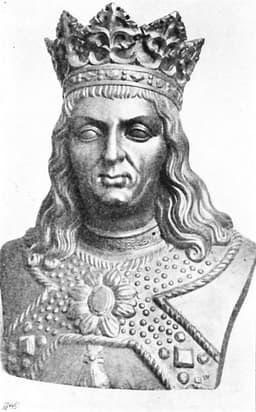
John I Albert
Emperor · Medieval
43.4Total
Basic Information
Born
1255
1459
Died
1308
1501
Era
Medieval
Medieval
Nationality
Holy Roman Empire
Poland
Occupation
Emperor
Emperor
Civilization
Western
Western
Score Comparison
Military (10%)
47.5
50.0
Political (20%)
36.5
35.1
Influence (20%)
49.4
47.9
Legacy (20%)
40.8
38.3
Leadership (15%)
48.4
48.4
Strategy (15%)
43.7
43.7
TOTAL
44.4
43.4
Albert I — Complete Timeline
1298 AD
Defeated Adolf of Nassau at the Battle of GöllheimWar◆ Major
Albert I of Habsburg defeated and killed Adolf of Nassau at the Battle of G
BattleHabsburgVictory
Impact: regional
Elected King of GermanyPolitical Action◆ Major
Albert I of Habsburg was elected King of Germany after deposing Adolf of Nassau. His election was supported by the prince-electors and marked the return of Habsburg rule to the German throne.
ElectionHabsburgGerman Kingdom
Impact: regional
Crowned Holy Roman EmperorPolitical Action◆ Major
Albert I of Habsburg was crowned Holy Roman Emperor in Aachen. His coronation reaffirmed Habsburg authority in the empire, though his reign was marked by conflicts with the Papacy and the prince-electors.
CoronationHoly Roman EmpireHabsburg
Impact: regional
1308 AD
Assassinated by His Nephew John ParricidaOther◆ Major
Albert I of Habsburg was assassinated by his nephew John Parricida near Windisch, Switzerland. His death ended his reign and led to a period of instability, with the throne passing to Henry VII of Luxembourg.
AssassinationHabsburgDeath
Impact: regionaltragic
John I Albert — Complete Timeline
1496 AD
Attempt to Strengthen Royal PowerReform
John I Albert issued the Piotrk
NobilitySocial PolicyPeasants
Impact: nationaldestructive
1497 AD
Moldavian CampaignWar◆ Major
John I Albert led a military expedition into Moldavia to place his brother Sigismund on the Moldavian throne. The campaign ended in disaster at the Battle of the Cosmin Forest, where the Polish army was ambushed and defeated by Moldavian and Ottoman forces.
MoldaviaMilitary DefeatOttoman Empire
Impact: regionaldestructive
1501 AD
Conflict with the Teutonic OrderWar
John I Albert prepared for war against the Teutonic Order but died suddenly before any major engagement. His death left the conflict unresolved and weakened the Polish position in Prussia.
Teutonic OrderUnfinished CampaignDeath
Impact: regional
Expert Analysis
Origins
Albert I of Habsburg was born in 1255, the eldest son of King Rudolf I of Germany, founder of the Habsburg dynasty. Raised in the Swiss heartland, Albert was groomed for leadership from an early age, inheriting the Duchy of Austria and Styria in 1282. His upbringing was marked by the political maneuvering of his father, who sought to consolidate Habsburg power within the Holy Roman Empire.
John I Albert, born in 1459, was the third son of King Casimir IV of Poland and Elizabeth of Austria. As a member of the Jagiellonian dynasty, he grew up in a court that balanced Polish, Lithuanian, and Hungarian interests. Educated in humanist traditions, John I Albert was prepared for a role in governance, though his path to the throne was not initially clear due to his older brothers.
Rise to Power
Albert I's path to kingship was contentious. After his father's death in 1291, the prince-electors bypassed Albert and elected Adolf of Nassau as King of Germany. Albert spent years building alliances and military strength, eventually deposing Adolf at the Battle of Göllheim on July 2, 1298. He was crowned King of Germany in Aachen on August 27, 1298, and later crowned Holy Roman Emperor in 1303. His rise was characterized by ruthless pragmatism and military force.
John I Albert ascended the Polish throne in 1492 after the death of his father, Casimir IV. His election was supported by the Polish nobility, who saw him as a strong leader capable of curbing the power of magnates. However, his reign was immediately challenged by the need to balance royal authority with noble privileges, a tension that defined his rule.
Leadership & Governance
Albert I governed the Holy Roman Empire with a focus on centralizing Habsburg power. He expanded his dynastic lands through strategic marriages and military campaigns, but his heavy-handed tactics alienated many princes. For example, he imposed high taxes and enforced imperial jurisdiction, leading to conflicts with the Swiss Confederacy. His leadership score of 48.4 reflects his ability to command but also his failure to build lasting alliances.
John I Albert attempted to strengthen royal power in Poland by issuing the Piotrków Privilege in 1496, which restricted peasant mobility and granted the nobility further exemptions from taxes. While this temporarily secured noble support, it weakened the monarchy in the long run by entrenching the nobility's power. His political score of 35.1 indicates his struggles in navigating the complex Polish political landscape.
Triumph & Tragedy
Albert I's greatest triumph was the defeat of Adolf of Nassau at the Battle of Göllheim (1298), which secured his kingship and eliminated a rival. He also successfully expanded Habsburg territories in Swabia and Switzerland. However, his assassination by his nephew John Parricida in 1308 was a tragic end, stemming from a family dispute over inheritance. The murder plunged the empire into a period of instability, undermining his achievements.
John I Albert's Moldavian Campaign of 1497 aimed to place his brother Sigismund on the Moldavian throne, but it ended in disaster at the Battle of the Cosmin Forest, where Polish forces were decimated. This failure weakened his reputation and drained royal resources. On the positive side, he successfully negotiated with the Teutonic Order, though his sudden death in 1501 prevented a full resolution. His military score of 50.0 is slightly higher than Albert's 47.5, but his overall impact was limited.
Character & Destiny
Albert I was known for his ambition and determination, often described as a capable but ruthless ruler. His decision to deny his nephew John Parricida his inheritance directly led to his murder, highlighting a lack of diplomatic finesse. Historical assessments note that his reign was overshadowed by his father's legacy, and his assassination prevented him from achieving long-term stability.
John I Albert was characterized as a well-intentioned but ineffective king, caught between the nobility's demands and his own ambitions. His failure in Moldavia and his inability to curb noble privileges were partly due to his indecisiveness. He died at age 42, possibly from syphilis, leaving behind a kingdom that was no stronger than when he inherited it.
Legacy
Albert I's legacy is mixed: he solidified the Habsburg dynasty's claim to the German throne, but his assassination demonstrated the fragility of his achievements. The Habsburgs would later rise to dominate Europe, but Albert's direct contributions were modest. His influence score of 49.4 reflects his role as a transitional figure.
John I Albert's legacy is overshadowed by his more successful brothers, Sigismund I of Poland and Vladislaus II of Hungary. The Piotrków Privilege he enacted accelerated the decline of royal power in Poland, contributing to the eventual collapse of the Polish-Lithuanian Commonwealth. His legacy score of 38.3 is the lowest among the two, indicating a negative long-term impact.
Conclusion
Albert I of Habsburg, with a total score of 44.4, had a slightly greater impact than John I Albert (43.4). Albert's military victory at Göllheim and his role in the Habsburg consolidation outweigh John I Albert's failed campaigns and detrimental privileges. Albert's influence on the Holy Roman Empire's dynastic politics was more significant, even if his reign ended abruptly. John I Albert's policies ultimately weakened the Polish monarchy, making his legacy more harmful than constructive. Therefore, Albert I emerges as the more impactful ruler, despite his lower military score.
Rankings
🥇
Albert ILeader
Mil: 47.5Pol: 36.5Inf: 49.4
44.4
🥈
John I Albert
Mil: 50.0Pol: 35.1Inf: 47.9
43.4
+1.0 behind
How This Comparison Works
Algorithm
Each figure is scored on 6 dimensions (0—100 scale) based on structured historical data: Military (10%), Political (20%), Influence (20%), Legacy (20%), Leadership (15%), Strategy (15%). The weighted total produces the final ranking.
Data Sources
Scores are computed from structured sub-indicators in the database. Scale factors adjust for era (Ancient ×0.85, Modern ×1.0) and civilization size (Eastern ×1.05, Other ×0.80) to account for differences in population and military scale.
Maximum 3 Figures
Comparisons are limited to 2—3 figures to ensure readability and statistical meaningfulness.
Error Margins
±5 points per dimension — Sub-scores are derived from historical records with inherent uncertainty. Two figures within 5 points on a dimension should be considered roughly equivalent in that area.
Total Score Accuracy
±3 points overall — The weighted combination of 6 dimensions produces a total score with approximately ±3 points of uncertainty. Differences of less than 3 points are not statistically significant— the figures are effectively tied.
Known Limitations
- Historical records are incomplete and uneven across civilizations
- Figures from oral-tradition societies may be underrepresented
- Occupation labels can misclassify multi-role figures
- Scores measure capability and impact, not moral character
- Quantitative scoring is a comparison tool, not absolute truth
Capability Radar
Military (10%) — Battles & Warfare
Battles
20
20
Win Rate
25
25
Expansion
25
20
Political (20%) — Governance & Reform
Reform
30
35
Diplomacy
35
30
Economy
30
25
Influence (20%) — Cultural & Global Reach
Cultural
20
15
Global
15
10
Legacy (20%) — Historical Impact
Historical
25
20
Longevity
20
10
Leadership (15%) — Power & Stability
Tenure
40
40
Stability
20
20
Strategy (15%) — Tactics & Innovation
Strategy
20
20
Tactics
20
20
Reform
15
15
Similar Comparisons
Comments & Discussion
No comments yet. Be the first to share your thoughts!