Loading...
John I Albert vs Julius Caesar
Julius Caesar leads by 39.4 pts · 2 figures compared
…
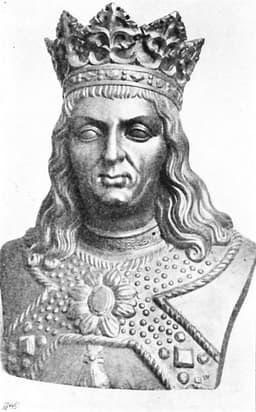
John I Albert
Emperor · Medieval
43.4Total

Julius Caesar
General · Ancient
82.8Total
Basic Information
Born
1459
-100
Died
1501
-44
Era
Medieval
Ancient
Nationality
Poland
Roman Republic
Occupation
Emperor
General
Civilization
Western
Western
Score Comparison
Military (10%)
50.0
88.0
Political (20%)
35.1
78.0
Influence (20%)
47.9
85.0
Legacy (20%)
38.3
82.0
Leadership (15%)
48.4
80.0
Strategy (15%)
43.7
85.0
TOTAL
43.4
82.8
John I Albert — Complete Timeline
1496 AD
Attempt to Strengthen Royal PowerReform
John I Albert issued the Piotrk
NobilitySocial PolicyPeasants
Impact: nationaldestructive
1497 AD
Moldavian CampaignWar◆ Major
John I Albert led a military expedition into Moldavia to place his brother Sigismund on the Moldavian throne. The campaign ended in disaster at the Battle of the Cosmin Forest, where the Polish army was ambushed and defeated by Moldavian and Ottoman forces.
MoldaviaMilitary DefeatOttoman Empire
Impact: regionaldestructive
1501 AD
Conflict with the Teutonic OrderWar
John I Albert prepared for war against the Teutonic Order but died suddenly before any major engagement. His death left the conflict unresolved and weakened the Polish position in Prussia.
Teutonic OrderUnfinished CampaignDeath
Impact: regional
Julius Caesar — Complete Timeline
58 BC
Gallic WarsWar◆ Major
Caesar, as proconsul of Gaul, launched a series of campaigns that conquered all of Gaul (modern France, Belgium, and parts of Switzerland). He fought numerous battles, including against the Helvetii, the Belgae, and the Gallic chieftain Vercingetorix. The wars brought immense wealth and a loyal army to Caesar.
Gallic WarsConquestRoman Expansion
Impact: regional
49 BC
Crossing the RubiconPolitical Action◆ Major
Caesar led Legio XIII across the Rubicon River into Italy, defying the Roman Senate's order to disband his army. This act triggered a civil war against Pompey and the Optimates, ultimately leading to Caesar's dictatorship and the end of the Roman Republic.
Roman Civil WarEnd of RepublicPower Struggle
Impact: global
48 BC
Battle of PharsalusWar◆ Major
Caesar's outnumbered army defeated the larger forces of Pompey the Great at Pharsalus in Greece. Caesar's tactical use of a reserve line to counter Pompey's cavalry charge proved decisive. Pompey fled to Egypt, where he was assassinated, leaving Caesar as the undisputed master of the Roman world.
Roman Civil WarBattleDecisive Victory
Impact: regional
44 BC
Appointment as Dictator for LifePolitical Action◆ Major
The Roman Senate appointed Caesar dictator perpetuo (dictator for life), granting him unprecedented personal power. This move concentrated military, legislative, and judicial authority in one person, effectively ending the Roman Republic's traditional system of checks and balances and alarming many senators.
DictatorshipEnd of RepublicPower Consolidation
Impact: regionaldestructive
Assassination on the Ides of MarchPolitical Action◆ Major
A group of Roman senators, led by Marcus Junius Brutus and Gaius Cassius Longinus, stabbed Caesar to death at a meeting of the Senate in the Theatre of Pompey. The assassination was intended to restore the Republic, but instead triggered another civil war that led to the rise of the Roman Empire.
AssassinationRoman PoliticsEnd of Republic
Impact: globaldestructive
Expert Analysis
john-i-albert-vs-julius-caesar
# The Ides of March and the Lost Throne
On a March morning in 44 BCE, the most powerful man in the Roman world fell bleeding at the feet of his assassins, his blood pooling on the Senate floor. Half a millennium later and a thousand miles away, another king died in his bed in Toruń, his grand ambitions dissolving into the cold air of a Polish winter. Julius Caesar and John I Albert—both rulers, both reformers, both men who tried to reshape their worlds—yet their names echo across history with vastly different resonance. Why did one become a legend and the other a footnote? The answer lies not merely in their achievements, but in the currents of time and character that carried them to such divergent fates.
Origins
Caesar was born into the patrician Julian clan, an ancient but politically diminished family in the turbulent final decades of the Roman Republic. His youth unfolded amid civil wars, proscriptions, and the collapse of traditional republican norms. The Rome of his childhood was a city of ambition run rampant, where generals like Marius and Sulla had already shown that military loyalty could override constitutional order. Caesar learned early that survival meant audacity.
John I Albert, by contrast, was the third son of Casimir IV Jagiellon, king of Poland and grand duke of Lithuania. He grew up in Kraków's Wawel Castle, surrounded by the rituals of a medieval court that balanced power between a hereditary monarch and a fiercely independent nobility. The Poland of his youth was a sprawling, multi-ethnic commonwealth where the king was less an autocrat than a first among equals, constantly negotiating with the *szlachta*—the noble class that held the real keys to power.
Their origins shaped their instincts. Caesar inherited a world where a man could seize destiny with a sword. John Albert inherited a world where a king must beg, bargain, and bribe.
Rise to Power
Caesar's ascent was a masterclass in calculated risk. He climbed the cursus honorum—the ladder of Roman offices—through a combination of military command, popular reforms, and strategic alliances. His governorship of Gaul from 58 to 50 BCE was transformative: he conquered a territory that doubled Rome's holdings, built a loyal army that worshipped him, and amassed wealth that made him a player on the grandest stage. When the Senate ordered him to disband his forces, he crossed the Rubicon River in 49 BCE, igniting a civil war that would end the Republic. “The die is cast,” he reportedly said—a phrase that captures his willingness to gamble everything.
John I Albert's path was quieter but no less ambitious. Elected king of Poland in 1492 after his father's death, he inherited a throne that was strong in name but constrained in practice. The Polish nobility had spent generations extracting privileges from weak monarchs, and John Albert's first challenge was not foreign enemies but his own court. His rise was legitimate, conventional, and hemmed in by tradition—the opposite of Caesar's revolutionary surge.
Leadership & Governance
Caesar governed as a revolutionary. As dictator, he reformed the calendar, granted citizenship to provincials, initiated public works, and centralized authority in his own person. His military genius was undeniable: at Alesia in 52 BCE, he besieged a Gallic stronghold while simultaneously fending off a massive relief army, displaying tactical brilliance that still commands study in military academies. Yet his political wisdom was flawed—he pardoned his enemies, promoted former opponents, and assumed lifelong dictatorship, believing his popularity would protect him. He underestimated the republican instincts of Rome's elite.
John I Albert governed as a traditionalist struggling against modernity. His 1496 Piotrków Privilege was meant to strengthen the crown by restricting peasant mobility and limiting townspeople's rights, but it primarily benefited the nobility, who extracted further concessions in return. His military campaign against the Ottoman Empire in 1497 was a disaster: he marched into Moldavia to install his brother on the throne, but the Ottomans and their allies ambushed and routed his army in the Bukovina forests. The defeat was not just a military failure—it shattered royal prestige and emboldened the nobles who opposed him.
Triumph & Tragedy
Caesar's greatest triumph was his conquest of Gaul, a campaign so complete that it transformed Rome from a Mediterranean power into a European empire. His greatest tragedy was his assassination on the Ides of March, 44 BCE—a death that proved his political reforms could not outlast his personal authority. He had won the war but lost the peace.
John I Albert's greatest moment was his election itself—a peaceful succession that demonstrated Poland's constitutional stability. His greatest tragedy was the Moldavian campaign, which drained the treasury, cost thousands of lives, and left him politically crippled. He spent his final years preparing for a war against the Teutonic Order but died suddenly in 1501 at age forty-two, before any redemption could be achieved. His last words, according to chroniclers, were reportedly about the ingratitude of his nobles.
Character & Destiny
Caesar was audacious, charismatic, and ruthlessly pragmatic. He forgave enemies not from kindness but from calculation—a generosity that disarmed opponents but also left them alive to plot against him. His personality was magnetic, his ambition limitless, and his confidence so absolute that he dismissed the warnings of soothsayers and friends. “It is easier to find men who will volunteer to die,” he once said, “than to find those who are willing to endure pain with patience.” That impatience—that need to control fate rather than submit to it—led him to walk unarmed into the Senate on that fatal morning.
John I Albert was cautious, conventional, and constrained by circumstance. He lacked Caesar's charisma and his willingness to break the rules. Where Caesar created opportunities, John Albert reacted to them. His personality was shaped by the limits of his office—a king who could command armies but not the loyalty of his own nobles, a reformer whose reforms only strengthened the class that opposed him.
Legacy
Caesar's legacy is immeasurable. His name became a title—*Caesar* for Roman emperors, *Kaiser* for Germans, *Tsar* for Russians. His writings, especially the *Commentaries on the Gallic War*, remain classics of military literature. The Roman Empire he inadvertently created lasted another five centuries in the West and a millennium in the East. His assassination did not restore the Republic; it merely cleared the path for his adopted heir, Octavian, to become Augustus, the first emperor.
John I Albert's legacy is modest. He is remembered in Poland as a well-intentioned but unsuccessful king, a reminder of the limits of royal power in the face of noble privilege. His reign accelerated the decline of the Polish monarchy, contributing to the “Golden Liberty” that would eventually paralyze the Commonwealth. His military defeat is studied as a cautionary tale. His name appears in history books, but not in the mouths of schoolchildren or the titles of emperors.
Conclusion
Standing at the edge of history, one sees that Caesar and John I Albert were both men who tried to master their eras, but their eras were not equal. Caesar lived in a time when the old order was dying, and a bold man could forge a new world from its ruins. John Albert lived in a time when institutions were hardening, and even a king could only chip at the edges of an entrenched system. Caesar's ambition was revolutionary; John Albert's was constitutional. One broke the world to remake it; the other tried to mend it from within. And history, as always, remembered the breaker far more vividly than the mender. The Ides of March echo across millennia; the Moldavian forests have long since grown silent.
Rankings
🥇
Julius CaesarLeader
Mil: 88.0Pol: 78.0Inf: 85.0
82.8
🥈
John I Albert
Mil: 50.0Pol: 35.1Inf: 47.9
43.4
+39.4 behind
How This Comparison Works
Algorithm
Each figure is scored on 6 dimensions (0—100 scale) based on structured historical data: Military (10%), Political (20%), Influence (20%), Legacy (20%), Leadership (15%), Strategy (15%). The weighted total produces the final ranking.
Data Sources
Scores are computed from structured sub-indicators in the database. Scale factors adjust for era (Ancient ×0.85, Modern ×1.0) and civilization size (Eastern ×1.05, Other ×0.80) to account for differences in population and military scale.
Maximum 3 Figures
Comparisons are limited to 2—3 figures to ensure readability and statistical meaningfulness.
Error Margins
±5 points per dimension — Sub-scores are derived from historical records with inherent uncertainty. Two figures within 5 points on a dimension should be considered roughly equivalent in that area.
Total Score Accuracy
±3 points overall — The weighted combination of 6 dimensions produces a total score with approximately ±3 points of uncertainty. Differences of less than 3 points are not statistically significant— the figures are effectively tied.
Known Limitations
- Historical records are incomplete and uneven across civilizations
- Figures from oral-tradition societies may be underrepresented
- Occupation labels can misclassify multi-role figures
- Scores measure capability and impact, not moral character
- Quantitative scoring is a comparison tool, not absolute truth
Capability Radar
Military (10%) — Battles & Warfare
Battles
20
95
Win Rate
25
92
Expansion
20
97
Political (20%) — Governance & Reform
Reform
35
90
Diplomacy
30
85
Economy
25
82
Influence (20%) — Cultural & Global Reach
Cultural
15
88
Global
10
94
Legacy (20%) — Historical Impact
Historical
20
95
Longevity
10
96
Leadership (15%) — Power & Stability
Tenure
40
75
Stability
20
60
Strategy (15%) — Tactics & Innovation
Strategy
20
94
Tactics
20
96
Reform
15
88
Similar Comparisons
Comments & Discussion
No comments yet. Be the first to share your thoughts!