Loading...
This comparison has not been analyzed yet.
One-time AI generation (~1 minute). Scores and timeline are already available below.
Albert I of Belgium vs Zayed bin Sultan Al Nahyan
Zayed bin Sultan Al Nahyan leads by 6.7 pts · 2 figures compared
…

Albert I of Belgium
Emperor · Modern
57.1Total
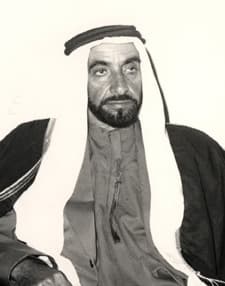
Zayed bin Sultan Al Nahyan
Emperor · Modern
63.8Total
Basic Information
Born
1875
1918
Died
1934
2004
Era
Modern
Modern
Nationality
Belgium
UAE
Occupation
Emperor
Emperor
Civilization
Western
Middle Eastern
Score Comparison
Military (10%)
46.7
11.3
Political (20%)
68.0
82.0
Influence (20%)
59.0
68.0
Legacy (20%)
47.5
72.0
Leadership (15%)
66.0
85.0
Strategy (15%)
57.5
25.7
TOTAL
57.1
63.8
Albert I of Belgium — Complete Timeline
1909 AD
Accession as King Albert IPolitical Action◆ Major
Albert I became king of Belgium upon the death of his uncle Leopold II. He inherited a country with deep social tensions and a controversial colonial legacy in the Congo.
AccessionMonarchySuccession
Impact: national
1914 AD
German Invasion of Belgium (1914)War
Germany invaded neutral Belgium on August 4, 1914, as part of the Schlieffen Plan. Albert I, as commander-in-chief, led the Belgian army in resistance, delaying the German advance and earning international respect.
World War IInvasionNeutrality
Impact: globaltragic
Battle of the YserWar◆ Major
Albert I ordered the opening of the Yser sluice gates, flooding the Yser plain to halt the German advance. This tactical flooding created a stable front line in West Flanders, where the Belgian army held out for the rest of the war.
World War IBattleDefense
Impact: regional
Leadership in Exile at De PanneWar◆ Major
Albert I established his headquarters at De Panne, the only unoccupied corner of Belgium. He refused to leave Belgian soil, commanding the army from the front lines and maintaining Belgian sovereignty throughout the war.
World War ILeadershipResistance
Impact: nationalconstructive
1918 AD
Post-War Reconstruction and ReformsReform◆ Major
After World War I, Albert I oversaw Belgium's reconstruction. He supported universal male suffrage (1919), the introduction of Flemish language rights, and social reforms, helping to heal the country's linguistic and social divisions.
ReconstructionReformDemocracy
Impact: nationalprogressive
1934 AD
Death in Climbing AccidentOther◆ Major
Albert I died in a climbing accident at Marche-les-Dames in the Ardennes. His death shocked Belgium and Europe, as he was widely respected for his wartime leadership and personal integrity.
DeathAccidentLegacy
Impact: nationaltragic
Zayed bin Sultan Al Nahyan — Complete Timeline
1970 AD
Oil Revenue Investment in InfrastructureReform◆ Major
After the discovery of oil in Abu Dhabi in the 1950s, Zayed directed oil revenues toward building modern infrastructure: roads, hospitals, schools, and housing. This transformed Abu Dhabi from a poor region into a wealthy state.
OilDevelopmentInfrastructure
Impact: nationalconstructive
1971 AD
Formation of the United Arab EmiratesPolitical Action
Zayed bin Sultan Al Nahyan, as ruler of Abu Dhabi, played a key role in uniting seven emirates to form the United Arab Emirates on December 2, 1971. He became the first President, a position he held until his death.
UnificationUAEIndependence
Impact: regionalconstructive
1990 AD
Environmental Conservation InitiativesReform
Zayed established the Zayed International Prize for the Environment and implemented policies to protect wildlife and habitats, including the creation of nature reserves. He was a pioneer in environmentalism in the Gulf region.
EnvironmentConservationAwards
Impact: regionalconstructive
Women's Rights ReformsReform◆ Major
Zayed supported women's education and employment, appointing women to government positions and promoting their participation in the workforce. These reforms were progressive for the region at the time.
Women's RightsEducationReform
Impact: nationalprogressive
2004 AD
Death and LegacyOther◆ Major
Zayed died on November 2, 2004, after a long illness. His funeral drew massive crowds, and he was mourned as the founding father of the UAE. His legacy includes a stable, prosperous federation.
DeathLegacyFounding Father
Impact: nationaltragic
This comparison has not been analyzed yet.
One-time AI generation (~1 minute). Scores and timeline are already available below.
Rankings
🥇
Zayed bin Sultan Al NahyanLeader
Mil: 11.3Pol: 82.0Inf: 68.0
63.8
🥈
Albert I of Belgium
Mil: 46.7Pol: 68.0Inf: 59.0
57.1
+6.7 behind
How This Comparison Works
Algorithm
Each figure is scored on 6 dimensions (0—100 scale) based on structured historical data: Military (10%), Political (20%), Influence (20%), Legacy (20%), Leadership (15%), Strategy (15%). The weighted total produces the final ranking.
Data Sources
Scores are computed from structured sub-indicators in the database. Scale factors adjust for era (Ancient ×0.85, Modern ×1.0) and civilization size (Eastern ×1.05, Other ×0.80) to account for differences in population and military scale.
Maximum 3 Figures
Comparisons are limited to 2—3 figures to ensure readability and statistical meaningfulness.
Error Margins
±5 points per dimension — Sub-scores are derived from historical records with inherent uncertainty. Two figures within 5 points on a dimension should be considered roughly equivalent in that area.
Total Score Accuracy
±3 points overall — The weighted combination of 6 dimensions produces a total score with approximately ±3 points of uncertainty. Differences of less than 3 points are not statistically significant— the figures are effectively tied.
Known Limitations
- Historical records are incomplete and uneven across civilizations
- Figures from oral-tradition societies may be underrepresented
- Occupation labels can misclassify multi-role figures
- Scores measure capability and impact, not moral character
- Quantitative scoring is a comparison tool, not absolute truth
Capability Radar
Military (10%) — Battles & Warfare
Battles
45
4
Win Rate
40
9
Expansion
10
12
Political (20%) — Governance & Reform
Reform
40
90
Diplomacy
60
95
Economy
35
90
Influence (20%) — Cultural & Global Reach
Cultural
45
70
Global
50
70
Legacy (20%) — Historical Impact
Historical
55
75
Longevity
40
65
Leadership (15%) — Power & Stability
Tenure
65
85
Stability
50
85
Strategy (15%) — Tactics & Innovation
Strategy
60
16
Tactics
55
16
Reform
30
18
Similar Comparisons
Comments & Discussion
No comments yet. Be the first to share your thoughts!