Loading...
This comparison has not been analyzed yet.
One-time AI generation (~1 minute). Scores and timeline are already available below.
Albert Alcibiades vs Higinio Morinigo
Higinio Morinigo leads by 5.1 pts · 2 figures compared
…
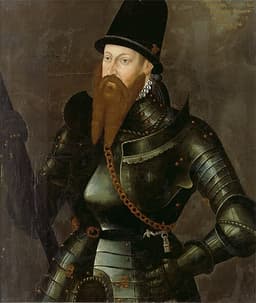
Albert Alcibiades
General · Modern
39.2Total
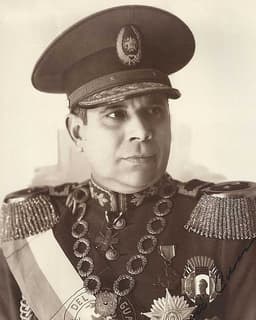
Higinio Morinigo
General · Modern
44.3Total
Basic Information
Born
1522
1897
Died
1557
1983
Era
Modern
Modern
Nationality
Brandenburg-Kulmbach
Paraguay
Occupation
General
General
Civilization
Western
Western
Score Comparison
Military (10%)
20.0
25.9
Political (20%)
27.9
37.9
Influence (20%)
50.2
48.6
Legacy (20%)
41.7
38.3
Leadership (15%)
38.1
71.0
Strategy (15%)
43.3
36.8
TOTAL
39.2
44.3
Albert Alcibiades — Complete Timeline
1527 AD
Became Margrave of Brandenburg-KulmbachPolitical Action◆ Major
Albert Alcibiades inherited the Margraviate of Brandenburg-Kulmbach, a small principality in Franconia. He became known for his aggressive military policies and expansionist ambitions, earning the nickname 'Alcibiades' for his warlike nature.
InheritanceMargrave
Impact: regional
1546 AD
Fought in the Schmalkaldic WarWar◆ Major
Albert Alcibiades fought on the side of Emperor Charles V in the Schmalkaldic War against the Protestant princes. He commanded troops in several battles, including the decisive Battle of M
Schmalkaldic WarImperial Service
Impact: regional
1552 AD
Raided and Plundered Franconian TerritoriesWar◆ Major
After the Treaty of Passau, Albert Alcibiades launched a series of raids and plundering campaigns across Franconia, attacking both Catholic and Protestant territories. His actions caused widespread destruction and destabilized the region, leading to his condemnation.
RaidingDestruction
Impact: regionaldestructive
1553 AD
Defeated at the Battle of SievershausenWar◆ Major
Albert Alcibiades was defeated by a coalition of princes led by Maurice of Saxony at the Battle of Sievershausen. Though he escaped, his forces were shattered, and he was forced to flee, ending his military ambitions.
BattleDefeat
Impact: regionaltragic
Placed under Imperial BanPolitical Action◆ Major
Albert Alcibiades was placed under the Imperial ban by Emperor Charles V for his violent raids and refusal to obey imperial authority. The ban declared him an outlaw, allowing any prince to attack him without legal consequences.
Imperial BanOutlaw
Impact: regionaldestructive
1557 AD
Died in ExileOther
Albert Alcibiades died in exile in France, having been driven from his lands after the Imperial ban. His death marked the end of the Brandenburg-Kulmbach line, and his territories were divided among neighboring princes.
ExileDeath
tragic
Higinio Morinigo — Complete Timeline
1940 AD
Became President of ParaguayPolitical Action◆ Major
After Estigarribia's death, Mor
PresidencyDictatorshipSuccession
Impact: national
1942 AD
Maintained neutrality in World War IIPolitical Action
Despite pressure from the United States, Mor
World War IINeutralityForeign Policy
Impact: national
1947 AD
Suppressed a Liberal revoltWar◆ Major
In March 1947, a coalition of Liberals, Febreristas, and Communists launched a civil war against Mor
Civil WarRepressionDictatorship
Impact: nationaldestructive
1948 AD
Overthrown in a coupPolitical Action◆ Major
On June 3, 1948, Mor
CoupEnd of DictatorshipPolitical Instability
Impact: nationaldestructive
This comparison has not been analyzed yet.
One-time AI generation (~1 minute). Scores and timeline are already available below.
Rankings
🥇
Higinio MorinigoLeader
Mil: 25.9Pol: 37.9Inf: 48.6
44.3
🥈
Albert Alcibiades
Mil: 20.0Pol: 27.9Inf: 50.2
39.2
+5.1 behind
How This Comparison Works
Algorithm
Each figure is scored on 6 dimensions (0—100 scale) based on structured historical data: Military (10%), Political (20%), Influence (20%), Legacy (20%), Leadership (15%), Strategy (15%). The weighted total produces the final ranking.
Data Sources
Scores are computed from structured sub-indicators in the database. Scale factors adjust for era (Ancient ×0.85, Modern ×1.0) and civilization size (Eastern ×1.05, Other ×0.80) to account for differences in population and military scale.
Maximum 3 Figures
Comparisons are limited to 2—3 figures to ensure readability and statistical meaningfulness.
Error Margins
±5 points per dimension — Sub-scores are derived from historical records with inherent uncertainty. Two figures within 5 points on a dimension should be considered roughly equivalent in that area.
Total Score Accuracy
±3 points overall — The weighted combination of 6 dimensions produces a total score with approximately ±3 points of uncertainty. Differences of less than 3 points are not statistically significant— the figures are effectively tied.
Known Limitations
- Historical records are incomplete and uneven across civilizations
- Figures from oral-tradition societies may be underrepresented
- Occupation labels can misclassify multi-role figures
- Scores measure capability and impact, not moral character
- Quantitative scoring is a comparison tool, not absolute truth
Capability Radar
Military (10%) — Battles & Warfare
Battles
45
10
Win Rate
40
10
Expansion
30
10
Political (20%) — Governance & Reform
Reform
10
20
Diplomacy
15
30
Economy
10
20
Influence (20%) — Cultural & Global Reach
Cultural
20
10
Global
10
10
Legacy (20%) — Historical Impact
Historical
25
20
Longevity
15
10
Leadership (15%) — Power & Stability
Tenure
20
60
Stability
5
30
Strategy (15%) — Tactics & Innovation
Strategy
45
10
Tactics
50
10
Reform
10
10
Similar Comparisons
Comments & Discussion
No comments yet. Be the first to share your thoughts!