Loading...
Alaungpaya vs Alfonso XII
Alaungpaya leads by 12.0 pts · 2 figures compared
…

Alaungpaya
Emperor · Modern
63.2Total
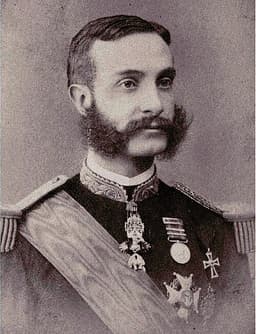
Alfonso XII
Emperor · Modern
51.2Total
Basic Information
Born
1714
1857
Died
1760
1885
Era
Modern
Modern
Nationality
Myanmar
Spain
Occupation
Emperor
Emperor
Civilization
Eastern
Western
Score Comparison
Military (10%)
82.0
21.2
Political (20%)
72.0
68.0
Influence (20%)
58.3
53.3
Legacy (20%)
52.0
43.3
Leadership (15%)
72.0
74.0
Strategy (15%)
58.0
36.8
TOTAL
63.2
51.2
Alaungpaya — Complete Timeline
1752 AD
Founding of the Konbaung DynastyPolitical Action
Alaungpaya, a village headman from Moksobo, led a rebellion against the declining Toungoo dynasty after the fall of Ava to the Mon. He proclaimed himself king and founded the Konbaung dynasty, which would rule Burma until 1885.
Konbaung DynastyFoundingBurma
Impact: nationalconstructive
1753 AD
Reconquest of Upper BurmaWar◆ Major
Alaungpaya's forces recaptured Ava from the Mon kingdom of Pegu, restoring Burmese control over Upper Burma. This victory consolidated his power base and allowed him to launch further campaigns to reunify the country.
Military CampaignReunificationBurma
Impact: regional
1757 AD
Conquest of PeguWar◆ Major
Alaungpaya's armies captured the Mon capital of Pegu (Bago), ending the Restored Hanthawaddy kingdom. This conquest unified all of Burma under Konbaung rule and led to the suppression of Mon identity and culture.
MonConquestBurma
Impact: nationaldestructive
1760 AD
Invasion of SiamWar◆ Major
Alaungpaya led an invasion of Siam (Ayutthaya kingdom) with a large army. The campaign initially succeeded in capturing several towns, but the Burmese forces were forced to retreat after Alaungpaya was mortally wounded by a cannon explosion during the siege of Ayutthaya.
Burmese-Siamese WarInvasionDeath
Impact: regional
Alfonso XII — Complete Timeline
1874 AD
Restoration of the Bourbon monarchyPolitical Action
Alfonso XII was proclaimed king after a military coup by General Mart
RestorationMonarchyBourbon
Impact: nationalconstructive
1876 AD
End of the Third Carlist WarWar◆ Major
Alfonso XII's forces defeated the Carlists, ending the Third Carlist War. The victory consolidated his rule and allowed for the implementation of the Restoration system.
Carlist WarsCivil WarVictory
Impact: nationalconstructive
Promulgation of the Constitution of 1876Reform◆ Major
Alfonso XII oversaw the adoption of the Constitution of 1876, which established a conservative liberal monarchy with a bicameral parliament. This constitution remained in force until 1923.
ConstitutionReformRestoration
Impact: nationalconstructive
1879 AD
Marriage to Maria Cristina of AustriaPolitical Action
Alfonso XII married Maria Cristina of Austria, who later served as regent after his death. The marriage produced Alfonso XIII and helped secure the dynasty.
MarriageDynastySuccession
Impact: national
Expert Analysis
Origins
**Alaungpaya** (born 1714) was a village headman in Moksobo, central Burma. His early life was marked by the decline of the Toungoo dynasty, which had lost control of Lower Burma to the Mon kingdom of Pegu. Alaungpaya received a traditional education in Buddhist monasteries and learned military tactics from local conflicts. He rose from obscurity as a local leader, gathering followers through charisma and promises of restoring Burmese power.
**Alfonso XII** (born 1857) was the son of Queen Isabella II of Spain, who was deposed in the 1868 Glorious Revolution. He spent his youth in exile in France and Austria, receiving a military education at the Theresian Military Academy. His early life was shaped by political instability in Spain, including the First Spanish Republic and the Carlist Wars. Alfonso's claim to the throne was supported by conservative elites who saw monarchy as a stabilizing force.
Rise to Power
Alaungpaya's rise began in 1752 when the Mon kingdom of Pegu captured Ava, the Toungoo capital. He proclaimed himself king at Moksobo (later Shwebo) and organized a resistance. By 1753, his forces recaptured Ava, and by 1754 he had defeated the Mon armies. In 1757, his forces conquered Pegu, ending the Restored Hanthawaddy kingdom. He unified all of Burma under the Konbaung dynasty within five years, scoring 82.0 in military capability.
Alfonso XII's restoration came through the 1874 pronunciamiento of General Martínez Campos, who declared Alfonso king. The First Spanish Republic collapsed, and Alfonso returned to Spain in 1875. He quickly ended the Third Carlist War (1872-1876) by defeating Carlist forces, scoring 74.0 in leadership. His political skill (68.0) was evident in negotiating the Constitution of 1876, which established a conservative liberal monarchy.
Leadership & Governance
Alaungpaya governed as an absolute monarch, centralizing power and expanding the Burmese empire. He implemented conscription, reorganized the army, and built a network of forts. His rule was militaristic: he led campaigns personally, demanding total loyalty. He also promoted Buddhist institutions, constructing pagodas and supporting the sangha. However, his governance lacked institutional reforms, relying on personal authority.
Alfonso XII operated within a constitutional framework. The Constitution of 1876 created a bicameral parliament (Cortes) with a limited franchise. Alfonso maintained stability by alternating power between the Liberal and Conservative parties (turnismo). He reduced military intervention in politics, a contrast to Alaungpaya's warrior kingship. Alfonso's leadership score of 74.0 reflects his ability to navigate political factions, while his strategy score of 36.8 shows limited military ambition.
Triumph & Tragedy
Alaungpaya's greatest success was unifying Burma under the Konbaung dynasty, a feat that ended centuries of fragmentation. His conquests expanded Burmese territory to its largest extent. However, his invasion of Siam in 1760 ended in disaster: he was mortally wounded by a cannon explosion during the siege of Ayutthaya. The campaign failed, and his death led to succession crises. His legacy score of 52.0 reflects his mixed achievements.
Alfonso XII's triumph was stabilizing Spain after years of civil war and republicanism. He ended the Carlist threat and restored monarchical continuity. His tragic early death from tuberculosis in 1885 at age 27 left his queen pregnant with Alfonso XIII, leading to a regency. His failure to address deeper social issues (land inequality, regional tensions) meant instability returned later. His legacy score of 43.3 is modest.
Character & Destiny
Alaungpaya was decisive, ambitious, and ruthless. He personally led troops and executed opponents without hesitation. His character drove rapid expansion but also overreach: the Siamese campaign was a gamble that cost him his life. Historical assessments note his energy and strategic vision but criticize his brutality. His total score of 63.2 reflects high military and political capability but lower influence and legacy.
Alfonso XII was pragmatic, diplomatic, and conciliatory. He sought to heal national divisions through compromise, embodying the "moderate monarchy." His early death cut short his potential. Historians view him as a stabilizing figure but note his regime's dependence on elite pacts. His total score of 51.2 is lower due to his short reign and limited military impact.
Legacy
Alaungpaya founded the Konbaung dynasty, which ruled Burma until 1885. His military campaigns shaped modern Myanmar's borders. However, his aggressive expansion provoked conflicts with Siam and China, and his dynasty's isolationism later led to decline. He is remembered as a national unifier in Myanmar, though his methods were harsh.
Alfonso XII restored the Bourbon monarchy, which lasted until 1931. The Constitution of 1876 provided stability for decades. The turnismo system influenced Spanish politics into the 20th century. He is remembered as a peaceful restorer, though his failure to democratize fully left tensions unresolved.
Conclusion
Alaungpaya had greater impact than Alfonso XII. His military score of 82.0 versus 21.2 underscores his transformative effect on Burma's political landscape. While Alfonso's political skill (68.0) stabilized Spain, Alaungpaya's unification of Burma was a more decisive historical change. The Konbaung dynasty's resistance to colonialism and its role in shaping modern Myanmar give Alaungpaya a legacy that outweighs Alfonso's short reign. The score gap of 12.0 points confirms this: Alaungpaya's total of 63.2 exceeds Alfonso's 51.2. Therefore, Alaungpaya is the more consequential figure.
Rankings
🥇
AlaungpayaLeader
Mil: 82.0Pol: 72.0Inf: 58.3
63.2
🥈
Alfonso XII
Mil: 21.2Pol: 68.0Inf: 53.3
51.2
+12.0 behind
How This Comparison Works
Algorithm
Each figure is scored on 6 dimensions (0—100 scale) based on structured historical data: Military (10%), Political (20%), Influence (20%), Legacy (20%), Leadership (15%), Strategy (15%). The weighted total produces the final ranking.
Data Sources
Scores are computed from structured sub-indicators in the database. Scale factors adjust for era (Ancient ×0.85, Modern ×1.0) and civilization size (Eastern ×1.05, Other ×0.80) to account for differences in population and military scale.
Maximum 3 Figures
Comparisons are limited to 2—3 figures to ensure readability and statistical meaningfulness.
Error Margins
±5 points per dimension — Sub-scores are derived from historical records with inherent uncertainty. Two figures within 5 points on a dimension should be considered roughly equivalent in that area.
Total Score Accuracy
±3 points overall — The weighted combination of 6 dimensions produces a total score with approximately ±3 points of uncertainty. Differences of less than 3 points are not statistically significant— the figures are effectively tied.
Known Limitations
- Historical records are incomplete and uneven across civilizations
- Figures from oral-tradition societies may be underrepresented
- Occupation labels can misclassify multi-role figures
- Scores measure capability and impact, not moral character
- Quantitative scoring is a comparison tool, not absolute truth
Capability Radar
Military (10%) — Battles & Warfare
Battles
75
10
Win Rate
80
15
Expansion
80
5
Political (20%) — Governance & Reform
Reform
70
50
Diplomacy
55
55
Economy
60
40
Influence (20%) — Cultural & Global Reach
Cultural
65
30
Global
45
20
Legacy (20%) — Historical Impact
Historical
70
35
Longevity
60
25
Leadership (15%) — Power & Stability
Tenure
60
40
Stability
50
45
Strategy (15%) — Tactics & Innovation
Strategy
75
15
Tactics
70
10
Reform
65
20
Similar Comparisons
Comments & Discussion
No comments yet. Be the first to share your thoughts!