Loading...
Al-Saffah vs Muhammad Shaybani
Al-Saffah leads by 1.5 pts · 2 figures compared
…
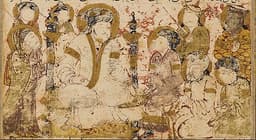
Al-Saffah
Emperor · Medieval
60.0Total

Muhammad Shaybani
Emperor · Medieval
58.5Total
Basic Information
Born
721
1451
Died
754
1510
Era
Medieval
Medieval
Nationality
Abbasid Caliphate
Uzbek Khanate
Occupation
Emperor
Emperor
Civilization
Middle Eastern
Eastern
Score Comparison
Military (10%)
65.0
63.3
Political (20%)
68.0
54.7
Influence (20%)
59.0
62.0
Legacy (20%)
56.0
48.3
Leadership (15%)
58.8
74.0
Strategy (15%)
57.5
52.5
TOTAL
60.0
58.5
Al-Saffah — Complete Timeline
750 AD
Proclamation as CaliphPolitical Action
Al-Saffah was proclaimed the first Abbasid caliph in Kufa after the Abbasid Revolution overthrew the Umayyads. His title 'al-Saffah' means 'the Shedder of Blood', reflecting the violent transition.
CaliphateRevolutionAbbasid
Impact: global
Massacre of the UmayyadsPolitical Action◆ Major
Al-Saffah ordered the systematic elimination of the Umayyad family to prevent any restoration. Most Umayyad princes were killed, though one, Abd al-Rahman I, escaped to Spain and founded the Emirate of Cordoba.
MassacreUmayyadPurge
Impact: globaldestructive
Establishment of the Abbasid CaliphatePolitical Action
Al-Saffah established the Abbasid Caliphate, moving the capital from Damascus to a new city near Kufa. This shift marked the beginning of a new era in Islamic history, with a focus on Persian influence and Baghdad.
CaliphateCapitalIslamic History
Impact: global
Muhammad Shaybani — Complete Timeline
1500 AD
Conquest of SamarkandWar
Muhammad Shaybani captured Samarkand from the Timurid ruler Babur. This conquest marked the end of Timurid rule in Transoxiana and established the Shaybanid dynasty, making Samarkand the capital of the Uzbek Khanate.
ConquestSamarkandTimurid Empire
Impact: regional
1505 AD
Siege of BukharaWar◆ Major
Muhammad Shaybani besieged and captured Bukhara from the Timurids. This conquest added another major Silk Road city to his domain, strengthening Uzbek control over Central Asian trade routes.
SiegeBukharaTimurid Empire
Impact: regional
1509 AD
Campaign against the Kazakh KhanateWar
Muhammad Shaybani launched a campaign against the Kazakh Khanate, defeating them near the Syr Darya. This victory secured the northern borders of the Uzbek Khanate and prevented Kazakh incursions into Transoxiana.
CampaignKazakh KhanateBorder Security
Impact: regional
1510 AD
Battle of the MarvWar
Muhammad Shaybani was defeated and killed by the Safavid Shah Ismail I at the Battle of Marv. His death ended the Shaybanid expansion into Khorasan and led to the temporary Safavid occupation of Uzbek territories.
BattleSafavid EmpireDeath
Impact: regionaltragic
Expert Analysis
Origins
Al-Saffah, born around 721 CE, was a descendant of al-Abbas, the uncle of the Prophet Muhammad. His family, the Abbasids, had long opposed the Umayyad Caliphate, which they viewed as corrupt and un-Islamic. Al-Saffah grew up in the Abbasid stronghold of Humayma in Jordan, where he was groomed for leadership. The Abbasid movement, based on a secret network of supporters in Khurasan, prepared the ground for his rise.
Muhammad Shaybani, born around 1451 CE, was a member of the Shaybanid dynasty, descendants of Genghis Khan through his son Jochi. He grew up among the nomadic Uzbek tribes of the Dasht-i Qipchaq (the steppes of Central Asia). His early life was marked by constant warfare and tribal politics. He learned the arts of war and leadership from a young age, eventually becoming a skilled military commander.
Rise to Power
Al-Saffah's rise came through the Abbasid Revolution. In 747 CE, the Abbasid general Abu Muslim launched an open revolt in Khurasan. By 749 CE, the Abbasid forces had captured Kufa. Al-Saffah was proclaimed caliph there in November 749 CE, taking the title 'al-Saffah' (the Shedder of Blood). His forces then defeated the last Umayyad caliph, Marwan II, at the Battle of the Zab in 750 CE. Al-Saffah secured power by eliminating the Umayyad family in a massacre at a banquet in Abi Futrus (near Jaffa).
Muhammad Shaybani rose through military conquest. In 1500 CE, he captured the Timurid capital of Samarkand, defeating Babur (who later founded the Mughal Empire). He then took Bukhara in 1501 CE, and by 1505 CE, he had conquered Khiva and other cities. He unified the Uzbek tribes under his leadership and established the Shaybanid dynasty. His military success earned him the title 'Shah-i Bek' (King of the Bek).
Leadership & Governance
Al-Saffah's leadership was marked by consolidation and centralization. He established a new capital at Anbar (near Kufa) and later his successor moved it to Baghdad. He relied heavily on his family and Persian administrators, such as the Barmakids. His governance style was ruthless but effective: he eliminated rivals and rewarded loyalists. He also began the process of integrating non-Arab Muslims into the state, a key shift from Umayyad policies.
Muhammad Shaybani governed as a traditional steppe ruler. He divided conquered territories among his Uzbek nobles, maintaining a tribal confederation. He promoted Sunni Islam and patronized scholars, but his rule was unstable due to internal tribal rivalries. He failed to build a strong administrative structure, relying instead on personal loyalty and military force. His governance score of 54.7 reflects this weakness.
Triumph & Tragedy
Al-Saffah's greatest triumph was founding the Abbasid Caliphate, which lasted for over 500 years. He successfully eliminated the Umayyad threat, ensuring his dynasty's survival. However, his reign was short (750-754 CE) and marked by constant revolts, including a rebellion in Syria and a Kharijite uprising. His tragedy was his early death from smallpox at age 33, leaving his brother al-Mansur to complete the consolidation.
Muhammad Shaybani's triumph was conquering Samarkand and Bukhara, ending Timurid rule in Transoxiana. He built a powerful Uzbek state that controlled key Silk Road cities. His tragedy came in 1510 CE at the Battle of Marv, where he was defeated and killed by the Safavid Shah Ismail I. His death led to the collapse of his empire, though the Shaybanids later recovered under his uncle. His military score of 63.3 shows his competence, but his strategy score of 52.5 indicates poor long-term planning.
Character & Destiny
Al-Saffah was cunning and ruthless, as his title suggests. He was a skilled political operator, using propaganda and alliances to win power. His decision to massacre the Umayyads was calculated to prevent any restoration. However, his health was poor, and his early death prevented him from fully shaping the Abbasid state. Historians note that he was more of a figurehead, with real power wielded by his generals and administrators.
Muhammad Shaybani was brave and ambitious, but also reckless. He led from the front and inspired loyalty among his warriors. However, he underestimated the Safavid threat and failed to forge alliances against Shah Ismail. His defeat at Marv was due to overconfidence and tactical errors. His character score of 74.0 reflects his personal valor, but his overall leadership score of 58.5 suggests limited strategic vision.
Legacy
Al-Saffah's legacy is immense: he founded the Abbasid Caliphate, which became the center of the Islamic Golden Age. The Abbasids ruled until 1258 CE, and their dynasty influenced subsequent Islamic empires. Al-Saffah's actions set the stage for the translation of Greek works, the rise of Islamic philosophy, and the development of Islamic law. His political influence score of 68.0 and legacy score of 56.0 reflect this broad impact.
Muhammad Shaybani's legacy is more localized. He established Uzbek rule in Transoxiana, which lasted for centuries. The Shaybanid dynasty continued until the late 16th century, and their state later evolved into the Khanate of Bukhara. However, his empire did not outlast him by much. His influence score of 62.0 and legacy score of 48.3 show his impact was significant but short-lived.
Conclusion
Al-Saffah had a greater impact than Muhammad Shaybani. While both were founders of dynasties, Al-Saffah's Abbasid Caliphate shaped the course of Islamic history for over five centuries, influencing religion, culture, and science across a vast region. Muhammad Shaybani's Uzbek state was important regionally but did not achieve the same lasting influence. Al-Saffah's total score of 60.0 versus Shaybani's 58.5 reflects this difference. Al-Saffah's political and strategic foundations allowed the Abbasids to thrive, while Shaybani's tribal approach led to a fragile empire that collapsed with his death. Thus, Al-Saffah stands as the more significant historical figure.
Rankings
🥇
Al-SaffahLeader
Mil: 65.0Pol: 68.0Inf: 59.0
60.0
🥈
Muhammad Shaybani
Mil: 63.3Pol: 54.7Inf: 62.0
58.5
+1.5 behind
How This Comparison Works
Algorithm
Each figure is scored on 6 dimensions (0—100 scale) based on structured historical data: Military (10%), Political (20%), Influence (20%), Legacy (20%), Leadership (15%), Strategy (15%). The weighted total produces the final ranking.
Data Sources
Scores are computed from structured sub-indicators in the database. Scale factors adjust for era (Ancient ×0.85, Modern ×1.0) and civilization size (Eastern ×1.05, Other ×0.80) to account for differences in population and military scale.
Maximum 3 Figures
Comparisons are limited to 2—3 figures to ensure readability and statistical meaningfulness.
Error Margins
±5 points per dimension — Sub-scores are derived from historical records with inherent uncertainty. Two figures within 5 points on a dimension should be considered roughly equivalent in that area.
Total Score Accuracy
±3 points overall — The weighted combination of 6 dimensions produces a total score with approximately ±3 points of uncertainty. Differences of less than 3 points are not statistically significant— the figures are effectively tied.
Known Limitations
- Historical records are incomplete and uneven across civilizations
- Figures from oral-tradition societies may be underrepresented
- Occupation labels can misclassify multi-role figures
- Scores measure capability and impact, not moral character
- Quantitative scoring is a comparison tool, not absolute truth
Capability Radar
Military (10%) — Battles & Warfare
Battles
60
70
Win Rate
65
75
Expansion
70
75
Political (20%) — Governance & Reform
Reform
55
40
Diplomacy
60
45
Economy
45
40
Influence (20%) — Cultural & Global Reach
Cultural
45
45
Global
50
35
Legacy (20%) — Historical Impact
Historical
65
50
Longevity
55
30
Leadership (15%) — Power & Stability
Tenure
40
55
Stability
35
30
Strategy (15%) — Tactics & Innovation
Strategy
55
70
Tactics
50
65
Reform
40
50
Similar Comparisons
Comments & Discussion
No comments yet. Be the first to share your thoughts!