Loading...
Al-Qahir vs Ganapati Deva of Kakatiya
Ganapati Deva of Kakatiya leads by 2.8 pts · 2 figures compared
…
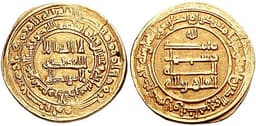
Al-Qahir
Emperor · Medieval
56.5Total

Ganapati Deva of Kakatiya
Emperor · Medieval
59.3Total
Basic Information
Born
899
1199
Died
950
1262
Era
Medieval
Medieval
Nationality
Abbasid Caliphate
India
Occupation
Emperor
Emperor
Civilization
Middle Eastern
Indian
Score Comparison
Military (10%)
33.0
65.0
Political (20%)
64.5
68.0
Influence (20%)
55.6
57.2
Legacy (20%)
57.3
49.2
Leadership (15%)
62.2
66.0
Strategy (15%)
60.0
60.7
TOTAL
56.5
59.3
Al-Qahir — Complete Timeline
932 AD
Accession of Al-QahirPolitical Action◆ Major
Al-Qahir became caliph after the assassination of his brother Al-Muqtadir. His reign was brief and marked by tyranny and paranoia, as he executed many officials and family members to secure his position.
AccessionTyrannyPurge
Impact: nationaldestructive
934 AD
Deposition and Blinding of Al-QahirPolitical Action◆ Major
Al-Qahir was deposed by court officials and military commanders after only two years. He was blinded and imprisoned, later living as a beggar in Baghdad. This event highlighted the powerlessness of the caliph against the military.
DepositionBlindingFall
Impact: nationaltragic
Life as a BeggarOther
After his deposition and blinding, Al-Qahir was released from prison and lived as a beggar in the streets of Baghdad. He was occasionally recognized and given alms by former subjects, a stark contrast to his former status.
BeggarHumiliationPost-Caliph
tragic
Ganapati Deva of Kakatiya — Complete Timeline
1210 AD
Built the Warangal FortCultural◆ Major
Ganapati Deva constructed the massive Warangal Fort, featuring a circular layout with four massive stone gateways (kirti toranas). The fort became the capital of the Kakatiya dynasty and a symbol of their power in the Deccan.
ArchitectureFortification
Impact: regionalconstructive
1213 AD
Commissioned the Ramappa TempleCultural◆ Major
Ganapati Deva ordered the construction of the Ramappa Temple (also known as Rudreshwara Temple) in Palampet. The temple is renowned for its intricate carvings and star-shaped platform, representing a peak of Kakatiya architecture.
ArchitectureHindu Temple
Impact: regionalconstructive
1220 AD
Expanded Kakatiya territory into coastal AndhraWar◆ Major
Ganapati Deva led military campaigns that brought the coastal Andhra region under Kakatiya control, including the important port of Motupalli. This expansion gave the Kakatiyas access to maritime trade routes.
Territorial ExpansionAndhra
Impact: regional
1230 AD
Defeated the Yadavas of DevagiriWar
Ganapati Deva's forces repelled an invasion by the Yadava king Simhana, securing the Kakatiya northern frontier. This victory established the Kakatiyas as the dominant power in the Telangana region.
Yadava-Kakatiya Conflict
Impact: regional
1260 AD
Appointed his daughter Rudrama Devi as co-regentPolitical Action◆ Major
Ganapati Deva designated his daughter Rudrama Devi as his successor and co-regent, a rare move for a medieval Indian ruler. She later became one of the few female monarchs in Indian history, ruling the Kakatiya kingdom after his death.
SuccessionFemale Ruler
Impact: nationalprogressive
Expert Analysis
Origins
Al-Qahir, born as Abu Mansur Muhammad ibn Ahmad al-Muqtadir in 899 CE, was a son of Caliph al-Muqtadir. He grew up in the Abbasid court in Baghdad, surrounded by political intrigue but without significant administrative experience. His early life was marked by the constant threat of assassination and palace coups, typical of the declining Abbasid caliphate. In contrast, Ganapati Deva, born around 1150 CE, was the son of Kakatiya king Mahadeva. He inherited a kingdom in the Deccan region of India, centered at Warangal. His upbringing involved training in military strategy and administration, preparing him for leadership in a period of regional expansion.
Rise to Power
Al-Qahir ascended to the caliphate in 932 CE after the assassination of his brother al-Muqtadir by the military commander Mu'nis al-Muzaffar. His rise was a result of court intrigue rather than popular support or merit. He immediately began executing perceived enemies, including Mu'nis, and alienating the court officials. Ganapati Deva became king in 1199 CE after the death of his father Mahadeva. He consolidated power by first securing the Kakatiya heartland and then launching campaigns against neighboring kingdoms, such as the Yadavas of Devagiri. By 1205, he had repelled a Yadava invasion, securing his northern frontier and establishing his reputation as a capable military leader.
Leadership & Governance
Al-Qahir's leadership was characterized by paranoia and brutality. He executed many officials and relied on a small circle of loyalists. His governance lacked any constructive reforms; instead, he focused on eliminating rivals, leading to administrative chaos. He scored 62.2 in leadership but 33.0 in military, reflecting his inability to command respect or maintain order. Ganapati Deva, scoring 66.0 in leadership and 65.0 in military, demonstrated effective governance. He built the Warangal Fort, a massive circular fortification with four stone gateways (kirti toranas), which became a symbol of Kakatiya power. He also promoted trade by opening the port of Motupalli, boosting the economy. His appointment of his daughter Rudrama Devi as co-regent in 1261 was a progressive move, ensuring stability and continuity.
Triumph & Tragedy
Al-Qahir's only triumph was briefly holding the caliphate, but his reign was a tragedy. He was deposed in 934 CE after only two years, blinded, and imprisoned. Later released, he lived as a beggar in Baghdad, occasionally recognized by former subjects. His total score of 56.5 reflects this failure. Ganapati Deva's triumphs include the construction of the Ramappa Temple, a UNESCO World Heritage site noted for its intricate carvings, and the expansion of Kakatiya territory into coastal Andhra. However, his later years saw the rise of the Delhi Sultanate under Alauddin Khalji, who would eventually sack Warangal in 1310, after Ganapati Deva's death. His legacy score of 49.2 is lower partly due to the eventual decline of the Kakatiya dynasty.
Character & Destiny
Al-Qahir's paranoid and vengeful character led to his downfall. He could not trust even his closest allies, and his actions alienated the military and bureaucracy. His fate—blinded and begging—was a direct result of his inability to govern effectively. Ganapati Deva, in contrast, was a pragmatic and visionary ruler. He secured his dynasty by naming a female successor, a rare decision that showed foresight. His character, marked by strategic thinking and cultural patronage, allowed him to build lasting monuments. His destiny was to expand Kakatiya power, but the looming threat from the north would ultimately overshadow his achievements.
Legacy
Al-Qahir's legacy is negligible; he is remembered as a cautionary tale of failed leadership. His scores: influence 55.6, legacy 57.3, total 56.5. In contrast, Ganapati Deva's legacy endures through the Ramappa Temple and Warangal Fort, which remain cultural landmarks. His political score of 68.0 reflects his successful expansion and administrative reforms. However, his overall total of 59.3 is only 2.8 points higher than Al-Qahir's, indicating that while he was more effective, his impact was limited by the eventual collapse of his dynasty. The Kakatiya dynasty's contributions to art and architecture, however, outlasted the Abbasid decline.
Conclusion
Ganapati Deva had a greater impact than Al-Qahir. His construction of Warangal Fort and Ramappa Temple, his territorial expansion, and his progressive succession planning demonstrate effective leadership. Al-Qahir's brief, tyrannical reign ended in personal ruin and left no constructive legacy. While the score gap is only 2.8 points, Ganapati Deva's tangible contributions to culture and governance outweigh Al-Qahir's failures. Ganapati Deva scored higher in military (65.0 vs 33.0), political (68.0 vs 64.5), and leadership (66.0 vs 62.2), making him the more consequential figure.
Rankings
🥇
Ganapati Deva of KakatiyaLeader
Mil: 65.0Pol: 68.0Inf: 57.2
59.3
🥈
Al-Qahir
Mil: 33.0Pol: 64.5Inf: 55.6
56.5
+2.8 behind
How This Comparison Works
Algorithm
Each figure is scored on 6 dimensions (0—100 scale) based on structured historical data: Military (10%), Political (20%), Influence (20%), Legacy (20%), Leadership (15%), Strategy (15%). The weighted total produces the final ranking.
Data Sources
Scores are computed from structured sub-indicators in the database. Scale factors adjust for era (Ancient ×0.85, Modern ×1.0) and civilization size (Eastern ×1.05, Other ×0.80) to account for differences in population and military scale.
Maximum 3 Figures
Comparisons are limited to 2—3 figures to ensure readability and statistical meaningfulness.
Error Margins
±5 points per dimension — Sub-scores are derived from historical records with inherent uncertainty. Two figures within 5 points on a dimension should be considered roughly equivalent in that area.
Total Score Accuracy
±3 points overall — The weighted combination of 6 dimensions produces a total score with approximately ±3 points of uncertainty. Differences of less than 3 points are not statistically significant— the figures are effectively tied.
Known Limitations
- Historical records are incomplete and uneven across civilizations
- Figures from oral-tradition societies may be underrepresented
- Occupation labels can misclassify multi-role figures
- Scores measure capability and impact, not moral character
- Quantitative scoring is a comparison tool, not absolute truth
Capability Radar
Military (10%) — Battles & Warfare
Battles
33
65
Win Rate
32
70
Expansion
38
60
Political (20%) — Governance & Reform
Reform
59
60
Diplomacy
62
55
Economy
63
65
Influence (20%) — Cultural & Global Reach
Cultural
67
55
Global
78
30
Legacy (20%) — Historical Impact
Historical
73
50
Longevity
77
45
Leadership (15%) — Power & Stability
Tenure
58
75
Stability
66
60
Strategy (15%) — Tactics & Innovation
Strategy
41
65
Tactics
42
60
Reform
48
55
Similar Comparisons
Comments & Discussion
No comments yet. Be the first to share your thoughts!