Loading...
Al-Qahir vs Chai Rong
Chai Rong leads by 9.2 pts · 2 figures compared
…
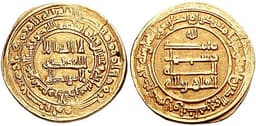
Al-Qahir
Emperor · Medieval
56.5Total

Chai Rong
Emperor · Medieval
65.7Total
Basic Information
Born
899
921
Died
950
959
Era
Medieval
Medieval
Nationality
Abbasid Caliphate
China
Occupation
Emperor
Emperor
Civilization
Middle Eastern
Eastern
Score Comparison
Military (10%)
33.0
82.0
Political (20%)
64.5
71.2
Influence (20%)
55.6
60.0
Legacy (20%)
57.3
54.0
Leadership (15%)
62.2
72.0
Strategy (15%)
60.0
75.0
TOTAL
56.5
65.7
Al-Qahir — Complete Timeline
932 AD
Accession of Al-QahirPolitical Action◆ Major
Al-Qahir became caliph after the assassination of his brother Al-Muqtadir. His reign was brief and marked by tyranny and paranoia, as he executed many officials and family members to secure his position.
AccessionTyrannyPurge
Impact: nationaldestructive
934 AD
Deposition and Blinding of Al-QahirPolitical Action◆ Major
Al-Qahir was deposed by court officials and military commanders after only two years. He was blinded and imprisoned, later living as a beggar in Baghdad. This event highlighted the powerlessness of the caliph against the military.
DepositionBlindingFall
Impact: nationaltragic
Life as a BeggarOther
After his deposition and blinding, Al-Qahir was released from prison and lived as a beggar in the streets of Baghdad. He was occasionally recognized and given alms by former subjects, a stark contrast to his former status.
BeggarHumiliationPost-Caliph
tragic
Chai Rong — Complete Timeline
954 AD
Battle of GaopingWar◆ Major
Chai Rong personally led Later Zhou forces to defeat a combined Northern Han and Liao army at Gaoping. This victory secured his throne and demonstrated his military capability.
Later ZhouNorthern HanBattle
Impact: regionalconstructive
Ascended as Emperor Shizong of Later ZhouPolitical Action◆ Major
Chai Rong succeeded his adoptive father Guo Wei as emperor of Later Zhou. He immediately began reforms to strengthen the state, including military reorganization and economic policies.
Later ZhouSuccessionReform
Impact: nationalconstructive
955 AD
Military campaigns against Later Shu and Southern TangWar◆ Major
Chai Rong launched successful campaigns against Later Shu and Southern Tang, capturing key territories in the southwest and south. These conquests significantly expanded Later Zhou's territory.
Later ZhouConquestExpansion
Impact: regionalconstructive
Reforms to centralize powerReform◆ Major
Chai Rong implemented administrative and military reforms, including reducing the power of regional military governors and strengthening the central bureaucracy. These reforms laid the groundwork for later Song unification.
Later ZhouReformCentralization
Impact: nationalconstructive
959 AD
Died during campaign against LiaoWar
Chai Rong died suddenly at age 38 while leading a campaign to recover the Sixteen Prefectures from the Liao dynasty. His death ended Later Zhou's momentum and allowed the Song dynasty to rise.
Later ZhouLiaoDeath
Impact: nationaltragic
Expert Analysis
Origins
Al-Qahir was born in 899 AD into the Abbasid caliphal family in Baghdad. His father was Caliph al-Muqtadir, but his upbringing was overshadowed by court intrigue and the declining power of the caliphate. Little is known of his education, but he was likely tutored in Islamic theology and governance. Chai Rong, born in 921 AD in Xingtai, Hebei, was the adopted son of Guo Wei, a Later Zhou general. His biological father was Chai Shouli, a minor official. Chai Rong received a military education and early exposure to administration, accompanying his adoptive father on campaigns.
Rise to Power
Al-Qahir became caliph in 932 AD after his brother al-Muqtadir was assassinated by his own generals. His rise was due to his lineage, not merit. He was chosen by the court as a puppet, but he quickly sought to assert real power, executing perceived enemies. His reign lasted only two years (932–934). Chai Rong rose through military and administrative competence. In 951, his adoptive father Guo Wei founded the Later Zhou dynasty. Chai Rong was appointed as a regional governor and military commander. Upon Guo Wei's death in 954, he ascended the throne as Emperor Shizong, aged 33. His rise was legitimate and based on proven ability.
Leadership & Governance
Al-Qahir's leadership was marked by paranoia and brutality. He executed officials he distrusted, including the former vizier Ibn Muqla. He alienated the military and bureaucracy, leading to his swift deposition. He scored 62.2 in leadership and 64.5 in political skills, but his tyranny negated any potential. Chai Rong implemented sweeping reforms: he centralized the army by reducing the power of military governors, reorganized tax collection, and promoted Confucian scholars. He personally led campaigns, as at the Battle of Gaoping in 954, where he rallied his troops to defeat a Northern Han-Liao coalition. His political score of 71.2 reflects his effective governance.
Triumph & Tragedy
Al-Qahir's triumph was surviving his brother's assassination and briefly holding the caliphal title. His tragedy was total: he was deposed, blinded, and spent his final years as a beggar in Baghdad, occasionally recognized by passersby. His military score of 33.0 reflects his lack of any military achievement. Chai Rong's triumphs include the victory at Gaoping, which secured his throne, and successful campaigns against Later Shu and Southern Tang, expanding Zhou territory. His tragedy was dying at 38 during a campaign against the Liao dynasty to recover the Sixteen Prefectures. His death halted Later Zhou's momentum, and within a year, his general Zhao Kuangyin usurped the throne to found the Song dynasty. Chai Rong's military score of 82.0 and strategy score of 75.0 highlight his martial prowess.
Character & Destiny
Al-Qahir's character was defined by suspicion and cruelty. He executed rivals without evidence, creating enemies. His inability to build alliances led to his downfall. His destiny was a direct result of his paranoia. Chai Rong was decisive, intelligent, and ambitious. He was known for his personal bravery and dedication to reunification. His early death was a tragic twist, cutting short a promising reign. Historians describe him as one of the most capable rulers of the Five Dynasties period.
Legacy
Al-Qahir's legacy is negligible. He is remembered as a failed caliph who died in obscurity. His brief reign had no lasting impact on the Abbasid Caliphate, which continued its decline. His legacy score is 57.3, likely due to his unique story. Chai Rong's legacy is significant: his reforms laid the groundwork for the Song dynasty's unification of China. His military campaigns weakened rival states, and his centralization policies were adopted by the Song. He scored 54.0 in legacy, perhaps because his reign was short, but his influence on Chinese history is profound. The Song dynasty, which reunified China, built upon his achievements.
Conclusion
Chai Rong had a far greater impact than Al-Qahir. With a total score of 65.7 against Al-Qahir's 56.5, the 9.2-point gap reflects a stark contrast in effectiveness and historical significance. Al-Qahir was a failed ruler whose tyranny led to his downfall and obscurity. Chai Rong, despite his early death, was a reformer and conqueror who nearly reunified China and set the stage for the Song dynasty. His leadership, military skill, and reforms created a lasting legacy. Al-Qahir's story is a cautionary tale of incompetence; Chai Rong's is one of potential tragically unfulfilled. History rightly remembers Chai Rong as a brilliant ruler, while Al-Qahir is a footnote. The evidence supports Chai Rong's superiority.
Rankings
🥇
Chai RongLeader
Mil: 82.0Pol: 71.2Inf: 60.0
65.7
🥈
Al-Qahir
Mil: 33.0Pol: 64.5Inf: 55.6
56.5
+9.2 behind
How This Comparison Works
Algorithm
Each figure is scored on 6 dimensions (0—100 scale) based on structured historical data: Military (10%), Political (20%), Influence (20%), Legacy (20%), Leadership (15%), Strategy (15%). The weighted total produces the final ranking.
Data Sources
Scores are computed from structured sub-indicators in the database. Scale factors adjust for era (Ancient ×0.85, Modern ×1.0) and civilization size (Eastern ×1.05, Other ×0.80) to account for differences in population and military scale.
Maximum 3 Figures
Comparisons are limited to 2—3 figures to ensure readability and statistical meaningfulness.
Error Margins
±5 points per dimension — Sub-scores are derived from historical records with inherent uncertainty. Two figures within 5 points on a dimension should be considered roughly equivalent in that area.
Total Score Accuracy
±3 points overall — The weighted combination of 6 dimensions produces a total score with approximately ±3 points of uncertainty. Differences of less than 3 points are not statistically significant— the figures are effectively tied.
Known Limitations
- Historical records are incomplete and uneven across civilizations
- Figures from oral-tradition societies may be underrepresented
- Occupation labels can misclassify multi-role figures
- Scores measure capability and impact, not moral character
- Quantitative scoring is a comparison tool, not absolute truth
Capability Radar
Military (10%) — Battles & Warfare
Battles
33
75
Win Rate
32
80
Expansion
38
70
Political (20%) — Governance & Reform
Reform
59
88
Diplomacy
62
70
Economy
63
80
Influence (20%) — Cultural & Global Reach
Cultural
67
50
Global
78
30
Legacy (20%) — Historical Impact
Historical
73
65
Longevity
77
40
Leadership (15%) — Power & Stability
Tenure
58
55
Stability
66
75
Strategy (15%) — Tactics & Innovation
Strategy
41
82
Tactics
42
78
Reform
48
85
Similar Comparisons
Comments & Discussion
No comments yet. Be the first to share your thoughts!