Loading...
Al-Nasir vs Qaitbay
Al-Nasir leads by 1.6 pts · 2 figures compared
…
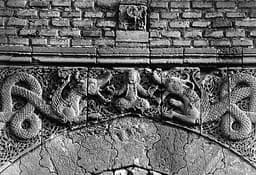
Al-Nasir
Emperor · Medieval
60.3Total
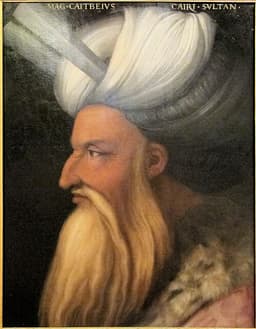
Qaitbay
Emperor · Medieval
58.7Total
Basic Information
Born
1158
1416
Died
1225
1496
Era
Medieval
Medieval
Nationality
Abbasid Caliphate
Egypt
Occupation
Emperor
Emperor
Civilization
Middle Eastern
Middle Eastern
Score Comparison
Military (10%)
70.0
50.0
Political (20%)
60.0
68.0
Influence (20%)
60.0
58.0
Legacy (20%)
52.0
50.0
Leadership (15%)
72.0
66.0
Strategy (15%)
55.0
66.3
TOTAL
60.3
58.7
Al-Nasir — Complete Timeline
1180 AD
Restoration of Caliphal PowerPolitical Action
Al-Nasir began his reign by consolidating caliphal power in Baghdad and reducing the influence of the Seljuk sultan. He reorganized the administration and built a strong military, laying the foundation for a revived caliphate.
Caliphal RevivalConsolidationBaghdad
Impact: regionalconstructive
1194 AD
Conflict with the Khwarezmian EmpireWar◆ Major
Al-Nasir allied with the Ghurids against the Khwarezmian Empire, which had become a major power. The conflict weakened the Khwarezmians but also drained caliphal resources, leading to a stalemate.
Khwarezmian WarGhurid AlliancePower Struggle
Impact: regional
1207 AD
Reform of the Futuwwa OrdersReform◆ Major
Al-Nasir reformed the futuwwa (chivalric) orders, incorporating them into the caliphal administration. He made himself the supreme head of the futuwwa, using it to spread caliphal influence across the Islamic world.
FutuwwaReformCaliphal Influence
Impact: regionalconstructive
1210 AD
Suppression of the IsmailisPolitical Action◆ Major
Al-Nasir launched a campaign against the Ismaili sect in the mountains of Iran, destroying their fortresses. This action aimed to eliminate a rival religious and political force and assert Sunni orthodoxy.
Ismaili SuppressionReligious CampaignSunni Orthodoxy
Impact: regionaldestructive
1217 AD
Diplomatic Overtures to the MongolsPolitical Action◆ Major
Al-Nasir sent an embassy to the Mongol ruler Genghis Khan, seeking an alliance against the Khwarezmian Empire. This diplomatic move failed to prevent the Mongol invasion of the Islamic world.
Mongol DiplomacyGenghis KhanAlliance Attempt
Impact: global
1225 AD
Death and LegacyOther◆ Major
Al-Nasir died after a 45-year reign, leaving the caliphate stronger than it had been for centuries. His policies restored caliphal authority in Iraq and expanded its influence, but the Mongol threat loomed.
DeathLegacyCaliphal Revival
Impact: regionalconstructive
Qaitbay — Complete Timeline
1468 AD
Suppression of the Revolt of the Emir of AleppoWar
Early in his reign, Qaitbay suppressed a revolt by the Emir of Aleppo, who had refused to recognize his authority. The sultan's forces marched to Aleppo, defeated the rebels, and executed the emir, securing his position as sultan.
Mamluk SultanateRevoltAleppo
Impact: regional
1477 AD
Construction of the Qaitbay Citadel in AlexandriaCultural◆ Major
Qaitbay ordered the construction of a fortress on the site of the ancient Lighthouse of Alexandria, one of the Seven Wonders of the Ancient World. The citadel was built using stones from the ruined lighthouse and served as a key defensive fortification for the city.
Mamluk SultanateArchitectureFortificationAlexandria
Impact: regionalconstructive
1482 AD
Restoration of the Dome of the RockCultural◆ Major
Qaitbay funded a major restoration of the Dome of the Rock in Jerusalem, including repairs to the dome's mosaics and the addition of a marble facing. This project demonstrated Mamluk patronage of Islamic architecture and religious sites.
Mamluk SultanateArchitectureJerusalemRestoration
Impact: regionalconstructive
1485 AD
War with the Ottoman Empire (1485-1491)War◆ Major
Qaitbay fought a protracted war against the Ottoman Empire over control of Cilicia and the buffer state of Dulkadir. The conflict ended with a peace treaty that maintained the status quo, with the Mamluks retaining their northern borders.
Mamluk SultanateOttoman EmpireWarCilicia
Impact: regional
Expert Analysis
Origins
Al-Nasir (born 1158) was the 34th Abbasid caliph in Baghdad, ascending the throne in 1180 at age 22. He inherited a caliphate weakened by Seljuk dominance, with real power held by sultans. His father, Al-Mustadi, had begun restoring authority, but Al-Nasir accelerated this. He was educated in Islamic jurisprudence and administration, and he understood the need to leverage religious legitimacy against military rulers.
Qaitbay (born c. 1416) was a Circassian slave purchased by the Mamluk sultan Barsbay. He rose through the Mamluk military hierarchy, serving as a commander and eventually becoming sultan in 1468 at age 52. His early life was typical of Mamluks: purchased, converted to Islam, trained as a soldier, and manumitted. His career depended on patronage and skill, not birth.
Rise to Power
Al-Nasir's rise was a gradual assertion of authority. Upon becoming caliph, he immediately worked to reduce Seljuk influence. He reorganized the caliphal bureaucracy, appointed loyalists, and used the futuwwa (chivalric orders) to build a power base. In 1187, he allied with Saladin against the Crusaders, but his main focus was internal consolidation. By 1194, after the death of the Seljuk sultan Toghrul III, Al-Nasir was able to assert direct control over Baghdad and much of Iraq.
Qaitbay became sultan after the death of Sultan Khushqadam, when a power struggle ensued. Qaitbay, then a senior emir, was chosen by the Mamluk oligarchy as a compromise candidate. He quickly consolidated power by defeating a revolt in Aleppo in 1468. His rule was marked by stability, as he maintained the Mamluk system of military patronage.
Leadership & Governance
Al-Nasir ruled for 47 years (1180–1225). He centralized power, restored the caliphate as a political force, and reformed the futuwwa into a state-sponsored organization that promoted chivalric ideals and loyalty to the caliph. He also suppressed the Ismaili sect, destroying their fortresses in Iran (1190s). However, his foreign policy was flawed: he allied with the Ghurids against the Khwarezmians, which drained resources and failed to stop the Khwarezmian rise.
Qaitbay ruled for 28 years (1468–1496). He focused on building and restoration, including the Qaitbay Citadel in Alexandria (1477) and the Dome of the Rock in Jerusalem (1483). His governance was conservative, maintaining Mamluk institutions. He fought a war with the Ottoman Empire (1485–1491) over Cilicia, ending with a peace treaty that preserved the status quo. His leadership score of 66.0 reflects his effectiveness within the Mamluk system.
Triumph & Tragedy
Al-Nasir's greatest success was restoring the Abbasid caliphate to a position of authority after decades of subservience. He made the caliph a key player in regional politics. His tragedy was his failure to anticipate the Mongol threat: his embassy to Genghis Khan (1217) did not prevent the Mongol invasion that destroyed Baghdad in 1258, after his death. The caliphate he restored was ultimately crushed.
Qaitbay's triumph was his long reign and the architectural legacy he left, notably the Citadel of Qaitbay, which still stands. His tragedy was that his reign marked the beginning of Mamluk decline. The war with the Ottomans exhausted resources, and after his death, internal strife weakened the sultanate, leading to its conquest by the Ottomans in 1517.
Character & Destiny
Al-Nasir was ambitious and shrewd, using religious and chivalric symbols to legitimize his rule. But he was also overconfident, thinking he could manipulate the Mongols. His character led him to take risks that paid off in the short term but set the stage for disaster.
Qaitbay was cautious and pragmatic. He avoided major reforms and focused on stability. His character suited a period of equilibrium, but he failed to prepare for the rising Ottoman power. His legacy is that of a builder, not a reformer.
Legacy
Al-Nasir's legacy is mixed: he revived the caliphate's political role, but his policies contributed to its destruction. He is remembered as the last strong Abbasid caliph. His scores: Military 70.0, Political 60.0, Influence 60.0, Legacy 52.0, Leadership 72.0, Strategy 55.0, Total 60.3.
Qaitbay's legacy is more tangible: his fortifications and restorations survive. He is remembered as a patron of architecture. His scores: Military 50.0, Political 68.0, Influence 58.0, Legacy 50.0, Leadership 66.0, Strategy 66.3, Total 58.7.
Conclusion
Al-Nasir had greater impact because he changed the trajectory of the caliphate, albeit temporarily. Qaitbay maintained an empire but did not alter its course. Al-Nasir's total score of 60.3 edges Qaitbay's 58.7, reflecting his higher military and leadership scores. While Qaitbay was more stable, Al-Nasir's actions had more profound consequences for the Islamic world.
Rankings
🥇
Al-NasirLeader
Mil: 70.0Pol: 60.0Inf: 60.0
60.3
🥈
Qaitbay
Mil: 50.0Pol: 68.0Inf: 58.0
58.7
+1.6 behind
How This Comparison Works
Algorithm
Each figure is scored on 6 dimensions (0—100 scale) based on structured historical data: Military (10%), Political (20%), Influence (20%), Legacy (20%), Leadership (15%), Strategy (15%). The weighted total produces the final ranking.
Data Sources
Scores are computed from structured sub-indicators in the database. Scale factors adjust for era (Ancient ×0.85, Modern ×1.0) and civilization size (Eastern ×1.05, Other ×0.80) to account for differences in population and military scale.
Maximum 3 Figures
Comparisons are limited to 2—3 figures to ensure readability and statistical meaningfulness.
Error Margins
±5 points per dimension — Sub-scores are derived from historical records with inherent uncertainty. Two figures within 5 points on a dimension should be considered roughly equivalent in that area.
Total Score Accuracy
±3 points overall — The weighted combination of 6 dimensions produces a total score with approximately ±3 points of uncertainty. Differences of less than 3 points are not statistically significant— the figures are effectively tied.
Known Limitations
- Historical records are incomplete and uneven across civilizations
- Figures from oral-tradition societies may be underrepresented
- Occupation labels can misclassify multi-role figures
- Scores measure capability and impact, not moral character
- Quantitative scoring is a comparison tool, not absolute truth
Capability Radar
Military (10%) — Battles & Warfare
Battles
55
55
Win Rate
60
60
Expansion
60
45
Political (20%) — Governance & Reform
Reform
75
55
Diplomacy
70
60
Economy
65
55
Influence (20%) — Cultural & Global Reach
Cultural
55
50
Global
45
40
Legacy (20%) — Historical Impact
Historical
60
55
Longevity
50
50
Leadership (15%) — Power & Stability
Tenure
85
70
Stability
60
65
Strategy (15%) — Tactics & Innovation
Strategy
65
60
Tactics
50
65
Reform
70
50
Similar Comparisons
Comments & Discussion
No comments yet. Be the first to share your thoughts!