Loading...
Al-Mutawakkil vs Malcolm III Canmore
Malcolm III Canmore leads by 5.8 pts · 2 figures compared
…
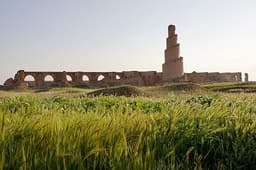
Al-Mutawakkil
Emperor · Medieval
52.9Total
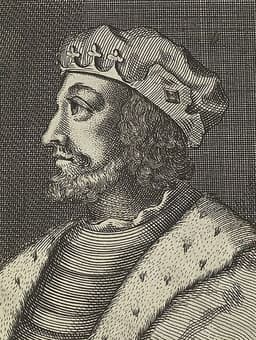
Malcolm III Canmore
Emperor · Medieval
58.7Total
Basic Information
Born
822
1031
Died
861
1093
Era
Medieval
Medieval
Nationality
Abbasid Caliphate
Scotland
Occupation
Emperor
Emperor
Civilization
Middle Eastern
Western
Score Comparison
Military (10%)
50.0
45.0
Political (20%)
61.3
68.0
Influence (20%)
57.2
57.2
Legacy (20%)
50.0
54.0
Leadership (15%)
55.3
68.0
Strategy (15%)
35.7
60.0
TOTAL
52.9
58.7
Al-Mutawakkil — Complete Timeline
848 AD
End of the MihnaReform
Al-Mutawakkil ended the Mihna, the inquisition that enforced the Mu'tazilite doctrine of the createdness of the Quran. He restored traditionalist orthodoxy and ended the persecution of scholars who opposed the doctrine.
Religious ReformMihna
Impact: regionalprogressive
851 AD
Construction of the Great Mosque of SamarraCultural◆ Major
Al-Mutawakkil commissioned the construction of the Great Mosque of Samarra, featuring the famous Malwiya minaret. This mosque was one of the largest in the Islamic world and symbolized Abbasid architectural ambition.
ArchitectureMosque
Impact: regionalconstructive
861 AD
Assassination by Turkish GuardPolitical Action
Al-Mutawakkil was assassinated by his Turkish guard in Samarra. The murder was orchestrated by his son al-Muntasir, who succeeded him. This event marked the beginning of the 'Anarchy at Samarra' and the decline of Abbasid power.
AssassinationTurkish Guard
Impact: regionaltragic
Malcolm III Canmore — Complete Timeline
1057 AD
Battle of LumphananWar
Malcolm Canmore killed Macbeth at the Battle of Lumphanan, ending Macbeth's reign. Malcolm then claimed the Scottish throne, though he faced opposition from Macbeth's stepson Lulach, whom he killed in 1058 to secure his position.
BattleSuccessionMacbeth
Impact: national
1070 AD
Invasion of England (1070s)War◆ Major
Malcolm launched a series of raids into northern England, exploiting the instability after the Norman Conquest. He invaded Northumbria in 1070 and again in 1079, but was forced to submit to William the Conqueror at the Treaty of Abernethy in 1072, becoming a vassal.
InvasionNorthumbriaNorman Conquest
Impact: regional
Marriage to Margaret of WessexPolitical Action◆ Major
Malcolm married Margaret, an Anglo-Saxon princess who had fled to Scotland after the Norman Conquest. The marriage strengthened ties with the English church and nobility, and Margaret later became a saint. It also introduced English cultural and religious influences to the Scottish court.
MarriageAnglo-SaxonReligion
Impact: regionalconstructive
1093 AD
Battle of AlnwickWar◆ Major
Malcolm invaded England again and was killed at the Battle of Alnwick in Northumberland, along with his eldest son Edward. His death led to a succession crisis in Scotland, as his brother Donald III seized the throne, beginning a period of instability.
BattleDeathSuccession Crisis
Impact: nationaltragic
Expert Analysis
Origins
Al-Mutawakkil was born in 822 CE in the Abbasid Caliphate, the son of Caliph al-Mu'tasim. He grew up in the imperial court of Samarra, a city built by his father to house the Turkish guard. His early life was shaped by the power struggles between the caliphs and their Turkish military commanders. In contrast, Malcolm III Canmore was born around 1031 in Scotland, the son of King Duncan I. After his father's death at the hands of Macbeth in 1040, Malcolm fled to England, spending his formative years in exile at the court of Edward the Confessor. This experience exposed him to Norman and Anglo-Saxon governance.
Rise to Power
Al-Mutawakkil became caliph in 847 CE after the death of his brother al-Wathiq. His rise was facilitated by the Turkish military elite, who saw him as a figure who could restore stability. However, he quickly asserted his independence, ending the Mihna in 848-849 CE. The Mihna had been an inquisition enforcing Mu'tazilite doctrine, and its termination earned him support from traditionalist scholars. Malcolm III's path to power was more violent. After Macbeth's defeat and death at the Battle of Lumphanan in 1057, Malcolm claimed the throne. He faced opposition from Macbeth's stepson Lulach, whom he killed in 1058. Malcolm's marriage to Margaret of Wessex in 1070 solidified his alliance with Anglo-Saxon refugees and strengthened his legitimacy.
Leadership & Governance
Al-Mutawakkil's leadership was marked by a shift toward Sunni orthodoxy. He restored the traditionalist Hanbali school and patronized scholars like Ahmad ibn Hanbal. However, his reliance on the Turkish guard created a volatile power dynamic. He attempted to reduce their influence by moving the capital back to Baghdad, but this failed. Malcolm III's governance focused on centralizing royal authority and integrating Anglo-Saxon and Norman influences. He introduced feudalism to Scotland, granted lands to Norman knights, and reformed the Church under Queen Margaret. His raids into England, however, drained resources and provoked English retaliation.
Triumph & Tragedy
Al-Mutawakkil's greatest triumph was ending the Mihna, which ended decades of religious persecution and restored intellectual freedom. He also commissioned the Great Mosque of Samarra, with its 52-meter Malwiya minaret, a masterpiece of Islamic architecture. His tragedy was his assassination in 861 CE by his own Turkish guard, orchestrated by his son al-Muntasir. This event plunged the caliphate into the Anarchy at Samarra, a period of instability. Malcolm III's triumph was founding the Canmore dynasty, which ruled Scotland for over two centuries. He also secured Scotland's independence from English dominance temporarily. His tragedy was his death at the Battle of Alnwick in 1093, along with his heir, leading to a succession crisis that weakened Scotland.
Character & Destiny
Al-Mutawakkil was a decisive but capricious ruler. He asserted his authority against the Turkish guard but failed to build lasting institutional control. His character led to both his achievements and his downfall. Malcolm III was a pragmatic warrior-king, adept at using marriage and military force. His alliance with Margaret brought cultural and religious reforms, but his aggressive invasions of England ultimately cost him his life. Historians note that Al-Mutawakkil's political score of 61.3 reflects his effective religious policies, while Malcolm's leadership score of 68.0 highlights his consolidation of royal power.
Legacy
Al-Mutawakkil's legacy is mixed: he is remembered for ending the Mihna and building the Great Mosque, but also for the decline of the caliphate after his assassination. His reign marked the last period of strong caliphal authority before the rise of regional dynasties. Malcolm III's legacy is more enduring: the Canmore dynasty established a stable monarchy that resisted English domination. His marriage to Margaret brought Roman Catholicism and Norman feudalism to Scotland, shaping its medieval identity. Malcolm scores 54.0 in legacy, while Al-Mutawakkil scores 50.0.
Conclusion
Malcolm III Canmore had a greater impact than Al-Mutawakkil. Despite a score gap of only 5.8 points (58.7 vs 52.9), Malcolm's long-term influence on Scottish state-building and his dynasty's endurance outweigh Al-Mutawakkil's short-lived religious reforms. Al-Mutawakkil's assassination triggered a collapse, whereas Malcolm's dynasty provided centuries of stability. Thus, Malcolm's political and leadership scores of 68.0 and 68.0, compared to Al-Mutawakkil's 61.3 and 55.3, support this conclusion.
Rankings
🥇
Malcolm III CanmoreLeader
Mil: 45.0Pol: 68.0Inf: 57.2
58.7
🥈
Al-Mutawakkil
Mil: 50.0Pol: 61.3Inf: 57.2
52.9
+5.8 behind
How This Comparison Works
Algorithm
Each figure is scored on 6 dimensions (0—100 scale) based on structured historical data: Military (10%), Political (20%), Influence (20%), Legacy (20%), Leadership (15%), Strategy (15%). The weighted total produces the final ranking.
Data Sources
Scores are computed from structured sub-indicators in the database. Scale factors adjust for era (Ancient ×0.85, Modern ×1.0) and civilization size (Eastern ×1.05, Other ×0.80) to account for differences in population and military scale.
Maximum 3 Figures
Comparisons are limited to 2—3 figures to ensure readability and statistical meaningfulness.
Error Margins
±5 points per dimension — Sub-scores are derived from historical records with inherent uncertainty. Two figures within 5 points on a dimension should be considered roughly equivalent in that area.
Total Score Accuracy
±3 points overall — The weighted combination of 6 dimensions produces a total score with approximately ±3 points of uncertainty. Differences of less than 3 points are not statistically significant— the figures are effectively tied.
Known Limitations
- Historical records are incomplete and uneven across civilizations
- Figures from oral-tradition societies may be underrepresented
- Occupation labels can misclassify multi-role figures
- Scores measure capability and impact, not moral character
- Quantitative scoring is a comparison tool, not absolute truth
Capability Radar
Military (10%) — Battles & Warfare
Battles
20
45
Win Rate
25
50
Expansion
10
55
Political (20%) — Governance & Reform
Reform
60
55
Diplomacy
40
60
Economy
45
50
Influence (20%) — Cultural & Global Reach
Cultural
40
45
Global
35
30
Legacy (20%) — Historical Impact
Historical
55
55
Longevity
40
60
Leadership (15%) — Power & Stability
Tenure
50
70
Stability
20
55
Strategy (15%) — Tactics & Innovation
Strategy
20
45
Tactics
15
40
Reform
10
30
Similar Comparisons
Comments & Discussion
No comments yet. Be the first to share your thoughts!