Loading...
Al-Mutamid vs Julius Caesar
Julius Caesar leads by 43.6 pts · 2 figures compared
…
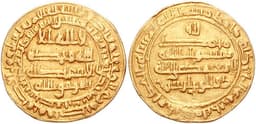
Al-Mutamid
Emperor · Medieval
39.2Total

Julius Caesar
General · Ancient
82.8Total
Basic Information
Born
844
-100
Died
892
-44
Era
Medieval
Ancient
Nationality
Abbasid Caliphate
Roman Republic
Occupation
Emperor
General
Civilization
Middle Eastern
Western
Score Comparison
Military (10%)
21.2
88.0
Political (20%)
25.0
78.0
Influence (20%)
51.0
85.0
Legacy (20%)
41.7
82.0
Leadership (15%)
41.5
80.0
Strategy (15%)
39.6
85.0
TOTAL
39.2
82.8
Al-Mutamid — Complete Timeline
869 AD
Zanj RebellionWar◆ Major
A major slave revolt began in the marshlands of southern Iraq, led by Ali ibn Muhammad. Al-Mutamid's caliphate struggled to suppress the rebellion for over a decade, draining resources and weakening Abbasid authority.
Zanj RebellionSlave RevoltAbbasid Decline
Impact: regionaldestructive
871 AD
Battle of BasraWar◆ Major
Zanj rebels captured and sacked the city of Basra, massacring its inhabitants. This event demonstrated the inability of Al-Mutamid's forces to protect major urban centers, further eroding caliphal prestige.
Zanj RebellionBattleBasra
Impact: regionaltragic
892 AD
Death of Al-MutamidPolitical Action◆ Major
Al-Mutamid died, possibly poisoned by his brother and successor Al-Mutadid. His death ended a reign marked by the devastating Zanj Rebellion and the continued fragmentation of Abbasid power.
DeathSuccessionAbbasid
Impact: nationaltragic
Julius Caesar — Complete Timeline
58 BC
Gallic WarsWar◆ Major
Caesar, as proconsul of Gaul, launched a series of campaigns that conquered all of Gaul (modern France, Belgium, and parts of Switzerland). He fought numerous battles, including against the Helvetii, the Belgae, and the Gallic chieftain Vercingetorix. The wars brought immense wealth and a loyal army to Caesar.
Gallic WarsConquestRoman Expansion
Impact: regional
49 BC
Crossing the RubiconPolitical Action◆ Major
Caesar led Legio XIII across the Rubicon River into Italy, defying the Roman Senate's order to disband his army. This act triggered a civil war against Pompey and the Optimates, ultimately leading to Caesar's dictatorship and the end of the Roman Republic.
Roman Civil WarEnd of RepublicPower Struggle
Impact: global
48 BC
Battle of PharsalusWar◆ Major
Caesar's outnumbered army defeated the larger forces of Pompey the Great at Pharsalus in Greece. Caesar's tactical use of a reserve line to counter Pompey's cavalry charge proved decisive. Pompey fled to Egypt, where he was assassinated, leaving Caesar as the undisputed master of the Roman world.
Roman Civil WarBattleDecisive Victory
Impact: regional
44 BC
Appointment as Dictator for LifePolitical Action◆ Major
The Roman Senate appointed Caesar dictator perpetuo (dictator for life), granting him unprecedented personal power. This move concentrated military, legislative, and judicial authority in one person, effectively ending the Roman Republic's traditional system of checks and balances and alarming many senators.
DictatorshipEnd of RepublicPower Consolidation
Impact: regionaldestructive
Assassination on the Ides of MarchPolitical Action◆ Major
A group of Roman senators, led by Marcus Junius Brutus and Gaius Cassius Longinus, stabbed Caesar to death at a meeting of the Senate in the Theatre of Pompey. The assassination was intended to restore the Republic, but instead triggered another civil war that led to the rise of the Roman Empire.
AssassinationRoman PoliticsEnd of Republic
Impact: globaldestructive
Expert Analysis
al-mutamid-vs-julius-caesar
# The Weight of a Crown: Caesar and al-Mutamid
On a morning in March of 44 BCE, a man in a purple toga fell at the foot of a statue of his greatest rival, stabbed twenty-three times by men he had called friends. On another morning, in 892 CE, a caliph in Samarra died in his bed, perhaps by poison, perhaps by exhaustion, leaving behind a caliphate that had bled for two decades from a wound he could not close. Both men inherited a world in crisis. One remade it. The other was remade by it.
Origins
Gaius Julius Caesar was born into a patrician family that had fallen from political prominence. His father died when he was sixteen, and the young Caesar navigated the treacherous waters of late Republican Rome with a combination of charm, debt, and audacity. He was a man of the forum and the battlefield, shaped by the civil wars of Marius and Sulla, and by the growing realization that the old republican institutions were too brittle to govern an empire.
Al-Mutamid, born Ahmad ibn Ja’far in 844, was the son of a caliph who had been murdered by his own Turkish guards. He grew up in Samarra, a city built by his grandfather al-Mu’tasim to house the Turkic slave soldiers who now controlled the Abbasid throne. Al-Mutamid was not raised to rule; he was raised to survive. His brother al-Muwaffaq, a far more capable man, effectively governed the caliphate from behind the throne. Al-Mutamid’s era was one of fragmentation, where the caliph’s authority barely reached beyond the palace walls.
Caesar grew up in a world where power was up for grabs. Al-Mutamid grew up in a world where power had already been stolen.
Rise to Power
Caesar’s path was one of relentless, calculated ambition. He served as a military tribune, then quaestor in Spain, then aedile, spending vast sums on games and buildings to win the favor of the Roman mob. In 60 BCE, he formed the First Triumvirate with Pompey and Crassus, an alliance that allowed him to secure the governorship of Gaul. His eight-year campaign there (58–50 BCE) was a masterpiece of military strategy and self-promotion. He conquered a million people, wrote his own commentaries, and built an army loyal to him, not to Rome.
When the Senate demanded he disband his legions, he crossed the Rubicon River in 49 BCE, triggering a civil war. He defeated Pompey at Pharsalus, crushed the remnants of the optimates in Africa and Spain, and returned to Rome as dictator. By 44 BCE, he had been appointed dictator for life.
Al-Mutamid became caliph in 870 after the death of his cousin al-Muhtadi, who had been killed by Turkish soldiers. The caliphate was in chaos: the Zanj Rebellion, a massive slave revolt in southern Iraq, had begun the year before, and the central government was too weak to suppress it. Al-Mutamid’s brother al-Muwaffaq took charge of the military effort, while the caliph remained in Samarra, a figurehead. Al-Mutamid’s rise was not a conquest but an inheritance of collapse.
Leadership & Governance
Caesar governed with a blend of clemency and ruthlessness. He pardoned many of his former enemies, including Brutus and Cassius, and enacted sweeping reforms: he recalibrated the calendar (the Julian calendar), reformed debt laws, initiated public works, and extended Roman citizenship to communities in Gaul and Spain. He centralized power in his own hands but maintained the forms of republican government, at least for a time. His military genius was matched by his political acumen; he understood that Rome needed a strong executive, but he moved too fast for the old aristocracy.
Al-Mutamid, by contrast, governed in name only. The Zanj Rebellion, which began in 869, grew into a war that consumed southern Iraq for fourteen years. In 871, the rebels captured and sacked Basra, massacring its inhabitants. The caliph’s forces, led by al-Muwaffaq, eventually crushed the rebellion in 883, but the cost was immense. Al-Mutamid’s reign saw the further erosion of caliphal authority. Provincial governors became independent warlords; the Turkic guard dictated policy; and the treasury was drained. He issued decrees, but few obeyed.
Triumph & Tragedy
Caesar’s greatest triumph was his conquest of Gaul, which brought immense wealth and prestige to Rome and to himself. His greatest tragedy was his assassination on the Ides of March, 44 BCE. He had been warned, but he walked into the Senate chamber unarmed. His death plunged Rome into another civil war, but it also cleared the path for his adopted heir, Octavian, to become Augustus, the first Roman emperor.
Al-Mutamid’s greatest triumph was survival. He lived for twenty-two years as caliph, a feat in an era when caliphs were routinely murdered. His greatest tragedy was that he was never truly the ruler of his own realm. He died in 892, possibly poisoned by his brother al-Mutadid, who succeeded him. The Abbasid Caliphate continued for another three centuries, but it never regained its former power.
Character & Destiny
Caesar was audacious, calculating, and charismatic. He took risks that would have destroyed lesser men—crossing the Rubicon, fighting in Gaul with inferior numbers, pardoning enemies who later killed him. His personality drove him to reshape the world, but it also made him blind to the hatred he inspired. He believed that his clemency would win loyalty; instead, it bred contempt.
Al-Mutamid was cautious, passive, and perhaps resigned. He accepted his role as a figurehead, perhaps because he knew that any attempt to seize real power would end in his death. His brother al-Muwaffaq was the real ruler, and al-Mutamid seems to have tolerated this arrangement. His personality was shaped by the constraints of his era: a caliphate in decline, a military dominated by foreign slaves, a society fractured by rebellion.
Legacy
Caesar’s legacy is monumental. His name became synonymous with imperial power—*Kaiser* in German, *Tsar* in Russian. His military campaigns are studied in war colleges; his writings are read as classics; his assassination is one of the most famous events in history. He transformed the Roman Republic into an empire, for better and for worse.
Al-Mutamid’s legacy is modest. He is remembered, if at all, as the caliph who presided over the Zanj Rebellion and the decline of Abbasid authority. His reign is a footnote in a larger story of fragmentation and collapse. He did not change the course of history; he was swept along by it.
Conclusion
Caesar and al-Mutamid both wore crowns, but they lived in different worlds. Caesar’s world was one of opportunity, where a man of talent and ambition could seize power and reshape civilization. Al-Mutamid’s world was one of entropy, where the forces of decay were stronger than any individual. Caesar was a sculptor of history; al-Mutamid was a stone being carved by it. Their stories remind us that leadership is not merely a matter of character, but of context. The same audacity that made Caesar a legend would have made al-Mutamid a corpse. And the same caution that kept al-Mutamid alive would have made Caesar forgotten. History, in the end, rewards those who seize the moment—but only if the moment is theirs to seize.
Rankings
🥇
Julius CaesarLeader
Mil: 88.0Pol: 78.0Inf: 85.0
82.8
🥈
Al-Mutamid
Mil: 21.2Pol: 25.0Inf: 51.0
39.2
+43.6 behind
How This Comparison Works
Algorithm
Each figure is scored on 6 dimensions (0—100 scale) based on structured historical data: Military (10%), Political (20%), Influence (20%), Legacy (20%), Leadership (15%), Strategy (15%). The weighted total produces the final ranking.
Data Sources
Scores are computed from structured sub-indicators in the database. Scale factors adjust for era (Ancient ×0.85, Modern ×1.0) and civilization size (Eastern ×1.05, Other ×0.80) to account for differences in population and military scale.
Maximum 3 Figures
Comparisons are limited to 2—3 figures to ensure readability and statistical meaningfulness.
Error Margins
±5 points per dimension — Sub-scores are derived from historical records with inherent uncertainty. Two figures within 5 points on a dimension should be considered roughly equivalent in that area.
Total Score Accuracy
±3 points overall — The weighted combination of 6 dimensions produces a total score with approximately ±3 points of uncertainty. Differences of less than 3 points are not statistically significant— the figures are effectively tied.
Known Limitations
- Historical records are incomplete and uneven across civilizations
- Figures from oral-tradition societies may be underrepresented
- Occupation labels can misclassify multi-role figures
- Scores measure capability and impact, not moral character
- Quantitative scoring is a comparison tool, not absolute truth
Capability Radar
Military (10%) — Battles & Warfare
Battles
15
95
Win Rate
10
92
Expansion
5
97
Political (20%) — Governance & Reform
Reform
20
90
Diplomacy
20
85
Economy
15
82
Influence (20%) — Cultural & Global Reach
Cultural
25
88
Global
20
94
Legacy (20%) — Historical Impact
Historical
30
95
Longevity
20
96
Leadership (15%) — Power & Stability
Tenure
40
75
Stability
10
60
Strategy (15%) — Tactics & Innovation
Strategy
10
94
Tactics
10
96
Reform
5
88
Similar Comparisons
Comments & Discussion
No comments yet. Be the first to share your thoughts!