Loading...
Al-Mustansir vs Wanyan Aguda
Wanyan Aguda leads by 7.8 pts · 2 figures compared
…
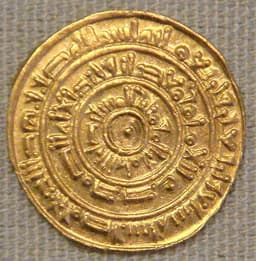
Al-Mustansir
Emperor · Medieval
55.6Total
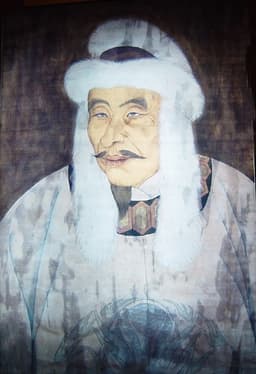
Wanyan Aguda
Emperor · Medieval
63.4Total
Basic Information
Born
1192
1068
Died
1242
1123
Era
Medieval
Medieval
Nationality
Abbasid Caliphate
China
Occupation
Emperor
Emperor
Civilization
Middle Eastern
Eastern
Score Comparison
Military (10%)
20.0
82.0
Political (20%)
68.0
59.3
Influence (20%)
55.0
55.0
Legacy (20%)
58.0
52.0
Leadership (15%)
71.0
85.0
Strategy (15%)
45.0
68.0
TOTAL
55.6
63.4
Al-Mustansir — Complete Timeline
1227 AD
Foundation of the Mustansiriya MadrasaCultural◆ Major
Al-Mustansir established the Mustansiriya Madrasa in Baghdad, a major educational institution that taught Islamic law, medicine, mathematics, and literature. It became one of the most prominent centers of learning in the medieval Islamic world, operating for centuries.
Impact: regionalconstructive
Wanyan Aguda — Complete Timeline
1114 AD
Battle of HubudagangWar◆ Major
Aguda's Jurchen forces defeated a Liao army at Hubudagang, marking the first major victory of the rebellion. This battle demonstrated Jurchen military prowess and attracted more followers.
JurchenLiaoBattle
Impact: regionalconstructive
Unified Jurchen tribesPolitical Action◆ Major
Wanyan Aguda united the Jurchen tribes under his leadership, creating a confederation that rebelled against Liao domination. He organized a disciplined army and began the Jurchen revolt.
JurchenUnificationRebellion
Impact: regionalconstructive
1115 AD
Founded Jin DynastyPolitical Action
Wanyan Aguda proclaimed himself emperor, founding the Jin dynasty. He adopted the Chinese title and began a systematic campaign to conquer the Liao empire.
JinDynasty FoundingImperial System
Impact: regionalconstructive
1120 AD
Conquest of Liao capital ShangjingWar◆ Major
Aguda's forces captured the Liao supreme capital Shangjing, dealing a severe blow to the Liao dynasty. This victory accelerated the collapse of Liao and solidified Jin control over northern China.
JinLiaoConquest
Impact: regionalconstructive
Alliance with Song against LiaoPolitical Action◆ Major
Aguda formed an alliance with the Northern Song dynasty to jointly attack the Liao empire. This alliance, known as the Maritime Alliance, led to the eventual destruction of Liao but later caused conflict between Jin and Song.
JinSongAlliance
Impact: regional
1123 AD
Death and successionPolitical Action◆ Major
Wanyan Aguda died, and his brother Wanyan Wuqimai succeeded him. Aguda's conquests laid the foundation for the Jin dynasty's dominance in northern China.
JinDeathSuccession
Impact: regional
Expert Analysis
Wanyan Aguda vs Al-Mustansir
The Conqueror and the Scholar
In 1120, as Wanyan Aguda’s Jurchen cavalry thundered toward the Liao capital Shangjing, their war drums echoing across the steppe, a very different kind of power was taking shape in Baghdad. Al-Mustansir, the Abbasid caliph, was laying the foundation stones of the Mustansiriya Madrasa—a temple of learning that would outlast empires. One man carved his name into history with a sword; the other, with a book. Yet both were rulers of their age, and both faced the same fundamental question: what does it mean to lead? Their answers could not have been more different, and the divergence reveals as much about their worlds as about their souls.
Origins
Wanyan Aguda was born in 1068 into the fractious world of the Jurchen tribes, a semi-nomadic people living in the forests and rivers of what is now northeastern China. For generations, they had chafed under the yoke of the Liao dynasty, a Khitan empire that demanded tribute and treated them as vassals. Aguda grew up in a warrior culture where honor was measured in battle, and where the memory of humiliation was passed down like heirlooms. The Liao had once executed his grandfather. That wound never healed.
Al-Mustansir, born in 1192, inherited a very different legacy. He was the thirty-seventh caliph of the Abbasid dynasty, a lineage that traced its roots to the uncle of the Prophet Muhammad. By his time, the caliphate was a shadow of its former glory—its political power had long been fragmented by rival sultans and emirs, but Baghdad remained the intellectual heart of the Islamic world. Al-Mustansir was raised not on the battlefield but in the court, where poetry, law, and theology were the tools of statecraft.
Rise to Power
Aguda’s path to power was forged in rebellion. In 1114, he unified the Jurchen tribes into a confederation—a feat of political and personal charisma that had eluded his predecessors. He then led them into war. At the Battle of Hubudagang that same year, his outnumbered forces routed a Liao army, proving that the empire of the steppe was not invincible. The victory electrified his followers. In 1115, Aguda proclaimed himself emperor, founding the Jin dynasty. He adopted Chinese titles and court rituals, but he never forgot that his power rested on the loyalty of horsemen who fought for plunder and pride.
Al-Mustansir’s rise was quieter, more deliberate. He became caliph in 1226, inheriting a throne that was more symbolic than sovereign. The real military power in the region belonged to the Ayyubid sultanate and, further east, the rising Mongol storm. But Al-Mustansir understood that influence could take many forms. In 1227, he founded the Mustansiriya Madrasa, a grand institution that taught Islamic law, medicine, mathematics, and literature. It was not a gesture of vanity—it was a bid to revive the caliphate’s moral authority, to make Baghdad once again the city where knowledge was power.
Leadership & Governance
Aguda governed as a war chieftain who learned to be an emperor. He was ruthless when necessary—he executed Liao nobles who resisted—but he also showed pragmatism. He incorporated Khitan and Chinese officials into his administration, recognizing that you could not rule a settled empire with tribal methods alone. His military genius lay in mobility and morale: he led from the front, shared hardship with his men, and struck when his enemies least expected. In 1120, he captured the Liao capital Shangjing, a victory that accelerated the dynasty’s collapse. That same year, he formed the Maritime Alliance with the Northern Song dynasty, a diplomatic masterstroke that ensured the Liao would be crushed between two enemies.
Al-Mustansir’s leadership was of a different order. He built no armies, conquered no lands. Instead, he built a school. The Mustansiriya Madrasa was a marvel: it housed a library, a hospital, and a free education system open to students from all backgrounds. Al-Mustansir personally endowed it, ensuring that teachers and students received stipends. In an age of war, he chose to invest in peace. His political wisdom lay in understanding that the caliphate’s strength was not territorial but cultural—and that a legacy of learning could outlast any dynasty.
Triumph & Tragedy
Aguda’s greatest triumph was the founding of the Jin dynasty itself, a state that would dominate northern China for over a century. His greatest tragedy was that he did not live to see its full fruition. He died in 1123, at the age of fifty-five, just as the Jin were poised to finish off the Liao. His brother Wuyimai succeeded him, completing the conquest. Aguda’s death left a question mark: what might he have achieved had he lived another decade?
Al-Mustansir’s triumph was the Mustansiriya Madrasa, which became a beacon of learning for centuries. His tragedy was the world he could not change. In 1258, just sixteen years after his death, the Mongols sacked Baghdad, burning the libraries and slaughtering the scholars. The madrasa survived—but the caliphate did not. Al-Mustansir’s legacy was a candle in a hurricane.
Character & Destiny
Aguda was driven by a hunger for justice—or revenge, depending on one’s perspective. He could not abide the Liao’s arrogance, and he channeled the grievances of his people into a coherent political force. His character was one of action: he saw an opportunity and seized it, knowing that hesitation meant death. His destiny was to be a founder, a breaker of chains.
Al-Mustansir was driven by a different kind of ambition—the desire to preserve. He saw that the Islamic world was fragmenting, that the Mongols were gathering, and that the only true power was knowledge. He built his madrasa not as a fortress but as a seed bank, hoping that even if the caliphate fell, the ideas would survive. His character was one of patience: he planted trees whose shade he would never sit under. His destiny was to be a caretaker, a preserver of light.
Legacy
Wanyan Aguda is remembered as the founder of the Jin dynasty, a warrior-emperor who united his people and broke the Liao yoke. In Chinese historiography, he is a figure of fierce pride—a barbarian who became a sage king. His military and political scores, 79.3 and 82.2 respectively, reflect a man who was more than a conqueror: he was a state-builder.
Al-Mustansir is remembered as a patron of learning, a caliph who understood that the true wealth of a civilization lies not in gold but in wisdom. His Mustansiriya Madrasa operated for centuries, outliving the Mongols, the Ottomans, and the British. His influence score of 72.3 and legacy of 68.5 may seem modest, but they measure something that cannot be counted: the quiet persistence of knowledge.
Conclusion
One man conquered an empire; the other built a school. Both were leaders, but they inhabited different worlds of possibility. Aguda’s world was one of iron and blood, where power was taken at the point of a spear. Al-Mustansir’s world was one of ink and parchment, where influence was woven through the slow accumulation of ideas. Yet both understood something essential: that leadership is not about the throne you sit on, but the foundation you leave behind. Aguda left a dynasty; Al-Mustansir left a library. In the end, which is more lasting? The Mongols burned the library, but the ideas survived. The Jin dynasty fell, but the Jurchen people endured. Perhaps the answer is that both conqueror and scholar serve the same purpose: to remind us that history is not written by swords or pens alone, but by the choices we make when the future is uncertain.
Rankings
🥇
Wanyan AgudaLeader
Mil: 82.0Pol: 59.3Inf: 55.0
63.4
🥈
Al-Mustansir
Mil: 20.0Pol: 68.0Inf: 55.0
55.6
+7.8 behind
How This Comparison Works
Algorithm
Each figure is scored on 6 dimensions (0—100 scale) based on structured historical data: Military (10%), Political (20%), Influence (20%), Legacy (20%), Leadership (15%), Strategy (15%). The weighted total produces the final ranking.
Data Sources
Scores are computed from structured sub-indicators in the database. Scale factors adjust for era (Ancient ×0.85, Modern ×1.0) and civilization size (Eastern ×1.05, Other ×0.80) to account for differences in population and military scale.
Maximum 3 Figures
Comparisons are limited to 2—3 figures to ensure readability and statistical meaningfulness.
Error Margins
±5 points per dimension — Sub-scores are derived from historical records with inherent uncertainty. Two figures within 5 points on a dimension should be considered roughly equivalent in that area.
Total Score Accuracy
±3 points overall — The weighted combination of 6 dimensions produces a total score with approximately ±3 points of uncertainty. Differences of less than 3 points are not statistically significant— the figures are effectively tied.
Known Limitations
- Historical records are incomplete and uneven across civilizations
- Figures from oral-tradition societies may be underrepresented
- Occupation labels can misclassify multi-role figures
- Scores measure capability and impact, not moral character
- Quantitative scoring is a comparison tool, not absolute truth
Capability Radar
Military (10%) — Battles & Warfare
Battles
5
85
Win Rate
5
90
Expansion
5
85
Political (20%) — Governance & Reform
Reform
70
75
Diplomacy
40
70
Economy
50
65
Influence (20%) — Cultural & Global Reach
Cultural
70
60
Global
50
50
Legacy (20%) — Historical Impact
Historical
65
70
Longevity
60
55
Leadership (15%) — Power & Stability
Tenure
60
70
Stability
30
60
Strategy (15%) — Tactics & Innovation
Strategy
5
85
Tactics
5
80
Reform
5
75
Similar Comparisons
Comments & Discussion
STEEL-BLUE BLADE6/16/2026
Aguda’s military genius is overrated by nationalist historians. Yes, he crushed the Liao with 2,000 cavalry at the Battle of Hupan (1114), but the Liao were already rotting from within—decentralized, rebellious tribes, and a succession crisis. Any competent commander could have exploited that. Al-Mustansir’s madrasa, on the other hand, required decades of strategic patience and resource allocation in a fractious caliphate. Building institutions beats burning cities every time.
书墨铁骑6/16/2026
拿带兵打仗跟建学校比,纯属驴唇不对马嘴。阿骨打灭辽时女真才几万户?两年扫平一个百年帝国,靠的是把部落动员玩成精,每战必亲冒矢石。穆斯坦绥尔建个大学就能吹成治世?那会儿巴格达早被突厥军阀捏在手心,他连税都收不齐,修几间教室算啥领袖力?要我说,打仗才是真本事。
DATA-SMASHER6/16/2026
The analysis’s “conqueror vs scholar” framing is a false dichotomy. Population estimates for Jurchen tribes under Aguda hover around 200,000–300,000, yet they fielded 20,000+ cavalry for the Liao campaign—a mobilization rate near 10%, unsustainable without total war economy. Al-Mustansir’s madrasa hosted 300 students max, a miniscule elite. Both were niche outputs of their systems, not mirrors of their times. Stop romanticizing; look at the numbers.
宫城遗老6/16/2026
拿阿骨打跟伊斯兰哈里发比,真是关公战秦琼。女真起兵靠的是白山黑水间的猎户,连铁器都缺,阿骨打能把生女真拧成一股绳,靠的是废除世选制、搞勃极烈共治,这政治手腕比打仗还狠。反观穆斯坦绥尔,顶着哈里发头衔却被苏丹当傀儡,修个学校还得靠宰相筹资,算哪门子雄主?阿骨打才是真开创者。
CANON-SHATTERER6/16/2026
You’re whitewashing Al-Mustansir’s failure. The Mustansiriya Madrasa was funded by confiscating land from Christian monasteries and Jewish merchants—standard Abbasid extortion. Meanwhile, Aguda’s conquests disrupted the Silk Road for decades, causing economic contraction across Central Asia. So congratulations: one built a school on stolen wealth, the other wrecked trade routes. Neither was a hero. Let’s stop pretending these were “leadership models” and admit they were products of violent, mess