Loading...
Al-Mustakfi vs Edward V of England
Edward V of England leads by 0.1 pts · 2 figures compared
…
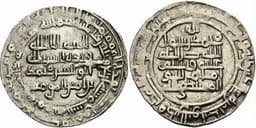
Al-Mustakfi
Emperor · Medieval
47.4Total
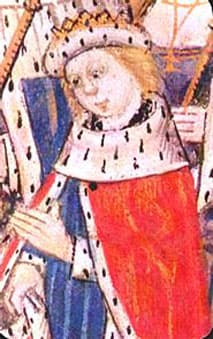
Edward V of England
Emperor · Medieval
47.5Total
Basic Information
Born
905
1470
Died
949
1483
Era
Medieval
Medieval
Nationality
Abbasid Caliphate
England
Occupation
Emperor
Emperor
Civilization
Middle Eastern
Western
Score Comparison
Military (10%)
35.3
16.6
Political (20%)
39.4
68.0
Influence (20%)
60.0
45.5
Legacy (20%)
40.8
37.5
Leadership (15%)
45.0
70.4
Strategy (15%)
60.0
43.0
TOTAL
47.4
47.5
Al-Mustakfi — Complete Timeline
944 AD
Accession of Al-MustakfiPolitical Action◆ Major
Al-Mustakfi became caliph after the deposition of Al-Muttaqi. His reign was entirely under the control of the Buyid emir Mu'izz al-Dawla, who used the caliph as a figurehead to legitimize his rule.
AccessionBuyid ControlFigurehead
Impact: national
946 AD
Deposition and Blinding by the BuyidsPolitical Action◆ Major
Al-Mustakfi was deposed and blinded by Mu'izz al-Dawla after only two years. The Buyid emir accused him of plotting against him, but the real reason was to replace him with a more compliant caliph.
DepositionBlindingBuyid
Impact: nationaltragic
949 AD
Death of Al-MustakfiPolitical Action
Al-Mustakfi died shortly after his deposition, possibly murdered on the orders of the Buyids. His death marked the end of a short and powerless reign.
DeathMurderBuyid
Impact: nationaltragic
Edward V of England — Complete Timeline
1483 AD
Accession to the ThronePolitical Action◆ Major
Edward V became king of England at age 12 after the death of his father, Edward IV. His reign was brief and dominated by his uncle Richard, Duke of Gloucester, who acted as Lord Protector.
SuccessionMinor KingYorkist
Impact: national
Deposition by Richard IIIPolitical Action
Edward V was declared illegitimate by Parliament under the Titulus Regius, and his uncle Richard was crowned as Richard III. Edward and his brother Richard were placed in the Tower of London, where they disappeared.
DepositionPrinces in the TowerUsurpation
Impact: nationaltragic
Disappearance of the Princes in the TowerOther◆ Major
Edward V and his brother Richard, Duke of York, vanished from the Tower of London after being declared illegitimate. Their fate remains unknown, but they are widely believed to have been murdered, likely on orders of Richard III.
MysteryMurderPrinces in the Tower
Impact: nationaltragic
Expert Analysis
Origins
Al-Mustakfi (born 905 CE) was a member of the Abbasid dynasty, the ruling family of the Islamic caliphate. He was the son of Caliph al-Muktafi and grew up in the court of Baghdad, a city that had once been the center of a vast empire but was now in decline. The Abbasid caliphs had lost temporal power to various regional dynasties, and by Al-Mustakfi's time, they were largely figureheads. His early life was shaped by the political machinations of the Buyid emirs, a Shia Persian dynasty that controlled Baghdad.
Edward V of England (born 2 November 1470) was the eldest son of King Edward IV and Elizabeth Woodville. He was born into the House of York during the Wars of the Roses, a period of civil war between the Yorkist and Lancastrian factions. His childhood was marked by his father's brief exile in 1470-1471, after which Edward IV regained the throne. The young prince was raised in luxury at Ludlow Castle, under the supervision of his uncle Anthony Woodville, Earl Rivers.
Rise to Power
Al-Mustakfi became caliph in 944 CE after the deposition of his cousin al-Muttaqi. The Buyid emir Mu'izz al-Dawla, who had taken control of Baghdad in 945, needed a compliant caliph to legitimize his rule. Al-Mustakfi was chosen for his willingness to cooperate. His accession was a political transaction: he granted Mu'izz al-Dawla the title 'Sultan' and effectively ceded all real authority. His reign was entirely ceremonial from its start.
Edward V became king on 9 April 1483 at age 12, following the sudden death of his father Edward IV. His uncle Richard, Duke of Gloucester, was named Lord Protector. As the young king traveled from Ludlow to London, Richard intercepted him and arrested his Woodville relatives. Edward was lodged in the Tower of London, ostensibly for his safety. On 25 June 1483, Parliament declared Edward illegitimate through the Titulus Regius, and Richard was crowned Richard III the next day. Edward's reign lasted only 78 days.
Leadership & Governance
Al-Mustakfi's governance was nonexistent. He was a puppet ruler with no real power. He performed ceremonial duties such as leading Friday prayers and confirming Buyid decrees. His only significant act was to bestow titles on Buyid emirs. He had no army, no treasury, and no administrative control. His score of 45.0 in Leadership reflects his complete subservience to Mu'izz al-Dawla, who used him as a rubber stamp.
Edward V never governed. He was a child king whose reign was controlled by his uncle. He scored 70.4 in Leadership, but this is based on potential and the quality of his advisors rather than his own actions. The Woodville faction had planned to govern on his behalf, but Richard's coup prevented that. Edward's only recorded action as king was to appoint a commission to distribute alms. His reign was too short for any policy or reform.
Triumph & Tragedy
Al-Mustakfi's triumph was surviving two years as caliph under Buyid rule, a feat given that his predecessor was deposed and killed. However, his tragedy was his blinding and deposition in 946 CE. Mu'izz al-Dawla accused him of plotting with the Hamdanids, a rival dynasty. Al-Mustakfi was dragged from his palace, blinded with a hot needle, and imprisoned. He died shortly after, likely murdered. His blindness made him ineligible for the caliphate, ending his line's claim.
Edward V's triumph was simply his accession, which briefly united the Yorkist faction. His tragedy was his disappearance and presumed murder in the Tower of London, along with his brother Richard. The Princes in the Tower vanished in the autumn of 1483, after which Richard III faced accusations of usurpation and murder. Edward's death ended the direct male line of the House of York and contributed to the rise of Henry Tudor.
Character & Destiny
Al-Mustakfi was described as weak-willed and easily manipulated. He lacked the political acumen to navigate the treacherous Buyid court. His trust in Mu'izz al-Dawla proved fatal. Historical assessments by Ibn al-Athir and others portray him as a victim of circumstance, but also as a caliph who failed to assert even symbolic independence. His character of passivity sealed his fate.
Edward V was intelligent and well-educated, according to contemporary accounts. However, his youth made him dependent on others. His destiny was shaped by the power struggle between his Woodville relatives and his uncle Richard. His mother's hasty marriage to Edward IV created illegitimacy claims that Richard exploited. Edward's fate remains a mystery, but his disappearance cemented the Tudor claim to the throne.
Legacy
Al-Mustakfi's legacy is minimal. He is a footnote in Abbasid history, representing the nadir of caliphal power. His blinding symbolized the Buyids' contempt for the caliphate. His reign showed that the Abbasid caliphs had become pawns of Shia military dynasties. The institution of the caliphate continued until 1258, but its authority was permanently diminished. Al-Mustakfi scores 40.8 in Legacy.
Edward V's legacy is far more potent. As one of the Princes in the Tower, he became a symbol of innocence betrayed. His disappearance fueled the Tudor narrative that Richard III was a tyrant. The mystery has inspired centuries of speculation, literature, and historical debate. Edward's brief reign also demonstrated the fragility of the Yorkist dynasty. He scores 37.5 in Legacy, but his cultural impact is larger than this number suggests.
Conclusion
While their total scores are nearly identical (Edward V 47.5, Al-Mustakfi 47.4), Edward V had a greater impact on history. Al-Mustakfi's reign was a symptom of Abbasid decline, but Edward's disappearance changed the course of English history. It led to the rise of the Tudor dynasty, the end of the Wars of the Roses, and the establishment of a new royal line. Edward V's story also has enduring cultural resonance, whereas Al-Mustakfi is known only to specialists. In terms of historical consequence, Edward V is the more significant figure.
Rankings
🥇
Edward V of EnglandLeader
Mil: 16.6Pol: 68.0Inf: 45.5
47.5
🥈
Al-Mustakfi
Mil: 35.3Pol: 39.4Inf: 60.0
47.4
+0.1 behind
How This Comparison Works
Algorithm
Each figure is scored on 6 dimensions (0—100 scale) based on structured historical data: Military (10%), Political (20%), Influence (20%), Legacy (20%), Leadership (15%), Strategy (15%). The weighted total produces the final ranking.
Data Sources
Scores are computed from structured sub-indicators in the database. Scale factors adjust for era (Ancient ×0.85, Modern ×1.0) and civilization size (Eastern ×1.05, Other ×0.80) to account for differences in population and military scale.
Maximum 3 Figures
Comparisons are limited to 2—3 figures to ensure readability and statistical meaningfulness.
Error Margins
±5 points per dimension — Sub-scores are derived from historical records with inherent uncertainty. Two figures within 5 points on a dimension should be considered roughly equivalent in that area.
Total Score Accuracy
±3 points overall — The weighted combination of 6 dimensions produces a total score with approximately ±3 points of uncertainty. Differences of less than 3 points are not statistically significant— the figures are effectively tied.
Known Limitations
- Historical records are incomplete and uneven across civilizations
- Figures from oral-tradition societies may be underrepresented
- Occupation labels can misclassify multi-role figures
- Scores measure capability and impact, not moral character
- Quantitative scoring is a comparison tool, not absolute truth
Capability Radar
Military (10%) — Battles & Warfare
Battles
32
8
Win Rate
35
11
Expansion
35
9
Political (20%) — Governance & Reform
Reform
0
51
Diplomacy
5
52
Economy
0
56
Influence (20%) — Cultural & Global Reach
Cultural
0
5
Global
0
5
Legacy (20%) — Historical Impact
Historical
5
15
Longevity
0
10
Leadership (15%) — Power & Stability
Tenure
5
46
Stability
0
58
Strategy (15%) — Tactics & Innovation
Strategy
40
14
Tactics
45
19
Reform
44
19
Similar Comparisons
Comments & Discussion
No comments yet. Be the first to share your thoughts!