Loading...
Al-Muqtadir vs Sango
Sango leads by 22.2 pts · 2 figures compared
…
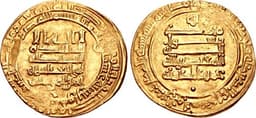
Al-Muqtadir
Emperor · Medieval
41.5Total

Sango
Emperor · Medieval
63.7Total
Basic Information
Born
895
1200
Died
932
1250
Era
Medieval
Medieval
Nationality
Abbasid Caliphate
Oyo Empire
Occupation
Emperor
Emperor
Civilization
Middle Eastern
Other
Score Comparison
Military (10%)
20.0
46.7
Political (20%)
30.7
36.5
Influence (20%)
49.4
75.0
Legacy (20%)
39.2
90.0
Leadership (15%)
55.3
58.8
Strategy (15%)
45.0
35.0
TOTAL
41.5
63.7
Al-Muqtadir — Complete Timeline
908 AD
Accession of Al-MuqtadirPolitical Action◆ Major
Al-Muqtadir became caliph at age 13 after the death of Al-Muktafi. His youth and inexperience led to factional struggles among court officials and military commanders, accelerating the decline of Abbasid authority.
AccessionYouthDecline
Impact: nationaldestructive
929 AD
Battle of BaghdadWar◆ Major
The Qarmatians attacked and sacked Baghdad, the Abbasid capital. Al-Muqtadir's forces were unable to defend the city, and the caliph was forced to flee. This event demonstrated the complete military weakness of the caliphate.
QarmatiansSack of BaghdadWeakness
Impact: regionaltragic
932 AD
Assassination of Al-MuqtadirPolitical Action◆ Major
Al-Muqtadir was killed in battle against a rebel army led by Mu'nis al-Muzaffar, a former general. His death ended a 24-year reign marked by political instability, economic decline, and loss of territory.
AssassinationRebellionEnd of Reign
Impact: nationaltragic
Sango — Complete Timeline
1245 AD
Suicide after military defeatWar◆ Major
According to tradition, Sango accidentally destroyed his own palace with lightning during a fit of rage, killing his wives and children. Overcome with guilt and facing military defeat, he hanged himself. This dramatic end is central to his legend and subsequent deification.
DeathLegendYoruba Mythology
Impact: nationaltragic
1250 AD
Deification as the god of thunderCultural
After his death, Sango was deified as the Yoruba god of thunder and lightning. He became one of the most important Orishas in the Yoruba pantheon, worshipped across the African diaspora in religions such as Santeria, Candombl
DeificationYoruba ReligionOrisha
Impact: global
Expert Analysis
Origins
Al-Muqtadir was born in 895 CE into the Abbasid dynasty, the son of Caliph al-Mutadid. He became caliph at age 13 in 908 CE after the death of his half-brother al-Muktafi. His youth left him inexperienced, and his reign was dominated by court factions and harem politics. He was largely illiterate and relied on advisors like the vizier Ali ibn Isa and the powerful queen-mother Shaghab.
Sango, in contrast, is a semi-legendary figure from the Oyo Empire in West Africa, traditionally dated to the 12th or 13th century. He was the third Alaafin (king) of Oyo, succeeding his brother Ajaka. Little is known of his early life, but he is described as a powerful and charismatic ruler who expanded Oyo's territory through military campaigns. His reign is estimated to have lasted around seven years.
Rise to Power
Al-Muqtadir's rise was passive: he inherited the caliphate due to his father's death. His accession was controversial, as the vizier al-Abbas ibn al-Hasan initially attempted to install a different candidate, but the court ultimately chose al-Muqtadir due to his mother's influence. From the start, he was a figurehead, with real power held by civil and military officials.
Sango's rise was active: he seized power in a palace coup, overthrowing his brother Ajaka, who was considered too gentle. Sango then consolidated his rule through military conquest, expanding Oyo's borders and establishing a formidable cavalry. His reign was marked by constant warfare and displays of power, including his alleged ability to control lightning and fire.
Leadership & Governance
Al-Muqtadir's leadership was weak and indecisive. He allowed the vizierate and military to dominate, leading to a fragmented state. His political score of 30.7 reflects his inability to control his court. For example, in 928 CE, the general Mu'nis al-Muzaffar deposed him briefly, only to restore him after a short period. The caliph's reign saw the rise of the Qarmatians, who sacked Baghdad in 930 CE, killing thousands and looting the caliphal palace. Al-Muqtadir fled and was unable to defend his capital.
Sango was a strong but volatile leader. He centralized power and promoted the cult of his own person, using his reputed magical powers to intimidate rivals. His leadership score of 58.8 indicates a more effective ruler than al-Muqtadir (55.3), but his governance was harsh and autocratic. He executed many nobles and generals, creating enemies. His reliance on fear rather than institutional strength proved fragile.
Triumph & Tragedy
Al-Muqtadir's triumphs are few: he maintained the caliphate for 24 years despite constant threats, and his reign saw some cultural patronage, though it was overshadowed by decline. His tragedies are numerous: the sack of Baghdad by the Qarmatians, the loss of provinces to rebels, and his own assassination in 932 CE while fighting Mu'nis's forces. His military score of 20.0 reflects his complete failure to defend his realm.
Sango's triumph is his deification and enduring legacy as the god of thunder, which gives him the highest influence (75.0) and legacy (90.0) scores in this comparison. His tragedy is his suicide after accidentally destroying his own palace with lightning, killing his family. This act of hubris led to his death and the loss of his empire to his brother Ajaka, who was restored.
Character & Destiny
Al-Muqtadir was a passive and pleasure-loving ruler, more interested in his harem and gardens than in governance. His character allowed court factions to control him, leading to his downfall. His destiny was to be a weak link in the Abbasid chain, accelerating the empire's fragmentation.
Sango was proud, impulsive, and violent. His character drove him to seek power through fear and intimidation, but his temper led to his own destruction. His destiny was to become a legend, transformed from a flawed king into a powerful deity.
Legacy
Al-Muqtadir's legacy is negative: he is remembered as the caliph under whom the Abbasid decline became irreversible. His reign marked the loss of control over provinces, the rise of the Buyids, and the humiliation of Baghdad. His total score of 41.5 reflects this.
Sango's legacy is immense in West African religion. He is worshipped as the god of thunder, justice, and war, and his cult spread across the African diaspora. He is a central figure in Yoruba religion and influenced Santeria, Candomblé, and Vodou. His score of 63.7 is largely due to this enduring religious impact.
Conclusion
Sango had a greater impact than Al-Muqtadir. While al-Muqtadir's reign was a failure in military (20.0 vs 46.7) and politics (30.7 vs 36.5), Sango's legacy (90.0 vs 39.2) and influence (75.0 vs 49.4) far surpass the caliph's. Sango's deification created a lasting religious tradition that continues today, whereas al-Muqtadir's rule only accelerated decline. Sango's total score of 63.7 is 22.2 points higher, a clear margin. The caliph's story is a cautionary tale of weak leadership, while Sango's is a transformation from mortal to deity. Thus, Sango emerges as the more significant figure.
Rankings
🥇
SangoLeader
Mil: 46.7Pol: 36.5Inf: 75.0
63.7
🥈
Al-Muqtadir
Mil: 20.0Pol: 30.7Inf: 49.4
41.5
+22.2 behind
How This Comparison Works
Algorithm
Each figure is scored on 6 dimensions (0—100 scale) based on structured historical data: Military (10%), Political (20%), Influence (20%), Legacy (20%), Leadership (15%), Strategy (15%). The weighted total produces the final ranking.
Data Sources
Scores are computed from structured sub-indicators in the database. Scale factors adjust for era (Ancient ×0.85, Modern ×1.0) and civilization size (Eastern ×1.05, Other ×0.80) to account for differences in population and military scale.
Maximum 3 Figures
Comparisons are limited to 2—3 figures to ensure readability and statistical meaningfulness.
Error Margins
±5 points per dimension — Sub-scores are derived from historical records with inherent uncertainty. Two figures within 5 points on a dimension should be considered roughly equivalent in that area.
Total Score Accuracy
±3 points overall — The weighted combination of 6 dimensions produces a total score with approximately ±3 points of uncertainty. Differences of less than 3 points are not statistically significant— the figures are effectively tied.
Known Limitations
- Historical records are incomplete and uneven across civilizations
- Figures from oral-tradition societies may be underrepresented
- Occupation labels can misclassify multi-role figures
- Scores measure capability and impact, not moral character
- Quantitative scoring is a comparison tool, not absolute truth
Capability Radar
Military (10%) — Battles & Warfare
Battles
5
30
Win Rate
5
35
Expansion
5
30
Political (20%) — Governance & Reform
Reform
10
30
Diplomacy
15
35
Economy
10
30
Influence (20%) — Cultural & Global Reach
Cultural
15
90
Global
10
80
Legacy (20%) — Historical Impact
Historical
20
85
Longevity
15
95
Leadership (15%) — Power & Stability
Tenure
60
40
Stability
10
35
Strategy (15%) — Tactics & Innovation
Strategy
5
35
Tactics
5
40
Reform
5
25
Similar Comparisons
Comments & Discussion
No comments yet. Be the first to share your thoughts!