Loading...
Al-Muqtadir vs Ngola Kiluanje
Ngola Kiluanje leads by 6.5 pts · 2 figures compared
…
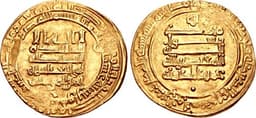
Al-Muqtadir
Emperor · Medieval
41.5Total

Ngola Kiluanje
Emperor · Medieval
48.0Total
Basic Information
Born
895
1480
Died
932
1530
Era
Medieval
Medieval
Nationality
Abbasid Caliphate
Angola
Occupation
Emperor
Emperor
Civilization
Middle Eastern
Other
Score Comparison
Military (10%)
20.0
10.0
Political (20%)
30.7
43.7
Influence (20%)
49.4
55.7
Legacy (20%)
39.2
49.2
Leadership (15%)
55.3
67.0
Strategy (15%)
45.0
41.7
TOTAL
41.5
48.0
Al-Muqtadir — Complete Timeline
908 AD
Accession of Al-MuqtadirPolitical Action◆ Major
Al-Muqtadir became caliph at age 13 after the death of Al-Muktafi. His youth and inexperience led to factional struggles among court officials and military commanders, accelerating the decline of Abbasid authority.
AccessionYouthDecline
Impact: nationaldestructive
929 AD
Battle of BaghdadWar◆ Major
The Qarmatians attacked and sacked Baghdad, the Abbasid capital. Al-Muqtadir's forces were unable to defend the city, and the caliph was forced to flee. This event demonstrated the complete military weakness of the caliphate.
QarmatiansSack of BaghdadWeakness
Impact: regionaltragic
932 AD
Assassination of Al-MuqtadirPolitical Action◆ Major
Al-Muqtadir was killed in battle against a rebel army led by Mu'nis al-Muzaffar, a former general. His death ended a 24-year reign marked by political instability, economic decline, and loss of territory.
AssassinationRebellionEnd of Reign
Impact: nationaltragic
Ngola Kiluanje — Complete Timeline
1500 AD
Foundation of Ndongo KingdomPolitical Action◆ Major
Ngola Kiluanje founded the Ndongo kingdom in the highlands of present-day Angola. He established the capital at Kabasa and organized the Mbundu people into a centralized state, laying the foundation for the kingdom that later resisted Portuguese colonization.
FoundationNdongoMbundu
Impact: regionalconstructive
1510 AD
Consolidation of Mbundu ChiefdomsPolitical Action◆ Major
Ngola Kiluanje unified various Mbundu chiefdoms under his rule, creating a cohesive kingdom. This consolidation allowed Ndongo to become a significant power in the region, controlling trade in slaves and ivory.
ConsolidationMbunduNdongo
Impact: regionalconstructive
1530 AD
Death of Ngola KiluanjePolitical Action◆ Major
Ngola Kiluanje died around 1530, ending his reign as founder of Ndongo. His successors continued to expand the kingdom, and the title 'Ngola' became synonymous with the region, eventually giving rise to the name Angola.
DeathNdongoLegacy
Impact: regional
Expert Analysis
Origins
Al-Muqtadir (born 895 CE) was the 18th caliph of the Abbasid Caliphate, ascending the throne at age 13 after the death of his brother Al-Muktafi. His youth and inexperience left him vulnerable to the machinations of court officials and military commanders. The Abbasid state, already weakened by previous decades of internal strife and the rise of autonomous dynasties, entered a phase of accelerated decline under his reign.
Ngola Kiluanje (born c. 1470) was a Mbundu leader who founded the Ndongo kingdom in the highlands of present-day Angola. Little is known of his early life, but he emerged as a chief among the Mbundu people, organizing them into a cohesive political entity. He established his capital at Kabasa and took the title 'Ngola', which later became the name of the modern nation of Angola.
Rise to Power
Al-Muqtadir's rise was automatic as a hereditary caliph, but his power was immediately contested. The vizier Ibn al-Furat and the general Mu'nis al-Muzaffar vied for control, leading to a series of coups and counter-coups. Al-Muqtadir was deposed briefly in 929 CE but reinstated within days. His reign saw the rise of the Qarmatians, a radical Ismaili sect that sacked Mecca in 930 CE and threatened Baghdad.
Ngola Kiluanje rose by consolidating fragmented Mbundu chiefdoms under his rule. Through diplomacy and military campaigns, he unified the region into the Ndongo kingdom around 1515. His ability to organize the Mbundu people and establish a centralized state with a defined territory marked his ascent. The kingdom became a significant power in the region, engaging in trade with Portuguese explorers who arrived in the late 15th century.
Leadership & Governance
Al-Muqtadir's leadership was characterized by weakness and reliance on court factions. He scored 55.3 in leadership and 45.0 in strategy, reflecting his inability to control the state. His governance was marked by fiscal mismanagement; the treasury was drained by lavish spending and military defeats. The vizier Ibn al-Furat implemented tax reforms, but political instability prevented sustained improvements.
Ngola Kiluanje scored 67.0 in leadership, indicating stronger executive capability. He established a centralized monarchy with a capital at Kabasa, organized the Mbundu into administrative regions, and created a tax system based on tribute. His governance allowed Ndongo to resist Portuguese encroachment for decades, though internal succession disputes later weakened the state.
Triumph & Tragedy
Al-Muqtadir's greatest success was surviving 24 years on the throne despite numerous threats. However, his reign saw the Qarmatian sack of Baghdad in 928 CE (Battle of Baghdad), where the caliph fled, and the pilgrimage caravan was attacked. His assassination in 932 CE by his own general Mu'nis al-Muzaffar marked a tragic end. His military score of 20.0 reflects his inability to defend the state.
Ngola Kiluanje's triumph was founding a kingdom that gave its name to a modern nation. He unified the Mbundu and established a dynasty that lasted until the 17th century. His tragedy is the limited historical record; his death around 1530 left the kingdom facing Portuguese colonialism. His military score of 10.0 suggests limited direct warfare, but his political score of 43.7 indicates effective state-building.
Character & Destiny
Al-Muqtadir was a puppet caliph, controlled by courtiers and generals. His character was passive and indecisive, leading to a vicious cycle of instability. The historian al-Mas'udi described him as 'weak and easily led'. His destiny was sealed by his inability to assert authority, culminating in his death at the hands of his own general.
Ngola Kiluanje was a visionary leader who built a state from disparate chiefdoms. His character combined diplomatic skill and organizational ability. His destiny was to establish a kingdom that became a symbol of Mbundu identity and later Angolan nationalism. His leadership score of 67.0 reflects this success, though his influence score of 55.7 shows the limits of his reach compared to global empires.
Legacy
Al-Muqtadir's legacy is negative: he accelerated the decline of the Abbasid Caliphate. His reign saw the loss of effective power to military commanders and the rise of autonomous dynasties. His total score of 41.5 places him among the weaker Abbasid caliphs. He is remembered as a symbol of decadence and decay in medieval Islamic history.
Ngola Kiluanje's legacy is profound: he is the founder of the Ndongo kingdom and the namesake of Angola. His political score of 43.7 and influence score of 55.7 reflect his role in state formation. The title 'Ngola' became the basis for the country's name. He is revered in Angolan history as a unifier and founder, despite the lack of extensive written records.
Conclusion
Ngola Kiluanje had a greater impact than Al-Muqtadir. With a total score of 48.0 versus 41.5, Kiluanje's founding of a kingdom that endured for centuries and gave its name to a modern nation outweighs Al-Muqtadir's negative legacy. While Al-Muqtadir ruled a larger empire, his reign was a failure that contributed to the Abbasid decline. Kiluanje's state-building, though on a smaller scale, created a lasting political entity. The clear position is that Ngola Kiluanje's constructive legacy surpasses Al-Muqtadir's destructive tenure.
Rankings
🥇
Ngola KiluanjeLeader
Mil: 10.0Pol: 43.7Inf: 55.7
48.0
🥈
Al-Muqtadir
Mil: 20.0Pol: 30.7Inf: 49.4
41.5
+6.5 behind
How This Comparison Works
Algorithm
Each figure is scored on 6 dimensions (0—100 scale) based on structured historical data: Military (10%), Political (20%), Influence (20%), Legacy (20%), Leadership (15%), Strategy (15%). The weighted total produces the final ranking.
Data Sources
Scores are computed from structured sub-indicators in the database. Scale factors adjust for era (Ancient ×0.85, Modern ×1.0) and civilization size (Eastern ×1.05, Other ×0.80) to account for differences in population and military scale.
Maximum 3 Figures
Comparisons are limited to 2—3 figures to ensure readability and statistical meaningfulness.
Error Margins
±5 points per dimension — Sub-scores are derived from historical records with inherent uncertainty. Two figures within 5 points on a dimension should be considered roughly equivalent in that area.
Total Score Accuracy
±3 points overall — The weighted combination of 6 dimensions produces a total score with approximately ±3 points of uncertainty. Differences of less than 3 points are not statistically significant— the figures are effectively tied.
Known Limitations
- Historical records are incomplete and uneven across civilizations
- Figures from oral-tradition societies may be underrepresented
- Occupation labels can misclassify multi-role figures
- Scores measure capability and impact, not moral character
- Quantitative scoring is a comparison tool, not absolute truth
Capability Radar
Military (10%) — Battles & Warfare
Battles
5
35
Win Rate
5
40
Expansion
5
45
Political (20%) — Governance & Reform
Reform
10
30
Diplomacy
15
35
Economy
10
25
Influence (20%) — Cultural & Global Reach
Cultural
15
40
Global
10
35
Legacy (20%) — Historical Impact
Historical
20
45
Longevity
15
50
Leadership (15%) — Power & Stability
Tenure
60
40
Stability
10
30
Strategy (15%) — Tactics & Innovation
Strategy
5
35
Tactics
5
30
Reform
5
25
Similar Comparisons
Comments & Discussion
No comments yet. Be the first to share your thoughts!