Loading...
Al-Muktafi vs Albert I
Al-Muktafi leads by 0.0 pts · 2 figures compared
…
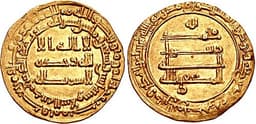
Al-Muktafi
Emperor · Medieval
44.4Total

Albert I
Emperor · Medieval
44.4Total
Basic Information
Born
877
1255
Died
908
1308
Era
Medieval
Medieval
Nationality
Abbasid Caliphate
Holy Roman Empire
Occupation
Emperor
Emperor
Civilization
Middle Eastern
Western
Score Comparison
Military (10%)
45.0
47.5
Political (20%)
36.5
36.5
Influence (20%)
49.4
49.4
Legacy (20%)
40.0
40.8
Leadership (15%)
51.9
48.4
Strategy (15%)
43.3
43.7
TOTAL
44.4
44.4
Al-Muktafi — Complete Timeline
907 AD
Victory over the QarmatiansWar◆ Major
Al-Muktafi's forces defeated a Qarmatian army near Kufa, temporarily halting their raids into Iraq. This victory was one of the last significant military successes of the Abbasid caliphate before its decline.
QarmatiansBattleVictory
Impact: regionalconstructive
908 AD
Return of the Caliphate to BaghdadPolitical Action◆ Major
Al-Muktafi moved the Abbasid court from Samarra back to Baghdad. This ended the period of Samarra as the capital, which had lasted since 836, and marked a symbolic return to the traditional seat of the caliphate.
Capital MoveBaghdadSamarra
Impact: nationalconstructive
Death of Al-MuktafiPolitical Action◆ Major
Al-Muktafi died after a short reign of about six years. His death marked the end of the last effective Abbasid caliph from the Samarra period, as his successors were weaker and more dependent on military factions.
DeathSuccessionDecline
Impact: nationaltragic
Albert I — Complete Timeline
1298 AD
Defeated Adolf of Nassau at the Battle of GöllheimWar◆ Major
Albert I of Habsburg defeated and killed Adolf of Nassau at the Battle of G
BattleHabsburgVictory
Impact: regional
Elected King of GermanyPolitical Action◆ Major
Albert I of Habsburg was elected King of Germany after deposing Adolf of Nassau. His election was supported by the prince-electors and marked the return of Habsburg rule to the German throne.
ElectionHabsburgGerman Kingdom
Impact: regional
Crowned Holy Roman EmperorPolitical Action◆ Major
Albert I of Habsburg was crowned Holy Roman Emperor in Aachen. His coronation reaffirmed Habsburg authority in the empire, though his reign was marked by conflicts with the Papacy and the prince-electors.
CoronationHoly Roman EmpireHabsburg
Impact: regional
1308 AD
Assassinated by His Nephew John ParricidaOther◆ Major
Albert I of Habsburg was assassinated by his nephew John Parricida near Windisch, Switzerland. His death ended his reign and led to a period of instability, with the throne passing to Henry VII of Luxembourg.
AssassinationHabsburgDeath
Impact: regionaltragic
Expert Analysis
Origins
Al-Muktafi, born in 877 in Samarra, was the son of Caliph al-Mu'tadid. He grew up in the turbulent Abbasid court during the Anarchy at Samarra, which had weakened the caliphate. His father restored some stability, and Al-Muktafi was groomed for leadership. Albert I of Habsburg, born in 1255 in Rheinfelden, was the son of King Rudolf I of Germany. He was raised in the Habsburg territories, learning the politics of the Holy Roman Empire. His father was the first Habsburg to become king, establishing the dynasty's royal status.
Rise to Power
Al-Muktafi became caliph in 902 after his father's death. His reign was short, only six years, but he faced immediate challenges from the Qarmatians, a radical Ismaili sect. His forces defeated the Qarmatians near Kufa in 903, one of the last significant military victories of the Abbasid caliphs. Albert I was elected King of Germany in 1298 after deposing Adolf of Nassau. He defeated and killed Adolf at the Battle of Göllheim in 1298, securing his throne. He was crowned Holy Roman Emperor in 1298 in Aachen, reaffirming Habsburg authority.
Leadership & Governance
Al-Muktafi's leadership was focused on restoring the caliphate's prestige. He moved the court from Samarra back to Baghdad in 892, ending the Samarra period. This move was symbolic but also practical, as Baghdad remained the cultural center. However, his military score of 45.0 and political score of 36.5 reflect limited effectiveness. Albert I ruled the Holy Roman Empire with a political score of 36.5, similar to Al-Muktafi. He fought to centralize authority against the prince-electors and faced rebellions. His reign was marked by conflict with the Swiss Confederacy and the assassination by his nephew.
Triumph & Tragedy
Al-Muktafi's greatest triumph was returning the caliphate to Baghdad, which restored some unity. His victory over the Qarmatians was a temporary success. His tragedy was his early death after only six years, ending any chance of sustained revival. The Abbasid caliphate continued to decline after him. Albert I's triumph was securing the German throne and being crowned emperor. His tragedy was his assassination by his nephew John Parricida in 1308, which plunged the empire into instability. His military score of 47.5 is slightly higher than Al-Muktafi's 45.0, but both were mediocre commanders.
Character & Destiny
Al-Muktafi was a capable administrator but lacked the forcefulness needed to reverse the caliphate's decline. His decision to move back to Baghdad was wise but insufficient. His score of 51.9 in leadership shows average ability. Albert I was ambitious and ruthless, as seen in his deposition of Adolf. However, his harsh rule created enemies, leading to his assassination. His leadership score of 48.4 is slightly lower than Al-Muktafi's. Both were overshadowed by their predecessors and successors.
Legacy
Al-Muktafi's legacy is mixed: he is remembered as the last caliph to rule from Samarra and the one who returned to Baghdad. His influence score of 49.4 reflects modest impact. The Abbasid caliphate continued for centuries but as a figurehead. Albert I's legacy is his role in consolidating Habsburg power. His influence score is also 49.4, matching Al-Muktafi's. The Habsburgs would dominate Europe for centuries. His assassination highlighted the dangers of medieval politics.
Conclusion
Comparing their total scores, both have 44.4, reflecting similar overall impact. However, Albert I's legacy is more enduring: the Habsburg dynasty he strengthened became a major European power for 600 years. Al-Muktafi's achievements were temporary and failed to halt the caliphate's decline. Therefore, Albert I had greater long-term impact. While neither was a great leader, Albert I's role in Habsburg history gives him an edge.
Rankings
🥇
Al-MuktafiLeader
Mil: 45.0Pol: 36.5Inf: 49.4
44.4
🥈
Albert I
Mil: 47.5Pol: 36.5Inf: 49.4
44.4
How This Comparison Works
Algorithm
Each figure is scored on 6 dimensions (0—100 scale) based on structured historical data: Military (10%), Political (20%), Influence (20%), Legacy (20%), Leadership (15%), Strategy (15%). The weighted total produces the final ranking.
Data Sources
Scores are computed from structured sub-indicators in the database. Scale factors adjust for era (Ancient ×0.85, Modern ×1.0) and civilization size (Eastern ×1.05, Other ×0.80) to account for differences in population and military scale.
Maximum 3 Figures
Comparisons are limited to 2—3 figures to ensure readability and statistical meaningfulness.
Error Margins
±5 points per dimension — Sub-scores are derived from historical records with inherent uncertainty. Two figures within 5 points on a dimension should be considered roughly equivalent in that area.
Total Score Accuracy
±3 points overall — The weighted combination of 6 dimensions produces a total score with approximately ±3 points of uncertainty. Differences of less than 3 points are not statistically significant— the figures are effectively tied.
Known Limitations
- Historical records are incomplete and uneven across civilizations
- Figures from oral-tradition societies may be underrepresented
- Occupation labels can misclassify multi-role figures
- Scores measure capability and impact, not moral character
- Quantitative scoring is a comparison tool, not absolute truth
Capability Radar
Military (10%) — Battles & Warfare
Battles
30
20
Win Rate
35
25
Expansion
20
25
Political (20%) — Governance & Reform
Reform
30
30
Diplomacy
35
35
Economy
30
30
Influence (20%) — Cultural & Global Reach
Cultural
20
20
Global
15
15
Legacy (20%) — Historical Impact
Historical
25
25
Longevity
15
20
Leadership (15%) — Power & Stability
Tenure
40
40
Stability
25
20
Strategy (15%) — Tactics & Innovation
Strategy
30
20
Tactics
30
20
Reform
20
15
Similar Comparisons
Comments & Discussion
No comments yet. Be the first to share your thoughts!