Loading...
This comparison has not been analyzed yet.
One-time AI generation (~1 minute). Scores and timeline are already available below.
Al-Kindi vs Thomas Cranmer
Thomas Cranmer leads by 6.8 pts · 2 figures compared
…

Al-Kindi
Politician · Medieval
54.7Total
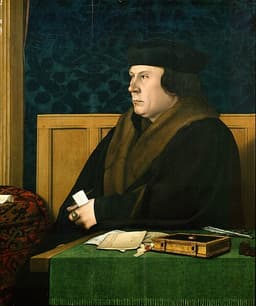
Thomas Cranmer
Politician · Medieval
61.5Total
Basic Information
Born
801
1489
Died
873
1556
Era
Medieval
Medieval
Nationality
Abbasid Caliphate
England
Occupation
Politician
Politician
Civilization
Middle Eastern
Western
Score Comparison
Military (10%)
43.4
44.8
Political (20%)
68.0
68.0
Influence (20%)
56.7
65.0
Legacy (20%)
54.0
55.0
Leadership (15%)
55.3
74.0
Strategy (15%)
41.8
56.8
TOTAL
54.7
61.5
Al-Kindi — Complete Timeline
830 AD
Appointed to the House of WisdomPolitical Action◆ Major
Al-Kindi was appointed by Caliph al-Ma'mun to work at the House of Wisdom in Baghdad. This institution was a major center for translation and research, where Al-Kindi supervised the translation of Greek philosophical and scientific texts into Arabic, preserving classical knowledge.
Translation MovementHouse of WisdomGreek Philosophy
Impact: globalconstructive
850 AD
Wrote 'On First Philosophy'Cultural◆ Major
Al-Kindi wrote 'On First Philosophy', a foundational work of Arabic Neoplatonic philosophy. In it, he argued for the existence of God as the First Cause and the eternity of the world, introducing Aristotelian and Neoplatonic ideas to the Islamic world.
PhilosophyNeoplatonismIslamic Philosophy
Impact: globalconstructive
Developed the concept of 'specificity' in medicineInvention
Al-Kindi developed a method for determining the dosage of drugs based on mathematical proportions, described in his work 'De Gradibus'. This approach applied quantitative analysis to pharmacology, influencing later medical practice in both the Islamic world and Europe.
MedicinePharmacologyMathematics
Impact: globalconstructive
860 AD
Fell out of favor under Caliph al-MutawakkilPolitical Action
Al-Kindi fell out of favor under Caliph al-Mutawakkil, who reversed the rationalist policies of his predecessors. Al-Kindi's library was confiscated, and he was reportedly beaten. This persecution reflected the shift toward orthodox Islamic theology and the decline of Mu'tazilite influence.
PersecutionCaliphal PatronageIntellectual History
Impact: regionaldestructive
Thomas Cranmer — Complete Timeline
1533 AD
Appointed Archbishop of CanterburyPolitical Action◆ Major
Cranmer was appointed Archbishop of Canterbury by Henry VIII. He annulled Henry's marriage to Catherine of Aragon, enabling the king's marriage to Anne Boleyn and solidifying the English Reformation.
English ReformationChurch Leadership
Impact: national
1549 AD
Authored the Book of Common PrayerCultural
Cranmer compiled and wrote the first Book of Common Prayer, establishing a standardized English liturgy for the Church of England. It replaced Latin services and shaped Anglican worship for centuries.
LiturgyAnglicanism
Impact: globalconstructive
1552 AD
Revised the Book of Common PrayerCultural◆ Major
Cranmer issued a more Protestant revision of the Book of Common Prayer, removing Catholic elements and emphasizing justification by faith. This version further defined Anglican doctrine.
LiturgyProtestantism
Impact: nationalconstructive
1556 AD
Tried for Heresy and Burned at the StakePolitical Action◆ Major
Under Mary I, Cranmer was tried for heresy and recanted his Protestant beliefs, but later retracted his recantation. He was burned at the stake in Oxford, becoming a martyr for the English Reformation.
MartyrdomReligious Persecution
Impact: nationaltragic
This comparison has not been analyzed yet.
One-time AI generation (~1 minute). Scores and timeline are already available below.
Rankings
🥇
Thomas CranmerLeader
Mil: 44.8Pol: 68.0Inf: 65.0
61.5
🥈
Al-Kindi
Mil: 43.4Pol: 68.0Inf: 56.7
54.7
+6.8 behind
How This Comparison Works
Algorithm
Each figure is scored on 6 dimensions (0—100 scale) based on structured historical data: Military (10%), Political (20%), Influence (20%), Legacy (20%), Leadership (15%), Strategy (15%). The weighted total produces the final ranking.
Data Sources
Scores are computed from structured sub-indicators in the database. Scale factors adjust for era (Ancient ×0.85, Modern ×1.0) and civilization size (Eastern ×1.05, Other ×0.80) to account for differences in population and military scale.
Maximum 3 Figures
Comparisons are limited to 2—3 figures to ensure readability and statistical meaningfulness.
Error Margins
±5 points per dimension — Sub-scores are derived from historical records with inherent uncertainty. Two figures within 5 points on a dimension should be considered roughly equivalent in that area.
Total Score Accuracy
±3 points overall — The weighted combination of 6 dimensions produces a total score with approximately ±3 points of uncertainty. Differences of less than 3 points are not statistically significant— the figures are effectively tied.
Known Limitations
- Historical records are incomplete and uneven across civilizations
- Figures from oral-tradition societies may be underrepresented
- Occupation labels can misclassify multi-role figures
- Scores measure capability and impact, not moral character
- Quantitative scoring is a comparison tool, not absolute truth
Capability Radar
Military (10%) — Battles & Warfare
Battles
26
52
Win Rate
30
56
Expansion
29
59
Political (20%) — Governance & Reform
Reform
40
75
Diplomacy
50
55
Economy
30
30
Influence (20%) — Cultural & Global Reach
Cultural
70
80
Global
55
60
Legacy (20%) — Historical Impact
Historical
65
75
Longevity
60
70
Leadership (15%) — Power & Stability
Tenure
30
60
Stability
20
25
Strategy (15%) — Tactics & Innovation
Strategy
34
60
Tactics
37
64
Reform
40
68
Similar Comparisons
Comments & Discussion
No comments yet. Be the first to share your thoughts!