Loading...
Hai Rui vs Thomas Cranmer
Thomas Cranmer leads by 7.6 pts · 2 figures compared
…

Hai Rui
Politician · Medieval
53.9Total
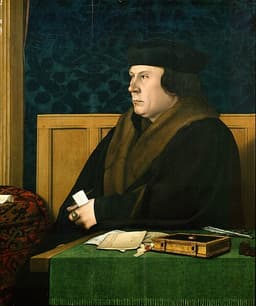
Thomas Cranmer
Politician · Medieval
61.5Total
Basic Information
Born
1514
1489
Died
1587
1556
Era
Medieval
Medieval
Nationality
China
England
Occupation
Politician
Politician
Civilization
Eastern
Western
Score Comparison
Military (10%)
41.8
44.8
Political (20%)
61.3
68.0
Influence (20%)
57.2
65.0
Legacy (20%)
50.0
55.0
Leadership (15%)
65.7
74.0
Strategy (15%)
38.9
56.8
TOTAL
53.9
61.5
Hai Rui — Complete Timeline
1566 AD
Submitted Memorial Criticizing the Jiajing EmperorPolitical Action
Hai Rui submitted a memorial directly criticizing the Jiajing Emperor for his neglect of state affairs, obsession with Daoist rituals, and oppressive governance. The emperor was enraged and ordered Hai Rui's imprisonment, but he was spared execution.
Ming DynastyCriticismImperial Court
Impact: nationalconstructive
Imprisoned for Lèse-majestéPolitical Action◆ Major
Hai Rui was imprisoned in the Ministry of Justice jail for his memorial criticizing the emperor. He remained in prison until the Jiajing Emperor's death later that year, after which he was released and his reputation as an incorruptible official grew.
Ming DynastyImprisonmentIntegrity
Impact: nationaltragic
1569 AD
Appointed Governor of Yingtian PrefecturePolitical Action◆ Major
Hai Rui was appointed Governor of Yingtian Prefecture (modern Nanjing area). In this role, he rigorously enforced land reforms to return illegally seized land to peasants, and he strictly punished corrupt officials, earning him both praise and powerful enemies.
Ming DynastyGovernorshipLand Reform
Impact: regionalconstructive
1570 AD
Dismissed from OfficePolitical Action
Hai Rui was dismissed from his post as Governor of Yingtian Prefecture. His strict enforcement of reforms and attacks on powerful landlords generated intense opposition, leading to his removal. He retired from public life for over a decade.
Ming DynastyDismissalReform
Impact: nationaldestructive
Thomas Cranmer — Complete Timeline
1533 AD
Appointed Archbishop of CanterburyPolitical Action◆ Major
Cranmer was appointed Archbishop of Canterbury by Henry VIII. He annulled Henry's marriage to Catherine of Aragon, enabling the king's marriage to Anne Boleyn and solidifying the English Reformation.
English ReformationChurch Leadership
Impact: national
1549 AD
Authored the Book of Common PrayerCultural
Cranmer compiled and wrote the first Book of Common Prayer, establishing a standardized English liturgy for the Church of England. It replaced Latin services and shaped Anglican worship for centuries.
LiturgyAnglicanism
Impact: globalconstructive
1552 AD
Revised the Book of Common PrayerCultural◆ Major
Cranmer issued a more Protestant revision of the Book of Common Prayer, removing Catholic elements and emphasizing justification by faith. This version further defined Anglican doctrine.
LiturgyProtestantism
Impact: nationalconstructive
1556 AD
Tried for Heresy and Burned at the StakePolitical Action◆ Major
Under Mary I, Cranmer was tried for heresy and recanted his Protestant beliefs, but later retracted his recantation. He was burned at the stake in Oxford, becoming a martyr for the English Reformation.
MartyrdomReligious Persecution
Impact: nationaltragic
Expert Analysis
Origins
Hai Rui (1514–1587) was born into a modest scholarly family in Hainan, China. His father died when he was four, leaving his mother to raise him with a strict Confucian education. He passed the imperial examinations in 1549 at age 35, a relatively late start, and began his career as a low-level magistrate. His early experiences with corruption and local oppression shaped his unwavering commitment to justice.
Thomas Cranmer (1489–1556) was born in Aslockton, England, into a modest gentry family. He studied at Cambridge, earning a Doctor of Divinity, and became a fellow of Jesus College. Initially a conservative theologian, he was drawn to humanist and reformist ideas through his studies. His career took a dramatic turn when he was recruited by Henry VIII to support the king's annulment from Catherine of Aragon.
Rise to Power
Hai Rui rose through the ranks by demonstrating incorruptibility and effectiveness. As magistrate of Chun'an (1558–1562), he enforced equitable taxation and reduced corruption, gaining a reputation as a "pure official." His most famous act came in 1566 when he submitted a memorial directly criticizing the Jiajing Emperor for neglecting state affairs, obsessing over Daoist rituals, and oppressing the people. This act of lèse-majesté led to his imprisonment but also made him a folk hero. After the emperor's death later that year, he was released and promoted.
Cranmer's rise was tied to his usefulness to Henry VIII. In 1532, he was appointed Archbishop of Canterbury after the death of William Warham. He quickly annulled Henry's marriage to Catherine of Aragon, enabling the marriage to Anne Boleyn. Under Henry, Cranmer cautiously advanced Protestant reforms, but his influence grew under Edward VI, when he became the chief architect of the English Reformation.
Leadership & Governance
Hai Rui's leadership was defined by strict adherence to law and moral principle. As Governor of Yingtian Prefecture (1569–1570), he enforced land reforms to return illegally seized land to peasants, alienating powerful landlords. He also reformed the tax system and reduced bureaucratic corruption. His approach was uncompromising: he dismissed corrupt officials and refused gifts, earning him enemies among the elite. His political score of 61.3 reflects his effectiveness but also his inability to navigate court politics.
Cranmer's leadership was more nuanced. He navigated the treacherous politics of Tudor England, surviving Henry VIII's shifting policies and Mary I's persecution. He compiled the Book of Common Prayer (1549, revised 1552), which standardized English liturgy and became a cornerstone of Anglicanism. His governance score of 74.0 reflects his institutional impact, though he recanted under pressure before his execution, a moment of weakness that tarnished his legacy.
Triumph & Tragedy
Hai Rui's greatest triumph was his moral victory: his memorial and subsequent reforms made him a symbol of integrity. However, his tragedy was his dismissal in 1570 after only one year as governor, undone by the landlords he opposed. He spent the last 17 years of his life in retirement, largely forgotten by the state. His legacy score of 50.0 reflects this mixed outcome.
Cranmer's triumph was the creation of the Book of Common Prayer, which shaped English religious identity for centuries. His tragedy was his execution under Mary I: after being forced to recant, he withdrew his recantation at the stake, dying a martyr. His influence score of 65.0 and legacy score of 55.0 reflect his enduring impact.
Character & Destiny
Hai Rui was stubborn, principled, and fearless. His character made him a hero to the common people but a liability to the court. He once said, "I would rather die than be a corrupt official." His integrity cost him his career, but it also ensured his place in history as a model official. His strategy score of 38.9 reflects his lack of political cunning.
Cranmer was scholarly, cautious, but ultimately courageous. He sought to balance reform with obedience to authority, which led to his recantation. Yet his final act of defiance redeemed him. Historians note his intellectual brilliance but criticize his vacillation. His leadership score of 74.0 underscores his ability to implement lasting change.
Legacy
Hai Rui's legacy is primarily cultural. He is celebrated in Chinese folklore, operas, and historical dramas as the archetype of the incorruptible official. The Ming dynasty's later decline reinforced his image as a warning against corruption. However, his concrete reforms were short-lived. His influence score of 57.2 reflects his symbolic importance.
Cranmer's legacy is institutional. The Book of Common Prayer remains in use in Anglican churches worldwide, and his theological writings influenced Protestantism. The Church of England's identity is deeply shaped by his work. His political score of 68.0 and total score of 61.5 reflect his greater tangible impact.
Conclusion
While Hai Rui scored 53.9 total and Cranmer 61.5, the gap of 7.6 points understates the difference in lasting impact. Cranmer's work created a religious and liturgical framework that persists 500 years later. Hai Rui's moral example is powerful but did not change China's governance. Cranmer's influence on language, worship, and church structure is more measurable and enduring. Therefore, Thomas Cranmer had the greater historical impact.
Rankings
🥇
Thomas CranmerLeader
Mil: 44.8Pol: 68.0Inf: 65.0
61.5
🥈
Hai Rui
Mil: 41.8Pol: 61.3Inf: 57.2
53.9
+7.6 behind
How This Comparison Works
Algorithm
Each figure is scored on 6 dimensions (0—100 scale) based on structured historical data: Military (10%), Political (20%), Influence (20%), Legacy (20%), Leadership (15%), Strategy (15%). The weighted total produces the final ranking.
Data Sources
Scores are computed from structured sub-indicators in the database. Scale factors adjust for era (Ancient ×0.85, Modern ×1.0) and civilization size (Eastern ×1.05, Other ×0.80) to account for differences in population and military scale.
Maximum 3 Figures
Comparisons are limited to 2—3 figures to ensure readability and statistical meaningfulness.
Error Margins
±5 points per dimension — Sub-scores are derived from historical records with inherent uncertainty. Two figures within 5 points on a dimension should be considered roughly equivalent in that area.
Total Score Accuracy
±3 points overall — The weighted combination of 6 dimensions produces a total score with approximately ±3 points of uncertainty. Differences of less than 3 points are not statistically significant— the figures are effectively tied.
Known Limitations
- Historical records are incomplete and uneven across civilizations
- Figures from oral-tradition societies may be underrepresented
- Occupation labels can misclassify multi-role figures
- Scores measure capability and impact, not moral character
- Quantitative scoring is a comparison tool, not absolute truth
Capability Radar
Military (10%) — Battles & Warfare
Battles
39
52
Win Rate
38
56
Expansion
46
59
Political (20%) — Governance & Reform
Reform
65
75
Diplomacy
20
55
Economy
30
30
Influence (20%) — Cultural & Global Reach
Cultural
55
80
Global
30
60
Legacy (20%) — Historical Impact
Historical
60
75
Longevity
55
70
Leadership (15%) — Power & Stability
Tenure
40
60
Stability
25
25
Strategy (15%) — Tactics & Innovation
Strategy
49
60
Tactics
48
64
Reform
53
68
Similar Comparisons
Comments & Discussion
No comments yet. Be the first to share your thoughts!