Loading...
This comparison has not been analyzed yet.
One-time AI generation (~1 minute). Scores and timeline are already available below.
Al-Hajjaj ibn Yusuf vs Chabrias
Al-Hajjaj ibn Yusuf leads by 15.6 pts · 2 figures compared
…
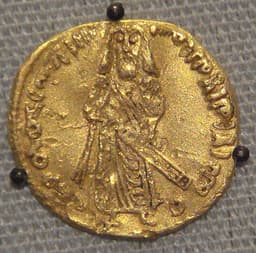
Al-Hajjaj ibn Yusuf
General · Ancient
64.2Total

Chabrias
General · Ancient
48.6Total
Basic Information
Born
-661
-420
Died
—
-357
Era
Ancient
Ancient
Nationality
Umayyad Caliphate
Athens
Occupation
General
General
Civilization
Middle Eastern
Western
Score Comparison
Military (10%)
90.0
65.0
Political (20%)
68.0
29.3
Influence (20%)
57.2
51.8
Legacy (20%)
50.0
44.2
Leadership (15%)
71.0
47.3
Strategy (15%)
76.0
66.3
TOTAL
64.2
48.6
Al-Hajjaj ibn Yusuf — Complete Timeline
694 AD
Appointed Governor of IraqPolitical Action◆ Major
Caliph Abd al-Malik appointed Al-Hajjaj ibn Yusuf as governor of Iraq. He was tasked with restoring order after years of rebellion and instability. His appointment marked the beginning of a harsh and effective administration.
GovernorshipIraqUmayyad
Impact: regional
700 AD
Reform of the Arabic ScriptCultural◆ Major
Al-Hajjaj ibn Yusuf commissioned the introduction of diacritical marks (dots) to the Arabic script to standardize the reading of the Quran and prevent mispronunciation. This reform had a lasting impact on Arabic writing and Islamic scholarship.
Language ReformArabic ScriptQuran
Impact: globalconstructive
701 AD
Battle of Dayr al-JamajimWar◆ Major
Al-Hajjaj ibn Yusuf led Umayyad forces to a decisive victory over the rebel army of Abd al-Rahman ibn al-Ash'ath at Dayr al-Jamajim in Iraq. The victory crushed a major rebellion and solidified Umayyad control over Iraq and the eastern provinces.
BattleRebellionUmayyad
Impact: regionaldestructive
Chabrias — Complete Timeline
378 BC
Defense of Thebes against SpartaWar
Chabrias led an Athenian force to aid Thebes against a Spartan invasion. He famously ordered his troops to stand at ease with their shields resting on their knees, a gesture of defiance that unnerved the Spartans. The Spartans withdrew without attacking.
Military TacticsAthensSparta
Impact: regionalconstructive
376 BC
Battle of NaxosWar◆ Major
Chabrias commanded the Athenian fleet to a decisive victory over the Spartan fleet off the island of Naxos. This battle ended Spartan naval dominance and restored Athenian control over the Aegean Sea. It was the first major Athenian naval victory since the Peloponnesian War.
Naval BattleAthensSparta
Impact: regionalconstructive
357 BC
Command in the Social WarWar
Chabrias served as a commander in the Athenian campaign against rebellious allies in the Social War. He was killed in action during the siege of the island of Chios when his ship was rammed and sank. His death was a significant loss for Athens.
Naval BattleAthensSocial War
Impact: regionaltragic
This comparison has not been analyzed yet.
One-time AI generation (~1 minute). Scores and timeline are already available below.
Rankings
🥇
Al-Hajjaj ibn YusufLeader
Mil: 90.0Pol: 68.0Inf: 57.2
64.2
🥈
Chabrias
Mil: 65.0Pol: 29.3Inf: 51.8
48.6
+15.6 behind
How This Comparison Works
Algorithm
Each figure is scored on 6 dimensions (0—100 scale) based on structured historical data: Military (10%), Political (20%), Influence (20%), Legacy (20%), Leadership (15%), Strategy (15%). The weighted total produces the final ranking.
Data Sources
Scores are computed from structured sub-indicators in the database. Scale factors adjust for era (Ancient ×0.85, Modern ×1.0) and civilization size (Eastern ×1.05, Other ×0.80) to account for differences in population and military scale.
Maximum 3 Figures
Comparisons are limited to 2—3 figures to ensure readability and statistical meaningfulness.
Error Margins
±5 points per dimension — Sub-scores are derived from historical records with inherent uncertainty. Two figures within 5 points on a dimension should be considered roughly equivalent in that area.
Total Score Accuracy
±3 points overall — The weighted combination of 6 dimensions produces a total score with approximately ±3 points of uncertainty. Differences of less than 3 points are not statistically significant— the figures are effectively tied.
Known Limitations
- Historical records are incomplete and uneven across civilizations
- Figures from oral-tradition societies may be underrepresented
- Occupation labels can misclassify multi-role figures
- Scores measure capability and impact, not moral character
- Quantitative scoring is a comparison tool, not absolute truth
Capability Radar
Military (10%) — Battles & Warfare
Battles
85
55
Win Rate
90
60
Expansion
75
40
Political (20%) — Governance & Reform
Reform
85
30
Diplomacy
60
50
Economy
75
35
Influence (20%) — Cultural & Global Reach
Cultural
40
35
Global
55
25
Legacy (20%) — Historical Impact
Historical
65
45
Longevity
50
30
Leadership (15%) — Power & Stability
Tenure
80
45
Stability
50
40
Strategy (15%) — Tactics & Innovation
Strategy
85
65
Tactics
80
70
Reform
70
50
Similar Comparisons
Comments & Discussion
No comments yet. Be the first to share your thoughts!