Loading...
This comparison has not been analyzed yet.
One-time AI generation (~1 minute). Scores and timeline are already available below.
Al-Ashraf Khalil vs Henry VI of England
Al-Ashraf Khalil leads by 11.3 pts · 2 figures compared
…
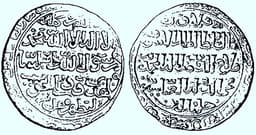
Al-Ashraf Khalil
Emperor · Medieval
49.1Total
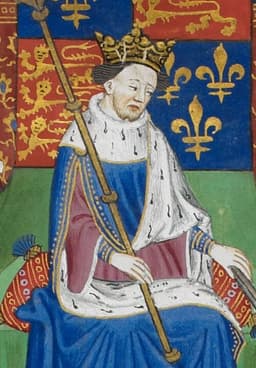
Henry VI of England
Emperor · Medieval
37.8Total
Basic Information
Born
1260
1421
Died
1293
1471
Era
Medieval
Medieval
Nationality
Egypt
England
Occupation
Emperor
Emperor
Civilization
Middle Eastern
Western
Score Comparison
Military (10%)
67.5
20.0
Political (20%)
32.2
30.7
Influence (20%)
55.7
47.9
Legacy (20%)
48.3
40.0
Leadership (15%)
41.5
31.2
Strategy (15%)
52.5
45.0
TOTAL
49.1
37.8
Al-Ashraf Khalil — Complete Timeline
1290 AD
Accession as Sultan (1290)Political Action◆ Major
Al-Ashraf Khalil succeeded his father Qalawun as Sultan of Egypt. He was the second ruler of the Qalawunid dynasty. His accession was contested by some Mamluk factions, but he quickly consolidated power.
SuccessionMamluk SultanateQalawunid Dynasty
Impact: regional
1291 AD
Siege and Capture of Acre (1291)War
Al-Ashraf Khalil led the Mamluk siege of Acre, the last major Crusader stronghold in the Levant. After a six-week siege, the city fell on May 18, 1291. The capture of Acre ended the Crusader presence in the Holy Land.
Crusader WarsSiegeEnd of Crusader States
Impact: globaldestructive
Conquest of Tyre, Sidon, and Beirut (1291)War◆ Major
Following the fall of Acre, Al-Ashraf Khalil's forces captured the remaining Crusader coastal cities of Tyre, Sidon, and Beirut without significant resistance. These conquests completed the Mamluk reconquest of the Levant and eliminated all Crusader footholds.
Crusader WarsConquestMamluk Expansion
Impact: regionaldestructive
1293 AD
Assassination of Al-Ashraf Khalil (1293)Other◆ Major
Al-Ashraf Khalil was assassinated by a group of Mamluk emirs while hunting near Cairo. His death was likely due to internal power struggles. He was succeeded by his young brother An-Nasir Muhammad, beginning a period of instability.
AssassinationSuccessionMamluk Sultanate
Impact: regionaltragic
Henry VI of England — Complete Timeline
1444 AD
Treaty of ToursPolitical Action◆ Major
Henry VI agreed to a truce with France through the Treaty of Tours, which included his marriage to Margaret of Anjou. The truce was intended to pause the Hundred Years' War but was criticized for ceding territory and failing to secure lasting peace.
Hundred Years' WarDiplomacyMarriage
Impact: regional
1453 AD
Loss of GasconyWar
The French army defeated English forces at the Battle of Castillon, ending English rule in Gascony and effectively concluding the Hundred Years' War. This loss stripped England of its last major continental possession, marking a decisive defeat for Henry VI's reign.
Hundred Years' WarTerritorial LossDefeat
Impact: regionaldestructive
1455 AD
First Battle of St AlbansWar
Richard, Duke of York, led forces against the king's army at St Albans, capturing Henry VI. This battle marked the start of the Wars of the Roses, a series of civil wars between the Houses of York and Lancaster for control of the English throne.
Wars of the RosesCivil WarCapture
Impact: nationaldestructive
1460 AD
Act of AccordPolitical Action◆ Major
Henry VI agreed to the Act of Accord, which named Richard, Duke of York, as his heir, disinheriting his own son Edward. This agreement aimed to end the conflict but was rejected by Queen Margaret, leading to continued warfare.
Wars of the RosesSuccessionCompromise
Impact: national
1470 AD
Readeption of Henry VIPolitical Action◆ Major
After being deposed and imprisoned, Henry VI was restored to the throne by the Earl of Warwick and Queen Margaret. This brief return to power lasted only six months before Edward IV reclaimed the crown at the Battle of Barnet.
Wars of the RosesRestorationPower Shift
Impact: national
This comparison has not been analyzed yet.
One-time AI generation (~1 minute). Scores and timeline are already available below.
Rankings
🥇
Al-Ashraf KhalilLeader
Mil: 67.5Pol: 32.2Inf: 55.7
49.1
🥈
Henry VI of England
Mil: 20.0Pol: 30.7Inf: 47.9
37.8
+11.3 behind
How This Comparison Works
Algorithm
Each figure is scored on 6 dimensions (0—100 scale) based on structured historical data: Military (10%), Political (20%), Influence (20%), Legacy (20%), Leadership (15%), Strategy (15%). The weighted total produces the final ranking.
Data Sources
Scores are computed from structured sub-indicators in the database. Scale factors adjust for era (Ancient ×0.85, Modern ×1.0) and civilization size (Eastern ×1.05, Other ×0.80) to account for differences in population and military scale.
Maximum 3 Figures
Comparisons are limited to 2—3 figures to ensure readability and statistical meaningfulness.
Error Margins
±5 points per dimension — Sub-scores are derived from historical records with inherent uncertainty. Two figures within 5 points on a dimension should be considered roughly equivalent in that area.
Total Score Accuracy
±3 points overall — The weighted combination of 6 dimensions produces a total score with approximately ±3 points of uncertainty. Differences of less than 3 points are not statistically significant— the figures are effectively tied.
Known Limitations
- Historical records are incomplete and uneven across civilizations
- Figures from oral-tradition societies may be underrepresented
- Occupation labels can misclassify multi-role figures
- Scores measure capability and impact, not moral character
- Quantitative scoring is a comparison tool, not absolute truth
Capability Radar
Military (10%) — Battles & Warfare
Battles
65
5
Win Rate
70
5
Expansion
55
5
Political (20%) — Governance & Reform
Reform
20
10
Diplomacy
35
15
Economy
25
10
Influence (20%) — Cultural & Global Reach
Cultural
30
15
Global
45
10
Legacy (20%) — Historical Impact
Historical
50
25
Longevity
40
15
Leadership (15%) — Power & Stability
Tenure
30
30
Stability
20
5
Strategy (15%) — Tactics & Innovation
Strategy
65
5
Tactics
60
5
Reform
30
5
Similar Comparisons
Comments & Discussion
No comments yet. Be the first to share your thoughts!