Loading...
Al-Ashraf Khalil vs Napoleon Bonaparte
Napoleon Bonaparte leads by 21.8 pts · 2 figures compared
…
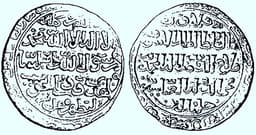
Al-Ashraf Khalil
Emperor · Medieval
49.1Total

Napoleon Bonaparte
General · Modern
70.9Total
Basic Information
Born
1260
1769
Died
1293
1821
Era
Medieval
Modern
Nationality
Egypt
France
Occupation
Emperor
General
Civilization
Middle Eastern
Western
Score Comparison
Military (10%)
67.5
94.0
Political (20%)
32.2
72.0
Influence (20%)
55.7
40.0
Legacy (20%)
48.3
80.0
Leadership (15%)
41.5
78.0
Strategy (15%)
52.5
90.0
TOTAL
49.1
70.9
Al-Ashraf Khalil — Complete Timeline
1290 AD
Accession as Sultan (1290)Political Action◆ Major
Al-Ashraf Khalil succeeded his father Qalawun as Sultan of Egypt. He was the second ruler of the Qalawunid dynasty. His accession was contested by some Mamluk factions, but he quickly consolidated power.
SuccessionMamluk SultanateQalawunid Dynasty
Impact: regional
1291 AD
Siege and Capture of Acre (1291)War
Al-Ashraf Khalil led the Mamluk siege of Acre, the last major Crusader stronghold in the Levant. After a six-week siege, the city fell on May 18, 1291. The capture of Acre ended the Crusader presence in the Holy Land.
Crusader WarsSiegeEnd of Crusader States
Impact: globaldestructive
Conquest of Tyre, Sidon, and Beirut (1291)War◆ Major
Following the fall of Acre, Al-Ashraf Khalil's forces captured the remaining Crusader coastal cities of Tyre, Sidon, and Beirut without significant resistance. These conquests completed the Mamluk reconquest of the Levant and eliminated all Crusader footholds.
Crusader WarsConquestMamluk Expansion
Impact: regionaldestructive
1293 AD
Assassination of Al-Ashraf Khalil (1293)Other◆ Major
Al-Ashraf Khalil was assassinated by a group of Mamluk emirs while hunting near Cairo. His death was likely due to internal power struggles. He was succeeded by his young brother An-Nasir Muhammad, beginning a period of instability.
AssassinationSuccessionMamluk Sultanate
Impact: regionaltragic
Napoleon Bonaparte — Complete Timeline
1799 AD
Coup of 18 BrumaireOther◆ Major
Napoleon Bonaparte, with support from his brother Lucien and key political figures, overthrew the Directory in a bloodless coup. He established the Consulate with himself as First Consul, effectively becoming the ruler of France. This event ended the French Revolution's most unstable period.
French RevolutionCoupRise to Power
Impact: regional
1804 AD
Promulgation of the Napoleonic CodeOther◆ Major
Napoleon enacted the Civil Code of the French, known as the Napoleonic Code, a comprehensive set of laws that replaced the fragmented feudal legal systems. The code established legal equality, protected property rights, and secularized law. It became the basis for legal systems in many European and world countries.
Legal ReformNapoleonic CodeCivil Law
Impact: globalconstructive
1805 AD
Battle of AusterlitzWar◆ Major
Napoleon's Grande Arm
Napoleonic WarsBattleDecisive Victory
Impact: global
1812 AD
Invasion of RussiaWar◆ Major
Napoleon led the Grande Arm
Napoleonic WarsInvasionDisaster
Impact: globaldestructive
1815 AD
Battle of WaterlooWar◆ Major
Napoleon's French army was defeated by the combined forces of the Duke of Wellington's Anglo-Allied army and Gebhard Leberecht von Bl
Napoleonic WarsBattleFinal Defeat
Impact: globaldestructive
Expert Analysis
al-ashraf-khalil-vs-napoleon-bonaparte
# The Conqueror and the Crusher
On a July morning in 1291, the walls of Acre—the last Christian bastion in the Holy Land—crumbled under the relentless assault of Mamluk siege engines. Five hundred years later, on a June evening in 1815, a different sort of wall collapsed near a Belgian village called Waterloo: the will of an army, the dream of an empire, the career of the most famous general in European history. Between these two moments, two men—Al-Ashraf Khalil and Napoleon Bonaparte—rose to power, conquered their enemies, and reshaped the world. One is remembered as a footnote, the other as a titan. Why?
Origins
Napoleon Bonaparte was born in 1769 on the island of Corsica, a place that had just become French. His family was minor nobility, poor enough to feel the sting of social climbing. He attended French military schools, where his accent marked him as an outsider, and he devoured books on military history and Enlightenment philosophy. His era was one of revolution—not just in France but in the very idea of how a society could be organized.
Al-Ashraf Khalil was born in 1260 into the Mamluk Sultanate of Egypt, a slave-soldier state where power came through the sword, not blood. His father, Qalawun, was a former slave who became sultan. Khalil grew up in a world of constant war: Crusaders still held coastal forts, Mongols threatened from the east, and rival Mamluk factions schemed in the shadows. His era was medieval, brutal, and defined by a single question: who would rule the Levant?
The difference in their worlds is the difference between a chess master and a street fighter. Napoleon played with ideas—nationalism, meritocracy, legal reform. Khalil played with daggers and loyalty.
Rise to Power
Napoleon’s ascent was a masterpiece of opportunism. He first gained fame in 1793 by retaking the port of Toulon from royalist rebels, then crushed a Parisian uprising in 1795 with a "whiff of grapeshot." His Italian campaign of 1796-1797 made him a legend: he defeated larger Austrian armies through speed, deception, and the morale of his troops. By 1799, he was confident enough to stage a coup and make himself First Consul. He was thirty years old.
Khalil’s path was simpler and more violent. His father Qalawun died in 1290 while preparing a campaign against Acre. Khalil immediately assumed the sultanate, but his position was fragile. He was young, untested, and surrounded by emirs who had served his father. To secure his throne, he needed a victory that would unite the Mamluks behind him. He chose Acre.
Napoleon rose by outthinking his enemies. Khalil rose by inheriting a war and finishing it.
Leadership & Governance
Napoleon was a genius of organization. The Napoleonic Code, created in 1804, standardized French law and influenced legal systems worldwide. He reformed education, established the Bank of France, and built roads and canals. On the battlefield, he was peerless: his use of artillery, the corps system, and the strategy of the central position allowed him to defeat coalition after coalition. He was also a master of propaganda, crafting his own legend through newspapers, paintings, and memoirs.
Khalil’s governance was brief and pragmatic. He completed his father’s work by capturing Acre in 1291 after a six-week siege, then swept through Tyre, Sidon, and Beirut, erasing Crusader rule forever. He did not create a legal code or a bureaucracy; he ruled through the Mamluk system of military patronage. His leadership was personal and direct—he led his army in person, and his authority depended on the loyalty of his emirs.
Napoleon governed through institutions. Khalil governed through relationships.
Triumph & Tragedy
Napoleon’s greatest triumph was the Battle of Austerlitz in 1805, where he crushed the combined armies of Russia and Austria. It was a masterpiece of deception and timing. His greatest tragedy was the invasion of Russia in 1812. He lost half a million men to winter, disease, and Russian tactics. He never recovered.
Khalil’s triumph was Acre. It was complete, final, and decisive. His tragedy was his assassination in 1293, just two years after his victory. While hunting near Cairo, he was murdered by his own emirs, likely because he had grown too powerful and too independent. He was thirty-three.
Napoleon’s fall was a slow collapse over years. Khalil’s fall was a single dagger stroke.
Character & Destiny
Napoleon was restless, ambitious, and supremely confident. He once said, “Impossible is a word to be found only in the dictionary of fools.” His hunger for glory drove him to conquer Europe, but it also blinded him. He could not stop. He invaded Spain, Russia, and ultimately sealed his fate.
Khalil was decisive and ruthless. He finished what his father started. But he may have been too confident in his own power. He alienated the emirs who had raised him to the throne, and they struck him down.
Napoleon’s character led to his exile on Saint Helena. Khalil’s character led to his grave near Cairo. Both were destroyed by the same flaw: a belief that they were indispensable.
Legacy
Napoleon’s legacy is enormous. He reshaped Europe, spread the ideas of the French Revolution, and inspired nationalism across the continent. His military tactics are still studied. His name is synonymous with genius and ambition.
Khalil’s legacy is smaller but no less real. He ended the Crusades. He destroyed the last Christian kingdom in the Levant. In the Muslim world, he is remembered as a hero who cleansed the land of invaders. But his name is not widely known outside of academic circles.
The difference is not in their achievements. Both conquered, both ruled, both fell. The difference is in the stories we tell. Napoleon’s story was written by himself and by a continent that could not stop talking about him. Khalil’s story was written by chroniclers in Cairo and Damascus, and it ended with his death.
Conclusion
Standing at Waterloo, or walking the ruins of Acre, a visitor might feel the same thing: the weight of a life that changed the world. Napoleon and Khalil both rose from uncertain beginnings, both seized power with audacity, and both fell because of the very ambition that lifted them. One is remembered as a colossus, the other as a footnote. But history’s judgment is not always fair. It depends on who writes the books, who builds the monuments, and who survives to tell the tale. In the end, Khalil’s tragedy is not that he was assassinated—it is that his victory, so complete in its time, is now so forgotten. And Napoleon’s tragedy is that his defeat, so complete in its time, is now so famous.
Rankings
🥇
Napoleon BonaparteLeader
Mil: 94.0Pol: 72.0Inf: 40.0
70.9
🥈
Al-Ashraf Khalil
Mil: 67.5Pol: 32.2Inf: 55.7
49.1
+21.8 behind
How This Comparison Works
Algorithm
Each figure is scored on 6 dimensions (0—100 scale) based on structured historical data: Military (10%), Political (20%), Influence (20%), Legacy (20%), Leadership (15%), Strategy (15%). The weighted total produces the final ranking.
Data Sources
Scores are computed from structured sub-indicators in the database. Scale factors adjust for era (Ancient ×0.85, Modern ×1.0) and civilization size (Eastern ×1.05, Other ×0.80) to account for differences in population and military scale.
Maximum 3 Figures
Comparisons are limited to 2—3 figures to ensure readability and statistical meaningfulness.
Error Margins
±5 points per dimension — Sub-scores are derived from historical records with inherent uncertainty. Two figures within 5 points on a dimension should be considered roughly equivalent in that area.
Total Score Accuracy
±3 points overall — The weighted combination of 6 dimensions produces a total score with approximately ±3 points of uncertainty. Differences of less than 3 points are not statistically significant— the figures are effectively tied.
Known Limitations
- Historical records are incomplete and uneven across civilizations
- Figures from oral-tradition societies may be underrepresented
- Occupation labels can misclassify multi-role figures
- Scores measure capability and impact, not moral character
- Quantitative scoring is a comparison tool, not absolute truth
Capability Radar
Military (10%) — Battles & Warfare
Battles
65
95
Win Rate
70
90
Expansion
55
95
Political (20%) — Governance & Reform
Reform
20
95
Diplomacy
35
80
Economy
25
85
Influence (20%) — Cultural & Global Reach
Cultural
30
85
Global
45
90
Legacy (20%) — Historical Impact
Historical
50
95
Longevity
40
90
Leadership (15%) — Power & Stability
Tenure
30
85
Stability
20
70
Strategy (15%) — Tactics & Innovation
Strategy
65
95
Tactics
60
98
Reform
30
92
Similar Comparisons
Comments & Discussion
古典学者老张6/17/2026
历史不是谁“著名”谁就赢。Al-Ashraf Khalil终结了十字军时代,把基督教势力赶出黎凡特。拿破仑的滑铁卢呢?就决定了他自己的流放。从文明史角度看,Khalil的战果持续五百年影响,拿破仑的帝国三年就散了。真正的巨人往往是历史教科书的脚注,这叫讽刺。
CrusherKhan6/17/2026
Khalil ended the Crusades in one decisive campaign—Acre in 1291 and then the coastal forts. Napoleon’s Egyptian campaign? A failure wrapped in propaganda. Khalil actually achieved a permanent strategic shift, while Bonaparte’s legacy relies on self-mythology and later political maneuvering. Head-to-head, the Mamluk sultan delivered where the Corsican only promised.
数字叛徒6/17/2026
你们拿一个五年执政的奴隶王朝末代去比帝国巅峰?拿破仑统治欧洲二十年,指挥过六十场战役,留下《拿破仑法典》——这根本是重量级vs轻量级。比战果不看时代体量,那是蠢。Al-Ashraf Khalil再强,也只是个地区军阀,别替他吹上天。
MedievalMetrics6/17/2026
Khalil’s siege of Acre used 92 trebuchets and engineers skilled enough to breach triple walls—a logistical feat Napoleon would’ve respected. But Waterloo cost Napoleon 25,000 casualties in one day; Acre’s entire campaign lasted weeks. Khalil wins in efficiency, but Bonaparte’s wars rewired an entire continent’s politics. Different leagues, different metrics.
EgoEater6/17/2026
Let’s be blunt: Napoleon is overhyped because he’s European and photogenic. Khalil conquered the last Crusader states, crushed the Mongols at Homs, and unified Syria-Egypt—all before age 30. Bonaparte lost his invasion of Egypt and only saved face with a coup back home. If we’re ranking pure military brilliance and real impact, give me the slave-soldier who ended an era, not the emperor who ended up on St. Helena.