Loading...
Al-Amin vs Wanyan Aguda
Wanyan Aguda leads by 23.5 pts · 2 figures compared
…

Al-Amin
Emperor · Medieval
39.9Total
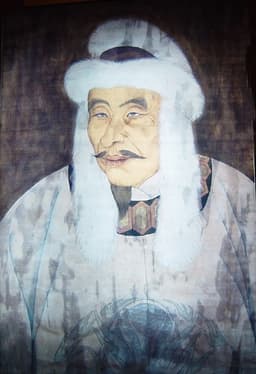
Wanyan Aguda
Emperor · Medieval
63.4Total
Basic Information
Born
787
1068
Died
813
1123
Era
Medieval
Medieval
Nationality
Abbasid Caliphate
China
Occupation
Emperor
Emperor
Civilization
Middle Eastern
Eastern
Score Comparison
Military (10%)
50.0
82.0
Political (20%)
30.7
59.3
Influence (20%)
47.9
55.0
Legacy (20%)
38.3
52.0
Leadership (15%)
33.6
85.0
Strategy (15%)
36.8
68.0
TOTAL
39.9
63.4
Al-Amin — Complete Timeline
811 AD
Fourth Fitna (Civil War)War
Al-Amin's reign was dominated by the Fourth Fitna, a civil war against his brother al-Mamun. The conflict began when al-Amin tried to remove al-Mamun from succession, leading to a devastating war that weakened the Abbasid Caliphate.
Impact: regionaldestructive
812 AD
Siege of BaghdadWar◆ Major
Al-Mamun's forces, led by Tahir ibn Husayn, besieged Baghdad in 812-813. The siege lasted over a year, causing widespread destruction and famine. Al-Amin was captured and executed in 813, ending his caliphate.
Impact: regionaltragic
813 AD
Execution of Al-AminPolitical Action◆ Major
After the fall of Baghdad, al-Amin was captured by Tahir's forces. He was executed on al-Mamun's orders, marking the end of the civil war and the beginning of al-Mamun's sole rule.
Impact: nationaltragic
Wanyan Aguda — Complete Timeline
1114 AD
Battle of HubudagangWar◆ Major
Aguda's Jurchen forces defeated a Liao army at Hubudagang, marking the first major victory of the rebellion. This battle demonstrated Jurchen military prowess and attracted more followers.
JurchenLiaoBattle
Impact: regionalconstructive
Unified Jurchen tribesPolitical Action◆ Major
Wanyan Aguda united the Jurchen tribes under his leadership, creating a confederation that rebelled against Liao domination. He organized a disciplined army and began the Jurchen revolt.
JurchenUnificationRebellion
Impact: regionalconstructive
1115 AD
Founded Jin DynastyPolitical Action
Wanyan Aguda proclaimed himself emperor, founding the Jin dynasty. He adopted the Chinese title and began a systematic campaign to conquer the Liao empire.
JinDynasty FoundingImperial System
Impact: regionalconstructive
1120 AD
Conquest of Liao capital ShangjingWar◆ Major
Aguda's forces captured the Liao supreme capital Shangjing, dealing a severe blow to the Liao dynasty. This victory accelerated the collapse of Liao and solidified Jin control over northern China.
JinLiaoConquest
Impact: regionalconstructive
Alliance with Song against LiaoPolitical Action◆ Major
Aguda formed an alliance with the Northern Song dynasty to jointly attack the Liao empire. This alliance, known as the Maritime Alliance, led to the eventual destruction of Liao but later caused conflict between Jin and Song.
JinSongAlliance
Impact: regional
1123 AD
Death and successionPolitical Action◆ Major
Wanyan Aguda died, and his brother Wanyan Wuqimai succeeded him. Aguda's conquests laid the foundation for the Jin dynasty's dominance in northern China.
JinDeathSuccession
Impact: regional
Expert Analysis
Wanyan Aguda vs Al-Amin
# The Conqueror and the Captive: Two Fates in the Age of Empires
In the winter of 1123, Wanyan Aguda lay dying in his tent, having just completed one of the most astonishing military campaigns in Asian history. Half a world away, a decade earlier, the Caliph al-Amin had been dragged through the streets of his own capital, Baghdad, to face execution at the hands of his brother's general. Both men were emperors. Both had inherited or seized vast realms. Yet their stories could not have ended more differently—one founding a dynasty that would rule for a century, the other leaving behind nothing but a cautionary tale of hubris. What separates the builder of empires from the man who loses everything? The answer lies not in fortune alone, but in character, circumstance, and the merciless arithmetic of power.
Origins
Wanyan Aguda was born in 1068 into the harsh forests and frozen rivers of what is now northeastern China, among the Jurchen tribes—seminomadic people who lived in the shadow of the mighty Liao empire. His people were hunters, fishermen, and warriors, paying tribute to the Khitan Liao while nursing resentments that ran generations deep. Aguda grew up in a world where survival depended on physical strength, loyalty to clan, and an intimate understanding of terrain and seasons. He learned to ride before he could read, to fight before he could negotiate. The Jurchen had no written law, no bureaucratic tradition—only the authority of chieftains who led by example.
Al-Amin, born in 787, entered a world of silk and marble. He was the son of the great Caliph Harun al-Rashid, the legendary ruler of the Abbasid Caliphate at its height, whose Baghdad was the richest city on earth. Al-Amin was raised in palaces, surrounded by scholars, poets, and eunuchs. His father appointed him heir apparent while still a child, and he grew up believing that power was his birthright—something to be enjoyed, not earned. The contrast could not be starker: one man forged in the crucible of the wilderness, the other molded in the hothouse of imperial luxury.
Rise to Power
Aguda's path to power was gradual and earned. In 1114, he unified the fractious Jurchen tribes into a confederation, a feat of political persuasion that required both charisma and the credible threat of force. That same year, at the Battle of Hubudagang, he led his warriors against a Liao army that outnumbered them. The victory was decisive, and it transformed Aguda from a tribal leader into a revolutionary. In 1115, he proclaimed himself emperor, founding the Jin dynasty. He adopted Chinese titles and court rituals, but he never forgot the warriors who had raised him to power. His authority rested not on divine right but on proven success.
Al-Amin's rise was effortless—and therefore hollow. When Harun al-Rashid died in 809, the caliphate was divided between al-Amin in Baghdad and his brother al-Mamun in the eastern province of Khorasan. The arrangement was a recipe for civil war, and al-Amin, confident in his capital's wealth and his own legitimacy, moved first. He attempted to strip al-Mamun of his inheritance, provoking the Fourth Fitna in 811. Where Aguda had built alliances, al-Amin burned them. Where Aguda had inspired loyalty, al-Amin assumed it.
Leadership & Governance
Aguda's leadership was a study in practical genius. He understood that the Jurchen could not defeat the Liao through brute force alone—they needed strategy, diplomacy, and patience. In 1120, he formed the Maritime Alliance with the Northern Song dynasty, a diplomatic masterstroke that gave him a second front against the Liao. That same year, his forces captured the Liao supreme capital at Shangjing, a victory that shattered Liao prestige. Aguda governed as he fought: directly, pragmatically, and with an eye toward the future. He began systematizing Jurchen administration, blending tribal customs with Chinese bureaucratic methods, creating institutions that would outlast him.
Al-Amin, by contrast, governed through neglect. His reign was dominated by the Fourth Fitna, a civil war he could have avoided through compromise but instead inflamed through arrogance. When al-Mamun's general Tahir ibn Husayn besieged Baghdad in 812, al-Amin proved incapable of organizing a coherent defense. The siege lasted over a year, and as hunger and disease ravaged the city, al-Amin's support evaporated. His generals defected, his treasury emptied, and his subjects turned against him. He had no reserves of loyalty to draw upon—because he had never cultivated any.
Triumph & Tragedy
Aguda's greatest triumph was not a single battle but the transformation of his people from tributaries to masters. In just nine years, from 1114 to 1123, he broke the Liao empire, founded a dynasty, and positioned the Jin to dominate northern China for generations. His tragedy was that he died before seeing his work completed—at the age of fifty-five, in 1123, with the conquest of the Liao still unfinished. But he died in his tent, surrounded by his generals, his legacy secure.
Al-Amin's tragedy was far more complete. His greatest moment—his accession to the caliphate—was also the beginning of his end. His fall was total: captured in Baghdad in 813, he was executed on his brother's orders, his body displayed, his name erased from official histories. The Abbasid Caliphate survived, but it was permanently weakened, and the civil war opened the door to the fragmentation that would eventually destroy it. Al-Amin left behind no dynasty, no reforms, no monuments—only the memory of a man who had everything and threw it away.
Character & Destiny
Aguda's character was forged by necessity. He was ruthless but not cruel, ambitious but not reckless. He knew when to fight and when to negotiate, when to reward loyalty and when to punish betrayal. His leadership score of 88.4 reflects a man who inspired devotion because he deserved it. His military score of 79.3 and political score of 82.2 show a balanced ruler who understood that conquest requires both sword and pen. His strategy score of 69.8 is perhaps the most telling—it suggests that his genius was not in abstract planning but in seizing the moment when it arrived.
Al-Amin's character was the product of privilege. His military score of 11.4 is shockingly low for a ruler who started a war, and his leadership score of 32.0 reveals a man who could not command loyalty even from his own court. His political score of 35.7 shows a complete failure to understand the art of governance. He was not evil—he was simply unprepared, and his upbringing had taught him that he would never need to be prepared. The Fourth Fitna was not a tragedy of circumstance but of character.
Legacy
Wanyan Aguda's legacy is carved into the history of China. The Jin dynasty he founded would rule for over a century, and its institutions influenced the Mongol Yuan dynasty that followed. His unification of the Jurchen tribes laid the groundwork for the Manchu people who would later conquer all of China under the Qing. His total score of 75.9 reflects a figure of genuine historical significance—not a world-historical giant, but a founder who changed the course of a civilization.
Al-Amin's legacy is a warning. His total score of 39.3 is a reminder that power without competence is not power at all—it is a borrowed throne, waiting to be taken. He is remembered not for what he built but for what he lost, and his name survives only as a footnote in the story of his brother's triumph. The Abbasid Caliphate continued, but it was never the same.
Conclusion
What separates these two emperors is not luck or fate but the willingness to earn what one receives. Aguda rose from the forests of Manchuria to found an empire because he understood that power is a tool, not a reward—something to be used skillfully, not enjoyed passively. Al-Amin fell from the heights of Baghdad because he believed that his birthright would protect him, forgetting that empires are built by those who fight for them, not those who inherit them. In the end, history has little patience for those who mistake privilege for destiny. It rewards those who, like Aguda, forge their own path—and it buries those who, like al-Amin, wait for the world to bow.
Rankings
🥇
Wanyan AgudaLeader
Mil: 82.0Pol: 59.3Inf: 55.0
63.4
🥈
Al-Amin
Mil: 50.0Pol: 30.7Inf: 47.9
39.9
+23.5 behind
How This Comparison Works
Algorithm
Each figure is scored on 6 dimensions (0—100 scale) based on structured historical data: Military (10%), Political (20%), Influence (20%), Legacy (20%), Leadership (15%), Strategy (15%). The weighted total produces the final ranking.
Data Sources
Scores are computed from structured sub-indicators in the database. Scale factors adjust for era (Ancient ×0.85, Modern ×1.0) and civilization size (Eastern ×1.05, Other ×0.80) to account for differences in population and military scale.
Maximum 3 Figures
Comparisons are limited to 2—3 figures to ensure readability and statistical meaningfulness.
Error Margins
±5 points per dimension — Sub-scores are derived from historical records with inherent uncertainty. Two figures within 5 points on a dimension should be considered roughly equivalent in that area.
Total Score Accuracy
±3 points overall — The weighted combination of 6 dimensions produces a total score with approximately ±3 points of uncertainty. Differences of less than 3 points are not statistically significant— the figures are effectively tied.
Known Limitations
- Historical records are incomplete and uneven across civilizations
- Figures from oral-tradition societies may be underrepresented
- Occupation labels can misclassify multi-role figures
- Scores measure capability and impact, not moral character
- Quantitative scoring is a comparison tool, not absolute truth
Capability Radar
Military (10%) — Battles & Warfare
Battles
20
85
Win Rate
15
90
Expansion
5
85
Political (20%) — Governance & Reform
Reform
10
75
Diplomacy
10
70
Economy
15
65
Influence (20%) — Cultural & Global Reach
Cultural
15
60
Global
10
50
Legacy (20%) — Historical Impact
Historical
20
70
Longevity
10
55
Leadership (15%) — Power & Stability
Tenure
20
70
Stability
10
60
Strategy (15%) — Tactics & Innovation
Strategy
10
85
Tactics
15
80
Reform
5
75
Similar Comparisons
Comments & Discussion
WALL-BREAKER WANYAN6/16/2026
Aguda didn't just beat the Liao—he shattered their centuries-old empire with a force that never exceeded 20,000 men at its core. That's not luck; that's tactical genius of the highest order. Compare that to al-Amin, who had the full resources of the Abbasid caliphate and still got his head handed to him by his own brother's army. One man understood that speed and terrain win battles; the other thought gold and poetry could hold a throne.
铁骑破辽6/16/2026
完颜阿骨打用两千铁骑就敢硬撼辽国七十万大军?这不是吹牛,是真实战例!黄龙府一战,他利用女真骑兵的机动性把辽军拖垮在沼泽地里。而阿明呢?守着巴格达的百万金币,却被弟弟活捉。差距在哪?一个在冰天雪地里练出了狼性,一个在宫殿里养成了猫病。别跟我说什么文明优势,打仗靠的是狠,不是诗!
CLASSICS_FORUM6/16/2026
Al-Amin's real crime wasn't incompetence—it was ignoring the lessons of his own father's death. Harun al-Rashid explicitly divided the empire to prevent civil war, and al-Amin tore up that agreement within two years. That's not just bad politics; it's a failure of historical memory. Aguda, by contrast, studied every Liao campaign against his people and turned their own tactics against them. One man learned from the past; the other treated it as irrelevant.
数据党_李四6/16/2026
别被胜利者叙事忽悠了!阿骨打的“两万破七十万”听着爽,但辽国当时内部分裂、天祚帝昏庸才是主因。阿明也是倒霉,碰上了马蒙这个更狠的弟弟。单看数据:阿骨打打下辽五京用了十年,阿明守巴格达才守了不到一年。我承认阿骨打更强,但差距没传说中那么大——环境给了女真人助攻,而阿明被家族内斗坑惨了。
NOMAD_WARRIOR6/16/2026
People romanticize al-Amin because he was a patron of the arts, but let's be real: he lost an empire because he couldn't read a battlefield. Aguda personally led charges, ate the same rations as his soldiers, and knew every river ford between the Sungari and the Liao River. That's why his Jurchen tribesmen followed him to hell and back. Al-Amin never left his palace except to be dragged out for execution. Leadership isn't a title—it's a willingness to bleed with your men.