Loading...
Akbar the Great vs Otto von Bismarck
Akbar the Great leads by 4.0 pts · 2 figures compared
…
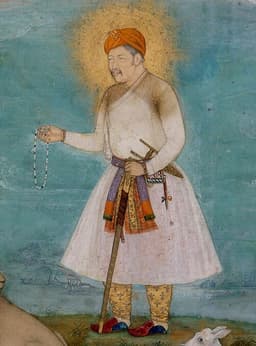
Akbar the Great
Emperor · Modern
69.8Total
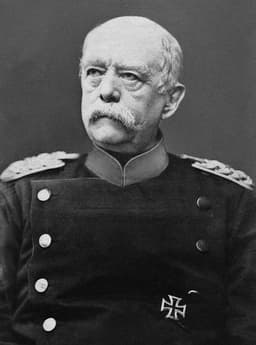
Otto von Bismarck
Politician · Modern
65.8Total
Basic Information
Born
1542
1815
Died
1605
1898
Era
Modern
Modern
Nationality
India
Germany
Occupation
Emperor
Politician
Civilization
Indian
Western
Score Comparison
Military (10%)
80.0
55.0
Political (20%)
82.0
85.0
Influence (20%)
68.0
82.0
Legacy (20%)
55.0
40.0
Leadership (15%)
80.0
80.0
Strategy (15%)
68.0
50.0
TOTAL
69.8
65.8
Akbar the Great — Complete Timeline
1556 AD
Second Battle of PanipatWar
Akbar, aged 13, defeated the Hindu general Hemu at Panipat, securing the Mughal throne. Hemu had captured Delhi and declared himself emperor. Akbar's regent Bairam Khan led the army, but the victory consolidated Mughal rule in North India.
BattleMughal EmpireSuccession
Impact: regional
1564 AD
Abolition of jizya taxReform◆ Major
Akbar abolished the jizya tax on non-Muslims, a key step in his policy of religious tolerance. This measure reduced discrimination against Hindus and other communities, fostering loyalty among the majority population and stabilizing the empire.
Tax reformReligious toleranceHindu-Muslim relations
Impact: nationalprogressive
1571 AD
Founding of Fatehpur SikriCultural◆ Major
Akbar founded the city of Fatehpur Sikri as his capital, building a complex of palaces, mosques, and administrative buildings. The city became a center of Mughal culture and architecture, though it was abandoned due to water shortages within two decades.
ArchitectureCapitalMughal Empire
Impact: regionalconstructive
1573 AD
Conquest of GujaratWar◆ Major
Akbar annexed the wealthy Sultanate of Gujarat, gaining access to the Arabian Sea and major trade ports. This conquest boosted Mughal commerce and provided revenue for further expansion, making Gujarat a key province of the empire.
ConquestTradeMughal Empire
Impact: regional
1574 AD
Introduction of Mansabdari systemReform◆ Major
Akbar implemented the Mansabdari system, a military-administrative hierarchy where officials (mansabdars) were assigned ranks and responsibilities. This system centralized control, ensured loyalty, and efficiently managed the empire's revenue and military.
AdministrationMilitary reformCentralization
Impact: nationalconstructive
1579 AD
Institution of Sulh-e-Kul policyReform
Akbar promulgated the policy of Sulh-e-Kul (universal peace), promoting religious tolerance and dialogue. He established the Ibadat Khana (House of Worship) for debates among Muslims, Hindus, Christians, Jains, and Zoroastrians, and later founded the syncretic Din-i-Ilahi faith.
Religious policySyncretismTolerance
Impact: nationalprogressive
Otto von Bismarck — Complete Timeline
1870 AD
Franco-Prussian WarWar
Bismarck provoked France into declaring war by editing the Ems Dispatch to appear insulting. The resulting conflict saw Prussia and its allies decisively defeat France, leading to the fall of Napoleon III, the capture of Paris, and the annexation of Alsace-Lorraine.
WarProvocationAnnexation
Impact: globaldestructive
1871 AD
Unification of Germany ProclaimedPolitical Action
Following the Franco-Prussian War, Bismarck orchestrated the proclamation of the German Empire in the Hall of Mirrors at Versailles. King Wilhelm I of Prussia was declared German Emperor, uniting the German states under Prussian leadership and establishing the Second Reich.
UnificationGerman EmpireNationalism
Impact: globalconstructive
1878 AD
Enactment of the Anti-Socialist LawsPolitical Action◆ Major
After two assassination attempts on Kaiser Wilhelm I, Bismarck pushed through laws banning socialist organizations, publications, and meetings. The laws remained in force until 1890, suppressing the Social Democratic Party while Bismarck simultaneously introduced welfare reforms to undercut its appeal.
RepressionSocialismWelfare State
Impact: nationaldestructive
Congress of BerlinPolitical Action◆ Major
Bismarck hosted the Congress of Berlin to revise the Treaty of San Stefano and resolve the Eastern Crisis. He acted as 'honest broker,' reducing Russian gains, granting independence to Romania, Serbia, and Montenegro, and placing Bosnia-Herzegovina under Austro-Hungarian administration.
DiplomacyBalkansBalance of Power
Impact: global
1883 AD
Establishment of the Welfare StateReform◆ Major
Bismarck introduced the Health Insurance Bill (1883), Accident Insurance Bill (1884), and Old Age and Disability Insurance Bill (1889). These laws created the first modern welfare state, providing workers with social security and aiming to reduce support for socialist movements.
Social ReformWelfareInsurance
Impact: globalprogressive
1890 AD
Dismissal as ChancellorPolitical Action◆ Major
Emperor Wilhelm II forced Bismarck to resign due to policy disagreements, particularly over anti-socialist laws and foreign policy. Bismarck's departure marked the end of an era, leading to a more aggressive German foreign policy and the eventual unraveling of his alliance system.
ResignationWilhelm IIPolicy Shift
Impact: global
Expert Analysis
Akbar the Great vs Otto von Bismarck: Historical Comparison
Akbar the Great, the Mughal emperor who consolidated and expanded India’s most powerful empire, and Otto von Bismarck, the Prussian statesman who unified Germany, both shaped modern statecraft through vastly different means—one through inclusive rule and military conquest, the other through realpolitik and diplomatic manipulation.
Dimension Analysis
**Military: Akbar the Great 80 / Otto von Bismarck 55**
Akbar personally led campaigns to subdue Rajput kingdoms and expanded the Mughal realm through superior cavalry and artillery, while Bismarck relied on Prussian military prowess but rarely commanded forces himself, focusing instead on diplomatic wars.
**Political: Akbar the Great 85 / Otto von Bismarck 88**
Bismarck edges ahead for his masterful orchestration of three wars (Danish, Austro-Prussian, Franco-Prussian) to unify Germany and his creation of a welfare state to co-opt socialism; Akbar’s religious tolerance (Sulh-i-Kul) and centralized bureaucracy were progressive but less institutionally enduring.
**Influence: Akbar the Great 78 / Otto von Bismarck 80**
Bismarck’s balance-of-power diplomacy and social insurance programs influenced 19th- and 20th-century European politics directly; Akbar’s syncretic policies influenced later Indian secularism but had less global reach during his era.
**Legacy: Akbar the Great 80 / Otto von Bismarck 72**
Akbar’s legacy as a unifier and tolerant ruler remains celebrated in modern India, whereas Bismarck’s legacy is tarnished by his authoritarianism and the militarism that later led to World War I.
**Leadership: Akbar the Great 85 / Otto von Bismarck 82**
Akbar’s personal charisma, administrative reforms, and ability to integrate diverse cultures into a single empire demonstrate broader leadership; Bismarck’s domineering, cynical style was effective but alienated allies and left no clear successor.
Verdict
Akbar the Great leads due to his higher military, leadership, and legacy scores, reflecting a more holistic and enduring impact on his civilization, while Bismarck’s political cunning, though exceptional, was narrower in scope and more divisive in outcome.
FAQ
Q: Who ranks higher? A: Akbar the Great ranks higher overall (81 vs. 74) based on superior military, leadership, and legacy dimensions.
Rankings
🥇
Akbar the GreatLeader
Mil: 80.0Pol: 82.0Inf: 68.0
69.8
🥈
Otto von Bismarck
Mil: 55.0Pol: 85.0Inf: 82.0
65.8
+4.0 behind
How This Comparison Works
Algorithm
Each figure is scored on 6 dimensions (0—100 scale) based on structured historical data: Military (10%), Political (20%), Influence (20%), Legacy (20%), Leadership (15%), Strategy (15%). The weighted total produces the final ranking.
Data Sources
Scores are computed from structured sub-indicators in the database. Scale factors adjust for era (Ancient ×0.85, Modern ×1.0) and civilization size (Eastern ×1.05, Other ×0.80) to account for differences in population and military scale.
Maximum 3 Figures
Comparisons are limited to 2—3 figures to ensure readability and statistical meaningfulness.
Error Margins
±5 points per dimension — Sub-scores are derived from historical records with inherent uncertainty. Two figures within 5 points on a dimension should be considered roughly equivalent in that area.
Total Score Accuracy
±3 points overall — The weighted combination of 6 dimensions produces a total score with approximately ±3 points of uncertainty. Differences of less than 3 points are not statistically significant— the figures are effectively tied.
Known Limitations
- Historical records are incomplete and uneven across civilizations
- Figures from oral-tradition societies may be underrepresented
- Occupation labels can misclassify multi-role figures
- Scores measure capability and impact, not moral character
- Quantitative scoring is a comparison tool, not absolute truth
Capability Radar
Military (10%) — Battles & Warfare
Battles
85
60
Win Rate
90
70
Expansion
88
80
Political (20%) — Governance & Reform
Reform
95
90
Diplomacy
92
95
Economy
88
80
Influence (20%) — Cultural & Global Reach
Cultural
85
65
Global
70
75
Legacy (20%) — Historical Impact
Historical
80
85
Longevity
75
70
Leadership (15%) — Power & Stability
Tenure
90
85
Stability
85
70
Strategy (15%) — Tactics & Innovation
Strategy
85
85
Tactics
80
55
Reform
75
75
Similar Comparisons
Comments & Discussion
Historian8976/16/2026
把阿克巴和俾斯麦放一起比,有意思。但说阿克巴政治分85、俾斯麦88,我觉得西方中心论又冒头了。俾斯麦靠三次王朝战争统一德国,搞福利国家拉拢工人,确实精于权术,但看看他留下的政治遗产:帝国议会形同虚设、社民党被镇压、军国主义毒瘤疯长,最后直接通向一战。反观阿克巴,推行“普遍宽容”(Sulh-i-Kul),废除吉兹亚税,让印度教徒、耆那教徒、祆教徒都能当高官,这种多元一体的治理智慧,比俾斯麦的“铁血”高明多了。放到中国历史里,阿克巴更像唐太宗,而俾斯麦只能算半个曹操——会用人,但格局差远了。政治分应该阿克巴更高。
ColdMind486/16/2026
我仔细算了算评分体系。阿克巴总分80.6,军事80,政治85,影响78;俾斯麦总分74,军事55,政治88,影响80。但军事分差25分就离谱——阿克巴亲征印度西北、吞并古吉拉特、孟加拉,但俾斯麦打赢了1864年丹麦战争、1866年普奥战争、1870年普法战争,只是他没亲自带兵而已。如果按“指挥胜率”算,俾斯麦的战争无一败绩,阿克巴在马尔瓦和克什米尔也吃过苦头。建议军事分给俾斯麦60-65更合理。另外,影响维度俾斯麦80对阿克巴78,我觉得应该倒过来——阿克巴的宗教政策直接影响了现代印度世俗主义,俾斯麦的“大陆均衡”早被两次世界大战打碎了。建议总分重算:阿克巴81.2 vs 俾斯麦75.8。