Loading...
Akbar the Great vs Charles de Gaulle
Akbar the Great leads by 1.6 pts · 2 figures compared
…
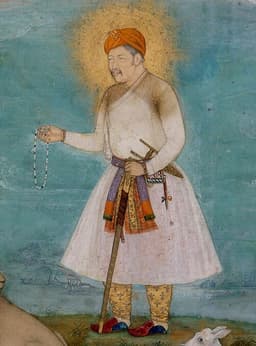
Akbar the Great
Emperor · Modern
69.8Total
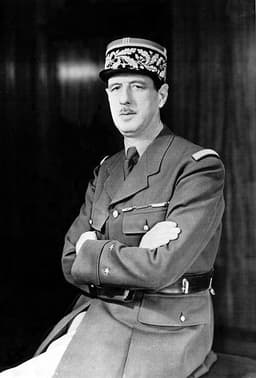
Charles de Gaulle
Politician · Modern
68.2Total
Basic Information
Born
1542
1890
Died
1605
1970
Era
Modern
Modern
Nationality
India
France
Occupation
Emperor
Politician
Civilization
Indian
Western
Score Comparison
Military (10%)
80.0
55.0
Political (20%)
82.0
75.0
Influence (20%)
68.0
65.0
Legacy (20%)
55.0
68.0
Leadership (15%)
80.0
78.0
Strategy (15%)
68.0
65.0
TOTAL
69.8
68.2
Akbar the Great — Complete Timeline
1556 AD
Second Battle of PanipatWar
Akbar, aged 13, defeated the Hindu general Hemu at Panipat, securing the Mughal throne. Hemu had captured Delhi and declared himself emperor. Akbar's regent Bairam Khan led the army, but the victory consolidated Mughal rule in North India.
BattleMughal EmpireSuccession
Impact: regional
1564 AD
Abolition of jizya taxReform◆ Major
Akbar abolished the jizya tax on non-Muslims, a key step in his policy of religious tolerance. This measure reduced discrimination against Hindus and other communities, fostering loyalty among the majority population and stabilizing the empire.
Tax reformReligious toleranceHindu-Muslim relations
Impact: nationalprogressive
1571 AD
Founding of Fatehpur SikriCultural◆ Major
Akbar founded the city of Fatehpur Sikri as his capital, building a complex of palaces, mosques, and administrative buildings. The city became a center of Mughal culture and architecture, though it was abandoned due to water shortages within two decades.
ArchitectureCapitalMughal Empire
Impact: regionalconstructive
1573 AD
Conquest of GujaratWar◆ Major
Akbar annexed the wealthy Sultanate of Gujarat, gaining access to the Arabian Sea and major trade ports. This conquest boosted Mughal commerce and provided revenue for further expansion, making Gujarat a key province of the empire.
ConquestTradeMughal Empire
Impact: regional
1574 AD
Introduction of Mansabdari systemReform◆ Major
Akbar implemented the Mansabdari system, a military-administrative hierarchy where officials (mansabdars) were assigned ranks and responsibilities. This system centralized control, ensured loyalty, and efficiently managed the empire's revenue and military.
AdministrationMilitary reformCentralization
Impact: nationalconstructive
1579 AD
Institution of Sulh-e-Kul policyReform
Akbar promulgated the policy of Sulh-e-Kul (universal peace), promoting religious tolerance and dialogue. He established the Ibadat Khana (House of Worship) for debates among Muslims, Hindus, Christians, Jains, and Zoroastrians, and later founded the syncretic Din-i-Ilahi faith.
Religious policySyncretismTolerance
Impact: nationalprogressive
Charles de Gaulle — Complete Timeline
1940 AD
Appeal of 18 June 1940Political Action
From London, de Gaulle broadcast a radio appeal urging French resistance against Nazi occupation. He called on French soldiers and citizens to continue the fight, founding the Free French Forces and becoming the symbol of French defiance.
World War IIResistanceLeadership
Impact: nationalconstructive
1958 AD
Founding of the Fifth RepublicPolitical Action
De Gaulle returned to power during the Algerian crisis and oversaw the drafting of a new constitution. The Fifth Republic established a strong executive presidency, replacing the unstable parliamentary system of the Fourth Republic.
ConstitutionGovernment ReformPolitical System
Impact: nationalconstructive
1962 AD
End of the Algerian WarPolitical Action◆ Major
De Gaulle negotiated the
DecolonizationPeace TreatyAlgeria
Impact: regionalconstructive
1968 AD
May 1968 CrisisPolitical Action◆ Major
Mass student protests and general strikes paralyzed France, challenging de Gaulle's government. De Gaulle briefly fled to Germany, then returned to dissolve the National Assembly and call elections, which his party won, but his authority was weakened.
ProtestPolitical CrisisSocial Unrest
Impact: nationaldestructive
1969 AD
Resignation as PresidentPolitical Action
De Gaulle resigned after losing a referendum on regional reform and Senate restructuring. The defeat marked the end of his political career, as he withdrew from public life and died the following year.
ResignationPolitical DefeatReferendum
Impact: nationaltragic
Expert Analysis
Charles de Gaulle vs Akbar the Great
# The Throne and the Crossroads
In the summer of 1579, a Mughal emperor in northern India gathered scholars from every faith—Hindus, Muslims, Jains, Zoroastrians, even Portuguese Jesuits—into a hall of debate in his new capital at Fatehpur Sikri. He listened, questioned, and ultimately declared that no single religion held a monopoly on truth. Nearly four centuries later, in the summer of 1940, a tall French general stood before a microphone in London, his voice crackling across the English Channel, and told his countrymen that a battle had been lost, but the war was not over. One man built an empire by embracing diversity; the other rebuilt a nation by refusing to accept defeat. Why did Akbar the Great and Charles de Gaulle, both towering figures of modern statecraft, follow such divergent paths—and what drove their very different outcomes?
Origins
Akbar was born in 1542 into a world of chaos. His father, Humayun, had lost the Mughal throne to Afghan rivals, and the young prince spent his early years as a refugee, learning to survive on the run. At thirteen, he inherited a fragile kingdom that barely extended beyond the Punjab. His India was a mosaic of warring sultanates, Hindu Rajput kingdoms, and fractious Muslim nobles—a land where religious identity often determined loyalty. Akbar’s education was famously poor; he never learned to read or write. But he compensated with an insatiable curiosity and a memory that could recall every detail of a conversation.
Charles de Gaulle, born in 1890 in Lille, France, grew up in a nation nursing the wounds of the Franco-Prussian War. His father was a devout Catholic and a monarchist who taught him that France had a special destiny. De Gaulle absorbed this conviction at the military academy of Saint-Cyr and on the battlefields of World War I, where he was wounded and taken prisoner. His France was a republic divided by class, ideology, and the trauma of defeat. Where Akbar’s world was fluid and syncretic, de Gaulle’s was rigid, defined by the sharp lines of European nationalism.
Rise to Power
Akbar’s path to power was forged in blood. At thirteen, he faced the Hindu general Hemu, who had captured Delhi and declared himself emperor. On the plains of Panipat in 1556, Akbar’s regent Bairam Khan outmaneuvered Hemu’s war elephants, and the young emperor watched as his enemy was brought before him, wounded and helpless. The Mughal nobles urged Akbar to behead Hemu himself—a ritual of kingship. He refused, but allowed the execution. It was a lesson in power he never forgot: mercy was a tool, but so was ruthlessness.
De Gaulle’s rise was slower, more intellectual. He spent the 1930s writing books on armored warfare and military strategy, arguing that France needed a professional, mobile army. His ideas were ignored. When Germany invaded in 1940, de Gaulle was a brigadier general commanding a tank division—a minor figure. But as the French government collapsed into surrender, he saw his moment. On June 18, 1940, from a BBC studio in London, he broadcast his appeal. He had no army, no territory, no legitimacy—only a voice and an unshakable conviction that he spoke for the true France.
Leadership & Governance
Akbar governed through inclusion. He abolished the jizya tax on non-Muslims in 1564, a radical act in a world where religious discrimination was the norm. He married Rajput princesses, appointed Hindus to high office, and in 1579 declared the policy of *Sulh-e-Kul*—universal peace. His Mansabdari system, introduced in 1574, turned military commanders into salaried administrators, tying their loyalty to the crown rather than to local loyalties. He built Fatehpur Sikri as a symbol of this new order, a city where a Christian altar stood beside a Muslim mosque and a Hindu temple. When he conquered Gujarat in 1573, he did not merely plunder its ports—he integrated them into a trade network that stretched from the Red Sea to the Bay of Bengal.
De Gaulle governed through will. As president of the Fifth Republic from 1958, he crafted a constitution that concentrated power in the executive, believing that France needed a strong leader to rise above factional squabbling. He ended the Algerian War in 1962 by negotiating the Évian Accords, despite death threats from right-wing extremists and the fury of the French army. He restored national prestige by pursuing an independent foreign policy, withdrawing from NATO’s military command, and developing France’s own nuclear deterrent. Where Akbar built consensus, de Gaulle imposed direction.
Triumph & Tragedy
Akbar’s greatest triumph was the creation of a stable, multi-religious empire that lasted for generations. His tragedy was personal: his sons failed him. His eldest, Prince Salim, rebelled against him, and Akbar died in 1605 with the succession unresolved. The empire he built would begin its slow decline under less capable heirs.
De Gaulle’s greatest triumph was the resurrection of France’s honor. By leading the Free French from 1940 to 1944, he ensured that France would sit at the victors’ table after World War II. His tragedy came in May 1968, when student protests and general strikes paralyzed France. De Gaulle, the man of iron will, briefly fled to Germany to consult with French generals—a moment of panic that shattered his aura of infallibility. He resigned in 1969 after losing a referendum on minor reforms, a quiet end for a man who had lived by grand gestures.
Character & Destiny
Akbar’s personality was shaped by insecurity and curiosity. The illiterate boy who became emperor learned to trust his instincts and his advisers. He was capable of terrible cruelty—he ordered the massacre of prisoners after the siege of Chittor—but also of genuine openness. He founded a new religion, the Din-i-Ilahi, not as a tool of conversion but as a personal experiment in synthesis. His destiny was to prove that an empire could be held together by tolerance.
De Gaulle’s personality was shaped by pride and isolation. The tall, aloof man with the prominent nose seemed to his contemporaries cold, arrogant, even inhuman. He once said, “France cannot be France without greatness.” His destiny was to prove that a nation could be rebuilt by sheer force of will, even after humiliation and collapse.
Legacy
Akbar is remembered as the greatest Mughal emperor, the architect of a golden age. His image adorns Indian currency, and his policy of religious tolerance is held up as a model for modern pluralism. Yet his empire did not survive his vision; later Mughals abandoned *Sulh-e-Kul*, and the subcontinent descended into sectarian conflict.
De Gaulle is remembered as the savior of French honor, the founder of the Fifth Republic, and the man who gave France its modern identity. His legacy is more durable: the presidential system he created remains, and his vision of an independent France still shapes French foreign policy. But his aloofness left a political culture that struggles with consensus.
Conclusion
Akbar and de Gaulle faced the same fundamental question: how to hold a fractured nation together. Akbar answered with openness, de Gaulle with strength. One built an empire that crumbled; the other rebuilt a nation that endures. The difference lies not in their ambition—both were immense—but in the worlds they inherited. Akbar’s India was a land of infinite possibility, where boundaries could be erased. De Gaulle’s France was a land of fixed borders and deep memories, where honor mattered more than harmony. Both succeeded in their own terms, and both left their successors with a challenge: how to sustain what they built. In the end, the throne and the crossroads demand different virtues—and different sacrifices.
Rankings
🥇
Akbar the GreatLeader
Mil: 80.0Pol: 82.0Inf: 68.0
69.8
🥈
Charles de Gaulle
Mil: 55.0Pol: 75.0Inf: 65.0
68.2
+1.6 behind
How This Comparison Works
Algorithm
Each figure is scored on 6 dimensions (0—100 scale) based on structured historical data: Military (10%), Political (20%), Influence (20%), Legacy (20%), Leadership (15%), Strategy (15%). The weighted total produces the final ranking.
Data Sources
Scores are computed from structured sub-indicators in the database. Scale factors adjust for era (Ancient ×0.85, Modern ×1.0) and civilization size (Eastern ×1.05, Other ×0.80) to account for differences in population and military scale.
Maximum 3 Figures
Comparisons are limited to 2—3 figures to ensure readability and statistical meaningfulness.
Error Margins
±5 points per dimension — Sub-scores are derived from historical records with inherent uncertainty. Two figures within 5 points on a dimension should be considered roughly equivalent in that area.
Total Score Accuracy
±3 points overall — The weighted combination of 6 dimensions produces a total score with approximately ±3 points of uncertainty. Differences of less than 3 points are not statistically significant— the figures are effectively tied.
Known Limitations
- Historical records are incomplete and uneven across civilizations
- Figures from oral-tradition societies may be underrepresented
- Occupation labels can misclassify multi-role figures
- Scores measure capability and impact, not moral character
- Quantitative scoring is a comparison tool, not absolute truth
Capability Radar
Military (10%) — Battles & Warfare
Battles
85
60
Win Rate
90
55
Expansion
88
20
Political (20%) — Governance & Reform
Reform
95
95
Diplomacy
92
90
Economy
88
70
Influence (20%) — Cultural & Global Reach
Cultural
85
70
Global
70
80
Legacy (20%) — Historical Impact
Historical
80
85
Longevity
75
75
Leadership (15%) — Power & Stability
Tenure
90
85
Stability
85
75
Strategy (15%) — Tactics & Innovation
Strategy
85
85
Tactics
80
70
Reform
75
80
Similar Comparisons
Comments & Discussion
GaulleVisionary6/16/2026
Comparing de Gaulle to Akbar is like comparing a fortress to a bazaar. Akbar built his empire through syncretism, marrying into Rajput families and abolishing the jizya tax. De Gaulle, by contrast, stood rigid as tempered steel—he restored French pride through sheer will, not compromise. One unified through inclusion, the other through defiance. History favors the builder, not the stubborn icon.|zh|