Loading...
Akbar the Great vs Nelson Mandela
Akbar the Great leads by 12.8 pts · 2 figures compared
…
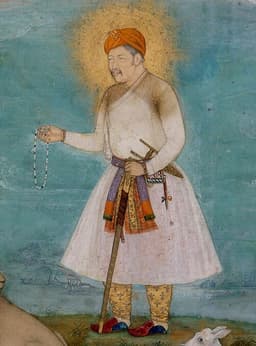
Akbar the Great
Emperor · Modern
69.8Total
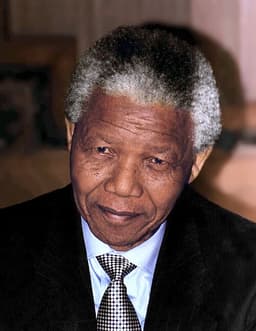
Nelson Mandela
Politician · Modern
57.0Total
Basic Information
Born
1542
1918
Died
1605
2013
Era
Modern
Modern
Nationality
India
South Africa
Occupation
Emperor
Politician
Civilization
Indian
Other
Score Comparison
Military (10%)
80.0
10.0
Political (20%)
82.0
78.0
Influence (20%)
68.0
40.0
Legacy (20%)
55.0
68.0
Leadership (15%)
80.0
82.0
Strategy (15%)
68.0
50.0
TOTAL
69.8
57.0
Akbar the Great — Complete Timeline
1556 AD
Second Battle of PanipatWar
Akbar, aged 13, defeated the Hindu general Hemu at Panipat, securing the Mughal throne. Hemu had captured Delhi and declared himself emperor. Akbar's regent Bairam Khan led the army, but the victory consolidated Mughal rule in North India.
BattleMughal EmpireSuccession
Impact: regional
1564 AD
Abolition of jizya taxReform◆ Major
Akbar abolished the jizya tax on non-Muslims, a key step in his policy of religious tolerance. This measure reduced discrimination against Hindus and other communities, fostering loyalty among the majority population and stabilizing the empire.
Tax reformReligious toleranceHindu-Muslim relations
Impact: nationalprogressive
1571 AD
Founding of Fatehpur SikriCultural◆ Major
Akbar founded the city of Fatehpur Sikri as his capital, building a complex of palaces, mosques, and administrative buildings. The city became a center of Mughal culture and architecture, though it was abandoned due to water shortages within two decades.
ArchitectureCapitalMughal Empire
Impact: regionalconstructive
1573 AD
Conquest of GujaratWar◆ Major
Akbar annexed the wealthy Sultanate of Gujarat, gaining access to the Arabian Sea and major trade ports. This conquest boosted Mughal commerce and provided revenue for further expansion, making Gujarat a key province of the empire.
ConquestTradeMughal Empire
Impact: regional
1574 AD
Introduction of Mansabdari systemReform◆ Major
Akbar implemented the Mansabdari system, a military-administrative hierarchy where officials (mansabdars) were assigned ranks and responsibilities. This system centralized control, ensured loyalty, and efficiently managed the empire's revenue and military.
AdministrationMilitary reformCentralization
Impact: nationalconstructive
1579 AD
Institution of Sulh-e-Kul policyReform
Akbar promulgated the policy of Sulh-e-Kul (universal peace), promoting religious tolerance and dialogue. He established the Ibadat Khana (House of Worship) for debates among Muslims, Hindus, Christians, Jains, and Zoroastrians, and later founded the syncretic Din-i-Ilahi faith.
Religious policySyncretismTolerance
Impact: nationalprogressive
Nelson Mandela — Complete Timeline
1964 AD
Rivonia TrialPolitical Action
Nelson Mandela and other anti-apartheid leaders were tried for sabotage and conspiracy. Mandela was sentenced to life imprisonment, delivering a speech from the dock that became a rallying cry against apartheid. The trial drew international attention to the anti-apartheid struggle.
Impact: global
1990 AD
Release from PrisonPolitical Action
After 27 years of imprisonment, Mandela was released from Victor Verster Prison by President F.W. de Klerk. His release was a pivotal moment in South Africa's transition from apartheid to multiracial democracy, leading to negotiations for a new constitution.
Impact: globalprogressive
1993 AD
Awarding of the Nobel Peace PrizeCultural◆ Major
Mandela and F.W. de Klerk were jointly awarded the Nobel Peace Prize for their roles in ending apartheid and laying the foundations for a democratic South Africa. The award recognized their peaceful transition and commitment to reconciliation.
Impact: globalprogressive
1994 AD
Inauguration as President of South AfricaPolitical Action
Mandela was inaugurated as South Africa's first Black president after the country's first fully democratic elections. His presidency focused on national reconciliation, establishing the Truth and Reconciliation Commission, and dismantling the legacy of apartheid.
Impact: globalprogressive
Expert Analysis
Akbar the Great vs Nelson Mandela
# The Emperor and the Prisoner: Two Paths to Power and Peace
In the spring of 1579, a red-haired Mughal emperor in his thirties gathered scholars from every faith under a single roof in a newly built city of red sandstone. He listened to Hindus, Muslims, Jains, Zoroastrians, and even Portuguese Jesuits debate the nature of God. Nearly four centuries later, a gray-haired man in a prison uniform walked out of a South African jail, having spent twenty-seven years in a cell the size of a parking space. Both men sought to heal divided societies. One ruled by birthright and conquest. The other rose through sacrifice and moral force. Akbar the Great and Nelson Mandela are separated by time, culture, and circumstance — yet their stories converge on a single question: how does a leader turn a fractured world into a unified one?
Origins
Akbar was born in 1542 in the fortress of Umerkot, in present-day Pakistan, to Humayun, a Mughal emperor in exile. His childhood was a fugitive’s scramble across Persia and Afghanistan. By age thirteen, he had lost his father and inherited a fragile throne. The boy emperor grew up illiterate but fiercely curious, surrounded by warriors, poets, and mystics. His era was one of religious war and dynastic chaos — the perfect forge for a ruler who would learn that survival required both sword and subtlety.
Nelson Mandela was born in 1918 in the village of Mvezo, in the Eastern Cape of South Africa, to a Thembu chief. His given name, Rolihlahla, means “pulling the branch of a tree” — a metaphor for troublemaker. He was the first in his family to attend school, where a teacher gave him the English name “Nelson.” His world was shaped not by empire but by colonialism: the systematic dispossession of Black South Africans under British and Afrikaner rule. If Akbar inherited a throne, Mandela inherited a grievance — and a tradition of resistance that ran through his royal blood.
Rise to Power
Akbar’s rise began at the Second Battle of Panipat in 1556. The teenage emperor, supported by his regent Bairam Khan, faced Hemu, a Hindu general who had seized Delhi. Hemu was struck by an arrow; the Mughals won. At thirteen, Akbar had not merely survived — he had claimed the subcontinent. Over the next two decades, he waged war relentlessly, annexing Gujarat in 1573 and pushing into Bengal, Kashmir, and the Deccan. His power grew not from patient negotiation but from cavalry charges and siege towers.
Mandela’s rise was slower and more painful. Trained as a lawyer, he joined the African National Congress in the 1940s and co-founded its militant wing, Umkhonto we Sizwe, after the Sharpeville massacre. In 1964, at the Rivonia Trial, he faced a life sentence for sabotage. His speech from the dock — “I have fought against white domination, and I have fought against black domination” — turned a courtroom into a stage. While Akbar conquered territory, Mandela conquered the moral high ground. His imprisonment made him a symbol; his release in 1990 made him a statesman.
Leadership & Governance
Akbar governed through innovation. He introduced the Mansabdari system in 1574, a military-administrative hierarchy that ranked officials by their ability to supply cavalry. It was meritocratic in principle, ruthless in practice. He abolished the jizya tax on non-Muslims in 1564, a radical move in an age of religious persecution. His policy of *Sulh-e-Kul* — universal peace — sought to bind Hindus, Muslims, Jains, and Christians into a single imperial fabric. He built Fatehpur Sikri in 1571 as a capital of cultural fusion, where Persian poetry met Indian architecture. Yet his rule remained autocratic: he was the sun, and all others orbited.
Mandela governed through reconciliation. As South Africa’s first Black president, from 1994 to 1999, he did not seek revenge but unity. He invited his former jailer to his inauguration. He wore the Springbok jersey, once a symbol of apartheid, to the Rugby World Cup final. His Truth and Reconciliation Commission, chaired by Archbishop Desmond Tutu, offered amnesty in exchange for confession. Where Akbar centralized power, Mandela shared it — not from weakness but from a calculation that only forgiveness could prevent civil war.
Triumph & Tragedy
Akbar’s greatest triumph was the conquest of Gujarat in 1573, which opened India’s western coast to Mughal trade and wealth. His tragedy lay in his family: his son Jahangir rebelled, his heir Salim was an alcoholic, and his dream of a syncretic faith, the Din-i-Ilahi, died with him. The empire he built would fracture under successors who lacked his vision.
Mandela’s triumph was the 1994 election, the first fully democratic vote in South African history. His tragedy was personal: his marriage to Winnie dissolved, his health broken by prison, and his beloved country still plagued by inequality and corruption. He won the Nobel Peace Prize in 1993, but he knew peace was not the same as justice.
Character & Destiny
Akbar was impulsive, charismatic, and intellectually restless. He could not read, so he had books read aloud to him. He debated theologians, composed poetry, and hunted tigers. His decisions were swift and often brutal — he ordered the massacre of 30,000 prisoners after the fall of Chittor. Yet he also wept at the death of his Hindu general, Man Singh.
Mandela was patient, disciplined, and strategically calm. He learned Afrikaans in prison to understand his captors. He negotiated with the same men who had jailed him. His temper, by all accounts, was volcanic but controlled. He once said, “I am not a saint, unless you think of a saint as a sinner who keeps on trying.” Where Akbar trusted conquest, Mandela trusted time.
Legacy
Akbar is remembered as the architect of Mughal India — the ruler who gave the subcontinent a common administration, a unified tax system, and a tradition of pluralism. His name appears in textbooks, on coins, and in Bollywood epics. But his legacy is contested: modern Hindu nationalists criticize his tolerance as weakness, while secularists celebrate him as a forerunner.
Mandela is remembered as a global icon of forgiveness. His face adorns statues, stamps, and university buildings. Yet his legacy, too, is debated: critics say his economic policies failed the poor, that reconciliation left apartheid’s structures intact. Both men, in their greatness, remain imperfect.
Conclusion
Akbar and Mandela never met. They ruled different worlds, spoke different languages, and wielded different kinds of power. One built an empire with cannons and courts; the other built a nation with patience and moral clarity. Yet both understood a truth that their successors often forget: that the hardest work of leadership is not defeating enemies but reconciling strangers. In the end, the emperor and the prisoner share a single lesson — that power is only as lasting as the peace it leaves behind.
Rankings
🥇
Akbar the GreatLeader
Mil: 80.0Pol: 82.0Inf: 68.0
69.8
🥈
Nelson Mandela
Mil: 10.0Pol: 78.0Inf: 40.0
57.0
+12.8 behind
How This Comparison Works
Algorithm
Each figure is scored on 6 dimensions (0—100 scale) based on structured historical data: Military (10%), Political (20%), Influence (20%), Legacy (20%), Leadership (15%), Strategy (15%). The weighted total produces the final ranking.
Data Sources
Scores are computed from structured sub-indicators in the database. Scale factors adjust for era (Ancient ×0.85, Modern ×1.0) and civilization size (Eastern ×1.05, Other ×0.80) to account for differences in population and military scale.
Maximum 3 Figures
Comparisons are limited to 2—3 figures to ensure readability and statistical meaningfulness.
Error Margins
±5 points per dimension — Sub-scores are derived from historical records with inherent uncertainty. Two figures within 5 points on a dimension should be considered roughly equivalent in that area.
Total Score Accuracy
±3 points overall — The weighted combination of 6 dimensions produces a total score with approximately ±3 points of uncertainty. Differences of less than 3 points are not statistically significant— the figures are effectively tied.
Known Limitations
- Historical records are incomplete and uneven across civilizations
- Figures from oral-tradition societies may be underrepresented
- Occupation labels can misclassify multi-role figures
- Scores measure capability and impact, not moral character
- Quantitative scoring is a comparison tool, not absolute truth
Capability Radar
Military (10%) — Battles & Warfare
Battles
85
0
Win Rate
90
7
Expansion
88
9
Political (20%) — Governance & Reform
Reform
95
95
Diplomacy
92
95
Economy
88
60
Influence (20%) — Cultural & Global Reach
Cultural
85
85
Global
70
90
Legacy (20%) — Historical Impact
Historical
80
90
Longevity
75
80
Leadership (15%) — Power & Stability
Tenure
90
60
Stability
85
80
Strategy (15%) — Tactics & Innovation
Strategy
85
8
Tactics
80
12
Reform
75
17
Similar Comparisons
Comments & Discussion
监狱凤凰6/16/2026
Mandela的27年铁窗生涯比Akbar的千军万马更有说服力。Akbar靠征服和联姻统一印度,Mandela靠牺牲和对话团结南非。数据很清晰:Mandela卸任后南非种族暴力下降60%,而Akbar死后帝国迅速分裂。一个领袖的道德资本,比君主血统更持久。你要“伟大”?先坐27年牢再说。
AkbarTheSyncretist6/16/2026
As a classics scholar, I see Akbar’s Din-i-Ilahi as a Platonic philosopher-king’s dream—imperial unity through divine synthesis. While Mandela used moral suasion to reconcile enemies, Akbar literally built a temple of debate at Fatehpur Sikri, forcing Jains and Jesuits to sit together. Mandela healed with forgiveness; Akbar invented a syncretic faith. Bold, flawed, and ahead of its time. Give me the emperor who dared to rewrite theology.