Loading...
Akbar the Great vs Mahatma Gandhi
Akbar the Great leads by 1.1 pts · 2 figures compared
…
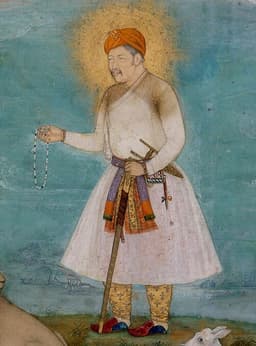
Akbar the Great
Emperor · Modern
69.8Total
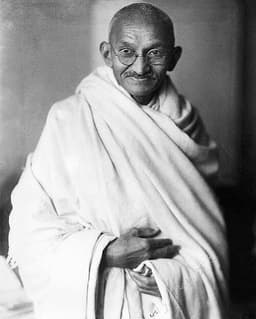
Mahatma Gandhi
Politician · Modern
68.7Total
Basic Information
Born
1542
1869
Died
1605
1948
Era
Modern
Modern
Nationality
India
India
Occupation
Emperor
Politician
Civilization
Indian
Indian
Score Comparison
Military (10%)
80.0
42.3
Political (20%)
82.0
65.0
Influence (20%)
68.0
80.0
Legacy (20%)
55.0
75.0
Leadership (15%)
80.0
70.0
Strategy (15%)
68.0
55.0
TOTAL
69.8
68.7
Akbar the Great — Complete Timeline
1556 AD
Second Battle of PanipatWar
Akbar, aged 13, defeated the Hindu general Hemu at Panipat, securing the Mughal throne. Hemu had captured Delhi and declared himself emperor. Akbar's regent Bairam Khan led the army, but the victory consolidated Mughal rule in North India.
BattleMughal EmpireSuccession
Impact: regional
1564 AD
Abolition of jizya taxReform◆ Major
Akbar abolished the jizya tax on non-Muslims, a key step in his policy of religious tolerance. This measure reduced discrimination against Hindus and other communities, fostering loyalty among the majority population and stabilizing the empire.
Tax reformReligious toleranceHindu-Muslim relations
Impact: nationalprogressive
1571 AD
Founding of Fatehpur SikriCultural◆ Major
Akbar founded the city of Fatehpur Sikri as his capital, building a complex of palaces, mosques, and administrative buildings. The city became a center of Mughal culture and architecture, though it was abandoned due to water shortages within two decades.
ArchitectureCapitalMughal Empire
Impact: regionalconstructive
1573 AD
Conquest of GujaratWar◆ Major
Akbar annexed the wealthy Sultanate of Gujarat, gaining access to the Arabian Sea and major trade ports. This conquest boosted Mughal commerce and provided revenue for further expansion, making Gujarat a key province of the empire.
ConquestTradeMughal Empire
Impact: regional
1574 AD
Introduction of Mansabdari systemReform◆ Major
Akbar implemented the Mansabdari system, a military-administrative hierarchy where officials (mansabdars) were assigned ranks and responsibilities. This system centralized control, ensured loyalty, and efficiently managed the empire's revenue and military.
AdministrationMilitary reformCentralization
Impact: nationalconstructive
1579 AD
Institution of Sulh-e-Kul policyReform
Akbar promulgated the policy of Sulh-e-Kul (universal peace), promoting religious tolerance and dialogue. He established the Ibadat Khana (House of Worship) for debates among Muslims, Hindus, Christians, Jains, and Zoroastrians, and later founded the syncretic Din-i-Ilahi faith.
Religious policySyncretismTolerance
Impact: nationalprogressive
Mahatma Gandhi — Complete Timeline
1917 AD
Champaran SatyagrahaPolitical Action
Gandhi led his first nonviolent protest in India, supporting indigo farmers in Champaran, Bihar, against exploitative British planters. He organized a campaign of civil disobedience and negotiations, resulting in the abolition of the oppressive tinkathia system.
Civil disobedienceFarmers' rightsBritish Raj
Impact: nationalprogressive
1919 AD
Jallianwala Bagh massacre aftermathPolitical Action◆ Major
After British troops killed hundreds of unarmed civilians in Amritsar, Gandhi organized a nationwide hartal (strike) and nonviolent protests. He returned his medals and launched the Rowlatt Satyagraha, marking a shift from cooperation to non-cooperation with British rule.
ProtestBritish RajMassacre
Impact: nationaltragic
1930 AD
Salt MarchPolitical Action
Gandhi led a 240-mile march from Sabarmati to Dandi, Gujarat, to defy the British salt monopoly. Thousands joined him, making salt from seawater. This act of civil disobedience sparked mass protests across India and drew global attention to the independence movement.
Civil disobedienceSalt taxIndependence movement
Impact: globalprogressive
1942 AD
Quit India Movement launchPolitical Action◆ Major
Gandhi launched the Quit India Movement, calling for an end to British rule with the slogan 'Do or Die'. The British arrested him and other leaders, but the movement led to widespread protests and repression, accelerating the end of colonial rule.
IndependenceCivil disobedienceBritish Raj
Impact: nationalprogressive
1948 AD
AssassinationPolitical Action
Gandhi was shot and killed by Nathuram Godse, a Hindu nationalist, during a prayer meeting in New Delhi. His assassination shocked the world and led to a wave of grief and violence, but also reinforced his legacy as a martyr for nonviolence.
AssassinationMartyrdomNonviolence
Impact: globaltragic
Expert Analysis
Akbar the Great vs Mahatma Gandhi
# The Emperor and the Saint: Two Visions of India
On a winter morning in 1948, an old man in a white dhoti walked toward a prayer ground in New Delhi, his hands clasped in greeting. Moments later, three bullets ended his life. Half a millennium earlier, a thirteen-year-old boy mounted an elephant at the head of a Mughal army, charging into the smoke of Panipat to claim an empire. Between these two figures—Akbar the Great and Mahatma Gandhi—lies the entire arc of Indian history: one who conquered with steel and statecraft, the other who liberated with salt and silence. Yet both wrestled with the same question: how does one rule a land of a thousand gods and a million divisions?
Origins
Akbar was born in 1542 in the fortress of Umarkot, a prince in exile. His father, Humayun, had lost the Mughal throne to Afghan rivals, and young Akbar grew up amid the precariousness of a dynasty fighting to survive. His education was deliberately practical—he learned to ride, hunt, and command, but remained functionally illiterate all his life. What he lacked in books, he made up in observation. The boy who could not read would later memorize entire Persian poems and debate theologians from memory.
Gandhi arrived in 1869 in the coastal town of Porbandar, Gujarat, into a family of merchants and administrators. His father was a diwan (chief minister) to a minor prince; his mother was a devout Vaishnava who practiced extreme fasting. Young Mohandas was a shy, mediocre student who once stole gold from his brother to pay off a debt—and later confessed in writing to his father, weeping. That early commitment to truth, however awkward, became the seed of Satyagraha.
The difference in their eras is stark. Akbar inherited a world where might made right, where empires rose and fell on the edge of a sword. Gandhi inherited a world of railways, telegraphs, and the British Raj—a machine of power that could not be defeated by swords alone.
Rise to Power
Akbar’s rise came through blood and battle. In 1556, at age thirteen, he faced Hemu, a Hindu general who had captured Delhi and crowned himself emperor. The Second Battle of Panipat was a near-run thing: an arrow struck Hemu’s eye, and the Mughal victory was sealed. Akbar did not lead the charge—his regent, Bairam Khan, commanded—but the boy-emperor sat on his elephant, watching the carnage, learning that power is taken, not given.
Gandhi’s rise was slower, stranger. After studying law in London, he spent twenty years in South Africa, where he was thrown off a train for being brown, beaten for refusing to leave a first-class carriage, and gradually forged a new kind of weapon: nonviolent resistance. When he returned to India in 1915, he was already fifty-one, bald, and dressed like a peasant. The British laughed at him. The Indian elite dismissed him. But in 1917, at Champaran, he went to the villages and listened. That listening—patient, relentless, moral—became his empire.
Leadership & Governance
Akbar governed through genius. He introduced the Mansabdari system in 1574, a hierarchy of military-administrative officials ranked by the number of horsemen they could field, paid in land revenue. It was a bureaucracy disguised as a cavalry—efficient, centralized, and ruthlessly meritocratic. He conquered Gujarat in 1573, opening India’s ports to global trade. He built Fatehpur Sikri in 1571, a city of red sandstone that was part palace, part university, part spiritual experiment.
But his most radical act was religious. In 1564, he abolished the jizya tax on non-Muslims, a levy that had existed for centuries. In 1579, he proclaimed Sulh-e-Kul—universal peace—and invited Hindus, Jains, Zoroastrians, and Jesuits to debate in his Ibadat Khana (House of Worship). He married a Hindu princess, Rajkumari Harkha Bai, and allowed her to keep her faith. He even created a syncretic religion, the Din-i-Ilahi, though it never gained followers. Akbar understood that an empire of Hindus and Muslims could not be ruled by force alone; it needed a vision of belonging.
Gandhi governed through example. He had no army, no treasury, no official position. His power came from the Salt March of 1930, when he walked 240 miles to the sea and picked up a lump of salt, defying British law. Thousands joined him. The British arrested him, but the image of a thin old man with a staff, walking toward the ocean, had already captured the world. In 1942, he launched the Quit India Movement, calling for 'Do or Die'. The British imprisoned him again, but the empire was already crumbling.
Gandhi’s governance was moral rather than administrative. He spun cotton to promote self-reliance, fasted to stop communal violence, and lived in ashrams rather than palaces. Where Akbar built a state, Gandhi built a conscience.
Triumph & Tragedy
Akbar’s triumph was the Mughal Empire at its zenith—a realm stretching from Afghanistan to the Bay of Bengal, wealthy beyond measure, tolerant beyond its time. His tragedy was personal: his son Salim rebelled against him, and Akbar died in 1605, heartbroken, having failed to secure a peaceful succession.
Gandhi’s triumph was Indian independence in 1947, achieved without a war of liberation. His tragedy came the following year, when he was assassinated by Nathuram Godse, a Hindu nationalist who believed Gandhi had betrayed Hindus by supporting Muslim rights. The apostle of nonviolence died by violence. The man who united India was killed by its divisions.
Character & Destiny
Akbar was curious, pragmatic, and ruthless when necessary. He personally executed a rebel general, but he also wept at the death of his favorite elephant. He could not read, but he could judge men. His destiny was to build an empire that would last for centuries.
Gandhi was stubborn, ascetic, and psychologically complex. He slept naked with young women to test his celibacy, he alienated his own sons, and he demanded absolute discipline from his followers. His destiny was to shatter an empire without firing a shot.
Legacy
Akbar is remembered as the greatest Mughal emperor, the architect of a syncretic India. His face adorns Indian currency, his tomb at Sikandra draws pilgrims, and his policy of Sulh-e-Kul is invoked whenever religious harmony is threatened. But his empire collapsed within a century of his death.
Gandhi is remembered as the Father of the Nation, his image on every Indian rupee, his salt march taught in schools worldwide. His philosophy inspired Martin Luther King Jr. and Nelson Mandela. But the India he dreamed of—a village-based, self-sufficient, harmonious society—never arrived. Modern India is urban, capitalist, and divided.
Conclusion
Akbar and Gandhi never met. They lived worlds apart—one in the sixteenth century, the other in the twentieth; one an emperor, the other a saint. Yet they share a secret: both understood that India’s greatest challenge is its diversity. Akbar tried to govern it through tolerance; Gandhi tried to unite it through love. One built a state; the other built a dream. Perhaps the truest India lies somewhere between the two—an empire of the soul that neither sword nor salt can fully claim.
Rankings
🥇
Akbar the GreatLeader
Mil: 80.0Pol: 82.0Inf: 68.0
69.8
🥈
Mahatma Gandhi
Mil: 42.3Pol: 65.0Inf: 80.0
68.7
+1.1 behind
How This Comparison Works
Algorithm
Each figure is scored on 6 dimensions (0—100 scale) based on structured historical data: Military (10%), Political (20%), Influence (20%), Legacy (20%), Leadership (15%), Strategy (15%). The weighted total produces the final ranking.
Data Sources
Scores are computed from structured sub-indicators in the database. Scale factors adjust for era (Ancient ×0.85, Modern ×1.0) and civilization size (Eastern ×1.05, Other ×0.80) to account for differences in population and military scale.
Maximum 3 Figures
Comparisons are limited to 2—3 figures to ensure readability and statistical meaningfulness.
Error Margins
±5 points per dimension — Sub-scores are derived from historical records with inherent uncertainty. Two figures within 5 points on a dimension should be considered roughly equivalent in that area.
Total Score Accuracy
±3 points overall — The weighted combination of 6 dimensions produces a total score with approximately ±3 points of uncertainty. Differences of less than 3 points are not statistically significant— the figures are effectively tied.
Known Limitations
- Historical records are incomplete and uneven across civilizations
- Figures from oral-tradition societies may be underrepresented
- Occupation labels can misclassify multi-role figures
- Scores measure capability and impact, not moral character
- Quantitative scoring is a comparison tool, not absolute truth
Capability Radar
Military (10%) — Battles & Warfare
Battles
85
45
Win Rate
90
46
Expansion
88
51
Political (20%) — Governance & Reform
Reform
95
85
Diplomacy
92
80
Economy
88
40
Influence (20%) — Cultural & Global Reach
Cultural
85
85
Global
70
90
Legacy (20%) — Historical Impact
Historical
80
90
Longevity
75
85
Leadership (15%) — Power & Stability
Tenure
90
60
Stability
85
55
Strategy (15%) — Tactics & Innovation
Strategy
85
52
Tactics
80
56
Reform
75
55
Similar Comparisons
Comments & Discussion
PANIPAT'S GHOST6/16/2026
Calling this a comparison is like comparing Genghis Khan to Jesus. Akbar was a brilliant military strategist who absorbed Rajput warriors into his ranks and created a centralized bureaucracy that lasted centuries. Gandhi's nonviolence worked specifically against an empire that had to pretend it was civilized. Try Gandhi's methods against Babur's cannons at Panipat and you'd get a massacre, not independence. Period.
分裂之王6/16/2026
阿克巴靠砍头建立统一印度,甘地用绝食分裂印度。史实摆着:1947年印巴分治死了两百万人,而阿克巴统治时期推行苏尔赫-库勒(普遍和平),允许印度教徒翻修寺庙。甘地的道德高地很漂亮,但阿克巴治下的印度确实比甘地走后的印度更和平。谁才是真正的大统一者?答案太明显。
SALT & STEEL6/16/2026
Gandhi united through symbolism - the salt march, the spinning wheel, the simple dhoti. But symbolic unity crumbles fast. Akbar built actual institutions: a centralized tax system, standardized weights and measures, a uniform legal code for both Hindus and Muslims. He married Rajput princesses (Jodha Bai alone changed the empire's DNA). Gandhi's closest parallel isn't Akbar - it's an influencer who rallied but didn't build. Empire wins.
种姓幽灵6/16/2026
两位伟人都没解决印度最根本的问题:种姓制度。阿克巴任命了像曼辛格这样的印度教将领进高层,却从未挑战婆罗门的特权。甘地称“神之民”(哈里真)为神的子民,但他也支持种姓分工,反对低种姓的独立政治组织。印度现在还有三名低种姓公民被活活烧死,就在2023年。两位伟人?不如说是两位教条囚徒。
SULTAN OF SYNCRETISM6/16/2026
Akbar literally invented a new religion - Din-i-Ilahi - to bridge Hindu-Muslim divides. He abolished the jizya tax, banned cow slaughter, and translated the Mahabharata into Persian. Gandhi's religious vision was Hindu-cored with thin pluralist garnish. Show me the moment Gandhi ever incorporated Qur'anic law into his ashram rules. Akbar was intellectually bolder, institutionally deeper. The illiterate emperor out-theorized the Oxford-educated lawyer.