Loading...
Akbar the Great vs Joseph Stalin
Akbar the Great leads by 1.0 pts · 2 figures compared
…
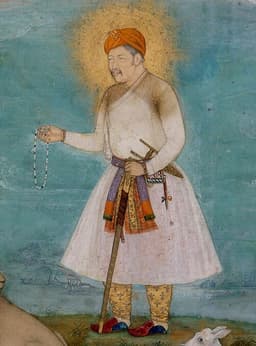
Akbar the Great
Emperor · Modern
69.8Total
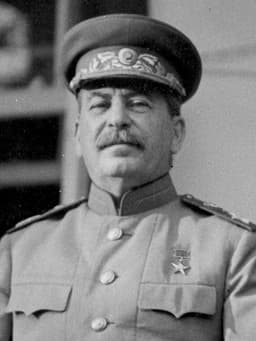
Joseph Stalin
Politician · Modern
68.8Total
Basic Information
Born
1542
1878
Died
1605
1953
Era
Modern
Modern
Nationality
India
Russia
Occupation
Emperor
Politician
Civilization
Indian
Western
Score Comparison
Military (10%)
80.0
75.0
Political (20%)
82.0
70.0
Influence (20%)
68.0
72.0
Legacy (20%)
55.0
55.0
Leadership (15%)
80.0
80.0
Strategy (15%)
68.0
70.0
TOTAL
69.8
68.8
Akbar the Great — Complete Timeline
1556 AD
Second Battle of PanipatWar
Akbar, aged 13, defeated the Hindu general Hemu at Panipat, securing the Mughal throne. Hemu had captured Delhi and declared himself emperor. Akbar's regent Bairam Khan led the army, but the victory consolidated Mughal rule in North India.
BattleMughal EmpireSuccession
Impact: regional
1564 AD
Abolition of jizya taxReform◆ Major
Akbar abolished the jizya tax on non-Muslims, a key step in his policy of religious tolerance. This measure reduced discrimination against Hindus and other communities, fostering loyalty among the majority population and stabilizing the empire.
Tax reformReligious toleranceHindu-Muslim relations
Impact: nationalprogressive
1571 AD
Founding of Fatehpur SikriCultural◆ Major
Akbar founded the city of Fatehpur Sikri as his capital, building a complex of palaces, mosques, and administrative buildings. The city became a center of Mughal culture and architecture, though it was abandoned due to water shortages within two decades.
ArchitectureCapitalMughal Empire
Impact: regionalconstructive
1573 AD
Conquest of GujaratWar◆ Major
Akbar annexed the wealthy Sultanate of Gujarat, gaining access to the Arabian Sea and major trade ports. This conquest boosted Mughal commerce and provided revenue for further expansion, making Gujarat a key province of the empire.
ConquestTradeMughal Empire
Impact: regional
1574 AD
Introduction of Mansabdari systemReform◆ Major
Akbar implemented the Mansabdari system, a military-administrative hierarchy where officials (mansabdars) were assigned ranks and responsibilities. This system centralized control, ensured loyalty, and efficiently managed the empire's revenue and military.
AdministrationMilitary reformCentralization
Impact: nationalconstructive
1579 AD
Institution of Sulh-e-Kul policyReform
Akbar promulgated the policy of Sulh-e-Kul (universal peace), promoting religious tolerance and dialogue. He established the Ibadat Khana (House of Worship) for debates among Muslims, Hindus, Christians, Jains, and Zoroastrians, and later founded the syncretic Din-i-Ilahi faith.
Religious policySyncretismTolerance
Impact: nationalprogressive
Joseph Stalin — Complete Timeline
1928 AD
Launched the First Five-Year PlanReform
Stalin initiated a series of centralized economic plans aimed at rapid industrialization and collectivization of agriculture. The First Five-Year Plan set ambitious targets for heavy industry, leading to significant growth but also severe shortages and human cost.
Impact: global
1929 AD
Implemented forced collectivization of agricultureReform
Stalin ordered the consolidation of individual peasant farms into collective farms (kolkhozy). This was met with resistance, leading to the liquidation of kulaks (wealthy peasants) as a class. The policy caused a catastrophic famine, particularly in Ukraine (Holodomor), resulting in millions of deaths.
Impact: nationaldestructive
1937 AD
Conducted the Great Purge (Great Terror)Political Action
Stalin orchestrated a campaign of political repression against alleged enemies of the state. Millions were arrested, executed, or sent to the Gulag labor camps. The purges targeted the Communist Party, military leadership, intellectuals, and ordinary citizens, consolidating Stalin's absolute power.
Impact: nationaldestructive
1945 AD
Led the Soviet Union to victory in World War IIWar
Stalin served as Supreme Commander of the Soviet armed forces. The Soviet Union bore the brunt of the war against Nazi Germany, suffering immense casualties. The Red Army's victory at Stalingrad and the capture of Berlin were key turning points. The war ended with Soviet domination of Eastern Europe.
Impact: global
Established the Eastern Bloc and the Iron CurtainPolitical Action◆ Major
After WWII, Stalin imposed communist governments in Eastern European countries occupied by the Red Army, creating a buffer zone against the West. This division of Europe into Soviet and Western spheres of influence marked the beginning of the Cold War.
Impact: globaldestructive
Expert Analysis
Akbar the Great vs Joseph Stalin
### The Emperor and the Tyrant: Akbar’s Dream of Peace and Stalin’s Cult of Fear
In the year 1579, in the red sandstone city of Fatehpur Sikri, the Mughal Emperor Akbar gathered scholars of every faith—Hindus, Muslims, Jains, Zoroastrians, and even Portuguese Jesuits—for a grand religious debate. He sat on a raised platform, listening intently, hoping to distill a single truth from the cacophony of creeds. Three and a half centuries later, in 1937, Joseph Stalin sat in the Kremlin, signing lists of names. Each signature, written in a steady hand, sent thousands to the execution cellars of the Lubyanka. One man built a city for dialogue; the other built a machine for silence. Both were architects of vast empires. But what drove one to seek unity, and the other to enforce uniformity?
### Origins
Akbar was born in 1542, a prince in exile. His father, Humayun, had lost the Mughal throne to Afghan rebels, and young Akbar spent his boyhood in the rough camps of Persia and Afghanistan, learning to fight before he learned to read. He never mastered literacy, but he possessed a fierce, restless intelligence that would later devour ideas from every culture. His world was one of fragile alliances and constant war—a crucible that forged a ruler who understood that survival meant embracing a diverse, fractious land.
Stalin was born in 1878 in the Georgian town of Gori, the son of a cobbler and a washerwoman. His father beat him; his mother prayed for him to become a priest. He entered a seminary but was expelled for reading forbidden Marxist texts. Unlike Akbar, who inherited a throne, Stalin inherited a world of underground conspiracy. His Russia was a prison of autocracy, and he learned early that trust was a weakness, that power came from controlling information and eliminating rivals. The seminary taught him dogma; the underground taught him paranoia.
### Rise to Power
Akbar’s rise was a miracle of youth. In 1556, at just thirteen, he faced the Hindu general Hemu at the Second Battle of Panipat. Hemu had seized Delhi and proclaimed himself emperor. Akbar’s regent, Bairam Khan, led the charge, but it was the boy-emperor’s name that rallied the troops. When an arrow struck Hemu’s eye, the Mughals won a victory that secured the throne. Akbar did not stop there. Over the next two decades, he conquered Gujarat in 1573, gaining the Arabian Sea ports, and pushed into the Deccan. His military score of 80 reflects a commander who led from the front but also knew when to use diplomacy.
Stalin’s rise was slower, more cunning. He did not win battles; he won bureaucratic wars. After Lenin’s death in 1924, Stalin used his position as General Secretary to appoint loyalists to key posts. By 1928, he had sidelined Trotsky, Zinoviev, and Kamenev. Where Akbar inherited an army and expanded it, Stalin inherited a party and purged it. His political score of 72 is modest, but it understates his genius for manipulation. He did not need to be loved; he needed to be feared.
### Leadership & Governance
Akbar’s reign was a laboratory of reform. In 1564, he abolished the jizya tax on non-Muslims—a radical act that removed the financial stigma of being a Hindu in a Muslim empire. In 1574, he introduced the Mansabdari system, a military-administrative hierarchy that ranked officials by the number of horsemen they could supply. This created a meritocratic bureaucracy, where even Hindus could rise to high office. His crowning achievement was the policy of *Sulh-e-Kul* (universal peace), institutionalized in 1579. He married Rajput princesses, appointed Hindu generals, and commissioned translations of the Mahabharata. His leadership score of 85 reflects a ruler who governed through consent, not coercion.
Stalin’s governance was the opposite. In 1928, he launched the First Five-Year Plan, a crash program of industrialization that built steel mills and dams at the cost of millions of lives. In 1929, he forced collectivization, seizing grain from peasants to feed the cities. Famine followed, killing perhaps five million in Ukraine alone. When resistance emerged, he responded with the Great Purge of 1937, executing party officials, army officers, and intellectuals. His military score of 75 reflects his role as Supreme Commander in World War II, but his legacy score of 55 is a testament to the blood in which that victory was soaked.
### Triumph & Tragedy
Akbar’s greatest moment was the founding of Fatehpur Sikri in 1571. He built a city of red sandstone, with a grand mosque and a palace where he held debates at the Ibadat Khana (House of Worship). It was a symbol of his belief that wisdom could come from any faith. But the city was also a tragedy: its water supply failed, and within a decade, it was abandoned. Akbar’s dream of a perfect capital, like his dream of a perfect syncretism, was unsustainable.
Stalin’s greatest moment was 1945, when he stood with Churchill and Roosevelt at Potsdam, the victor of the greatest war in history. He had turned the Soviet Union into a superpower. But his tragedy was the Iron Curtain he then lowered across Europe. He imposed communist regimes in Poland, Czechoslovakia, Hungary, and beyond, creating a buffer zone that would freeze the continent in Cold War for half a century. His triumph was hollow; his victory sowed the seeds of future oppression.
### Character & Destiny
Akbar was curious. He learned from failure. When Fatehpur Sikri failed, he moved his capital to Lahore and then Agra, always adapting. He was known for his temper, but also for his forgiveness—he often spared defeated enemies and even appointed them as generals. His character was shaped by the diversity of India; he understood that to rule a mosaic, you must respect each tile.
Stalin was suspicious. He saw enemies everywhere, even in his own family. His wife Nadya committed suicide after a quarrel; he had his closest comrades shot. His character was forged in the crucible of the Russian Revolution, where betrayal was common and mercy was fatal. He once said, “A single death is a tragedy; a million deaths is a statistic.” This cold calculus defined his destiny.
### Legacy
Akbar is remembered as Akbar the Great, a founding father of the Mughal Empire and a symbol of religious tolerance. His policies influenced later rulers like Emperor Shah Jahan and even modern India’s secular constitution. His legacy score of 80 is high because he left a model of pluralistic governance that still inspires.
Stalin is remembered as a dictator. His industrialization made the Soviet Union a superpower, but his purges and famines scarred a nation. In Russia today, polls show many view him favorably as a wartime leader, but historians rank him among history’s most brutal rulers. His legacy score of 55 is a reflection of this bitter contradiction.
### Conclusion
Akbar and Stalin both ruled vast, multi-ethnic empires. One built a house of worship; the other built a prison of ideology. The difference lies not in ambition—both were driven—but in their answer to a single question: Is power a tool for unity or a weapon for control? Akbar, the illiterate emperor, understood that the strongest empire is one where every subject feels they belong. Stalin, the seminary dropout, believed that the strongest empire is one where no one dares to dissent. Their stories remind us that the greatest leaders are not those who conquer the most land, but those who conquer the most hearts. And that the deepest tragedy is not a city that fails, but a soul that never learns to trust.
Rankings
🥇
Akbar the GreatLeader
Mil: 80.0Pol: 82.0Inf: 68.0
69.8
🥈
Joseph Stalin
Mil: 75.0Pol: 70.0Inf: 72.0
68.8
+1.0 behind
How This Comparison Works
Algorithm
Each figure is scored on 6 dimensions (0—100 scale) based on structured historical data: Military (10%), Political (20%), Influence (20%), Legacy (20%), Leadership (15%), Strategy (15%). The weighted total produces the final ranking.
Data Sources
Scores are computed from structured sub-indicators in the database. Scale factors adjust for era (Ancient ×0.85, Modern ×1.0) and civilization size (Eastern ×1.05, Other ×0.80) to account for differences in population and military scale.
Maximum 3 Figures
Comparisons are limited to 2—3 figures to ensure readability and statistical meaningfulness.
Error Margins
±5 points per dimension — Sub-scores are derived from historical records with inherent uncertainty. Two figures within 5 points on a dimension should be considered roughly equivalent in that area.
Total Score Accuracy
±3 points overall — The weighted combination of 6 dimensions produces a total score with approximately ±3 points of uncertainty. Differences of less than 3 points are not statistically significant— the figures are effectively tied.
Known Limitations
- Historical records are incomplete and uneven across civilizations
- Figures from oral-tradition societies may be underrepresented
- Occupation labels can misclassify multi-role figures
- Scores measure capability and impact, not moral character
- Quantitative scoring is a comparison tool, not absolute truth
Capability Radar
Military (10%) — Battles & Warfare
Battles
85
85
Win Rate
90
80
Expansion
88
85
Political (20%) — Governance & Reform
Reform
95
90
Diplomacy
92
70
Economy
88
85
Influence (20%) — Cultural & Global Reach
Cultural
85
70
Global
70
95
Legacy (20%) — Historical Impact
Historical
80
95
Longevity
75
80
Leadership (15%) — Power & Stability
Tenure
90
95
Stability
85
60
Strategy (15%) — Tactics & Innovation
Strategy
85
85
Tactics
80
60
Reform
75
90
Similar Comparisons
Comments & Discussion
AKBAR'S BETTER HALF6/16/2026
Akbar's genius was in synthesis—creating a syncretic faith like Din-i-Ilahi that borrowed from Hindu, Zoroastrian, and Christian beliefs. Stalin's "genius" was destruction, purging Orthodox priests, kulaks, and anyone who disagreed with the party line. Akbar abolished the jizya tax on non-Muslims to win loyalty; Stalin invented the Gulag to crush dissent. History remembers builders, not butchers.
红堡与红场6/16/2026
阿克巴取消了非穆斯林的吉兹亚税,在法塔赫布尔西格里建了一座辩论之城;斯大林却在莫斯科建了古拉格和处决地窖。前者用对话整合一个四分五裂的帝国,后者用恐惧统治一个意识形态帝国。没有比较的意义:一个在建造,一个在屠杀。
REVISIONIST SHOT6/16/2026
Let's stop pretending Akbar was some multicultural saint. He massacred 30,000 Rajputs at Chittor in 1568 after they surrendered—classic textbook terror. Sure, Stalin's purges hit millions, but Akbar's religious tolerance was strategic, not principled. He banned cow slaughter to appease Hindus while still enslaving prisoners of war. Both used violence to consolidate power; the scale differs, not the logic.
数据打脸6/16/2026
数据说话:斯大林统治期间约2000万人非正常死亡(包括大饥荒与大清洗),阿克巴在1556-1605年间对外征服导致数十万死亡。但比例上看,莫卧儿帝国人口约1亿,死亡比例约0.5%;苏联约1.6亿,比例超12%。两个都是强人,但数字从不骗人:斯氏是工业化级别的灭绝,阿克巴是冷兵器时代的常态统治。
THE SCEPTIC'S GAZE6/16/2026
The comparison flatters Stalin by making him look like Akbar's dark mirror. But Akbar didn't invent a cult of personality—he was illiterate, for God's sake, and relied on ministers like Birbal and Abu'l-Fazl. Stalin micromanaged every detail: rewriting history books, having Trotsky assassinated in Mexico. Akbar's "religious debates" were performative. Stalin's "debates" were show trials ending in bullets. Different leagues entirely.
历史辩证6/16/2026
一个没文化的皇帝和一个神学院辍学生,都是时代产物。阿克巴的帝国靠联姻和骑兵,斯大林的靠五年计划和秘密警察。关键是结果:阿克巴死后莫卧儿又撑了百年,斯大林死后苏联撑了不到40年。持久性才是检验统治的终极标准。阿克巴整合了多元社会,斯大林制造了统一废墟。不用选边站,时间给出了答案。