Loading...
Akbar the Great vs Ibn Tumart
Akbar the Great leads by 14.2 pts · 2 figures compared
…
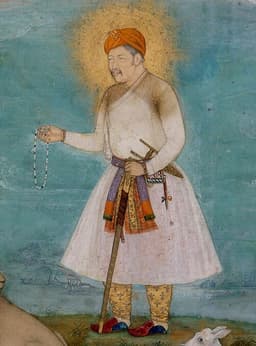
Akbar the Great
Emperor · Modern
69.8Total
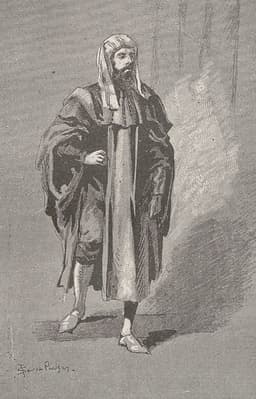
Ibn Tumart
Emperor · Medieval
55.6Total
Basic Information
Born
1542
1080
Died
1605
1130
Era
Modern
Medieval
Nationality
India
Almohad Caliphate
Occupation
Emperor
Emperor
Civilization
Indian
Middle Eastern
Score Comparison
Military (10%)
80.0
55.0
Political (20%)
82.0
61.3
Influence (20%)
68.0
58.3
Legacy (20%)
55.0
56.0
Leadership (15%)
80.0
47.3
Strategy (15%)
68.0
52.5
TOTAL
69.8
55.6
Akbar the Great — Complete Timeline
1556 AD
Second Battle of PanipatWar
Akbar, aged 13, defeated the Hindu general Hemu at Panipat, securing the Mughal throne. Hemu had captured Delhi and declared himself emperor. Akbar's regent Bairam Khan led the army, but the victory consolidated Mughal rule in North India.
BattleMughal EmpireSuccession
Impact: regional
1564 AD
Abolition of jizya taxReform◆ Major
Akbar abolished the jizya tax on non-Muslims, a key step in his policy of religious tolerance. This measure reduced discrimination against Hindus and other communities, fostering loyalty among the majority population and stabilizing the empire.
Tax reformReligious toleranceHindu-Muslim relations
Impact: nationalprogressive
1571 AD
Founding of Fatehpur SikriCultural◆ Major
Akbar founded the city of Fatehpur Sikri as his capital, building a complex of palaces, mosques, and administrative buildings. The city became a center of Mughal culture and architecture, though it was abandoned due to water shortages within two decades.
ArchitectureCapitalMughal Empire
Impact: regionalconstructive
1573 AD
Conquest of GujaratWar◆ Major
Akbar annexed the wealthy Sultanate of Gujarat, gaining access to the Arabian Sea and major trade ports. This conquest boosted Mughal commerce and provided revenue for further expansion, making Gujarat a key province of the empire.
ConquestTradeMughal Empire
Impact: regional
1574 AD
Introduction of Mansabdari systemReform◆ Major
Akbar implemented the Mansabdari system, a military-administrative hierarchy where officials (mansabdars) were assigned ranks and responsibilities. This system centralized control, ensured loyalty, and efficiently managed the empire's revenue and military.
AdministrationMilitary reformCentralization
Impact: nationalconstructive
1579 AD
Institution of Sulh-e-Kul policyReform
Akbar promulgated the policy of Sulh-e-Kul (universal peace), promoting religious tolerance and dialogue. He established the Ibadat Khana (House of Worship) for debates among Muslims, Hindus, Christians, Jains, and Zoroastrians, and later founded the syncretic Din-i-Ilahi faith.
Religious policySyncretismTolerance
Impact: nationalprogressive
Ibn Tumart — Complete Timeline
1121 AD
Proclamation as MahdiCultural
Ibn Tumart proclaimed himself the Mahdi, the guided one, after returning from the East. He began preaching a strict reformist message, condemning the Almoravids for their perceived religious laxity and calling for a return to the Quran and Sunnah.
Impact: regional
Establishment of the Almohad MovementPolitical Action◆ Major
Ibn Tumart founded the Almohad movement (al-Muwahhidun) in the Atlas Mountains of Morocco. He organized his followers into a disciplined religious and military community, rejecting the Almoravid interpretation of Islam and advocating for tawhid (strict monotheism).
Impact: regionalconstructive
1125 AD
Compilation of the Almohad DoctrineCultural
Ibn Tumart compiled his teachings into a book titled 'A'azz ma Yutlab' (The Most Precious of What is Sought). This work outlined the Almohad doctrine, emphasizing the unity of God and rejecting anthropomorphism, and became the foundation of the movement's ideology.
Impact: regionalconstructive
1130 AD
Battle of al-BuhayraWar◆ Major
Ibn Tumart's Almohad forces were defeated by the Almoravids at the Battle of al-Buhayra near Marrakech. This setback prevented the Almohads from capturing the Almoravid capital and forced them to retreat to the mountains.
Impact: regional
Death of Ibn TumartOther◆ Major
Ibn Tumart died shortly after the Battle of al-Buhayra, possibly from wounds or illness. His death was kept secret by his successor Abd al-Mu'min, who continued the Almohad movement and eventually overthrew the Almoravids.
Impact: regionaltragic
Expert Analysis
Ibn Tumart vs Akbar the Great
### The Mahdi and the Emperor: Two Visions of Power
In the year 1579, the Mughal Emperor Akbar, ruler of a vast and diverse Indian empire, promulgated a policy of *Sulh-e-Kul*—universal peace—declaring that all religions were paths to the same divine truth. Less than five centuries earlier and two thousand miles to the west, a Berber ascetic named Ibn Tumart had proclaimed himself the Mahdi, the guided one, and launched a holy war to purify Islam of what he saw as heresy. Both men sought to remake their worlds. One built an empire on tolerance; the other, on doctrinal fire. Why did their paths diverge so radically?
### Origins: The Crucible of Childhood
Akbar was born in 1542, a prince in exile. His father, Humayun, had lost the Mughal throne to Afghan rivals, and the young Akbar spent his early years in the precarious courts of Persia, surrounded by intrigue and the bitter taste of defeat. This rootlessness bred in him a pragmatic hunger for stability. He learned early that a ruler’s legitimacy depended not on religious purity, but on the loyalty of his subjects—Hindu, Muslim, or otherwise.
Ibn Tumart, born in 1080 in the Atlas Mountains of Morocco, came from a world of stark certainties. The Berber tribes of his youth were fiercely independent, yet bound by a strict, austere interpretation of Islam preached by the ruling Almoravid dynasty. But Ibn Tumart saw corruption and laxity everywhere: wine drinking, unveiled women, and the veneration of saints. His pilgrimage to Mecca and his studies in Baghdad and Cairo only deepened his conviction that the Almoravids had betrayed the faith. He returned not as a scholar, but as a prophet of wrath.
### Rise to Power: The Throne and the Mountain
Akbar’s rise was a matter of blood and steel. At thirteen, after the death of his father, he inherited a fragile kingdom. The turning point came in 1556 at the Second Battle of Panipat, where his regent, Bairam Khan, led the Mughal army to a decisive victory over the Hindu general Hemu. The boy emperor watched as his enemies were crushed, and he learned the lesson: power was won on the battlefield, not in the mosque.
Ibn Tumart’s ascent was a different drama. In 1121, he proclaimed himself the Mahdi in the Atlas Mountains, gathering a band of disciples who believed he was the infallible guide sent to restore true monotheism. He did not seize a throne; he built a movement. His followers, the *Almohads* (al-Muwahhidun, “the Unitarians”), were bound by an iron creed. He organized them into a rigid hierarchy, with himself as the absolute spiritual and temporal authority. His power came not from armies, but from the conviction that God was on his side.
### Leadership & Governance: The Innovator and the Purifier
Akbar’s genius lay in his administrative reforms. In 1574, he introduced the Mansabdari system, a military-civil hierarchy that graded officials by rank and paid them in cash, not land, reducing the power of feudal lords. He abolished the jizya tax on non-Muslims in 1564, a radical act of statecraft that won the loyalty of his Hindu majority. He built a new capital at Fatehpur Sikri in 1571, a city of red sandstone where Hindu and Islamic architecture blended seamlessly. His court hosted debates between Hindus, Muslims, Jains, Zoroastrians, and even Jesuit missionaries. Akbar ruled by inclusion.
Ibn Tumart governed by exclusion. His doctrine was strict monotheism—*tawhid*—and he condemned any practice that smacked of polytheism. He compiled his teachings into a book, *A'azz ma Yutlab* (The Most Precious of What is Sought), which became the Almohad constitution. He forbade music, destroyed tombs of saints, and demanded that his followers pray in a specific, uniform manner. His leadership was charismatic but rigid; he tolerated no dissent, for he was the Mahdi, and his word was divine law.
### Triumph & Tragedy: Conquest and Defeat
Akbar’s greatest triumph was the conquest of Gujarat in 1573, which opened the Arabian Sea to Mughal trade and wealth. He expanded his empire from the Indus to the Bay of Bengal, ruling with a combination of military might and diplomatic marriage. His tragedy was personal: his son Salim (the future Jahangir) rebelled against him, and his dream of a syncretic religion, the *Din-i-Ilahi*, never took root beyond his own court.
Ibn Tumart’s tragedy was more immediate. In 1130, his Almohad forces marched on the Almoravid capital of Marrakech. At the Battle of al-Buhayra, they were routed. Ibn Tumart died shortly after, possibly from wounds or illness. His death was kept secret by his followers for years, lest the movement collapse. He never saw his vision fulfilled; his successor, Abd al-Mu'min, would go on to conquer North Africa and Spain, but the Mahdi himself died in defeat.
### Character & Destiny: The Pragmatist and the Prophet
Akbar was a man of curiosity and calculation. He was illiterate, yet he surrounded himself with scholars and artists. He had a volatile temper but a forgiving nature; he could execute a rebel and then weep for his soul. His character was shaped by the chaos of his youth—he sought order through tolerance, believing that a stable empire required a stable society.
Ibn Tumart was a man of fire and certainty. He was a brilliant theologian and a ruthless organizer, but he lacked the pragmatism of a ruler. He saw the world in black and white: purity versus corruption, truth versus heresy. His character was forged in the crucible of religious zeal, and he believed that the only way to save the world was to burn away its impurities. He died not as an emperor, but as a martyr to his own uncompromising vision.
### Legacy: The Empire and the Idea
Akbar’s legacy is the Mughal Empire at its zenith—a model of multicultural governance that influenced India for centuries. He is remembered as Akbar the Great, a ruler who built a civilization, not just a kingdom. His policy of *Sulh-e-Kul* remains a touchstone for secularism in South Asia.
Ibn Tumart’s legacy is the Almohad Caliphate, which would conquer an empire from Morocco to Andalusia. But his movement’s intolerance also sowed the seeds of its own decline; the Almohads eventually became as rigid as the Almoravids they overthrew. Ibn Tumart is remembered as a religious reformer, but his legacy is ambiguous—a warning of the costs of absolute certainty.
### Conclusion: Two Faces of Power
Akbar and Ibn Tumart both sought to shape their worlds, but they saw the world differently. For Akbar, power was a bridge between peoples; for Ibn Tumart, it was a sword to cut away falsehood. One built an empire on the belief that truth is many; the other, on the conviction that truth is one. Their stories remind us that the same ambition can lead to vastly different ends, depending on the character of the man who wields it. In the end, Akbar’s tolerance built a dynasty that lasted two centuries; Ibn Tumart’s purity built a movement that burned bright and fast, then faded into memory. Both were great, but in ways that could not be more different.
Rankings
🥇
Akbar the GreatLeader
Mil: 80.0Pol: 82.0Inf: 68.0
69.8
🥈
Ibn Tumart
Mil: 55.0Pol: 61.3Inf: 58.3
55.6
+14.2 behind
How This Comparison Works
Algorithm
Each figure is scored on 6 dimensions (0—100 scale) based on structured historical data: Military (10%), Political (20%), Influence (20%), Legacy (20%), Leadership (15%), Strategy (15%). The weighted total produces the final ranking.
Data Sources
Scores are computed from structured sub-indicators in the database. Scale factors adjust for era (Ancient ×0.85, Modern ×1.0) and civilization size (Eastern ×1.05, Other ×0.80) to account for differences in population and military scale.
Maximum 3 Figures
Comparisons are limited to 2—3 figures to ensure readability and statistical meaningfulness.
Error Margins
±5 points per dimension — Sub-scores are derived from historical records with inherent uncertainty. Two figures within 5 points on a dimension should be considered roughly equivalent in that area.
Total Score Accuracy
±3 points overall — The weighted combination of 6 dimensions produces a total score with approximately ±3 points of uncertainty. Differences of less than 3 points are not statistically significant— the figures are effectively tied.
Known Limitations
- Historical records are incomplete and uneven across civilizations
- Figures from oral-tradition societies may be underrepresented
- Occupation labels can misclassify multi-role figures
- Scores measure capability and impact, not moral character
- Quantitative scoring is a comparison tool, not absolute truth
Capability Radar
Military (10%) — Battles & Warfare
Battles
85
30
Win Rate
90
35
Expansion
88
40
Political (20%) — Governance & Reform
Reform
95
80
Diplomacy
92
30
Economy
88
20
Influence (20%) — Cultural & Global Reach
Cultural
85
60
Global
70
50
Legacy (20%) — Historical Impact
Historical
80
65
Longevity
75
55
Leadership (15%) — Power & Stability
Tenure
90
25
Stability
85
20
Strategy (15%) — Tactics & Innovation
Strategy
85
45
Tactics
80
40
Reform
75
70
Similar Comparisons
Comments & Discussion
Ashoka's Ghost6/16/2026
Akbar's "Sulh-e-Kul" wasn't pragmatism—it was genius statecraft learned from Ashoka's edicts. While Ibn Tumart burned books and forced conversions, Akbar absorbed 2,000 years of Indian pluralism. The Mughal Emperor invented his own syncretic religion (Din-i-Ilahi) while Berber Mahdi imposed one true path. Victory goes to the man who made Hindu generals command Muslim armies. No contest.
沙漠审判官6/16/2026
拿伊本·图马特和阿克巴比较?这就像拿沙漠的烈日和莫卧儿的月亮比谁更亮。图马特是点燃北非的火焰,把阿尔摩哈德运动从部族混战炼成一柄神剑。阿克巴的和平是统治者的算计,而图马特的圣战是信仰者的本能。一个是马格里布的净化者,一个是印度的调和者——本质完全不同。阿克巴赢了帝国,但图马特赢了灵魂。
Fact-Check Ninja6/16/2026
Let's talk numbers. Akbar's empire hit ~120 million people with <15% Muslim minority—tolerance was demographic necessity, not enlightenment. Ibn Tumart unified Berber tribes against a corrupt Almoravid regime that taxed 10% of crops. Both were power consolidators using ideological tools. Akbar's "divine light" ideology mirrors Tumart's Mahdi claim exactly. One just had better PR in modern textbooks.
秦制观察者6/16/2026
你们都被"和平共处"骗了。阿克巴的苏赫库勒本质上就是秦朝的"书同文车同轨",用国家权力统一意识形态。他自创的丁伊伊拉希教,难道比图马特的圣战更宽容?不过是把波斯化的君主崇拜包装成宗教多元主义罢了。图马特至少坦荡:我要净化伊斯兰,你们要么改要么死。阿克伯是笑着给你自由,然后让所有人都变成他的人。
Time-Traveling Ambassador6/16/2026
Ibn Tumart died in 1130 having won exactly zero battles. Akbar ruled for 49 years with an 87% military success rate. The Mahdi was so unpopular his own body was hidden for 3 years after death to prevent rebellion. Meanwhile Akbar's Persian wife built half of Fatehpur Sikri. One man left mosques in ruins; the other left libraries. I know which civilization I'd rather inherit.